The Denver Nuggets were already dealing with a horrible salary situation before the Thunder gave Spencer Jones a two-year, $12.0 million offer sheet, but matching that deal finally pushed them into the second apron. Keeping Jones reportedly added around $32.0 million to the luxury-tax bill, taking the total close to $68.0 million, while the roster now sits above the NBA’s $221.7 million second-apron line.
Second-apron teams lose important roster-building tools, can’t aggregate several outgoing salaries in a trade, can’t take back more salary than they send out, and face long-term draft-pick penalties if they remain above the line.
The Peyton Watson situation makes everything even worse. The forward put up 14.6 points, 4.9 rebounds, 2.1 assists, 0.9 steals, and 1.1 blocks last season while shooting 49.1% from the field, 41.1% from three, and 73.0% from the line, so he clearly isn’t some bench player anymore. His camp is reportedly looking for more than $25.0 million per season, while the offers have mostly landed closer to $20.0 million.
The Nuggets now have two problems at the same time. They need to escape the second apron, but they also need to either create enough flexibility to re-sign Watson or accept that he is leaving. Saving a bit of money will help escape the apron penalties, but it doesn’t create space for another contract worth more than $20.0 million.
3. Pay The Hornets To Take Zeke Nnaji And Let Watson Leave
Charlotte Hornets Receive: Zeke Nnaji, 2028 second-round pick
Denver Nuggets Receive: 2031 second-round pick (top-55 protected)
The easiest way for the Nuggets to leave the second apron would be moving Zeke Nnaji without receiving another guaranteed contract. Nnaji will make approximately $7.5 million in 2026-27 and owns a player option for the following season, which makes his contract a clear problem for a player who averaged only 3.7 points, 2.6 rebounds, and 0.6 assists in 12.0 minutes last season.
Nnaji still has some physical tools at 6-foot-9, but his role with the Nuggets has basically disappeared. He played only 52 games last season, shot 25.9% from three, and never became the floor-spacing backup big man the team hoped to develop when it gave him a four-year extension.
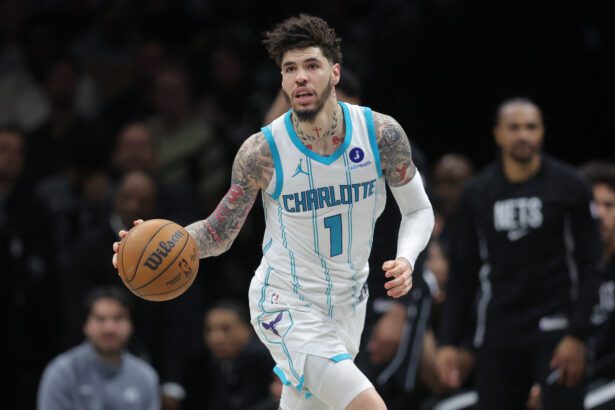
The Hornets are one of the few teams capable of absorbing his salary without sending money back. Their LaMelo Ball trade created a $40.7 million trade exception, which gives them enough space to take Nnaji’s full $7.5 million contract.
This wouldn’t be about the Hornets believing Nnaji is suddenly ready to become a starter. They would be using part of an exception to collect another second-round pick while taking a chance on a 25-year-old center. The 2031 top-55 protected second-round pick going back would basically be fake value used to complete the transaction.
For the Nuggets, the move would remove the full $7.5 million salary and comfortably take the current roster below the second apron. It would also keep Nikola Jokic, Jamal Murray, Aaron Gordon, Cameron Johnson, Christian Braun, Jones, and the rest of the main rotation together.
The bad part is that this trade doesn’t solve Watson’s contract. Saving $7.5 million is enough to escape the apron now, but it isn’t enough to add a Watson deal starting between $20.0 million and $25.0 million without going straight back above the line.
That means this framework only works if the Nuggets are ready to let Watson sign an offer sheet they won’t match, move him through a sign-and-trade for draft compensation, or allow him to play on his $6.5 million qualifying offer before becoming an unrestricted free agent in 2027. Marc Stein reported that Watson has considered that last option after the Nuggets initially offered around four years and $70.0 million.
It would feel painful, but keeping Watson at any price was never really part of this version. This move is about getting below the second apron before the penalties become worse and avoiding a much bigger trade involving one of the actual starters.
2. Turn Cameron Johnson Into Three Cheaper Lakers Players
Los Angeles Lakers Receive: Cameron Johnson
Denver Nuggets Receive: Jarred Vanderbilt, Dalton Knecht, Bronny James
Trading Cameron Johnson for three smaller contracts would be much more aggressive because the Nuggets would break up their starting lineup only one year after acquiring him. Johnson carries a $23.1 million salary in the final season of his contract, while Jarred Vanderbilt, Dalton Knecht, and Bronny James combine for approximately $18.9 million.
The Nuggets would send one player and receive less salary, which fits their second-apron restrictions, while saving around $4.1 million in the process. That should be enough to move the current roster back below the apron, although it still wouldn’t create enough space to pay Watson his full market value.
The Lakers have a basketball reason to consider it. Their roster is now completely built around Luka Doncic, but they still need another starting-level shooting wing after LeBron James left. Johnson would give them a 6-foot-8 forward who can space the floor, move without the ball, and punish teams for sending extra defenders toward Doncic.
Giving up three players sounds like a lot, but their individual roles are pretty limited. Jarred Vanderbilt averaged 4.4 points, 4.5 rebounds, and 1.3 assists across 65 games last season, while his lack of shooting continues to make him difficult to use next to Doncic and Walker Kessler.
Dalton Knecht averaged 4.2 points and 1.4 rebounds while shooting 45.5% from the field and 34.2% from three in only 10.2 minutes per game. His scoring talent remains interesting, but he has fallen behind more complete guards and wings in the Lakers rotation. Bronny James added 2.9 points and 1.2 assists while shooting 38.6% from three, although he still hasn’t earned a stable NBA role.
The Nuggets wouldn’t receive one player capable of replacing Johnson, but they would get three different options. This is clearly a talent downgrade, as the Nuggets would be making their rotation deeper but also much less reliable around Jokic.
The salary savings also aren’t big enough to keep Watson on a contract near $25.0 million. The Nuggets would still need to let Watson leave or complete a sign-and-trade where they receive only cheap salary and draft compensation.
That makes this a middle-level desperation move. The Nuggets wouldn’t completely dump Johnson for nothing, but they would admit that avoiding the apron is more important than keeping the best player in the trade.
The Lakers would become much better immediately, while the Nuggets would hope Vanderbilt’s defense, Knecht’s shooting upside, and Bronny’s development can combine to replace Johnson’s impact. That is a pretty dangerous bet during Jokic’s prime, but the second apron doesn’t leave many comfortable options.
1. Trade Christian Braun And Choose Watson
Milwaukee Bucks Receive: Christian Braun
Denver Nuggets Receive: 2031 first-round pick via Heat (top-12 protected)
This is the only framework that gives the Nuggets a path toward keeping Watson without moving any of their main core pieces. Christian Braun begins a five-year, $125.0 million extension in 2026-27, with a first-year salary close to $21.6 million before the deal eventually reaches $28.4 million. Braun put up 12.0 points, 4.8 rebounds, and 2.7 assists last season, shooting 51.9% from the field but only 30.1% from three across 44 games.
Braun remains a useful two-way starter. He runs the floor, finishes well around the rim, defends guards and wings, and already understands how to play beside Jokic without needing many touches. The problem is that paying him around $25.0 million annually becomes much harder to defend after Watson had the better season.
Watson scored 2.6 more points per game, blocked more shots, created more offense, and shot 11.0% better from three. He is also two years younger and has more upside as a self-creator, which is why his camp can point directly at Braun’s contract during negotiations.
The Bucks have the tools to make this framework possible. Trading Giannis Antetokounmpo created a $25.5 million trade exception, meaning they can absorb Braun’s full salary without sending a player back. They also received first-round picks from the Heat in the Giannis deal, including future selections in 2031 and 2033.
Braun would fit the Bucks’ new timeline much better than another older veteran. They finished 32-50 last season and are now building around Tyler Herro, Kel’el Ware, Nate Ament, and Ryan Rollins. A 25-year-old championship wing under contract for five years would give them another good piece for that young core.
For the Nuggets, removing Braun’s first-year salary would create the largest immediate reduction of these three trades. They could then re-sign Watson to a deal around four years and $90.0 million to $100.0 million, and use him as the new starting wing beside Murray, Johnson, Gordon, and Jokic.
This would basically be the Nuggets choosing Watson over Braun, which would’ve sounded wild one year ago but now makes sense. There is still risk because Watson’s shooting improvement came across only 54 games, while Braun has already proved he can play major minutes on a championship team.
Still, this is the only desperation trade that could improve the long-term talent level instead of simply cutting costs. The Nuggets would lose a dependable starter, keep the higher-upside wing, receive a first-round pick, and escape the worst second-apron penalties.