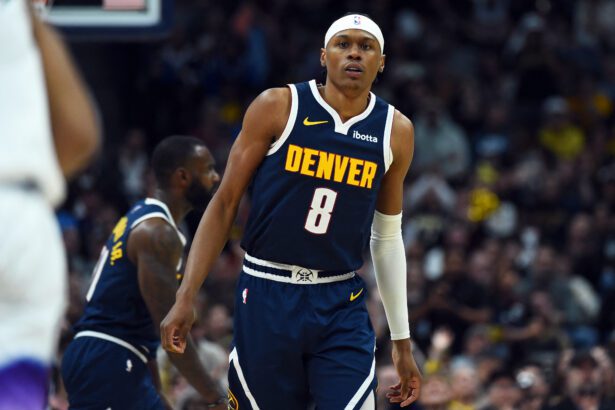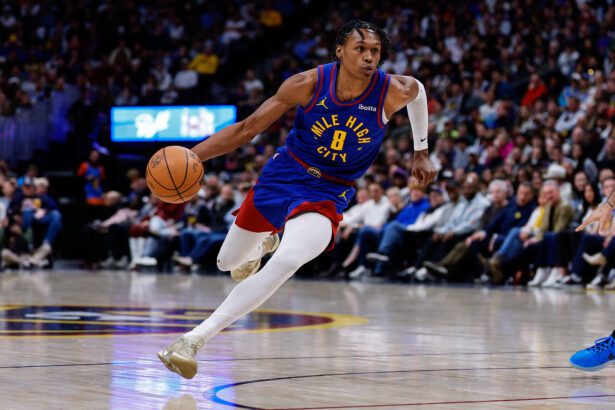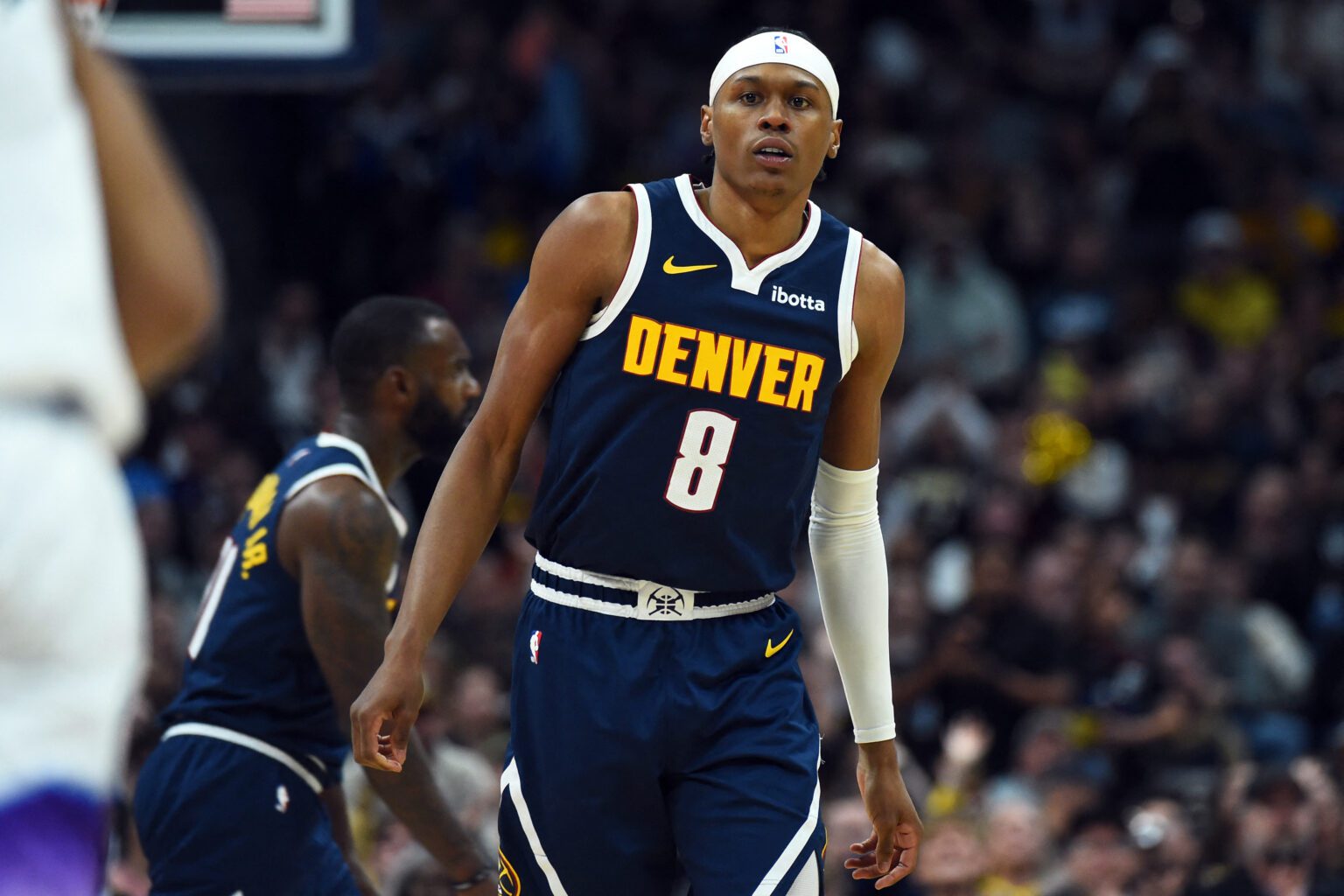
The Denver Nuggets, Cleveland Cavaliers, Los Angeles Clippers, and Washington Wizards just found a way to turn one restricted free agent into a blockbuster four-team transaction. According to Shams Charania, Cleveland is acquiring Peyton Watson, who will sign a new four-year, $88 million contract with a player option and trade kicker.
“Cleveland, Denver, and the Clippers have agreed on a trade sending Peyton Watson to the Cavaliers, Max Strus to LA, and an unprotected 2031 Cavs first-round pick and a 2032 Kings second-rounder to the Nuggets,” reported ESPN’s Shams Charania. “Watson will sign a new four-year, $88 million deal to join the Cavaliers, plus a player option and a trade kicker.”
Reported Trade Details
Cavaliers Acquire: Peyton Watson (four-year, $88M deal) and Cam Whitmore (from Wizards)
Cavaliers Send: Max Strus (to Clippers), Tre Mann (to Wizards), an unprotected 2031 first-round pick (to Nuggets), a 2027 second-round pick via Clippers (to Wizards), and cash (to Wizards)
Nuggets Acquire: Unprotected 2031 first-round pick (from Cavs), a 2032 second-round pick via Sacramento Kings (from Cavs), and Julian Reese (from Wizards, waived off two-way deal)
Nuggets Send: Peyton Watson (to Cavs via sign-and-trade)
Clippers Acquire: Max Strus (from Cavs)
Clippers Send: 2027 second-round pick (routed to Wizards)
Wizards Acquire: Tre Mann, 2027 second-round pick, and cash considerations (all via Cavs)
Wizards Send: Cam Whitmore (to Cavs) and Julian Reese (to Nuggets)
Denver gets an unprotected 2031 Cavaliers first-round pick and a 2032 Kings second-round pick, while the Clippers land Max Strus. Furthermore, the Cavaliers are sending Tre Mann, a 2027 second-round pick, and cash to the Wizards for Cam Whitmore. Denver also gets Julian Reese, who will be waived.
On the surface, this looks like a pretty straightforward deal, but it isn’t. Cleveland is betting that Watson’s defensive potential and offensive development are worth $88 million, and Cam Whitmore was a fantastic pickup for them off the bench.
Denver is essentially getting something in return for a player they cannot afford to keep in the form of an unprotected future first. The Clippers get a veteran shooter, and the Wizards fill their backup point guard hole while getting a second-rounder.
As we continue to unpack this trade, here is how we grade every major piece of the deal.
Cleveland Cavaliers: A+
Without question, Peyton Watson gives the Cavaliers something their roster desperately needs: size, athleticism, defense, and another young player with legitimate two-way upside. At 6’8″, Watson can defend multiple positions and provide Cleveland with a completely different physical profile than a traditional wing.
His 2025-26 season was the best of his career, as he averaged 14.6 points, 4.9 rebounds, 2.1 assists, 0.9 steals, and 1.1 blocks while shooting 49.1% from the field and 41.1% from three.
That’s the part of this deal Cleveland should love. Watson has lockdown defensive potential, but if that 41.1% three-point shooting is even remotely sustainable, the Cavaliers have found a forward who can be a fringe All-Star.
And Cleveland didn’t have to give up one of its core four, Donovan Mitchell, Evan Mobley, Jarrett Allen, or James Harden, to get him.
The price is significant, though. Four years and $88 million is real money for a player who is still developing. Cleveland is betting that Watson’s 23-year-old version isn’t his finished product.
That’s a reasonable gamble, especially considering the unprotected 2031 first-round pick is pushed so far into the future. Moving Strus ($16,660,836) also makes sense financially. Strus is a useful player, but Watson is younger, bigger, and potentially much more impactful defensively.
Also, Cam Whitmore is a bundle of talent. Yes, he is a selfish scorer and isn’t a great passer, but he is only 22 years old and can easily go off for 20 points in any game if he is hot. Whitmore averaged 9.2 points, 2.8 rebounds, 0.7 assists, and 0.7 steals per game on 45.6% from the field and 28.6% from deep.
There are far worse options than Whitmore coming off the bench. The Cavaliers are essentially choosing upside over certainty. An easy A+ for them.
Denver Nuggets: B-
Denver had a decision to make with Watson. Lose him for nothing, since they cannot afford him, or try to find something they can get in return. The Nuggets found a way and got the pick.
And it’s a 2031 unprotected first-rounder, which is important.
Denver isn’t receiving a heavily protected pick that might eventually turn into two seconds. It is getting Cleveland’s unprotected first six years from now, when nobody knows what the Cavaliers will look like. Cleveland could still be a contender in 2031. Or it could be rebuilding around an entirely different core.
That’s exactly what makes the pick valuable.
Watson’s development was real. He improved his scoring and became a dangerous defensive presence, and his 41.1% three-point shooting last season only made him more intriguing.
But Denver already has to manage a roster built around Nikola Jokic while navigating an increasingly expensive championship window.
Instead of getting nothing, the Nuggets turned a restricted free agent into a future unprotected first and another second.
That is good business. The downside is obvious: what if Watson becomes a star?
If Watson becomes a legitimate All-Star in Cleveland, Denver will eventually look back at this deal and wonder where they went wrong. We can’t give Denver higher than a B- because they lost the best player on the deal, and did not manage the salary cap well enough to be able to retain him.
Los Angeles Clippers: B
Max Strus isn’t going to dominate headlines, but he is the type of player good teams constantly need. He’s a legitimate shooter, experienced playoff contributor, and someone who can play within an offense without demanding the ball.
He posted 11.2 points, 5.4 rebounds, 2.0 assists, 0.3 steals, and 0.0 blocks per game on 44.3% from the field. He also shot 40.2% from three, and he brings the Clippers a legitimate floor-spacing threat. That’s valuable.
The Clippers are acquiring Strus through a trade exception and absorbing his roughly $16.6 million salary for 2026-27. They aren’t surrendering a first-round pick to get him, which is the key part of the equation.
For a team trying to remain competitive, adding a veteran wing who can space the floor, move the ball, and survive defensively makes plenty of sense.
The Clippers didn’t overpay for a role player (only a second-round pick), and they didn’t sacrifice a major draft asset. This is one of those moves that could look boring in August and very useful in April if the team can try to fight to get into the playoffs.
Washington Wizards: B+
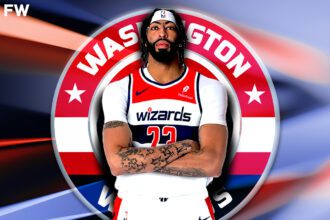
The Wizards ended up with Tre Mann, a 25-year-old point guard with solid handles and scoring ability. He fills the backup point guard hole behind Trae Young, and could play a pivotal role in the offense next year.
Mann posted 5.5 points and 1.6 assists per game last season, but only averaged 12.6 minutes per game. In 2024-25, Mann averaged an impressive 14.1 points, 2.9 rebounds, 3.0 assists, 0.5 steals, and 0.3 blocks per game on 43.5% from the field and 40.0% from deep.
The Wizards are essentially swapping Whitmore and Reese for Mann, and also getting a 2027 second-round pick and cash considerations. They won their part of the deal because Whitmore wasn’t likely to get the minutes he feels he deserves on the team.
Peyton Watson: A
Watson won. Let’s just call it what it is. The former Nuggets forward went from being a developing young player to securing an $88 million contract over four years, complete with a player option and trade kicker, while joining a Cleveland team that believes he can become an important piece of its championship core.
Watson’s development has been impressive. He entered the league as a raw prospect and gradually expanded his offensive game. Last season, he averaged 14.6 points, 4.9 rebounds, and 2.1 assists while shooting 41.1% from three. He also averaged 1.1 blocks per game, giving Cleveland a 6’8″ forward capable of making plays on both ends.
Now he gets a bigger role. That’s arguably just as important as the money.
In Denver, Watson was trying to establish himself around Jokic, Jamal Murray and an established championship core. In Cleveland, he has an opportunity to become the lockdown starting swingman.
The pressure is obviously coming with the contract. $88 million means nobody is going to call him a project anymore, but Watson has bet on himself, and Cleveland has bet right back.
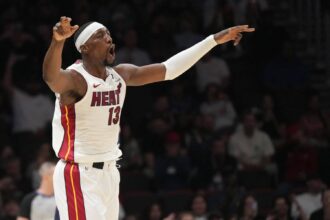
Max Strus: B+
Strus doesn’t get the massive contract or the exciting young-player storyline, but he lands in a situation that could actually suit him quite well.
The Clippers need shooting with Kawhi Leonard (likely) gone, and Strus can knock down shots.
He nailed 2.8 threes per game out of 6.8 attempts last season, and is averaging 3.7 makes per game over his career. He is also only 30 years old and is on an expiring contract.
Strus also gets a fresh start after an injury-plagued season in Cleveland. He appeared in only 12 games in 2025-26, so getting healthy and returning to his previous shooting form will be the biggest priority.
If he gets back to being the roughly 40%-from-three shooter he has been, this could be a very nice landing spot.
He’s being asked to shoot, defend, make the extra pass, and provide playoff experience. That’s exactly what Strus does.
Nikola Jokic: C
No, Jokic wasn’t technically part of the trade, but you absolutely have to grade how this affects him.
Watson was a fascinating young piece because his combination of size, athleticism, and defensive instincts made him particularly useful next to the greatest offensive hub of his generation. Losing a key player like that isn’t ideal, especially since the Nuggets’ bench was exposed in the first round last season.
Watson was increasingly becoming that guy, and that’s why losing him hurts.
But Denver just converted Watson into an unprotected 2031 first-round pick, rather than committing $88 million to him. The Nuggets are clearly betting that they can maximize Jokic’s championship window while maintaining flexibility for the future.
The concern is that Jokic isn’t getting any younger, and draft picks six years from now aren’t particularly useful if you’re trying to win another championship right now. The biggest loser so far is Jokic.