The Lakers just lived through one of the stranger free-agency stretches in recent memory. They lost LeBron James, the biggest name in the sport, after eight seasons, one title, and an entire era built around his gravity.
What stood out was how quickly the franchise moved once the decision was made. There was no waiting period, no “let’s see how things shake out.” The moment James told them he was playing elsewhere in 2026-27, Los Angeles shifted straight into the Luka Doncic era.
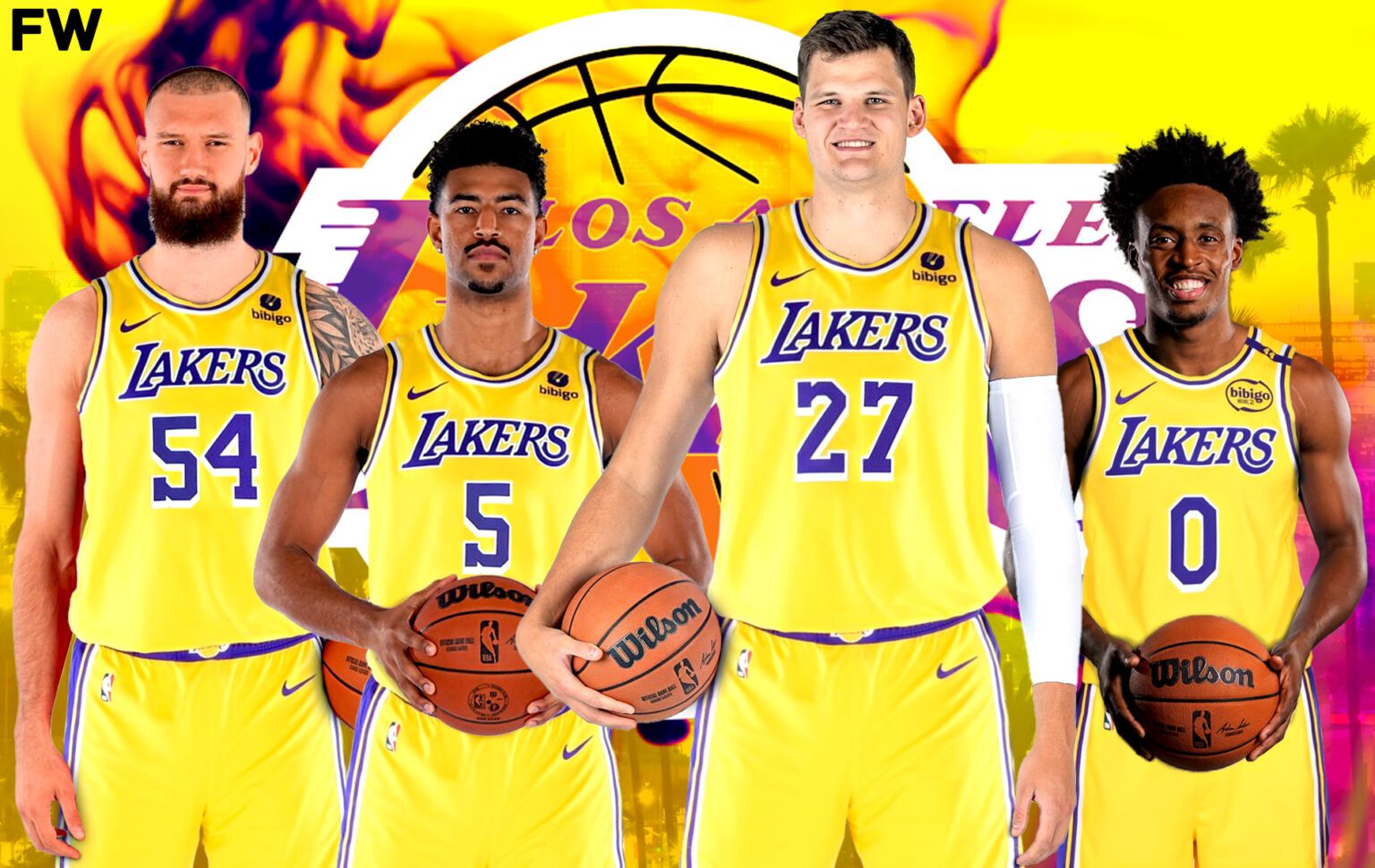
They had already re-signed Austin Reaves, and then landed Walker Kessler in a sign-and-trade, added Quentin Grimes and Sandro Mamukelashvili, signed Collin Sexton, and flipped Deandre Ayton for Jaden Hardy plus two second-round picks. That is a lot of roster work in a very short window.
Last season’s 53-29 record, fourth-place finish in the West, first-round win over the Rockets, and sweep by the Thunder told the true story. It was a good team, not a title contender. Doncic was spectacular at 33.5 points, 7.7 rebounds, and 8.3 assists, while Reaves took a real step with 23.3 points, 4.7 rebounds, and 5.5 assists in 51 games.
The roster still needed younger legs, better defense, and an actual center who could protect the rim next to Luka. The front office chose to get younger and build around Doncic’s timeline instead of chasing older names.
With that in mind, here are all the moves the Lakers made during a frenetic offseason that could make or break their season for 2026-27.
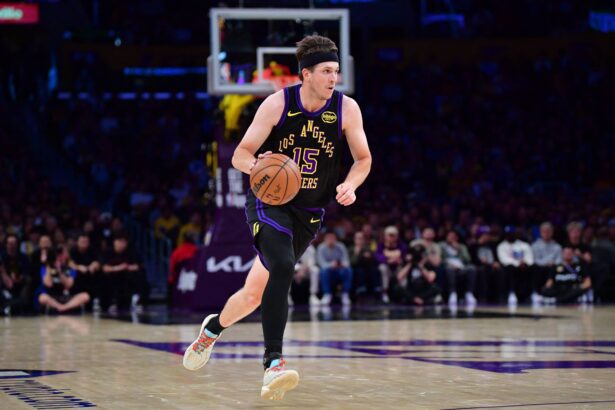
Re-Signing Austin Reaves
Grade: A-
Keeping Austin Reaves was never really optional with Luka Doncic putting pressure on the front office to keep him.
Letting him walk right after LeBron announced he was leaving would have created chaos at the worst possible moment, too. Reaves turned down his $14.9 million player option and signed a four-year, $185 million deal with a $51.2 million player option in 2029-30.
It was the richest contract ever given to an undrafted player, and he earned every dollar after the season he just had.
He posted career highs across the board and became a legitimate second scoring option next to Doncic instead of just a nice third wheel. The 49.0% shooting, the ability to get to the line, make secondary reads, and punish defenses that sent extra help at Luka all showed up in the numbers and the eye test. The two already have chemistry, and that matters when you are trying to stabilize a roster after losing its longtime leader.
The money is obviously steep. Reaves is being paid like a high-end offensive guard now, which means the Lakers need him to keep scoring 20-plus, stay efficient, and hold up defensively in playoff series. With Luka already drawing extra attention on that end, Reaves cannot become another easy target every night.
Still, at 28 years old and coming off the year he just produced, this was the move that had to happen. It showed Doncic the organization was serious about building something competitive immediately.
Trading For Walker Kessler
Grade: B+
This was the biggest swing of the summer and the one that will decide how the whole offseason ages. The Lakers acquired Walker Kessler from the Jazz in a sign-and-trade and gave him a four-year, $130 million contract.
The price tag sent to Utah was massive: unprotected firsts in 2031 and 2033 plus pick swaps in 2028 and 2030. That is almost every major future asset the Lakers still had.
On the court, the fit is obvious. Doncic needs a center who sets solid screens, catches lobs, rebounds, blocks shots, and stays out of the way offensively. Kessler delivered exactly that profile in 2024-25 with 11.1 points, 12.2 rebounds, and 2.4 blocks on 68.1% shooting.
The risk is just as obvious. Kessler played only five games last season after a torn labrum in his left shoulder ended his year. Paying that kind of money and giving up those picks for a center coming off major surgery is a real bet on health and recovery.
The free-agent center market was thin, and the Lakers could not afford another half-measure at the position next to Luka. If Kessler stays healthy and plays at that level, the deal looks better by the day. But if he misses time or cannot anchor their playoff defense as expected, those 2031 and 2033 picks will hurt for a long time.
Signing Quentin Grimes
Grade: B+
Quentin Grimes is one of the additions that quietly makes sense the more you look at it. He signed a four-year, $60 million deal with a player option in the final season after averaging 13.4 points, 3.6 rebounds, and 3.3 assists with the 76ers while shooting 45.0% from the field and 33.4% from three. The three-point number needs to improve, but the role fits what the Lakers need around Doncic.
Grimes gives them another guard who can defend, run the floor, and play off Luka without demanding the ball. That is important in a system built around one player’s gravity. The Lakers really just need players who can shoot open threes, attack closeouts, and play defense better than the previous group. At 26, he also helps the roster get younger (After these moves, the average age dropped to 25.1 from 26.3 last season), as right now, no current player is older than 28.
The only thing keeping this from a better grade is the shooting. If Grimes gets to 36 or 37% from three on more volume, the contract looks like a steal as the Luke Kennard-Marcus Smart replacement. If he stays at his current hitting range, defenses will help off him in the playoffs, and his value drops. The bet on age, defense, and fit is still a good one, but the three-point shot has to come along.
Signing Sandro Mamukelashvili
Grade: B-
Sandro Mamukelashvili is the kind of signing that won’t ever grab headlines but helps shape the roster. He declined a $2.8 million player option with the Raptors and signed a four-year, $52 million deal with the Lakers.
He averaged 11.2 points and 4.8 rebounds last season, but the real value is in the shooting. He hit 38.9% from three on 3.7 attempts per game after shooting 37.3% the year before.
With Kessler now in the middle, the Lakers needed frontcourt players who could stretch the floor. Kessler is not pulling the other center away from the rim, so someone else has to do it. Mamukelashvili can step out, knock down shots, and benefit from the open looks Doncic creates in the corners and on the perimeter.
The price is quite a surprise for a bench frontcourt piece who still has to prove he can stay on the floor in playoff games. If he keeps shooting in the high 30s from three and defends well enough to earn minutes, the deal works. If he becomes a regular-season option only, it will feel like too much. Either way, he fills a specific need the Lakers identified once they committed to Kessler.
Signing Collin Sexton
Grade: A-
Of all the moves the Lakers made this summer, signing Collin Sexton might be their most finesse play.
The former Bulls guard signed a two-year, $19 million deal with a player option after averaging 15.4 points and 3.3 assists last season between the Hornets and Bulls. At roughly $9.5 million per year, the Lakers added a guard who can win bench minutes, get downhill, and score when Luka sits.
Sexton is not perfect. He can play too fast, miss reads, and is not big enough to be a lockdown defender. But the Lakers need a player who can attack the defense and give them instant offense off the bench.
He brings exactly that. He also takes some of the creation load off Reaves, which matters when you face better defenses in the playoffs and do not want every second-side action falling on the same guy.
The defensive fit is the obvious question mark. A backcourt of Luka, Reaves, and Sexton can get small and vulnerable against bigger teams. JJ Redick will have to manage those lineups carefully. Still, the contract is cheap, the skill set is useful right away, and the Lakers badly needed bench scoring. This is a smart buy that should age well.
Trading Deandre Ayton After He Opted In
Grade: B+
Once Kessler arrived, moving Deandre Ayton was the logical next step. Ayton picked up his $8.1 million player option, then the Lakers sent him to the Wizards for Jaden Hardy and second-round picks in 2031 and 2032. It was not a huge return, but it was the right kind of cleanup the roster needed.
Ayton was productive in his time with the Lakers at 12.5 points and 8.0 rebounds on 67.0% shooting. The eye test was always mixed, though. He was never going to be the long-term answer next to Doncic.
The team wanted more rim protection, more vertical threat, and a real defensive anchor. That is why they paid the big price for Kessler. Getting Ayton out avoided redundancy and created a little cap flexibility at a time when the books are tight after the other additions.
Hardy is a nice young flyer with some history alongside Doncic from their Dallas days. He is not a locked-in rotation player yet, but he can score and gives the Lakers a developmental piece they did not have before. The two second-round picks also help soften the blow after the heavy draft capital used on Kessler.
Losing Marcus Smart To A Direct Rival
Grade: C+
Losing Marcus Smart stings because he was the Lakers’ best defensive guard last season. He declined his $5.4 million player option and signed a two-year, $13 million deal with the Rockets. He averaged 9.3 points, 3.0 assists, 2.8 rebounds, and 1.4 steals in 62 games, starting 54.
Smart is a former Defensive Player of the Year who still knows how to take tough assignments and set the tone. At 32, however, he no longer fit the youth direction the Lakers chose around Doncic. His minutes will likely go to Grimes, Sexton, and maybe Hardy, which adds speed and scoring but takes away some of that defensive trust.
It would have been nice to keep him at that number if the cap worked. The Lakers are going to need perimeter defenders who can handle tough playoff matchups. Losing Smart definitely isn’t a disaster, but he also won’t be easy to replace.
Losing Luke Kennard
Grade: C
Luke Kennard’s exit removes a skill the Lakers could have used. After being traded to the team last February, he gave them an offensive boost and lived up to his reputation as one of the league’s best three-point shooters. He agreed to a two-year deal with the Suns and is gone.
Doncic creates so many open threes that losing a proven movement shooter and spot-up threat like Kennard carries a cost. Neither Grimes nor Mamukelashvili projects as a direct replacement in that specific role, where Kennard’s gravity and off-ball movement were way better suited.
The Lakers understood his defensive limitations and chose to move on as part of the youth push. Still, a team built around Luka should keep shooting when the price is reasonable. They will need Grimes to shoot better or find other ways to generate spacing if they want to avoid getting stuck in half-court sets against packed defenses.
Overall Grade
Grade: B+
The Lakers earn a B+ for their 2026 free agency. It is not an A because the Kessler price was steep, Reaves’ contract is expensive, and the wing depth is still thin. They may need to renounce some remaining free agents, including Rui Hachimura, to finalize everything, and they are now hard-capped at the first apron. That limits what else they can do.
What stands out is the direction. They lost a 41-year-old LeBron James and did not panic into chasing old names. They got younger, made their push for a young, defensive center in Kessler, and made up for the shooting with Grimes, Sexton, and Mamhkelashvili.
The main question becomes what happens next with Rui Hachimura, and which center they’ll sign to be a backup now that Andre Drummond went to the Knicks.
Right now this group is probably not better than the Thunder or the loaded Spurs. But if Kessler is healthy and Doncic has another MVP-caliber season, the Lakers are in the next tier in the West. They had to build a Luka team fast after losing James, and they did it with real intent. That is not perfect, but it is good, purposeful work.