The Wizards entered the 2026 offseason in a strange position because their 17-65 record looked like the beginning of another long rebuild, but the roster no longer feels that way. Trae Young and Anthony Davis had arrived during the season, the Wizards won the lottery and selected AJ Dybantsa first overall, while Alex Sarr, Bilal Coulibaly, Tre Johnson and Kyshawn George were already part of the young group.
That gave general manager Will Dawkins two jobs at the same time. He needed to give the young players enough minutes to develop, but he also couldn’t waste another season around Young and Davis after acquiring both veterans on huge deals. The Wizards finished last season with a 111.0 offensive rating and a 122.8 defensive rating, producing a minus-11.8 net rating that showed how far the roster still had to go.
Washington didn’t chase another expensive free agent. Instead, the front office kept Young, added Deandre Ayton for a small package, moved D’Angelo Russell for Khris Middleton and filled the two-way spots with players it already knew. None of those moves makes the Wizards a championship contender, but the roster now has more depth, more experience, and much more pressure to compete for at least a Play-In position.
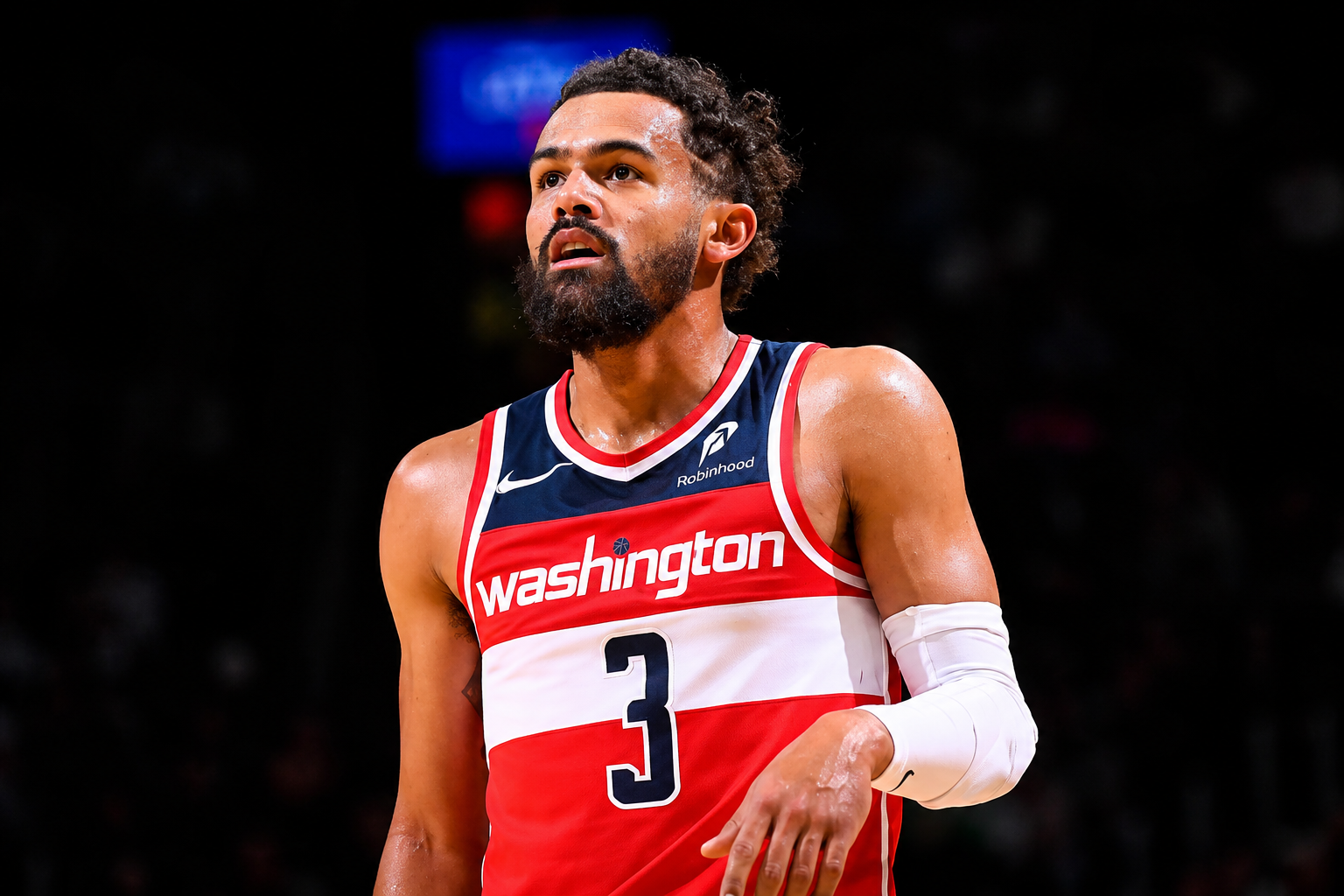
Re-Signing Trae Young To A Four-Year Deal
Grade: B+
Letting Trae Young walk only months after trading for him was never a serious option, so the Wizards did what they had to do and secured their point guard through most of his prime. Shams Charania and Josh Robbins reported that Young declined his $49.0 million player option before signing a four-year, approximately $212.0 million contract that includes a player option in the fourth season.
Young’s first season with the Wizards wasn’t close to his best statistical year. He averaged 17.9 points, 2.0 rebounds, and 8.0 assists while shooting 45.8% from the field, and quadriceps and back problems ended his season early. Still, the Wizards weren’t paying only for those numbers. They were paying for a four-time All-Star who owns career averages of 25.1 points and 9.8 assists, and who gives a young roster an elite pick-and-roll organizer.
That skill should be especially valuable around Davis, Sarr, and Dybantsa. Young can create easy shots for big men as a lob passer, force two defenders to follow him around screens, and give Dybantsa a lead guard who can organize the offense while the rookie develops. The Wizards haven’t had this level of playmaking stability for years, and replacing it in free agency would’ve been basically impossible.
The concern is that $53.0 million per season is still huge money for a small guard who has always created defensive problems. Washington finished last in defensive efficiency, and Young isn’t going to solve that part. The Wizards will need Davis, Sarr, Coulibaly, and Dybantsa to cover space behind him, which puts even more pressure on their health and defensive development.
The player option also gives Young control over the end of the contract, so the Wizards accepted almost every major term a star guard could want. Still, the alternative was losing the best offensive player on the roster for nothing after building around him for only a few months. The price isn’t cheap, but the decision makes sense, and Young is only 27.
Trading For Deandre Ayton
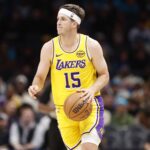
Washington Wizards Receive: Deandre Ayton
Los Angeles Lakers Receive: Jaden Hardy, 2031 second-round pick, 2032 second-round pick
Grade: B+
Deandre Ayton isn’t the player many expected after he went first overall in 2018, but this trade shouldn’t be evaluated like the Wizards paid for that version. Washington gave up Jaden Hardy and two distant second-round picks for a starting-level center making only $8.1 million in the final season of his contract. At that price, Ayton is one of the better value additions of the offseason.
Ayton averaged 12.5 points, 8.0 rebounds, and 1.0 blocks in 72 starts for the Lakers, while finishing around 67.0% from the field. He isn’t a floor spacer, doesn’t create much offense for teammates, and can disappear from games, but he remains an efficient finisher and strong defensive rebounder who can play 25 minutes without the offense needing to change.
The depth part is important because Davis played only 20 games last season and averaged 20.4 points, 11.1 rebounds, 2.8 assists, 1.1 steals, and 1.7 blocks. Davis is still productive, but expecting him to play 75 games and handle every difficult frontcourt assignment wouldn’t be serious roster planning. Ayton allows Brian Keefe to manage Davis’ minutes, use him more often at power forward, and avoid asking Sarr to carry every center minute at 21 years old.
There is some positional crowding. Davis, Sarr, and Ayton all need big-man minutes, while Dybantsa and several young wings also need space in the rotation. Ayton doesn’t stretch the floor, so lineups featuring him next to Davis or Sarr could become cramped unless the other three players are good shooters. Washington will have to be careful not to slow Sarr’s development just to give Ayton a larger role.
Still, Ayton’s expiring $8.1 million salary makes the risk very small. If the fit works, the Wizards have one of the league’s deeper center rotations. If it doesn’t, they can move him before the trade deadline or let the contract expire without damaging future flexibility.
Hardy averaged 9.2 points, 1.5 rebounds, and 1.0 assists on 42.4% from the field, but he was unlikely to receive enough touches behind Young, Tre Johnson, and Bub Carrington. Two second-round picks have value, yet neither one is important enough to stop Washington from buying low on a 27-year-old center.
Reuniting With Khris Middleton And Moving D’Angelo Russell
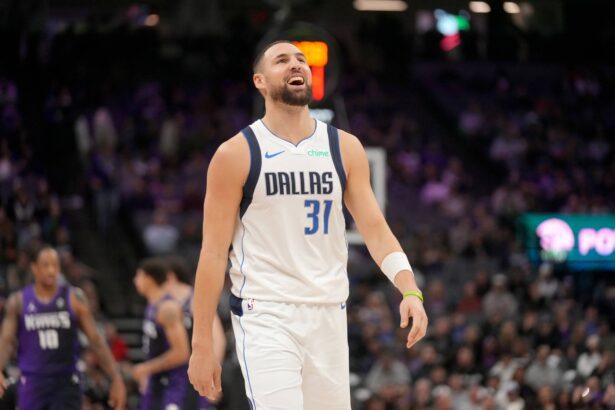
Washington Wizards Receive: Khris Middleton, 2033 second-round pick
Memphis Grizzlies Receive: D’Angelo Russell, 2029 second-round pick, 2032 second-round pick swap, 2033 second-round pick
Grade: B+
The Khris Middleton move looks confusing at first because the Wizards traded him to the Mavericks in February as part of the Anthony Davis deal, then brought him back five months later. Once the contract details are included, though, the logic becomes much easier to understand.
Middleton signed a three-year, $17.6 million contract, but only around $6.5 million is fully guaranteed. The first season is guaranteed, the second season carries only a partial guarantee, and the third season is fully non-guaranteed. Washington gets a veteran wing without accepting major long-term risk, which is almost the ideal contract structure for a team still trying to figure out how competitive it can be.
The 34-year-old isn’t an All-Star anymore and shouldn’t be treated like one. He averaged 10.2 points, 3.7 rebounds, and 2.8 assists across 63 games last season, while his production and athleticism have clearly declined. During his earlier stretch with the Wizards, Middleton averaged 10.4 points, 3.9 rebounds, and 3.3 assists while shooting 31.5% from three.
Even that version has a role on this roster. Dybantsa, Coulibaly, George, Johnson, and Sarr are all young players who will make mistakes, while Young and Davis have spent most of their careers playing for teams with playoff expectations. Middleton brings another veteran who understands spacing, late-game execution, and playoff defense without needing 15 shots every night.
He can play 15 to 20 minutes, handle some secondary creation, and help the young wings understand where they need to be. If his body looks better, the Wizards have a cheap rotation forward. If the decline continues, they can move away from the deal after one season without carrying a large dead-money charge.
Washington also removed D’Angelo Russell, who never reported to the Wizards after the February trade and had opted into a $5.9 million player option. Keeping him would’ve created another ball-dominant guard behind Young on a roster that already needed minutes for Johnson and Carrington. Moving him was the right decision even before Middleton entered the conversation.
The only small criticism is the draft cost. The Wizards sent Memphis a 2029 second-round pick, a 2032 second-round pick swap, and a 2033 second-round pick, although they recovered another 2033 second-round pick from Dallas. That is more future value than teams usually pay just to clear a $5.9 million contract, but Middleton’s flexible deal and potential contribution make the package acceptable.
Re-Signing Jamir Watkins On A Two-Way Contract
Grade: A
Washington declined Jamir Watkins’ $2.1 million team option, then brought him back on a two-way contract. That move opened more space below the luxury tax while keeping a young wing who showed enough during his rookie season to deserve another look.
Watkins averaged 7.4 points and 3.9 rebounds across 50 games, finishing the season with a career-high 24 points against the Cavaliers. He isn’t guaranteed to become a full-time rotation player, but he has defensive size, some downhill ability, and familiarity with the Wizards’ system. The two-way deal lets him continue developing with the Capital City Go-Go while remaining available for NBA minutes.
There is basically no downside here. Watkins would’ve had a difficult path to regular minutes behind Dybantsa, Middleton, Coulibaly, George, and Cam Whitmore on a standard contract. Moving him to a two-way spot preserves flexibility and still gives Washington control over his development.
The Wizards kept a young player they liked without using one of their 15 standard roster spots or guaranteeing $2.2 million.
Signing Felix Okpara To A Two-Way Contract
Grade: B+
Selected 46th overall after the Wizards acquired his draft rights from the Magic, Felix Okpara signed a two-way contract instead of a standard deal. The 6-foot-11 big man averaged 8.0 points, 6.3 rebounds, and 1.5 blocks while shooting 59.7% from the field at Tennessee.
Okpara’s path to NBA minutes is obviously crowded now that Ayton joins Davis, Sarr, and Tristan Vukcevic, but that is why the two-way deal works. Washington doesn’t need him to be ready now. They can give him regular G League minutes, work on his strength and offensive skill, then use him as emergency frontcourt depth.
The grade isn’t higher because the Ayton trade makes Okpara’s immediate role almost nonexistent, and second-round centers need playing time more than anything. Still, a two-way deal carries limited cost, and Washington has enough time to develop him without forcing him onto the floor too early.
Final Grade: B+
The Wizards didn’t win free agency because they didn’t add a star, and they still aren’t close to the Celtics, Knicks, Cavaliers, Heat, or 76ers in the East. A 17-win team doesn’t jump into that conversation only because it added Ayton and Middleton.
What the Wizards did accomplish was giving the roster a more serious NBA structure. Young is secured as the offensive engine, Davis has more frontcourt support, Middleton adds veteran wing depth, and Ayton gives the Wizards another playable center without creating long-term salary problems.
The biggest question now isn’t talent. It is how the pieces fit together. Young needs the ball, Dybantsa needs touches, Davis and Ayton prefer to work inside, while Sarr’s development should remain one of the main priorities. Brian Keefe has to balance competing with giving the young core enough responsibility, and those two goals won’t always match.
There is also major health risk. Young’s season ended with quadriceps and back issues, Davis appeared in only 20 games, and Middleton has dealt with injuries for several years. Washington could look surprisingly competitive if the veterans stay available, but this roster can also fall apart quickly if Davis and Young miss long stretches again.
Still, the front office didn’t overpay for short-term help. Ayton costs $8.1 million and expires after the season, Middleton has only $6.5 million guaranteed, while the Young contract was the necessary price of keeping the team’s best creator. Washington added experience without giving away a first-round pick or blocking the long-term Dybantsa-Sarr timeline.
That is a solid offseason for a team that needed to stop looking like a permanent rebuilding project. The Wizards probably aren’t ready to win a playoff series, but after these moves, missing the Play-In completely would feel like a failure rather than part of the plan.