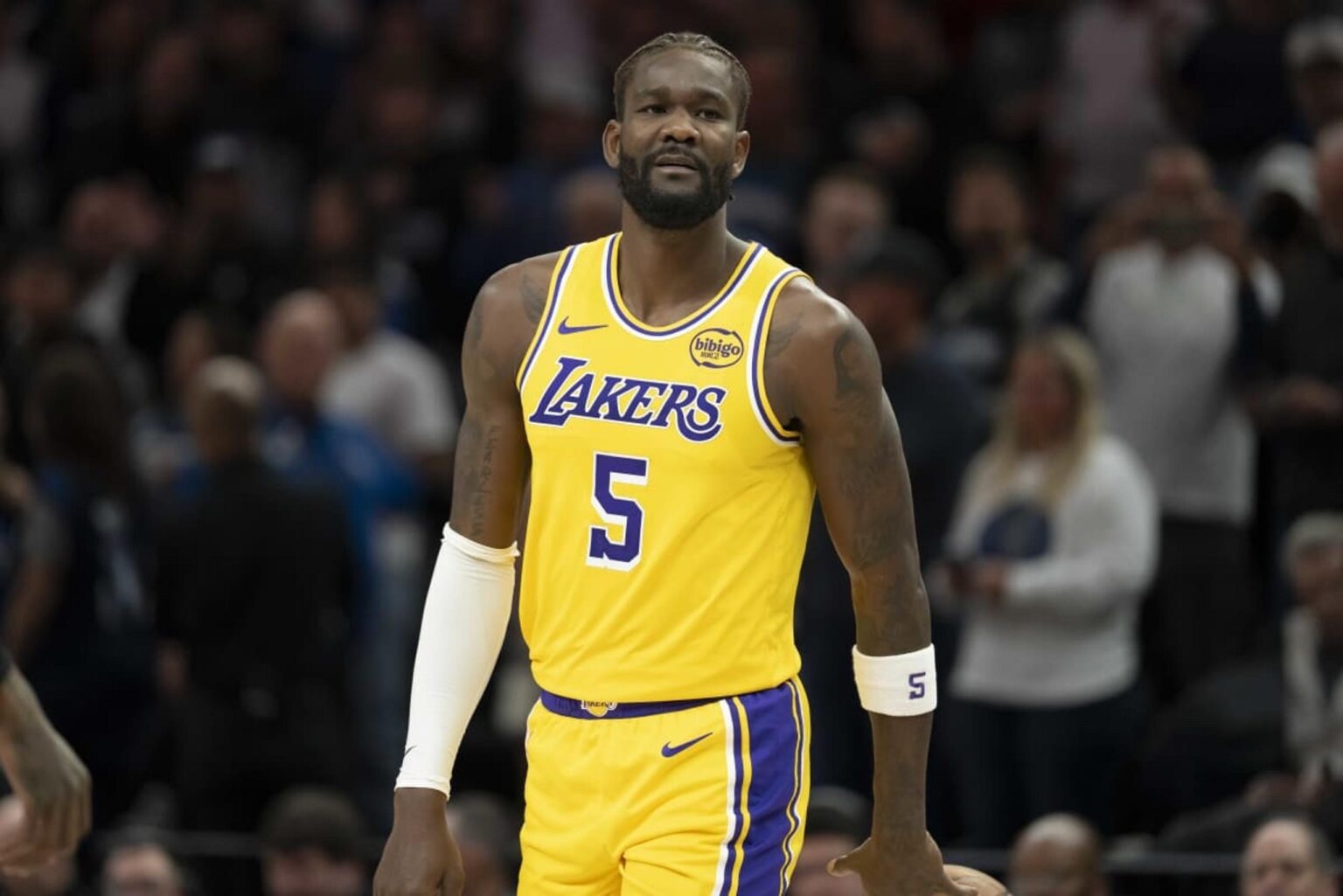
When the Los Angeles Lakers traded Deandre Ayton to the Washington Wizards this offseason, many assumed that it was simply to make room for Walker Kessler to become the undisputed number one option. But as it turns out, there was much more going on behind the scenes.
According to Lakers insider Jovan Buha, who spoke on his podcast, the decision wasn’t just based on basketball. Instead, it was driven by multiple factors like financial flexibility, asset management, and even an effort to help Ayton land in a better situation for his own career.
“My understanding with the Ayton situation is it’s not just that they traded him to replenish the cupboard. I mean, they needed to save some money, and they got some assets back. So I think those were the two driving forces of that move. Remember, they needed to save some money to get under the cap to execute several of their moves. However, it wasn’t just that.”
“There was also an element of Ayton and Luka sharing an agent, and they wanted to put Ayton in a position where he could continue to play and rehab his value. He’s not going to be playing a ton. He’s not going to be starting, but maybe AD gets traded.”
“Maybe AD gets injured, and now suddenly he’s in a more prominent role. So I think there are multiple wrinkles with the Kuminga situation. There are multiple wrinkles with the Ayton situation.”
Ayton averaged 12.5 points and 8.0 rebounds, both career-low numbers, while shooting 67.1% from the field. Those were solid stats, but his inconsistency and lack of motor were major issues. And that’s why the Lakers decided they needed to move on from him.
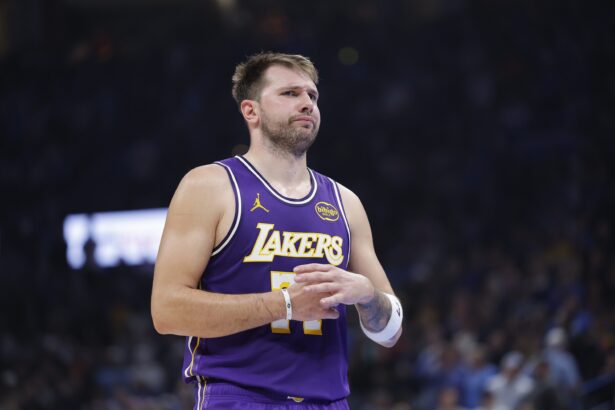
The financial flexibility has already started paying dividends. Since moving Ayton, the Lakers have continued reshaping the roster around Luka Doncic. They added Walker Kessler as their new starting center and have since strengthened the frontcourt rotation by adding Kevon Looney.
Along with that, they have also added Ziaire Williams and Matisse Thybulle on veteran contracts, which might not have been possible if Ayton was still with the team. These moves suggest that the Lakers wanted a different look in the middle rather than continuing with Ayton as either their starting or backup center.
But there is one factor Buha pointed out that is not discussed as much. He said the Lakers thought they were doing Ayton a favor. Kessler was clearly the Lakers’ starting center for the future, and Ayton’s role with the Lakers would have been greatly reduced.
Rather than simply keeping him on the bench, the organization sent him to the Washington Wizards, where circumstances could create a much larger opportunity. Buha pointed out one obvious possibility.
Although Anthony Davis and Alexander Sarr are expected to start for the Wizards, injuries or a future trade could suddenly make Ayton a starter. The Lakers also managed to get considerable assets in the deal, adding Jaden Hardy along with two future second-round picks.
Even after all this, though, future moves may not be done yet. After acquiring Kessler and Looney, there are still growing rumors that the Lakers might need another big man, and they remain in the hunt for one.
One thing everyone around the league knows is that the Lakers need perhaps one starting-caliber player, maybe even two, to become legitimate contenders in the West.
Their biggest priority currently remains Jonathan Kuminga. The Lakers have been heavily linked with the restricted free agent throughout the offseason, and multiple reports have hinted that they want to complete a deal at any cost. The main obstacle, as of now, remains Kuminga’s contract demands, which might be stalling negotiations.
If the Lakers eventually manage to land Kuminga, that would add another versatile two-way forward who fits the long-term vision under Doncic.
Seen through that lens, trading Ayton wasn’t just about moving on from an underperforming center. It was part of a much larger organizational strategy.
The Lakers have created financial flexibility, acquired more assets, upgraded their center position with Walker Kessler, strengthened their depth, and also become an attractive destination for potential major talent such as Kuminga. At the same time, they also gave Ayton a chance to rebuild his reputation in a place where there is not as much pressure and where he can earn big minutes again.
For the Lakers, this trade accomplished multiple objectives in a single move.
If they are ultimately able to turn that flexibility into one or maybe two major additions before the season begins, the Ayton deal could be one of the more important decisions of this offseason.