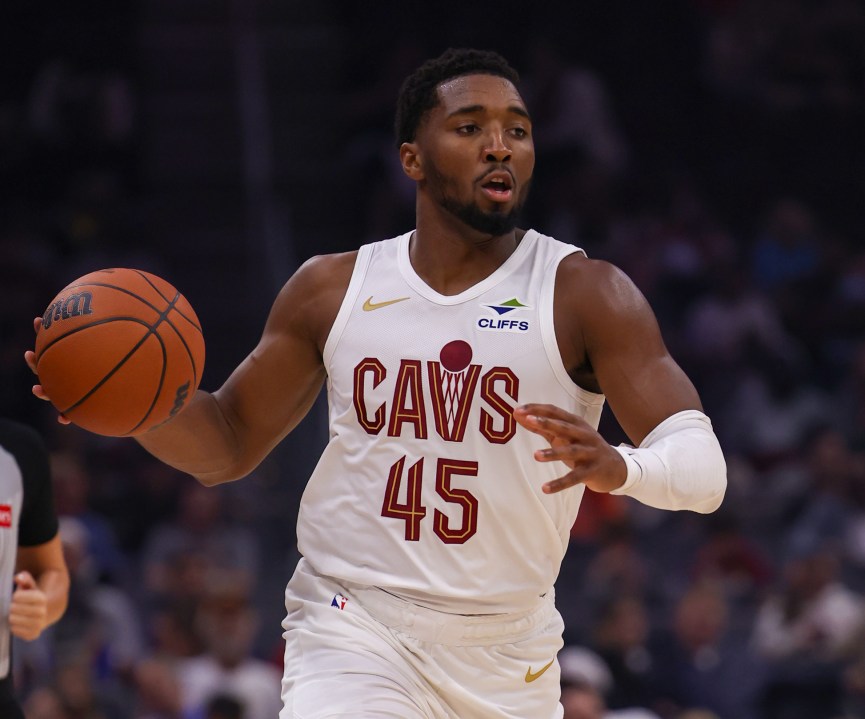
The Cleveland Cavaliers won with precision, balance, and timely shot-making on Thursday night. In a game where momentum swung early, Cleveland gradually took control and never truly let go, defeating the Golden State Warriors 118-111 behind elite perimeter shooting and a multi-layered offensive performance.
While Golden State had its moments, the Cavaliers’ ability to generate efficient looks and convert them at a high clip ultimately separated the two teams. Cleveland shot 51.2% from the field and a scorching 44.4% from three, compared to the Warriors’ 43.6% overall and just 27.3% from deep. That gap defined the game.
1. Cleveland’s Offensive Balance Was Too Much To Handle
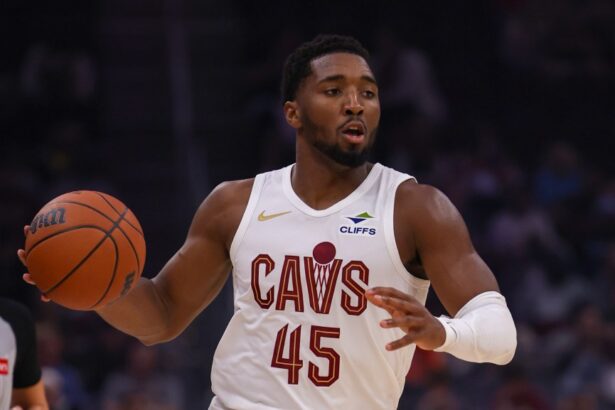
This wasn’t a one-man show, but a full offensive orchestra. Five Cavaliers starters scored in double figures, led by Donovan Mitchell with 25 points and Max Strus adding 24 on an efficient 9-14 shooting, including 6-10 from beyond the arc.
James Harden contributed 19 points and 5 assists while knocking down 3-6 from deep, consistently punishing defensive breakdowns. The Cavaliers didn’t rely on isolation – they trusted the pass, finishing with 28 assists and repeatedly finding the open man.
Even Evan Mobley and Jarrett Allen made their presence felt beyond scoring. Mobley added 12 points, 10 rebounds, and 5 assists, while Allen posted 16 points and 13 rebounds. It was complete, controlled offense, and Golden State never found an answer.
2. Three-Point Shooting Tilted The Game
The math told the story. Cleveland knocked down 16-36 from three (44.4%), while Golden State struggled at 12-44 (27.3%). That’s a 12-point differential from beyond the arc in a seven-point game – a decisive edge.
Max Strus was the biggest factor, stretching the defense with six made threes and forcing constant rotations. Donovan Mitchell added four more, while Cleveland’s spacing created clean looks throughout the night.
On the other side, the Warriors simply couldn’t capitalize. Draymond Green went 2-8 from deep, and De’Anthony Melton struggled at 1-5. Even with decent ball movement, the shots just didn’t fall – and against a team shooting this efficiently, that’s a losing formula.
3. Jarrett Allen Dominated The Interior
Jarrett Allen quietly controlled the paint with 16 points and 13 rebounds, including three offensive boards that extended key possessions. He didn’t need high volume – he was efficient, physical, and impactful in all the right moments.
Cleveland as a whole matched Golden State in the paint (48-50), but Allen’s presence ensured they didn’t get bullied inside. He also altered shots and cleaned up misses, helping limit second-chance opportunities despite the Warriors grabbing 13 offensive rebounds.
It wasn’t flashy, but it was foundational. Allen set the tone physically, and Cleveland built off it.
4. Warriors’ Inefficiency Wasted Strong Individual Performances
There were some promising performances from the Warriors, but all went to waste. Gui Santos and Brandin Podziemski scored 25 points, shooting 9-14 and 9-15, respectively, and kept Golden State within striking distance.
But outside of Santos and Podziemski, the offense was stagnant. Melton’s inefficiency (2-12) was compounded by Porzingis going 0-5 from three. On the night, the Warriors took 95 shots and scored 111 points, which resulted in far too many empty possessions.
As a result of 15 forced turnovers and 11 steals, the Warriors failed to convert on numerous offensive opportunities. Golden State was gifted countless opportunities, and they failed to convert.
5. Cavaliers Controlled The Game Flow From Start To Finish
Cleveland led for 78% of the game and built a double-digit advantage that they managed without panic. Even when Golden State made brief pushes, the Cavaliers responded with timely shot-making and composed execution.
Dennis Schröder played a key role off the bench with 12 points and 6 assists, stabilizing the second unit and keeping the offense flowing. Meanwhile, Cleveland’s ability to limit turnovers in key stretches prevented the Warriors from ever fully seizing momentum.
This wasn’t a dominant blowout; it was something more telling. The Cavaliers looked like a team that understands how to control a game, manage possessions, and execute late. That’s the kind of profile that translates when the stakes rise.