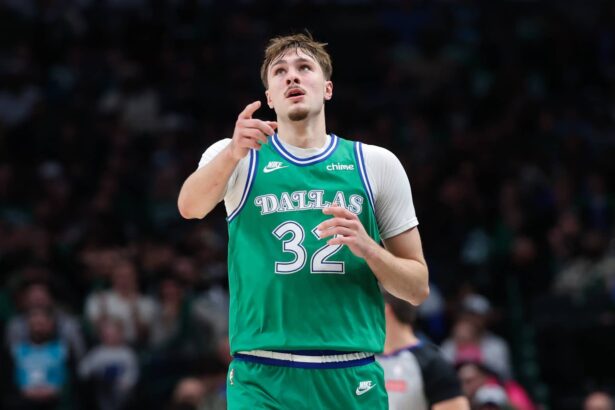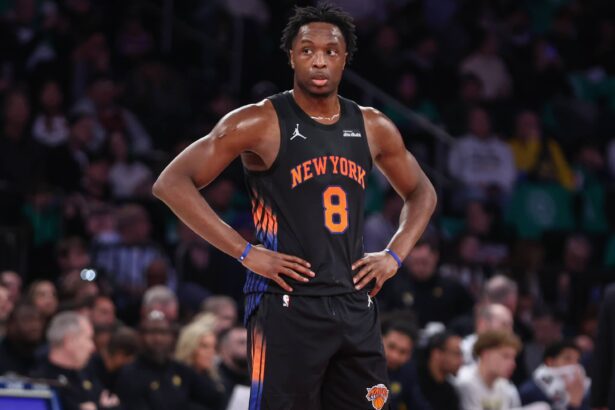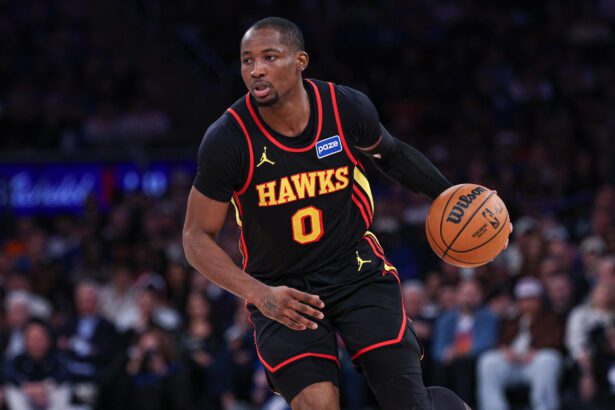
We already ranked the 15 best offenses for the 2026-27 NBA season, so now it is time to flip everything around and look at defense. This one is a little harder because defensive rankings can change a lot from one offseason move, especially when a team adds a new rim protector or loses one of its best perimeter defenders.
Last season still gives us a good base, but the teams that ruled the defensive charts aren’t the same for next season, as several squads changed a lot during the summer. So this ranking is more about what these defenses should look like in 2026-27 after an offseason filled with player movement and blockbuster deals.
15. Philadelphia 76ers
There is enough defensive talent in Philadelphia to sneak into the top 15, but there are also enough weak spots to keep them right at the bottom of this ranking. The 76ers were only 16th in Defensive Rating last season at 115.5, so this isn’t a team that was already elite and just needed one tweak.
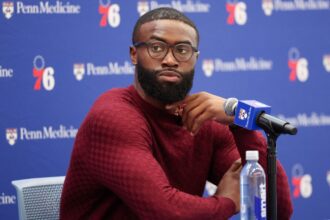
Jaylen Brown changes the wing defense right away. He can take the harder perimeter matchup, use his strength against bigger scorers, and stop the 76ers from asking non-defensive players to guard opponents they really shouldn’t be guarding. Kentavious Caldwell-Pope also gives them another experienced perimeter defender, while Dean Wade adds more size at forward.
Everything still comes back to Joel Embiid, though. If he is healthy, Philadelphia can defend the paint at a completely different level because he can block shots, control the glass, and make drivers think twice before getting all the way to the rim. The problem is that Tyrese Maxey and Anfernee Simons will both play heavy minutes, while LeBron James is 41 and can’t carry a huge defensive load every night.
That mix is why No. 15 feels right. Brown, KCP and Embiid give them a good defensive ceiling, but the guards and Embiid’s health keep this from being a safe top-10 pick.
14. Minnesota Timberwolves
Putting Minnesota this low feels weird because this team has been built around defense for years. They were seventh in Defensive Rating last season at 113.5, and Rudy Gobert plus Jaden McDaniels is still one of the better defensive duos in the league.
The roster around them changed a lot, though. Julius Randle and Naz Reid are gone after the LaMelo Ball trade, while Mike Conley and Kyle Anderson also left. That removes some size, rebounding, and defensive IQ from a team that used to have very few obvious places for opponents to attack.
Ball is the biggest concern. He will make Minnesota more dangerous offensively, but teams are going to involve him in pick-and-rolls every night and force him to defend. Josh Green helps, Ayo Dosunmu gives Chris Finch another good perimeter option, and Anthony Edwards can be very good when he puts full effort into that side, but Gobert and McDaniels are going to have even more responsibility now.
I still can’t leave the Wolves outside the top 15 because Gobert protects the rim, McDaniels takes the best wing, and Finch has enough defenders to build solid lineups. I just don’t think this version is as scary as the one that finished seventh last year, so dropping them to 14th isn’t as crazy as it looks.
13. Los Angeles Lakers
This might be one of the biggest jumps on the whole list. The Lakers were only 19th in Defensive Rating last season at 116.4, but the roster they are bringing into 2026-27 is way better equipped to defend than the one that posted that number.
Walker Kessler is the biggest reason. He finished last season with 14.4 points, 10.8 rebounds, 1.4 steals, and 1.8 blocks per game, and he has put up 2.4 blocks per game for his career. The Lakers didn’t have a consistent rim protector like that, and putting Kessler behind their guards should erase a lot of mistakes.
They also added Quentin Grimes and Matisse Thybulle, which gives JJ Redick two much better perimeter defenders to throw at quick guards and wings. Kevon Looney adds another strong rebounder and positional defender, so the Lakers now have more ways to build lineups that aren’t completely dependent on offense.
There are still problems. Luka Doncic and Austin Reaves are going to get targeted, and losing Marcus Smart removes another strong defender from the rotation. But with Kessler at the rim and Grimes or Thybulle taking harder perimeter assignments, those weaknesses should be easier to hide.
Going from 19th to around 13th is a big jump, but I think the personnel justifies it.
12. Orlando Magic
Orlando’s defense is basically built on size, and that hasn’t changed. Even after falling to 12th in Defensive Rating last season at 114.3, the Magic still have one of the biggest groups of guards, wings, and forwards in the league.
Jalen Suggs can pressure the ball, Anthony Black is huge for a guard, Franz Wagner is 6-foot-10, and Paolo Banchero has the body to defend stronger forwards. Then there is Jonathan Isaac, who is still one of the most useful defensive players on the roster because he can switch, help at the rim, and cover a lot of space when healthy.
The Nikola Vucevic addition is the part that scares me a little. He helps with scoring and rebounding, but Orlando will have to protect him more in pick-and-roll coverage because he isn’t the same type of mobile defender as some younger centers. Against quicker teams, that could become an issue.
Still, the Magic can build lineups where almost everybody on the floor is 6-foot-6 or taller without becoming painfully slow. That alone gives them a pretty strong defensive floor, especially if Suggs and Isaac stay healthy enough to play real minutes.
I wouldn’t expect them to get back to the No. 2 defense they had in 2024-25, but another finish around the top 12 feels very realistic.
11. Portland Trail Blazers
Portland is probably the team I trust the most to outperform this ranking. They finished only 14th in Defensive Rating last season at 114.7, but the amount of defensive talent on this roster is pretty serious.
Donovan Clingan already looks like the main piece. He put up 12.1 points, 11.6 rebounds, and 1.7 blocks in 27.2 minutes per game last season, and at 7-foot-2 he changes what teams can do around the rim. He also finishes possessions with rebounds, which is just as important as getting the initial stop.
In front of him, the Blazers can throw Jrue Holiday, Toumani Camara, and Jeremy Sochan at different matchups. Holiday isn’t the same defender he was five years ago, but he is still smart, strong, and almost never lost. Camara can guard elite wings, while Sochan gives them another long defender who can switch around.
Ja Morant is obviously the weak point. Teams will try to bring him into actions and make Portland choose between switching or helping, but having Camara on the best scorer and Clingan behind the play gives them a much better chance of hiding him.
If Clingan improves again, I can easily see Portland finishing higher than 11th. The pieces are there.
10. Phoenix Suns
Phoenix doesn’t need some huge defensive jump to earn this spot because the Suns were already 10th in Defensive Rating last season at 113.9. Their roster changed, but they still have enough defenders to stay around that same level.
Dillon Brooks is the guy who sets the tone. He can take the hardest perimeter scorer every night and let Devin Booker save more energy for offense, while Ryan Dunn gives Phoenix another long wing who can defend up a position. Mark Williams adds size around the rim after putting up 11.7 points, 8.0 rebounds, 0.9 steals, and 0.9 blocks in 23.6 minutes per game last season.
Haywood Highsmith coming back is also a huge piece, because he gives the Suns another forward who can come in and defend without needing touches. That kind of player is always needed around a high-usage scorer like Booker because he can stretch the offense and run around on defense.
The Suns did lose Royce O’Neale and Grayson Allen in the Miles Bridges deal, and O’Neale was especially useful on defense. Bridges gives them more offense, but he doesn’t fully replace that defensive value.
Even so, Brooks, Dunn, Williams, and Highsmith give Phoenix enough strong pieces to stay inside the top 10. I don’t see them becoming elite, but I also don’t see a big drop coming.
9. Boston Celtics
Boston is a weird one because the defense was already really good last season, but the roster changed a lot, and I don’t know if the team will gel as expected. The Celtics finished fourth in Defensive Rating at 112.7, and Joe Mazzulla was able to keep that unit elite even with Jayson Tatum missing most of the season.
The biggest loss is obviously Jaylen Brown, who was traded to the 76ers for Paul George and picks. George can still defend wings when healthy, but he is 36 years old and played only 37 games last season, so expecting him to replace Brown possession after possession is a lot. Boston still has Derrick White, Tatum, and Neemias Queta, so there isn’t some huge defensive hole either.
Mitchell Robinson might actually help balance that loss. Robinson had 5.7 points, 8.8 rebounds, 0.9 steals, and 1.2 blocks in only 19.6 minutes per game last season, and now Boston finally has a big man who can destroy the offensive glass while also protecting the rim. He gives Mazzulla a very different option from Queta.
I just don’t think fourth is realistic again after losing Brown and getting older on the perimeter. Still, Tatum, White, George, Robinson, and Queta are way too much defensive talent to fall far, so ninth feels like a pretty solid spot.
8. New York Knicks
The defending champions don’t need some huge defensive change because their formula already worked. The Knicks finished seventh in Defensive Rating last season at 113.3, then carried that balance all the way to the championship behind a starting group that could defend several different styles.
OG Anunoby and Mikal Bridges are still the main reason I trust them this much. Both can take difficult wing assignments, while Josh Hart gives them rebounding and physicality from another perimeter spot. New York can basically decide whether Anunoby or Bridges gets the best scorer every night, which is a pretty nice problem to have.
The obvious loss is Mitchell Robinson, who left for the Celtics after giving them 8.8 rebounds and 1.2 blocks per game. That hurts the rim protection and offensive rebounding, but Andre Drummond at least gives them another huge center behind Karl-Anthony Towns, while Jose Alvarado adds more ball pressure off the bench.
Towns will still be the guy teams try to attack in pick-and-rolls, and Jalen Brunson can be hunted too, so this isn’t some perfect defensive lineup. But Anunoby, Bridges, and Hart cover a lot of those problems, and the Knicks already proved this structure works deep into the playoffs.
7. Detroit Pistons
Detroit could easily be higher than seventh if the defense survives its offseason losses. The Pistons were absolutely nasty last season, finishing second in Defensive Rating at 109.7 while forcing teams into ugly possessions and making life difficult around the rim. Only the Thunder defended better over the entire regular season.
Ausar Thompson is the main reason that identity isn’t going anywhere. He finished with 9.9 points, 5.7 rebounds, and 3.1 assists in 73 games, but the defense was the crazy part, with 146 total steals in the regular season. His size, speed, and ability to stay with basically any wing give J.B. Bickerstaff a defender he can use everywhere.
Jalen Duren also took another step, finishing with 19.5 points and 10.5 rebounds while becoming an All-Star for the first time. Even if he’s still yet to re-sign in restricted free agency, Duren is the size and rebounding identity behind Thompson, while Ron Holland II is poised to become another long and aggressive wing defender in the rotation with extended minutes.
The reason they drop from second to seventh is simple: Isaiah Stewart was one of their best interior defenders and gave the second unit real toughness, so replacing those minutes won’t be easy, and John Collins is far from a defensive presence. Still, Thompson, Duren, and Holland are young enough to get even better. Detroit might lose some depth, but the core defensive identity should stay very strong.
6. Atlanta Hawks
Atlanta might have the most annoying defensive backcourt in the entire league now. The Hawks were already ninth in Defensive Rating last season at 113.7, and then they went out and added Luguentz Dort to a group that already had Dyson Daniels and Nickeil Alexander-Walker.
Daniels is the center of everything. He put up 11.9 points, 6.8 rebounds, 5.9 assists, and 2.0 steals per game last season, and his combination of size and hands is ridiculous for a guard. Now instead of asking him to take every difficult assignment, Atlanta can put Dort on one scorer and Daniels on another.
Dort had a 110.4 individual Defensive Rating last season with the Thunder, and he brings a much more physical style than most guards can deal with. Add Alexander-Walker, Jalen Johnson, and Onyeka Okongwu behind those two, and Atlanta can build lineups with basically no easy perimeter matchup to attack.
The numbers from last season already showed how good the core could be. The lineup of CJ McCollum, Alexander-Walker, Daniels, Johnson, and Okongwu outscored opponents by 20.3 points per 100 possessions across 391 regular-season minutes. Now imagine replacing some of those McCollum minutes with Dort when Atlanta wants stops.
That is why I have the Hawks sixth. They were already top 10, and adding one of the NBA’s best perimeter defenders gives them a very easy path toward becoming elite.
5. Houston Rockets
Houston was already sixth in Defensive Rating last season at 113.2, and I actually think this version can be even harder to score against. The Rockets didn’t need to rebuild their defense at all. They mostly needed to keep the young core together and add one more annoying guard, which is basically what they did with Marcus Smart.
Amen Thompson is the biggest reason for putting them this high. He had 18.3 points, 7.8 rebounds, 5.3 assists, and 1.5 steals per game last season, and at 6-foot-7, he can defend almost any perimeter player. Tari Eason is another problem with his size and hands, finishing with 10.5 points, 6.3 rebounds and 1.2 steals in only 25.8 minutes per game. Houston also kept Eason with a five-year, $81.5 million deal this summer.
Then Smart gives Ime Udoka another guard he can throw into ugly defensive lineups. Houston can play Smart, Thompson, and Eason together for maximum pressure, while Jabari Smith Jr. and Steven Adams can bring the size behind that group. Losing Dorian Finney-Smith hurts a little, but the Rockets still have more good defenders than most teams.
They were already sixth before Smart arrived, so putting them fifth isn’t some huge projection. If Thompson takes another step and Eason stays healthy, this could easily become a top-three defense.
4. Miami Heat
Forget Miami’s ranking from last season for a second because the frontcourt is completely different now. The Heat finished only 13th in Defensive Rating at 114.5, but adding Giannis Antetokounmpo next to Bam Adebayo changes the whole ceiling of this defense.
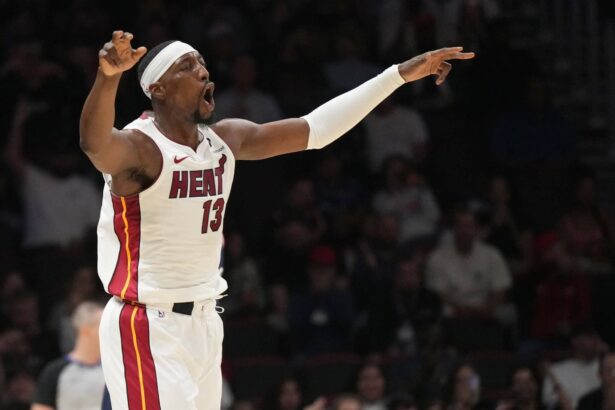
Giannis only played 36 games last season, but he still produced 27.6 points, 9.8 rebounds, and 5.4 assists while shooting 62.4% from the field. Bam was there for 73 games and finished with 20.1 points, 10.0 rebounds, and 3.2 assists, while earning another All-Defensive selection. Putting two players with that much size, mobility, and experience together gives Erik Spoelstra a ridiculous amount of freedom.
Miami also has Davion Mitchell at the point of attack and Andrew Wiggins on bigger wings. That means Giannis and Bam shouldn’t have to spend every possession fixing mistakes from weak perimeter defenders. They can switch, help, trap, play drop, or simply use their size around the rim depending on the matchup.
The shooting fit on offense might get weird sometimes, but defensively I love this roster. Giannis and Bam are potentially the league’s best defensive frontcourt. Going from 13th all the way to fourth is a massive jump, but Giannis is a massive addition. If both stars stay healthy, Miami should look completely different on this side.
3. Toronto Raptors
Ranking the Raptors this high also depends on being able to finally land Kawhi Leonard after the NBA’s investigation reportedly found no wrongdoing, per ESPN, although the league called out that claim while the trade is still pending.
With Kawhi or without him, the Raptors already finished fifth in Defensive Rating last season, with Scottie Barnes becoming an All-Defensive Second Team player and finishing fifth in Defensive Player of the Year voting. Barnes had 18.1 points, 7.5 rebounds, and 5.9 assists while shooting 50.7% from the field, but his defense was probably the biggest reason Toronto became so difficult to play against.
Now add Kawhi to that group, assuming the trade with the Clippers gets approved. The deal is still on hold, but with Leonard in Toronto, this team is definitely scaling up a couple more positions. Kawhi isn’t the 2016 version anymore, obviously, but he just played 65 games and had 27.9 points, 6.4 rebounds, and 3.6 assists on 50.5% from the field.
They also added Kyle Anderson, who had 6.2 points, 3.5 rebounds, 2.9 assists, and 1.0 steals last season. Add Collin Murray-Boyles, Jamal Shead, and the rest of Toronto’s length, and there are barely any easy defensive matchups here. A defense that was already fifth, adding Leonard and Anderson, has a very realistic argument for the top three.
2. Oklahoma City Thunder
Putting the Thunder second almost feels disrespectful after what they did last season. Oklahoma City finished first in Defensive Rating at 107.7 and went 64-18, with a defense that basically made every possession uncomfortable. They led the NBA in opponent field-goal percentage and deflections per game while finishing second in steals.
Chet Holmgren was the main guy inside. He made the All-Defensive First Team after putting up 17.1 points, 8.9 rebounds, and 1.9 blocks, while opponents shot only 44.9% on two-point attempts he contested. Cason Wallace made the All-Defensive Second Team and finished with 1.9 steals per game, 150 total steals, and a league-leading 4.4 deflections per game.
Alex Caruso is still there too, so Oklahoma City hasn’t suddenly become bad defensively. The reason they fall from No. 1 to No. 2 is what they lost. Luguentz Dort, Aaron Wiggins, and Isaiah Joe were all moved during the offseason, with Dort obviously being the biggest defensive loss of that group.
Wallace should get a much bigger role now, and Caruso can take more difficult assignments. Holmgren and Isaiah Hartenstein still give them elite size around the rim, so the floor is extremely high. I just think losing Dort is enough to open the door for somebody else at No. 1. Oklahoma City should still be ridiculous, just maybe a tiny bit less ridiculous.
1. San Antonio Spurs
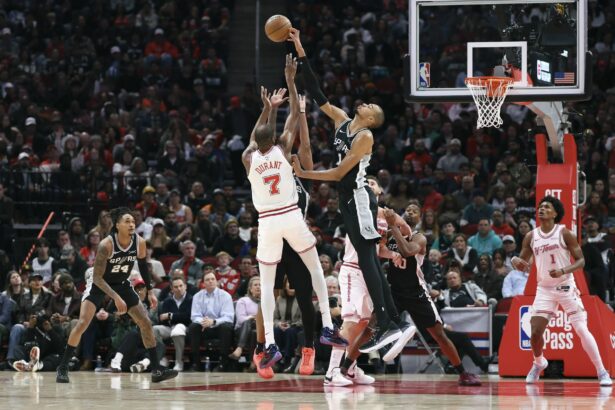
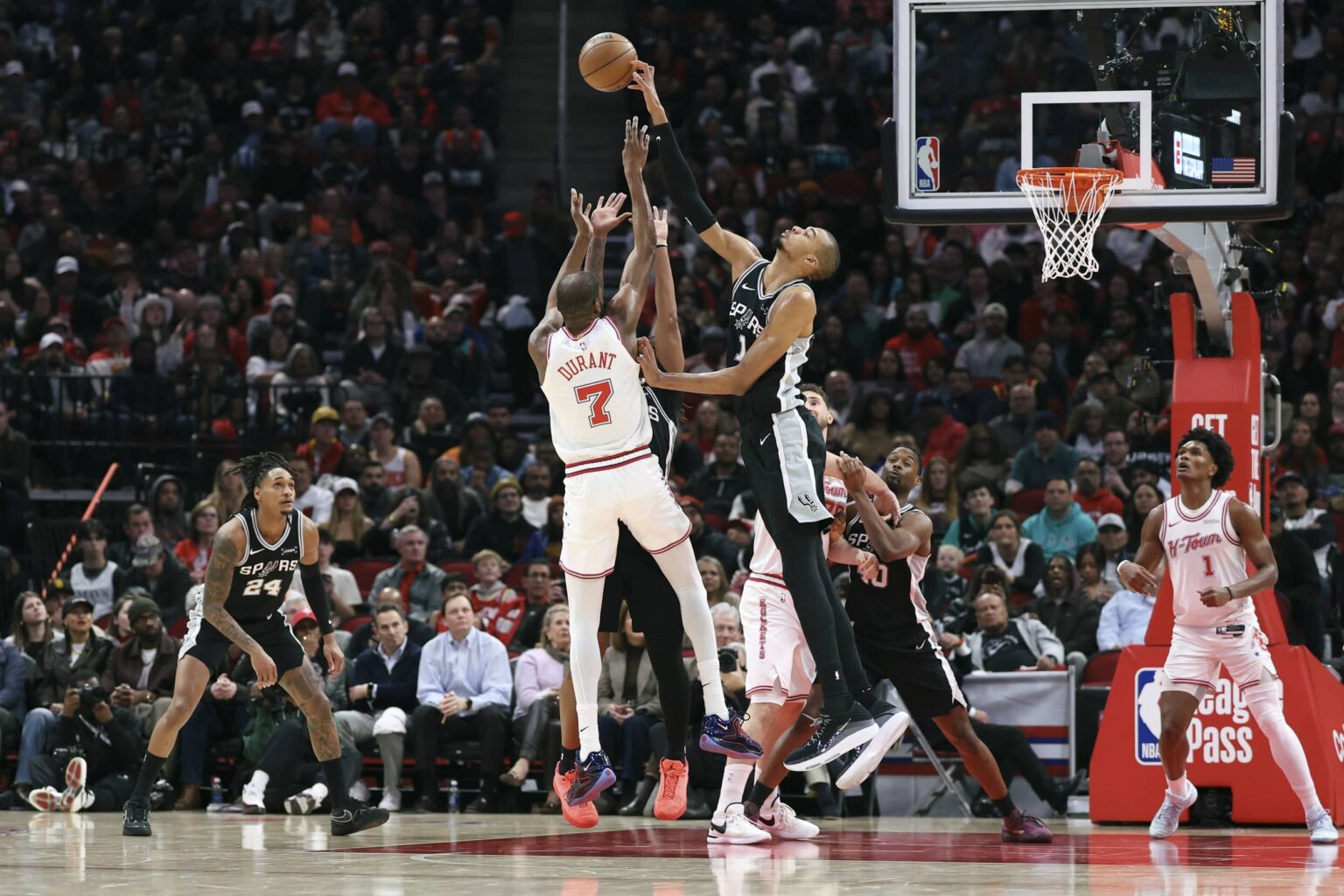
Victor Wembanyama is basically the reason this ranking starts with the Spurs. San Antonio was already third in Defensive Rating last season at 111.3 and finished 62-20, then Wembanyama became the first unanimous Defensive Player of the Year in NBA history. He had 25.0 points, 11.5 rebounds, 1.0 steals, and a league-best 3.1 blocks per game, winning all 100 first-place votes.
The crazy part is that his impact goes way past those 3.1 blocks. Players change shots before they even get to him because nobody wants to challenge a 7-foot-4 defender with his timing and length. During the playoffs, the Spurs allowed only 99.2 points per 100 possessions with Wembanyama on the floor, posting a +16.7 Net Rating, and they were close to 0.0 when he sat. That is an absurd difference for one player.
San Antonio also has Stephon Castle defending guards, while Dylan Harper gives them another 6-foot-6 body in the backcourt. Luke Kornet gives Mitch Johnson a huge backup center, so the Spurs don’t have to become tiny every time Wembanyama sits. This roster has size basically everywhere.
And unlike Oklahoma City, San Antonio didn’t lose one of its best perimeter defenders this summer. The core that reached the NBA Finals is still here, and Wembanyama is only 22 years old. The Spurs were third last year. Wembanyama is getting better, while Castle and Harper are getting more experienced. For me, that is enough to put them No. 1 entering 2026-27.