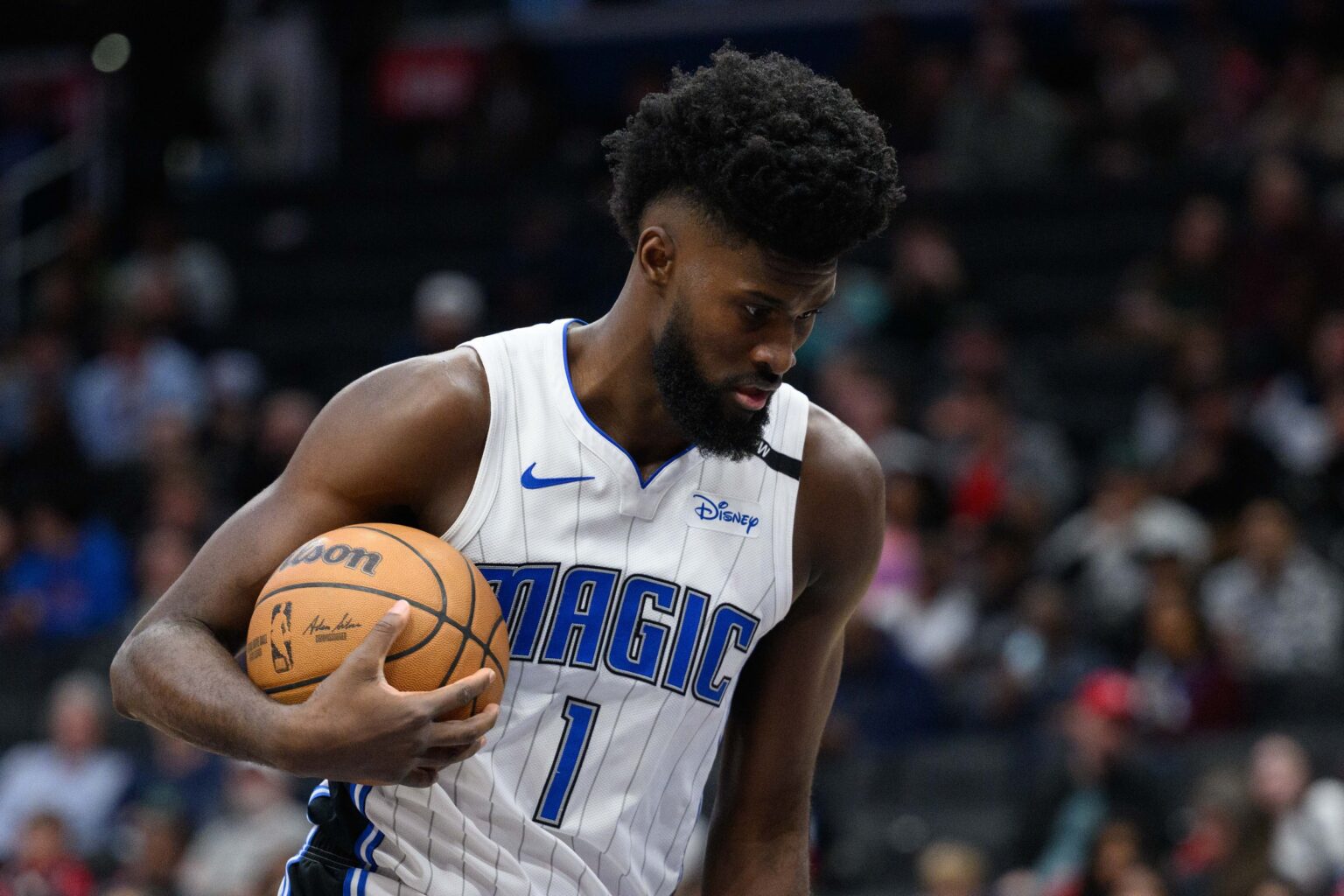
Jonathan Isaac could become one of the more specific low-cost names on the market if the Magic move on from him. According to Sean Deveney, the Magic are expected to waive Isaac and stretch his $8.0 million guaranteed money instead of using his contract in a trade.
The contract is the main reason. Isaac is on the books for $14.5 million in 2026-27, but only $8.0 million is guaranteed before June 28. He also has $14.5 million in 2027-28 and $15.0 million in 2028-29, but both seasons are non-guaranteed. That gives the Magic a simple cap decision if they want more flexibility around Paolo Banchero, Franz Wagner, Jalen Suggs, and Desmond Bane.
Isaac’s value is also simple. He is not being targeted for offense. He had only 2.6 points, 2.5 rebounds, and 0.4 assists in 52 games this season. He shot 42.2% from the field and 18.4% from three. He was also inactive in 21 of the Magic’s final 22 games.
The selling point is still defense. Isaac is 6-foot-10, 230 pounds, and can defend bigger wings, help at the rim, and play low-usage minutes. If he is waived, teams would not need to trade for his $14.5 million salary. They could look at him as a minimum or small-exception flier.
1. Los Angeles Lakers
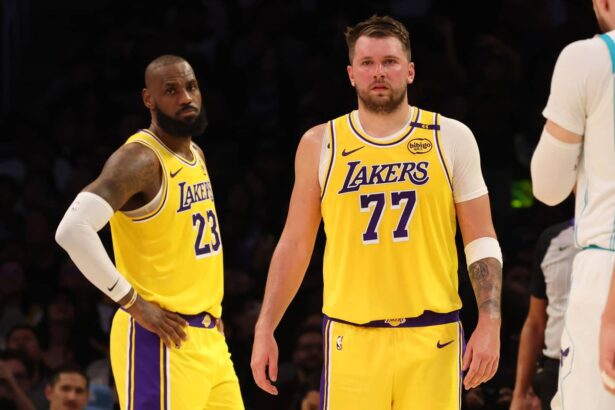
The Lakers are the easiest basketball fit. They went 53-29 and finished fourth in the West, but their defense was not strong enough for a team with high-end playoff goals. They gave up 114.6 points per game and had a 116.4 defensive rating, which ranked 19th in the league.
That is the exact area where Isaac can help. The Lakers already have enough offensive usage with Luka Doncic, LeBron James, Austin Reaves, and Deandre Ayton. Isaac would not need plays called for him. He would be asked to defend forwards, give weak-side rim help, rebound his area, and survive small-ball frontcourt minutes.
The shooting is the concern. Isaac shot only 18.4% from three this season, so he would tighten spacing if paired with another non-shooter. That is why his role would need to be controlled. Ten to 15 minutes as a defensive forward makes more sense than a permanent closing role.
The Lakers need size on the wing and more defensive activity around Doncic. Isaac gives them that type of body without needing a trade package.
2. Toronto Raptors
The Raptors went 46-36 and finished fifth in the East. They were already a strong defensive team, with a 113.0 defensive rating, fifth-best in the league. That makes Isaac less of a need and more of a depth play.
The Raptors’ roster identity is built around size. Scottie Barnes, Brandon Ingram, RJ Barrett, Immanuel Quickley, Gradey Dick, and Jakob Poeltl give them a long rotation, but Isaac would add another defensive forward who can play spot minutes in bigger matchups.
This fit depends on role clarity. Isaac would not take touches from Barnes or Ingram. He would not be asked to space the floor like a 3-and-D forward. His job would be situational defense: bigger wings, weak-side shot blocking, switch possessions, and frontcourt depth when the Raptors need more length.
The Raptors also ranked near the top of the league in steals and defensive pressure. Isaac fits that style because he can cover ground without needing the ball. The issue is offensive spacing. The Raptors can’t stack too many non-shooters, especially in playoff lineups.
As a low-cost defensive specialist, he matches their roster shape. As a heavy-minute forward, the shooting makes it difficult.
3. Philadelphia 76ers
The 76ers finished 45-37 and were seventh in the East. Their profile was uneven. They scored 115.9 points per game but also allowed 116.1 points per game. Their 115.5 defensive rating ranked 16th in the NBA.
That makes Isaac a logical depth target. The 76ers have spent years needing bigger defensive forwards around Joel Embiid, Tyrese Maxey, and Paul George. Isaac would give them a low-usage defender who can guard bigger wings, help on the glass, and play next to a scoring-heavy lineup.
The 76ers don’t need Isaac to score. They need him to defend without making the offense too tight. That is where Embiid helps. If Isaac plays with Embiid, the paint is already controlled defensively, and Isaac can be used more as a roaming forward. If Isaac plays without Embiid, he can give the bench more size and weak-side rim protection.
The concern is obvious. The 76ers already have enough injury risk on the roster. Isaac has a long injury history, and his offensive production dropped hard this season. He had only 0.6 blocks per game after previously being one of the better defensive playmakers in the league.
Still, if the cost is low, the fit is easy to understand. The 76ers need defensive size more than another small guard.
4. Golden State Warriors
The Warriors are not in the same tier as the Lakers or Raptors right now. They went 37-45 and finished 10th in the West. But their roster still has Stephen Curry, Jimmy Butler, Draymond Green, and a win-now structure. That keeps them in this type of conversation.
Their defense was average at best. The Warriors had a 115.6 defensive rating, 17th in the league, and allowed 115.2 points per game. For a team built around older stars, adding defensive length is a practical move.
Isaac fits the Warriors because he can play a simple role. He can defend forwards, protect the rim from the weak side, and give Green another long defender next to him. The Warriors have often needed more size without losing mobility. Isaac gives them that if healthy.
The offensive fit is harder. The Warriors use movement, spacing, and quick decisions. Isaac is not a movement shooter, and teams would help off him until he proves he can make corner threes. That means his minutes would need to come with Curry lineups or other shooting-heavy groups.
Still, the Warriors need cheap defensive upside. They are not in position to waste assets on risky trades. If Isaac is waived, he becomes the kind of low-cost frontcourt bet that makes sense for a team trying to protect older stars during the regular season.
5. Charlotte Hornets
The Hornets are the least proven team on this list, but they have a real fit if they want more defensive size. They finished 44-38 and ninth in the East, with a 114.4 defensive rating that ranked 12th. They were better than expected, but still not a finished playoff team.
Their roster already has offense and shooting. LaMelo Ball, Brandon Miller, Miles Bridges, and Kon Knueppel give them scoring, creation, and deep shooting. Isaac would add a different tool. He would be a defensive forward who can take physical wing assignments and help behind the play.
The Hornets also made 16.4 threes per game and shot 37.8% from three as a team. That matters for Isaac because stronger spacing can cover some of his offensive weakness. If he is playing next to shooters, his lack of shooting is easier to hide.
The role would still need to be small. Isaac should not block younger players or take major offensive minutes. But as a defensive bench piece, he fits a team trying to move from play-in level to real playoff level.
For the Hornets, the appeal is not star upside. It is a cheap chance to add size, defense, and playoff-type versatility without giving up assets.
Final Thoughts
Isaac’s next team would not be signing the old lottery-pick version. That version had more offensive hope and stronger defensive production. The current version is a role gamble.
The sample is clear. He scored 2.6 points per game, shot 18.4% from three, and was barely in the Magic’s rotation late in the season. That is why this is not a major-money market.
But if he is waived, the contract changes the conversation. Teams would not need to absorb $14.5 million. They could look at Isaac as a low-cost defensive specialist with size and playoff matchup value.
The Lakers, Raptors, 76ers, Warriors, and Hornets all have different reasons to look. The common point is simple: all five could use a 6-foot-10 defender who does not need touches. The risk is health and shooting. The upside is defensive depth at a much lower price than his current Magic salary.