The Suns entered this free agency period in a strange spot, interesting but strange. They were not a rebuilding team, but they were also not really a top team in the West. A 45-37 finish and the No. 8 seed told the real story: a roster caught between “good enough to be in the mix” and “not deep enough to scare anybody serious.”
That is exactly why this summer was important after a first-round sweep. Devin Booker and Jalen Green were already the offensive engine, but everything around them needed more balance, shooting, size, wing scoring, and some guard depth that didn’t depend entirely on two stars carrying the load.
Last season, the Suns scored 112.6 points per game, shot 45.5% from the field and 36.1% from three, with an offensive rating of 115.4. Solid, but nothing that separates a team from the pack. The defensive rating, at 113.9, was not doing them any favors either. This was not a group winning through an elite defensive core.
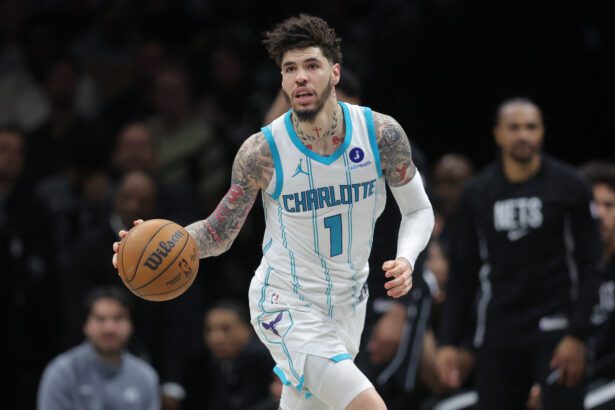
The front office chose continuity as a starting point. The Suns brought back Collin Gillespie, Jordan Goodwin, and Mark Williams, then made a bigger swing by acquiring Miles Bridges from Charlotte, at a price that was far from cheap.
After that trade, the front office went after some of the shooting they had lost in the Bridges trade by signing Luke Kennard on very reasonable terms. Pat Spencer was added on a two-way deal too, though that one belongs more to the depth-chart category than to anything that will decide the season.
They’ve been impressive, to say the least, but the summer can’t be catalogued as flawless. Grayson Allen, Royce O’Neale, and an unprotected 2033 first-round pick all went out the door. Still, the front office managed to keep its own useful players, add a starting-caliber forward, and find one of the league’s better shooters for very little money.
For a team without endless financial room to move, that is a fair offseason result. Here are the grades for every Suns’ move this summer.
Re-Signing Collin Gillespie: A-
There might not be a single move this summer that Suns fans can feel better about, both with the heart and with the numbers. Collin Gillespie went from a fringe rotation piece to a genuine starting-caliber guard, and the Suns paid him accordingly with a four-year, $48.0 million contract.
A guard who put up 12.7 points, 4.1 rebounds, and 4.6 assists across 80 games, shooting 40.1% from deep, is a very bargain number for what he brings.
His worth goes beyond the stat sheet, too. Phoenix needed a guard capable of playing alongside Booker or Green without asking for 20 shots of his own. He catches and shoots, he runs secondary actions, he makes the simple read and keeps the ball circulating.
On a roster already carrying two high-usage scorers, that kind of selflessness has its value. He is not a star by any measure, but he makes the whole rotation function in a more normal way than the old “Booker at point guard” scheme.
The shooting remains the headline. Gillespie connected on 232 threes last season, a franchise record in Phoenix, at roughly 40.0%. That is not a fluke stretch of 25 games, that is a full season of proof. Finding a player who can hit that many threes while still handing out 4.6 assists per night, for $12.0 million a season, is not an easy thing to replace.
The only reason this stops short of an A grade is size and defense. At 6-foot-1, Gillespie will be hunted in the postseason by bigger guards. If the shooting cools even slightly, the deal loses some of its shine. But for the moment, this is smart business. The Suns kept a player they developed, kept the shooting, and didn’t pay a crazy premium to do it.
Re-Signing Jordan Goodwin: B+
Bringing Jordan Goodwin back on a three-year, $19.0 million contract, with a player option in year three, is a sensible piece of business. It didn’t make headlines, but it fits what this roster needs.
Goodwin averaged 8.7 points and 4.9 rebounds across 70 games as an absolute steal last season, and at roughly $6.3 million per year, that is reasonable money for a bench guard who really outshone every single expectation.
What Goodwin offers is something the Suns lack elsewhere on the roster: physical, committed guard defense. At 6-foot-3 and strong, he competes on the glass and does the unglamorous work that many scoring guards would rather avoid. With a defensive rating of 113.9 with him on the floor, keeping a guard who pressures the ball and rebounds above his size is a logical choice.
Offense is where the questions live. Goodwin shot only 41.3% from the field last season, and he is neither a real shooter nor a true shot creator. That limits how often he can play in certain playoff lineups, particularly next to another shooter-limited teammate. Across 82 games, his energy is the key. Across a seven-game series, opponents may simply dare him to beat them from outside.
Even so, this is a reasonable retention. Goodwin already understands the system, does not need the ball to be effective, and gives the roster a physical backup option. The grade doesn’t reach an A because the ceiling here is not high, but nothing about the contract should cause discomfort.
Re-Signing Mark Williams: B
Of all the restricted free agent questions facing the Suns, Mark Williams carried the most weight. He signed a fully guaranteed three-year, $38.0 million deal after averaging 11.7 points, 8.0 rebounds and almost a block a night, while converting 64.4% of his shots, which is precisely what a team wants from a center whose job is finishing plays near the rim.
If health cooperates, this is a good deal. Williams is still only 24, stands 7-foot-1, and already carries career averages of 12.0 points, 8.5 rebounds, and 1.0 blocks. That combination of size and efficiency doesn’t come along often. The Suns needed a center who finishes the easy chances, controls the glass, and protects the rim without demanding the ball, and Williams checks each of those boxes.
Durability is the open question. A career-high 60 games last season is encouraging on its surface, but it also confirms that his health record is still unproven over a full season. Guaranteeing $38.0 million to a center with a spotty injury history is a genuine gamble. Should he reach 65-plus games, this contract will look excellent. Should he keep slipping in and out of the lineup, it becomes uncomfortable rather quickly.
Trading For Miles Bridges: B-
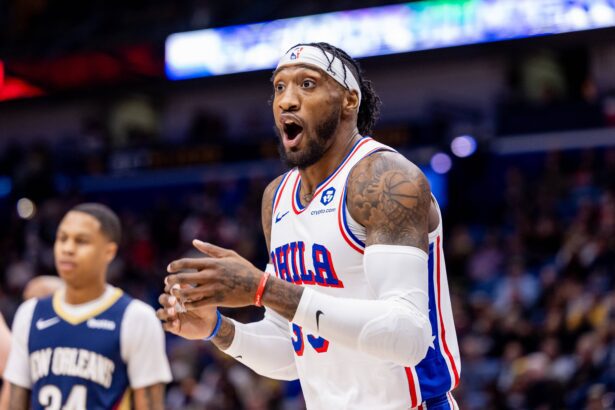
This is the toughest move on the list to judge fairly. On the floor, Miles Bridges genuinely helps. The Suns received Bridges, a 2029 first-round pick, and a 2027 second-round pick from the Hornets, while sending out Grayson Allen, Royce O’Neale, and a 2033 first-round pick.
Bridges averaged 17.1 points, 5.8 rebounds, and 3.2 assists on 46.0% shooting across 77 games last season, and he has cleared 20 points per game in three separate seasons of his career. The Suns now have another forward capable of scoring, rebounding, and running the floor, someone who could take some of the weight off Booker, Brooks, and Green, and Bridges provides exactly that.
The cost is where the doubts creep in. Allen averaged 16.5 points and 3.8 assists last season, even though his 40.3% shooting from the field left something to be desired, while O’Neale contributed 9.8 points and shot 40.8% from three, ranking 17th league-wide with 212 made threes. That represents a considerable amount of shooting walking out the door. Kennard’s arrival replaces part of it, but Allen and O’Neale were both genuinely key rotation contributors.
The draft compensation adds another layer of concern. The Suns surrendered a 2033 first-rounder and received a 2029 first-rounder plus a 2027 second-rounder in return. The 2029 pick carries some value, but it’s the least favorable among the Jazz, Timberwolves, and Cavaliers, which makes the return less appealing than the phrase “a first-round pick” might initially suggest.
There is also an extension conversation waiting on the horizon. Bridges enters the final season of his $22.8 million contract and becomes extension-eligible this same summer. According to ESPN, an immediate extension would be capped at three years and $86.3 million, while waiting could unlock a larger four-year, $143.2 million agreement. That is a considerable decision for a player who still needs to prove his fit alongside Booker and Green before Phoenix commits further financially.
All of this adds up to a B-. The talent upgrade is great, and Bridges will be covered on defense by Dillon Brooks’ presence on the wing with him. But parting with Allen, O’Neale, and a 2033 first-round pick for a forward who will soon require a new contract comes with a huge risk.
Signing Luke Kennard: A-
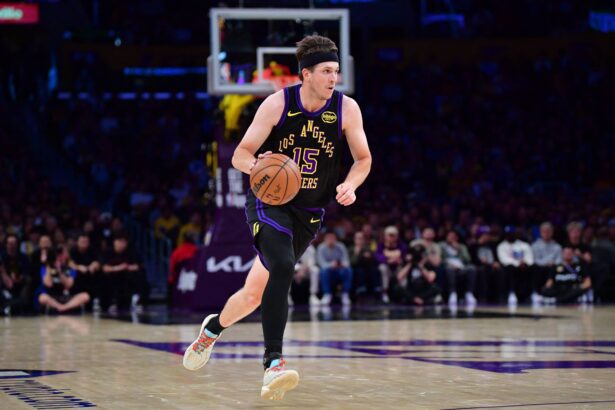
This was by far the best move of the entire offseason, at least in my opinion. Luke Kennard signed for two years and $13.0 million, with a player option attached to the second season. The Suns had just lost Allen and O’Neale, two shooters who offered essential value to the rotation, and quickly replaced a large share of that production with one of the league’s premier three-point specialists.
Kennard averaged 8.4 points, 2.3 rebounds, and 2.2 assists with the Hawks and Lakers last season while shooting 53.3% from the field overall. More telling, he shot 47.8% from three and led the entire NBA in three-point percentage at roughly 48.0%.
The logic behind the fit is not complicated. Booker needs space around him to operate effectively, Green requires open driving lanes to attack the rim, Bridges wants room to create his own shots, and Williams benefits from clear paths for his strong rim runs.
At the same time, Dillon Brooks had a strong season with a career-high 20.8 points per game, but he is still lacking that consistent outside threat after shooting just 34.4% from three. Kennard provides all of the help by stretching the floor and forcing defenses to stay honest.
The trade-off is defense and self-creation. Kennard does not solve Phoenix’s broader defensive shortcomings, and he is not a player who will create his own offense against heavy pressure. He is a specialist, plain and simple. But at $6.5 million per season, that specialization comes at a discount. Shooters who approach 48.0% from deep usually cost considerably more than this.
This settles at an A- rather than a full A only because of the second-year player option. Another elite shooting season could send Kennard back into free agency sooner than the Suns might like. Even so, shooting was an urgent need, and this answer was about as sharp as it gets.
Signing Pat Spencer To A Two-Way Contract: C+
A small transaction, but one still worth a mention. Pat Spencer joined on a two-way contract after three seasons with the Warriors. He averaged 7.2 points, 3.5 assists, and 2.4 rebounds in 18.6 minutes a night last season, shooting 42.7% overall and 35.7% from three.
Spencer is nearing 30, so this is not a young prospect carrying enormous upside. But two-way contracts don’t always need to be about upside. Sometimes they exist simply to have a mature, reliable guard on hand who can absorb real NBA minutes if the injury bug strikes. Spencer passes well, competes hard, and gives the organization emergency depth in the backcourt.
With Booker, Green, Gillespie, Goodwin, and Kennard already occupying the guard spots, Spencer likely will not see a consistent role. That is fine by design. A two-way contract carries very little downside. If he contributes in short stretches, that is a bonus. If he never gets the call, nothing about the roster suffers for it.
The grade lands at C+ because the move is sensible without being significant. It will not shift the season in either direction. It is simply a practical depth addition.
Final Grade: A-
The Suns put together a really good offseason, and although not perfect, I genuinely am impressed by all the creative moves they landed to retool as much as they can. Retaining Gillespie, Goodwin, and Williams provides continuity coming off a 45-37 season. Adding Kennard brings elite shooting at a fair price. Trading for Bridges adds a legitimate scoring forward, even with an uncomfortable price tag attached.
The biggest concern is that the Bridges trade solved one problem while opening several new ones. They lost shooting depth, gave up a distant 2033 first-round pick, and now must navigate a possible Bridges extension in the near future. That places a heavy amount of pressure on a single transaction. Kennard helps offset the shooting loss, but he doesn’t fully replace what Allen and O’Neale brought to the table.
Still, there was a clear direction to this offseason. Phoenix kept its developing rotation pieces, retained a starting center, added scoring on the wing, and found elite shooting on a bargain deal. For a franchise trying to remain competitive around Booker without any cap space aid, that qualifies as a very solid summer of work.
Final Grade: A-