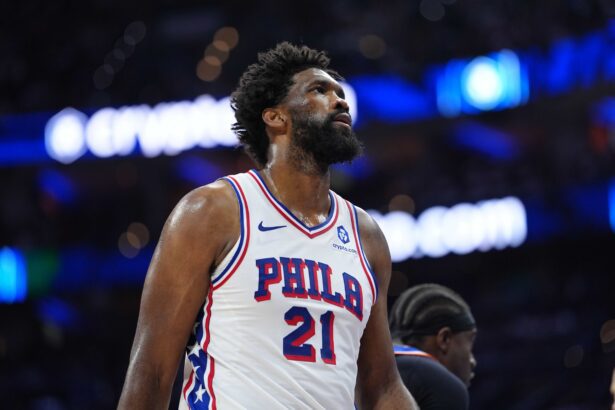
The 76ers entered this offseason in one of the strangest positions in the NBA. They finished 45-37, needed the Play-In Tournament to secure the seventh seed, then eliminated the Celtics in a crazy 3-1 comeback before the Knicks completely destroyed them with a 4-0 sweep in the Eastern Conference Semifinals. Tyrese Maxey had become a superstar, VJ Edgecombe looked like a future one, and Joel Embiid was still elite whenever his body allowed him to play. The Paul George experiment, though, had already become old, expensive, and pretty difficult to trust.
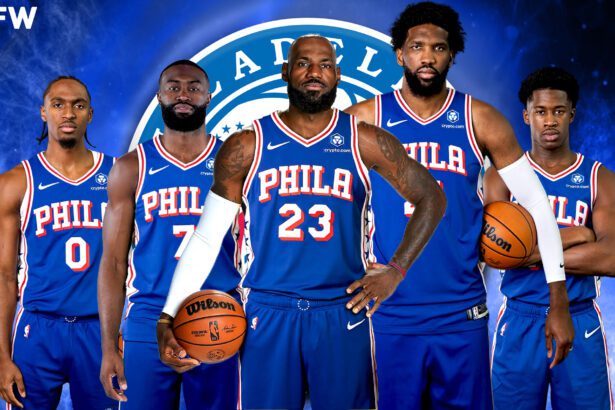
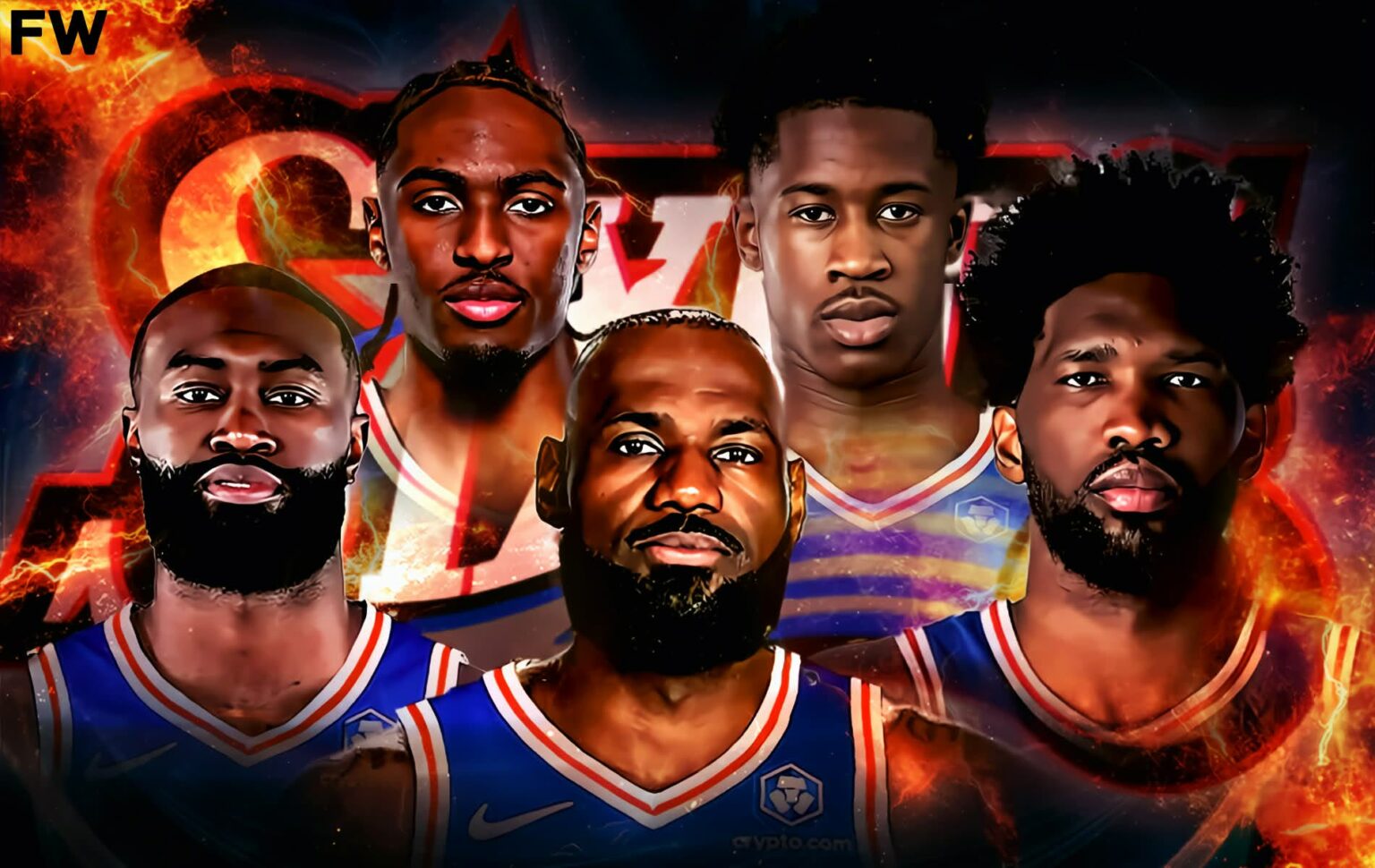
Instead of trying another tweak in the second unit or one specific department, the 76ers went completely crazy. They drafted another talented guard, replaced George with Jaylen Brown in the most shocking offseason trade, added three rotation pieces, convinced LeBron James to sign for basically nothing, and now expect Kentavious Caldwell-Pope to join after his buyout. The result is a roster with Maxey, Brown, LeBron, Embiid, and Edgecombe, which is honestly one of the most loaded groups we’ve seen in years.
There are still huge questions. Embiid played only 38 games last season, LeBron will turn 42 during the year, and the roster has a ridiculous amount of usage to divide. The backup center situation also remains weak, while the 76ers spent picks and sacrificed depth to make everything work financially.
Still, this summer changed their entire championship ceiling. Here is a breakdown of every major move and the final grade for one of the wildest offseasons in franchise history.
Drafting Labaron Philon Jr. At No. 22
The first move was much quieter than everything that followed. The 76ers selected Labaron Philon Jr. with the No. 22 pick after a huge sophomore season at Alabama. He posted 22.0 points, 5.0 assists, 3.5 rebounds, and 1.2 steals while shooting 50.1% from the field and 39.9% from three across 33 games. That’s excellent production for a guard who was still only 20 on draft night.
Philon’s early Summer League performances also showed why the 76ers liked him, including an 18-point, seven-assist game in his Las Vegas debut. The problem is opportunity. Maxey is 25, Edgecombe is 20, Anfernee Simons later joined in free agency, and Caldwell-Pope is expected to take another rotation spot. Philon could spend most of his rookie year outside the main rotation unless injuries create minutes. That isn’t terrible because the 76ers can develop him slowly, but it lowers his immediate value for a team trying to win right now.
I still like the pick. A late first-round selection should be used on talent, not only immediate fit, and Philon has more offensive upside than the normal No. 22 player. He could eventually become a cheap sixth man, secondary creator, or trade asset once the older contracts become harder to manage.
Grade: A-
Trading Paul George For Jaylen Brown
This was the point where the Sixers’ offseason became completely insane. Philadelphia sent Paul George, a top-16 protected 2028 first-round pick tied to the Clippers, an unprotected 2031 first-round pick, and second-round picks in 2028 and 2030 to the Celtics for a peak Jaylen Brown.
The price was heavy, especially because the 76ers gave four picks to a division rival. But the player upgrade is massive. Brown had the best regular season of his career with 28.7 points, 6.9 rebounds, and 5.1 assists. He finished sixth in MVP voting and arrives as a five-time All-Star, two-time All-NBA selection, 2024 Finals MVP, and proven championship scorer.
George, meanwhile, is 36 and finished with 17.3 points, 5.3 rebounds, and 3.6 assists. He also received a 25-game suspension during the season and remains attached to a brutal contract. Brown isn’t cheap either, with three years and around $183.0 million remaining, but paying that money to a 29-year-old in his prime is much easier than paying George into his late thirties.
I can’t give the move a full A because Brown is a “bad” analytics player, and that unprotected 2031 first-round pick could become scary. LeBron and Embiid will be long gone by then, while Brown and Maxey will be much older. Still, the 76ers turned an aging and disappointing contract into a player coming off a near-29-point season, regardless of the fit.
Grade: A-
Adding Great Bench Pieces For Little Money
The next step was filling out the roster with three very different free-agent additions. Anfernee Simons signed for two years and $12.3 million, with a player option in the second season. Dean Wade received four years and $39.0 million. Ariel Hukporti came in on a one-year, $3.4 million contract.
Simons is easily the best player of the group. He produced 14.3 points, 2.5 rebounds, and 2.4 assists across 55 games with the Celtics and Bulls. He can hit pull-up threes, attack closeouts, run second-unit pick-and-rolls, and create offense when Maxey or LeBron sits. Getting that for around $6.0 million in 2026-27 is kind of ridiculous.
His defense could become a problem in certain playoff matchups, and the backcourt is already crowded, but the contract is too cheap to hate. Simons could also become one of the easiest salaries to include in a future trade because his scoring skill is proven.
Wade is the move I like less. He finished last season with only 5.8 points, 4.2 rebounds, and 1.5 assists, so four years and $39.0 million feels expensive for a low-usage forward. I understand the idea because he’s 6-foot-9, can defend both forward spots, and won’t demand touches beside four stars. Still, nearly $10.0 million per year is a commitment for somebody who might only play 20 minutes when a contender is as asphyxiated by the cap as the 76ers.
Hukporti is basically another option at center with Drummond’s departure to the Knicks. He had 2.2 points and 2.9 rebounds in 9.2 minutes with New York and played a small role during their championship run. He’s strong, physical, and only 24, but he isn’t a proven Embiid replacement. If Embiid misses another major chunk of the season, Hukporti and Adem Bona can’t be expected to hold the center position by themselves.
This group improves the shooting and wing depth without fully solving the biggest roster weakness. Simons is an excellent bargain, Wade is good but expensive, and Hukporti is fine for the minimum. The 76ers still need another dependable center.
Grade: A-
Signing LeBron James As Their Blockbuster Free Agent
This is the move that turned a very good offseason into a superteam. LeBron James chose the 76ers for the final chapter of his career and signed a two-year, $8.0 million contract with a player option. He rejected larger offers, reportedly a $20.0 million deal from the Clippers, because he wanted one last championship chance, and the 76ers added an all-time player for the veteran minimum.
LeBron obviously isn’t the same athlete who dominated the league for two decades, but his “decline” still produced 20.9 points, 6.1 rebounds, and 7.2 assists last season. His scoring and usage were career lows, yet that version is almost perfect for this roster. The 76ers don’t need him to score 28 points or control every game. They need him to organize the offense, punish mismatches, create easier shots, and save energy for the playoffs.
The lineup possibilities are ridiculous. LeBron can run point with Maxey playing off the ball. Brown can defend the toughest wing and attack tilted defenses. Embiid can receive inside the paint because LeBron will find him down low. VJ Edgecombe can cut, run, and defend without needing to create everything himself.
There will be some spacing and usage issues. Embiid likes slower half-court possessions, Brown and Maxey both need shots, and LeBron isn’t going to stand in the corner all night. But having too many elite creators is a much better problem than depending on one or two players to generate every good shot.
The biggest concern is health. LeBron is entering his 24th season, while Embiid played 38 regular-season games and dealt with ankle, hip, knee, and appendix issues around the playoffs. This team could look unstoppable for months and then collapse if those two aren’t available in May.
None of that changes the grade. At $8.0 million over two seasons, the financial risk is basically zero. LeBron could lose another step and still outperform that contract by a ridiculous amount. The 76ers added one of the smartest players ever, another elite creator, and a proven playoff leader with zero assets spent.
Grade: A+
Reuniting LeBron With Kentavious Caldwell-Pope
The offseason apparently isn’t finished either, as Kentavious Caldwell-Pope agreed to a buyout with the Grizzlies and is expected to sign a one-year, $3.9 million contract with the 76ers once he clears waivers. The move hasn’t been formally completed at the time of writing, so this grade assumes everything goes through.
Caldwell-Pope had a rough and injury-shortened season. He finished with 8.4 points, 2.5 rebounds, and 2.7 assists in 51 games before surgery on his right pinkie finger ended his year. He’s 33 now, and his defensive speed isn’t exactly what it was during his prime.
Still, the role is perfect. KCP already knows how to play beside LeBron from their 2020 Lakers championship run. He doesn’t need the ball, understands where to stand, runs the floor, takes difficult matchups, and brings plenty of playoff experience. He also won another championship with the Nuggets in 2023 before he moved to the Magic and then the Grizzlies in the Desmond Bane trade.
The 76ers don’t need Caldwell-Pope to become a 15-point scorer. They need 20 solid minutes, open threes, defensive discipline, and experience. For $3.9 million, that’s a very good gamble. I’d only lower the grade if the finger injury or age has removed too much of his defense.
Grade: A
The Financial Cost Of Building The Superteam
Creating this roster wasn’t free. The 76ers lost George in the Brown trade, watched Kelly Oubre Jr. sign with the Pacers, Quentin Grimes join the Lakers, and Andre Drummond leave for the Knicks. Those departures removed scoring, perimeter defense, and the most experienced backup center on the roster.
After LeBron signed, the 76ers also traded Johni Broome and a 2027 second-round pick to the Clippers for cash considerations. The only purpose was financial, helping the team remain below both aprons while preparing to add Caldwell-Pope. Broome was the No. 35 pick in 2025, played only 11 NBA games, and missed time after tearing his meniscus, so he wasn’t some huge asset.
The 76ers also waived Dalen Terry and now have very little margin for another significant move. Brown will make around $57.7 million, Embiid $55.2 million, and Maxey remains on a major long-term deal. Wade’s $9.0 million salary adds another medium contract, but most of the remaining roster is built from cheap players and minimum deals.
The starting lineup is amazing, and Simons plus Caldwell-Pope should give the bench a great mix of scoring and defense, but the frontcourt is less convincing. If Embiid is unavailable, the 76ers could be asking Hukporti, Bona, Wade, or small-ball LeBron to survive against elite centers. That isn’t great championship insurance.
I understand why they accepted the cost. When LeBron agrees to play for the minimum, and Brown becomes available, nobody should put flexibility over immediate contention. But the 76ers made themselves even more dependent on health, and that’s dangerous for a team built around Embiid and a 41-year-old LeBron.
Grade: B+
Final Offseason Grade
The 76ers went from a 45-win seventh seed that got swept in the second round to the most talented roster in the Eastern Conference. Maxey had 28.3 points, 4.1 rebounds, and 6.6 assists last season. Brown had 28.7 points, 6.9 rebounds, and 5.1 assists. Embiid still produced 26.9 points, 7.7 rebounds, and 3.9 assists in 38 games. LeBron added 20.9 points, 6.1 rebounds, and 7.2 assists with the Lakers.
Putting those four together is honestly stupid. Add Edgecombe, Simons, Wade, Caldwell-Pope, and Philon, and the 76ers have more scoring, creation, and playoff experience than basically anybody. They also got LeBron at a salary that makes no sense compared with his production.
There are just very tiny issues in the process. They spent four picks on Brown, including an unprotected 2031 first-round pick. They gave Wade a contract that could age badly, lost several good role players, and still don’t have a trustworthy backup for Embiid. The entire project also depends on two players with massive health questions.
I’d still take this offseason every single time. The 76ers stopped pretending that patience would save them and built a team with enough talent to win the championship. The fit won’t always look perfect, and somebody’s numbers will drop, but that’s much better than entering another season with George as the second star and hoping Embiid’s body magically fixes itself.
The 76ers’ window is short, expensive, and dangerous. It’s also completely legitimate now.
Final Grade: A+