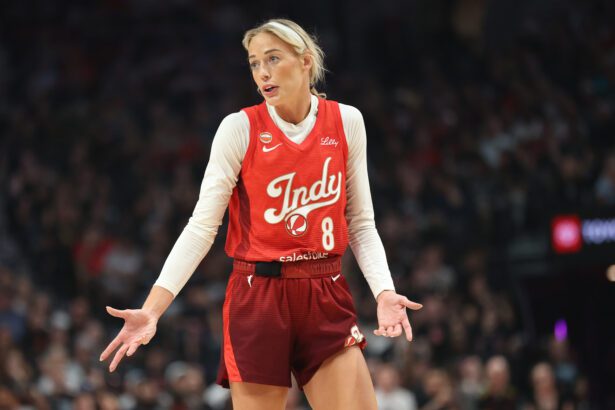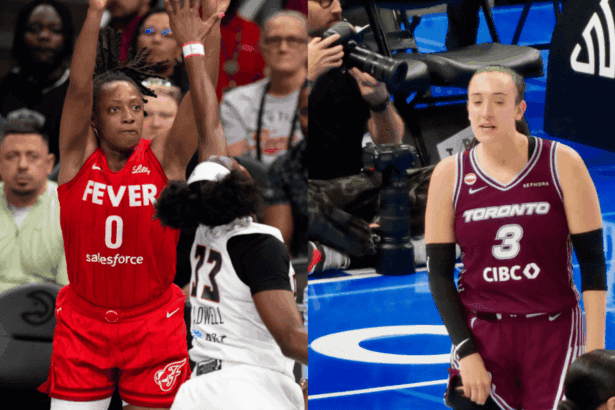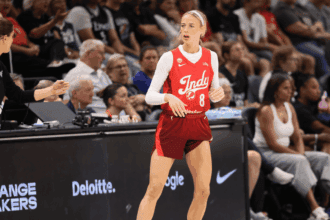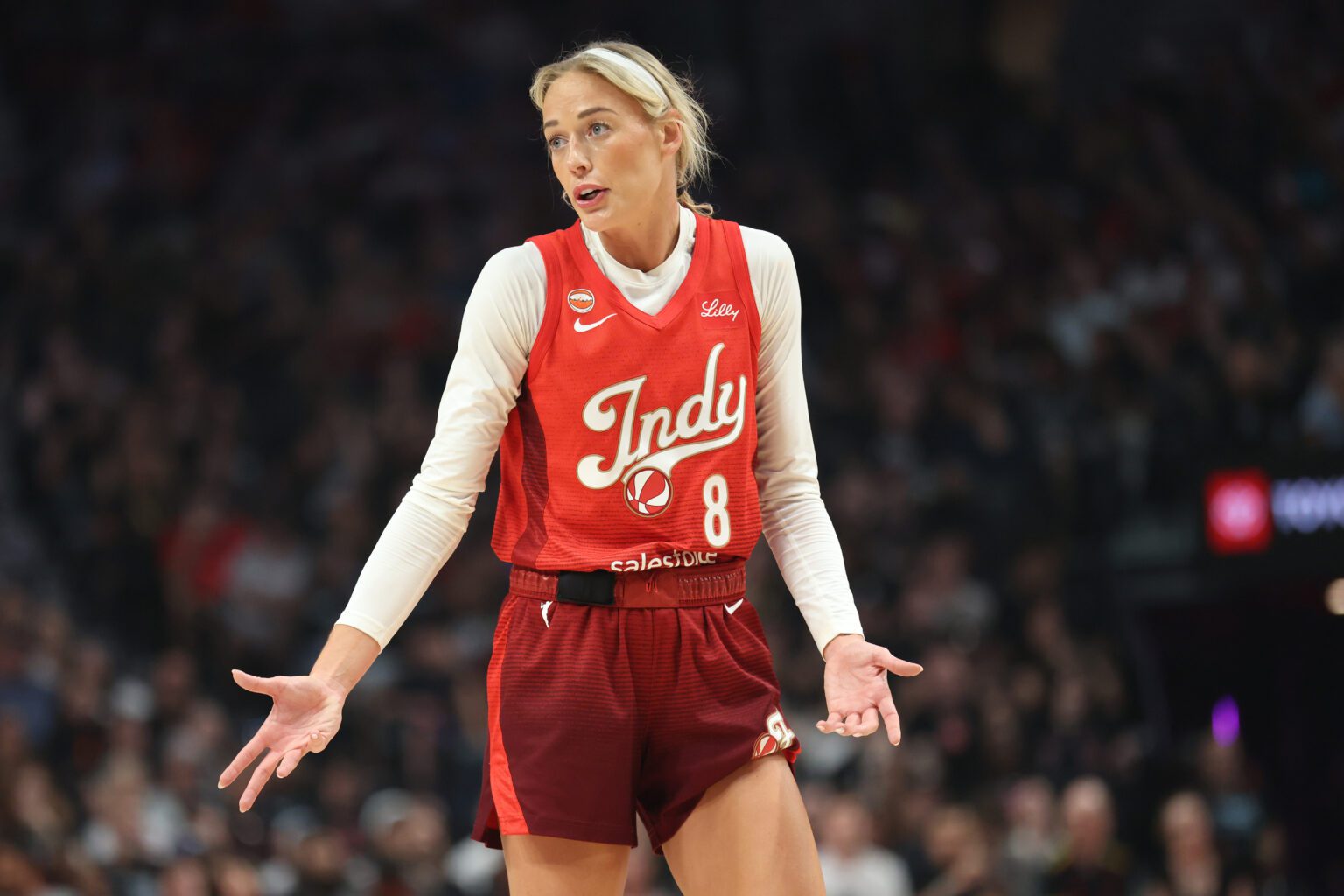
Sophie Cunningham, who previously said she wants to move beyond the debate she started and refocus on basketball, slammed the WNBA for trying to censor fans and players for expressing their opinions.
It doesn’t seem that Cunningham is done discussing her trans athlete stance, even though she said a few weeks ago that she was done talking about it. This time she decided to call out the league.
Speaking to USA Today, the Indiana Fever guard said that she doesn’t think anyone “should be censored” at WNBA games. She explicitly cited fans sporting “trans kids belong” shirts, claiming that the messages were neither threatening nor violent.
“None of these shirts are violent or mean. They express (a) belief. We may not agree, and that’s fine. I think everybody should get to wear what they want, and I think the league is making a mistake by attempting to censor anybody,” the Fever guard told the outlet.
On August 16, 2026, Cunningham supporters who attended Indiana’s game against the Atlanta Dream at State Farm Arena said that league security made them “cover up” their shirts. A mother and daughter were seen covering up their XX-XY Athletics-branded shirts with shirts provided by Atlanta in a video taken inside the venue and shared online.
Following the incident, the WNBA released a statement saying that the fans shouldn’t have been forced to cover their shirts.
A WNBA spokesperson said, “The WNBA is aware of interactions at last night’s game in Atlanta in which fans were asked by league security to cover their shirts. This should not have happened.”
🚨JUST IN: WNBA security made fans cover shirts that displayed messages about transgender athletes in women’s sports at the Fever vs Dream game.
The league responded saying: “This should not have happened.” pic.twitter.com/5JybTUnobq
— Polymarket Sports (@PolymarketSport) August 18, 2026
Former gymnast and former chief marketing officer of Levi Strauss, Jennifer Sey, launched XX-XY Athletics. The company has positioned itself as a brand “here to protect women’s sports and spaces.” In the 2026 WNBA season, XX-XY has also participated in rallies around WNBA games in “Support of Sophie Cunningham.”
Speaking to USA Today Sports, Sey said, “It’s sort of surprising to be the headline, and I would say the only reason we are is because (sic) people who have been censored by the league … they tend to be censored when they’re wearing our product.”
“Obviously, I didn’t make that happen. I don’t think anyone should be censored at the games. People can wear whatever shirt they want. I’m hearing now that ― I saw (on Tuesday) that (outlets are) reporting that several people wearing ‘trans kids belong’ shirts were told to cover them up. I don’t think that should happen either,” the XX-XY founder added.
Cunningham’s remarks on transgender athlete participation and the subsequent discourse came after the United States Supreme Court upheld states’ authority to exclude transgender women and girls from participating in women’s sports. In WNBA history, there has never been an openly transgender player.
According to a 2025 study by the Williams Institute at UCLA Law, only one percent of people in the States aged 13 and older identify as transgender. In short, the surge of anti-transgender legislation targets a mere percentage of the population.
In 2023, the Human Rights Campaign stated that fewer than 1,300 transgender individuals participated in school sports. This number accounts for 19 percent of all transgender youth across the nation. NCAA president Charlie Baker testified before the Senate in 2024 that out of 510,000 collegiate athletes, he is aware of fewer than 10 transgender students.
Both the WNBA and the Women’s National Basketball Players Association (WNBPA) have issued statements condemning hate speech, including transphobia.
After a meeting with the representatives on August 12, 2026, the league issued the following statement:
“We will approach these important conversations thoughtfully and in alignment with the values of our league. There are no immediate eligibility matters affecting the WNBA, and we strongly denounce the bad-faith efforts to use these topics to demean or marginalize others.”