The 2026 draft class has star power at the top, but not every exciting prospect is one of the names people mention first. Some players stand out because of pure speed and burst. Others do it with the ball in their hands, crossing defenders, creating space, and turning simple possessions into highlights. That is what makes this group so fun.
This list is not about the best overall prospects in the class. It is about the players who can make people stop scrolling and watch. Guards with real shake. Wings with serious bounce. Playmakers who can change a game in one move.
Here are the seven flashiest and most exciting college players who could explode in the NBA.
7. Ebuka Okorie, Stanford
Ebuka Okorie is a 6-foot-2 freshman point guard at Stanford, and he needs more introduction than the other names on this list because he is still not a major mainstream draft name. His production is strong enough to change that. He averaged 22.8 points, 3.7 rebounds, and 3.5 assists per game this season while shooting 46.0% from the field, 36.0% from three, and 83.4% from the line. ESPN’s last big board had him at No. 45, while the Ringer’s board placed him at No. 44. That puts him more in the early second-round range right now than the lottery range.
Stanford used him as their main lead guard, not just a scorer playing off others. He had the ball a lot, and the offense ran through his shot creation. That is the part NBA teams will notice first. He can get into pull-up jumpers, create space with the dribble, and score in bunches. The ACC named him Player of the Week on March 2 after he averaged 28.0 points, 3.5 rebounds, 6.0 assists, and 2.5 steals in wins over Pitt and SMU. In that same week, he had an ACC-leading sixth 30-point game and a nation-leading 13th game with at least 25 points.
The best single game on his resume was the 40-point night against Georgia Tech. He finished with 12-for-21 shooting, three made 3s, and a perfect 13-for-13 at the foul line. That kind of scoring night is why he belongs on this list. He is No. 7 because he is smaller than the guards above him, and his draft stock is still lower. But the role is clear, the numbers are real, and the offensive style fits this article perfectly. He is a scoring lead guard with real shot-making and a chance to rise a lot if teams buy the creation.
6. Brayden Burries, Arizona
Brayden Burries is a 6-foot-4, 205-pound freshman guard for Arizona. He is not in the very top tier of the 2026 draft class, but he is getting close to that range. ESPN had him No. 17 on its February big board, then placed him No. 10 in its March mock draft. That is a serious rise for a player who did not open the season in that tier.
The production is there. Burries averaged 16.0 points, 4.8 rebounds, and 2.5 assists per game this season while shooting 49.9% from the field. He is not just a volume scorer on a bad team. He is doing this on one of the best teams in the country, and he has stayed productive next to other talented Arizona players.
His role is clear. Burries is a scoring guard first, but he is not a small one-dimensional shot hunter. ESPN’s big board described him as a combo guard with decent size, solid catch-and-shoot value, rebounding for his size, and secondary playmaking. That is why he fits this list. He has the athletic profile, the body control, and the scoring package to create highlights, but there is also a real NBA role behind the tape.
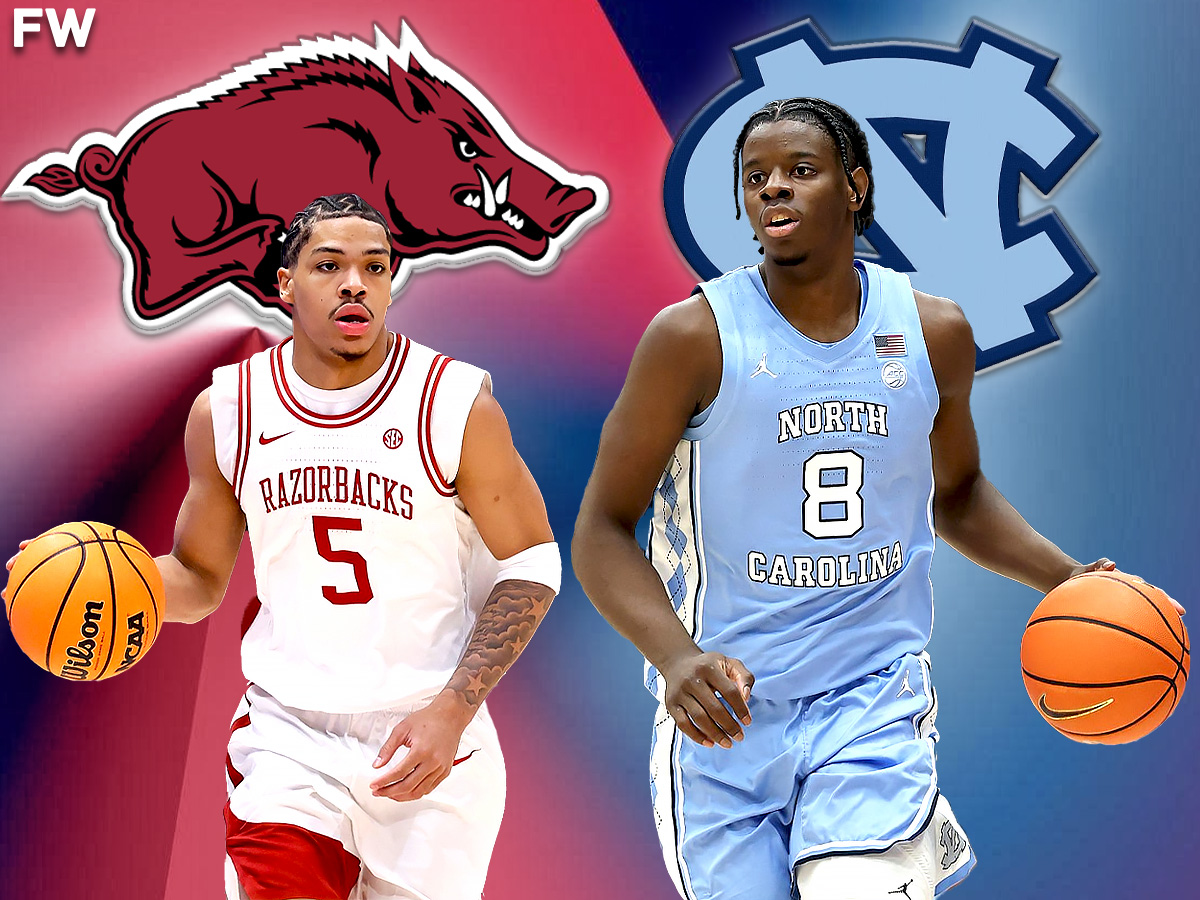
The reason he is only No. 6 is simple. The players above him have a more pure handle, more on-ball creation, or more explosive tools. Burries is a little more balanced than wild. Still, he belongs here because the upside is obvious. He can score off the bounce, play through contact, and rise quickly in a draft where teams always want big guards with real burst. Right now, he looks like a likely top-10 pick with a chance to go even higher if he keeps delivering in big games like tonight against No. 4 seed Arkansas.
5. Kingston Flemings, Houston
At 6-foot-4, 190-pound, Kingston Flemings is already in the top part of this draft class. The Houston freshman currently sits at No. 6 on ESPN’s board, and with his recent performances, he could jump to No. 5 overall. He is not a deep sleeper anymore. He looks more like a real top-10 pick, with a path to stay in the top five.
The numbers are strong and very clean for a freshman lead guard on a winning team. Flemings averaged 16.2 points, 4.0 rebounds, and 5.2 assists per game while shooting 47.8% from the field. Houston went into the Sweet 16 at 30-6, and will face No. 3 seed Illinois next. This is not empty production on a bad team. He is doing it on a contender.
He fits this list because he is a real point guard with burst. Houston has trusted him to start, handle the ball, and create offense early in his freshman year. He can score off the dribble, get to his pull-up game, and still keep the offense organized. The assist number is important here. A lot of flashy guards can get buckets. Flemings is producing as both a scorer and a table-setter.
He is No. 5 here because the players above him bring more pure shake or more wild highlight value. Flemings is a little more under control than that. But he clearly belongs on this list. He has first-step speed, real guard skill, and top-five draft momentum. That is more than enough for a freshman who is already leading one of the best teams in college basketball.
4. Christian Anderson, Texas Tech
Christian Anderson was not supposed to be one of the main names in this class when the season started. Now he looks like a real first-round guard. ESPN’s latest big board has the Texas Tech sophomore at No. 19, and ESPN’s March 11 mock draft placed him at No. 16 overall. He is a 6-foot-3, 178-pound sophomore point guard, so this is not a mystery prospect anymore. He is firmly in the draft picture.
The numbers explain the quick rise. Anderson averaged 18.5 points, 3.6 rebounds, and 7.4 assists per game this season, and his assist average ranked third in the country on ESPN. On the March mock draft update, ESPN listed him at 19.2 points, 3.7 rebounds, and 7.8 assists through 30 games, while also noting he shot 42.7% from 3. That is strong lead-guard production, and it is efficient production too.
His role is also easy to explain. Texas Tech did not use Christian Anderson as a secondary piece waiting in the corner. He had the ball, he ran offense, and he had to create shots for himself and for others. He helped keep Texas Tech afloat after JT Toppin went down in February. That gives more weight to the numbers because he was doing it with real responsibility, not in a small role.
He belongs at No. 4 on this list because the handle is real and the style is easy to see. He changes pace, gets defenders off balance, and can get right into pull-up jumpers or passing windows. He is above Burries here because he has more point guard craft and more live-dribble creation. He is below the top three because they bring either more athletic pop or more overall scoring force. But for a flashy guard ranking, Anderson is one of the clearest picks in the 2026 class.
3. Labaron Philon Jr., Alabama
Labaron Philon Jr. is a 6-foot-4, 185-pound sophomore guard, and he is one of the easiest players in this class to sell if the topic is pure watch value. He averaged 21.6 points, 3.4 rebounds, and 5.0 assists this season while shooting 50.2% from the field. ESPN’s February big board had him No. 21, and ESPN’s March 11 mock draft placed him at No. 18. So this is not a hidden second-round name. He already looks like a real first-round guard.
The style is why he lands this high. Alabama gave him a real on-ball role, and the production backed it up. ESPN called him one of the breakout stars of the season, and he was the only Division I player averaging at least 21.0 points and 4.5 assists while shooting 50.0% from the field. That is a strong stat line for any guard, but it stands out even more in this draft because so many guards are either smaller, less efficient, or less dynamic with the ball.
He is No. 3 because the tape is very easy to understand. Philon plays with pace, gets defenders leaning the wrong way, and can score without needing a lot of space. He also showed both sides of his game in the tournament.
ESPN noted the 29-point game against Hofstra, then the next game, he shot poorly but still had a career-high 12 assists against Texas Tech. That is why he belongs above most of the guards in this article. The scoring is real, the handle is real, and the draft range already says NBA teams see it too.
2. Caleb Wilson, North Carolina
Caleb Wilson is the one player near the top of this list who does not need the ball all the time to make a game feel loud. He is a 6-foot-10, 215-pound freshman forward, and ESPN’s latest big board had him No. 4 in the class. Although sidelined from the last season stretch, he had solidified himself as a top-five prospect before his injury.
The production was strong from the start. Wilson averaged 19.8 points, 9.4 rebounds, and 2.7 assists while shooting 57.8% from the field. He was not just an athlete catching lobs. He was a major piece of North Carolina’s offense, and ESPN described him as one of the greatest freshmen in school history before his season ended.
That part matters for this article because his highlight value does not come only from dunks. The size, the speed, the second jump, and the activity level give him a different kind of excitement than the guards on this list.
He is at No. 2 because the upside is huge, even with the bad timing of the injury. On March 6, Wilson suffered a broken right thumb, had surgery, and would miss the rest of the season. He is expected to be cleared during the predraft process, where he will compete to be the No. 1 pick.
That says a lot about how highly teams still view him. He is not the purest ball handler in this ranking, but in terms of athletic force and NBA ceiling, only one player made more sense at No. 1.
1. Darius Acuff Jr., Arkansas
This list ends with the easiest call. Darius Acuff Jr. is a 6-foot-3, 190-pound freshman guard at Arkansas, and right now he looks like both the flashiest scorer and the strongest point guard case in this group.
He averaged 23.3 points, 3.1 rebounds, and 6.5 assists this season. ESPN’s February big board ranked him No. 8, and ESPN’s March mock draft projected him at No. 7 overall. By any normal draft standard, that is already lottery territory.
What pushed him to No. 1 was the full season, not only the mixtape. Arkansas and the SEC both made the case for him with real results. Acuff was voted SEC Player of the Year, SEC Freshman of the Year, and first-team All-SEC.
Arkansas also noted that he was the only player in the NCAA averaging at least 20 points and 6 assists at the time of their elimination. Acuff changed the narrative around his game by showing he could score and still run a team with electric hoops.
The best part is that his season got louder late. Arguably, no player in the country had been more dominant over the last month of the regular season, and he scored 60 points in the first two rounds of the NCAA tournament by the Sweet 16 mark, the most ever by a freshman across those two opening games.
Then, he followed that with 36 against High Point and entered the next round projected as a high lottery pick. That is why he is No. 1 here. The handle, the pull-up game, the shot creation, and the production all match. Nobody else on this list checked every box as clearly as Acuff.