The first wave of 2026 NBA free agency moved fast, with deals dropping almost daily once the market opened. But in the middle of that rush, a group of familiar veterans is still sitting there without a clear landing spot.
This isn’t the usual pile of leftover minimum-contract names nobody remembers by August. This is a group full of former stars, former champions, rotation pieces off title teams, and players who were genuine names in this league for years.
That’s what makes this list worth paying attention to. Some of these guys can still play real minutes. Others carry more value in the locker room at this point than on the stat sheet. A couple of them need the perfect situation because the decline is impossible to hide. That’s the tricky part about veteran free agency in 2026: teams aren’t just paying for a name anymore.
They’re paying for a very specific role, for health, for how many minutes a body can realistically hold up, and for how willing that player is to accept being a smaller piece of an offense that no longer runs through him.
These seven veterans are still worth watching because one well-placed offer can change a contender’s bench almost overnight.
7. Jeff Green
Jeff Green isn’t a rotation lock anymore, and last season made that pretty obvious. He averaged just 2.2 points, 0.8 rebounds, and 0.3 assists with the Rockets, shooting 36.8% from the field. Those numbers barely register on a box score, so any team circling him isn’t doing it because they need 20 minutes a night out of him.
The appeal here is trust and experience. Green is 39, he’s played 18 seasons, and he won a championship with the Nuggets back in 2023. He’s been through star-driven contenders, full rebuilds, bad teams, good teams, spacing-heavy systems, and switch-everything defenses, basically every environment the league has to offer. That matters to a franchise with young players or title aspirations, because Green knows exactly how not to carry a locker room.
The catch is simple. His next team probably needs to view him as the 14th or 15th man on the roster, not a real option most nights. If a contender wants a steady veteran presence as insurance, Green makes sense. That’s why a comeback to the Rockets is still in the cards, at least in my view of their young, competitive roster.
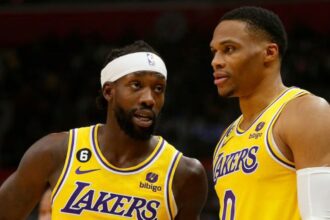
6. Gary Payton II
Gary Payton II was never a star, but he’s built a very specific identity around the league. He guards point guards, switches onto wings in smaller lineups, cuts behind ball-watching defenders, finishes hard at the rim, and brings the kind of playoff-caliber energy coaches love off the bench. That’s exactly why he stuck around Golden State for as long as he did.
Payton averaged 7.5 points, 3.6 rebounds, and 1.7 assists last season while shooting an efficient 58.3% from the field with the Warriors. He’s not a shot creator, and he’s not someone defenses respect from three, but he still finds ways to produce through cuts, transition buckets, offensive rebounds, and general chaos.
The problem is that his archetype has become harder to roster in 2026. A guard who doesn’t shoot at a high volume from deep needs to be an elite defender every single night just to justify staying on the floor. Payton can still give a contender 10 to 15 minutes of pure disruption, but he needs the right stars around him to make it work. He isn’t a plug-and-play fit for just any offense. I’d say the Warriors bring him back again, but the Lakers could be a possibility with their defensive needs.
5. Kevin Love
This is a player well past his prime, but Kevin Love has a skill package that hasn’t fully disappeared. A veteran big man who can rebound, sling outlet passes ahead of the break, space the floor, and survive in second-unit minutes always carries some value, even in a diminished form. He’s not the player from Cleveland’s title run anymore, but the basketball IQ is still very much intact.
Love averaged 6.7 points, 5.8 rebounds, and 1.8 assists last season with the Jazz, shooting 39.7% from the field. Those numbers won’t wow anybody, but the rebounding still matters, and the passing can help unblock bench units that get stuck in the mud.
For a contender, Love only really works in a tightly controlled role. Ten minutes here, an occasional spot start there, maybe specific matchups against opposing bench forwards. He can’t defend in space the way modern playoff basketball demands, but he can still help an offense breathe when the matchup shields him. My take? A return to the Jazz can’t be ruled out since he became an instant fan favorite, but if LeBron James ends up with the Cavaliers, a pairing there wouldn’t shock me.
4. Lonzo Ball
Lonzo Ball is the most complicated name on this list. He’s only 28, which makes it strange to lump him in with typical aging veterans, but his body has already lived through a veteran’s worth of wear and tear.
The injuries changed everything. Before the knee problems piled up, Ball was a high-IQ connector, a guy who defended, made the extra pass early, pushed pace, and shot just enough from three to fit next to any star.
Last season was rough. Ball averaged 4.6 points, 4.0 rebounds, 3.9 assists, and 1.3 steals with the Cavaliers, shooting a brutal 30.1% from the field and 27.2% from three. The Jazz then waived him after acquiring him in a three-team trade, which made his path to free agency pretty clear well before the summer.
The upside is still intriguing because the role he’d need doesn’t have to be a big one. Ball can still be a defensive-minded guard, a quick decision-maker, and a low-usage organizer if his legs cooperate. The problem is teams need to genuinely believe the shot and the burst are coming back. If they don’t, he becomes an extremely difficult fit inside the spacing that playoff basketball demands.
3. Bradley Beal
Bradley Beal is the biggest boom-or-bust candidate in this entire group. At his peak, he was a three-level scorer and one of the purest shot-makers in the league for the Wizards. That version of Beal is currently buried under injuries and a shrinking role, but the name still carries too much weight to ignore completely.
Beal declined his $5.6 million player option with the Clippers, according to ESPN’s Shams Charania, following a brutal season that ended with a left hip fracture and surgery. He played only six games and averaged 8.2 points and 1.7 assists; jarring numbers for a player who once strung together back-to-back 30-point scoring seasons.
That’s exactly why his market has stalled. Teams aren’t just asking whether Beal can still score. They’re asking whether he can stay on the floor, whether he can accept a role far smaller than anything he’s played before, whether he can defend enough to survive, and whether he can function without needing the ball in his hands constantly. The talent is still the reason a team could talk itself into him. The medical risk is the reason he’s still waiting for the phone to ring.
2. Russell Westbrook
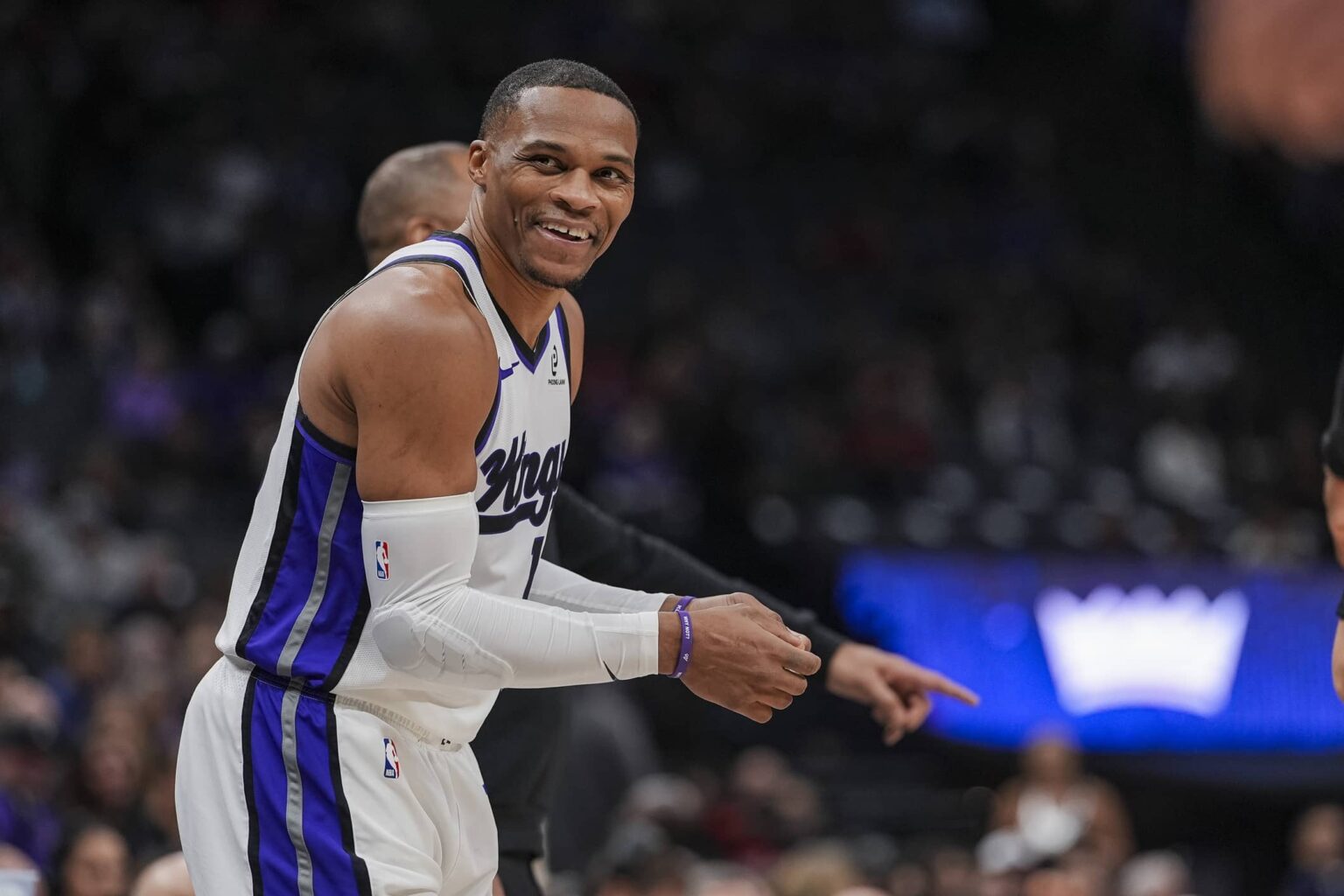
At this stage of his career, the case for Russell Westbrook isn’t built on nostalgia or his name alone. He still gave the Kings 15.2 points, 5.4 rebounds, and 6.7 assists per game last season, production that helps explain why his market remains one of the more interesting veteran situations in free agency, after being heavily doubted and at risk of not landing on a roster before the 2025-26 season.
Westbrook is also one of the most historically significant players to ever step on an NBA floor. He owns the league’s all-time record with 209 career triple-doubles, a mark he’s held since passing Oscar Robertson back in 2021. We’re talking about a Hall of Fame résumé built on an MVP-level peak, who proved to have some juice left after all.
The real question is fit. Westbrook can still bring pace, downhill pressure, rebounding, and second-unit playmaking. He can also crowd spacing and push tempo faster than some rosters can handle. Any contender considering him has to be honest about the role up front. If it’s clearly defined, he can genuinely help. If it’s vague, things can go sideways fast. For me personally, I’d love to see him back on the Kings after the season he had.
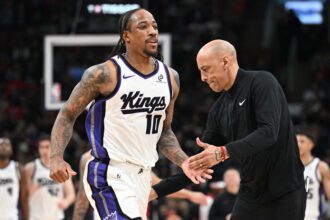
1. DeMar DeRozan
DeMar DeRozan is, without much argument, the best player still sitting on the market. The Kings waived him following a mutual agreement over the guaranteed portion of his deal, which instantly made him one of the more compelling unrestricted free agents still available. He averaged 18.4 points, 2.9 rebounds, and 4.1 assists across 77 games last season.
DeRozan is also a genuine all-time scorer. He’s a six-time All-Star with 26,711 career points, good for 16th on the NBA’s all-time scoring list. For a player still producing close to 20 points a night, it’s a little strange to see him unable to get trade suitors this far into the summer.
The fit concerns are real. DeRozan doesn’t space the floor the way most contenders want from a wing, and defense has never been his calling card. Still, playoff basketball always needs half-court scoring, someone who can get to the free-throw line, punish defensive switches, and manufacture a decent look when the shot clock is winding down. DeRozan can still do all of that. Of every veteran left on the board, he should be the first to land a serious offer, most likely with the Raptors, or either one of the Lakers or Clippers, judging by his California roots.