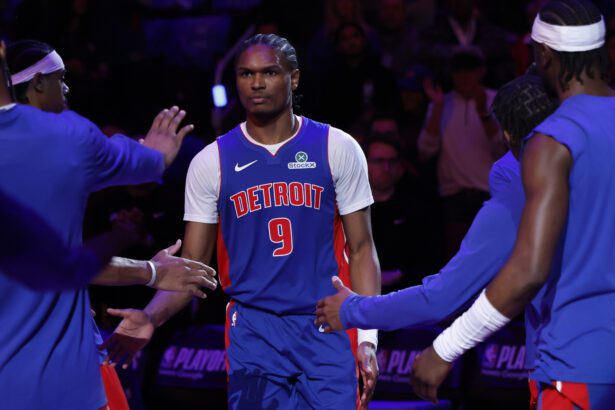
The Orlando Magic already pushed almost all their chips in last summer for Desmond Bane. That trade was supposed to fix their shooting and finally move them beyond the first round, but its first-year return was basically zero. They finished 45-37, needed the Play-In to claim the eighth seed, and then wasted a 3-1 lead against the Pistons. The Magic paid a superstar-level draft package for Bane and still ended their season in the same round as 2024 and 2025.
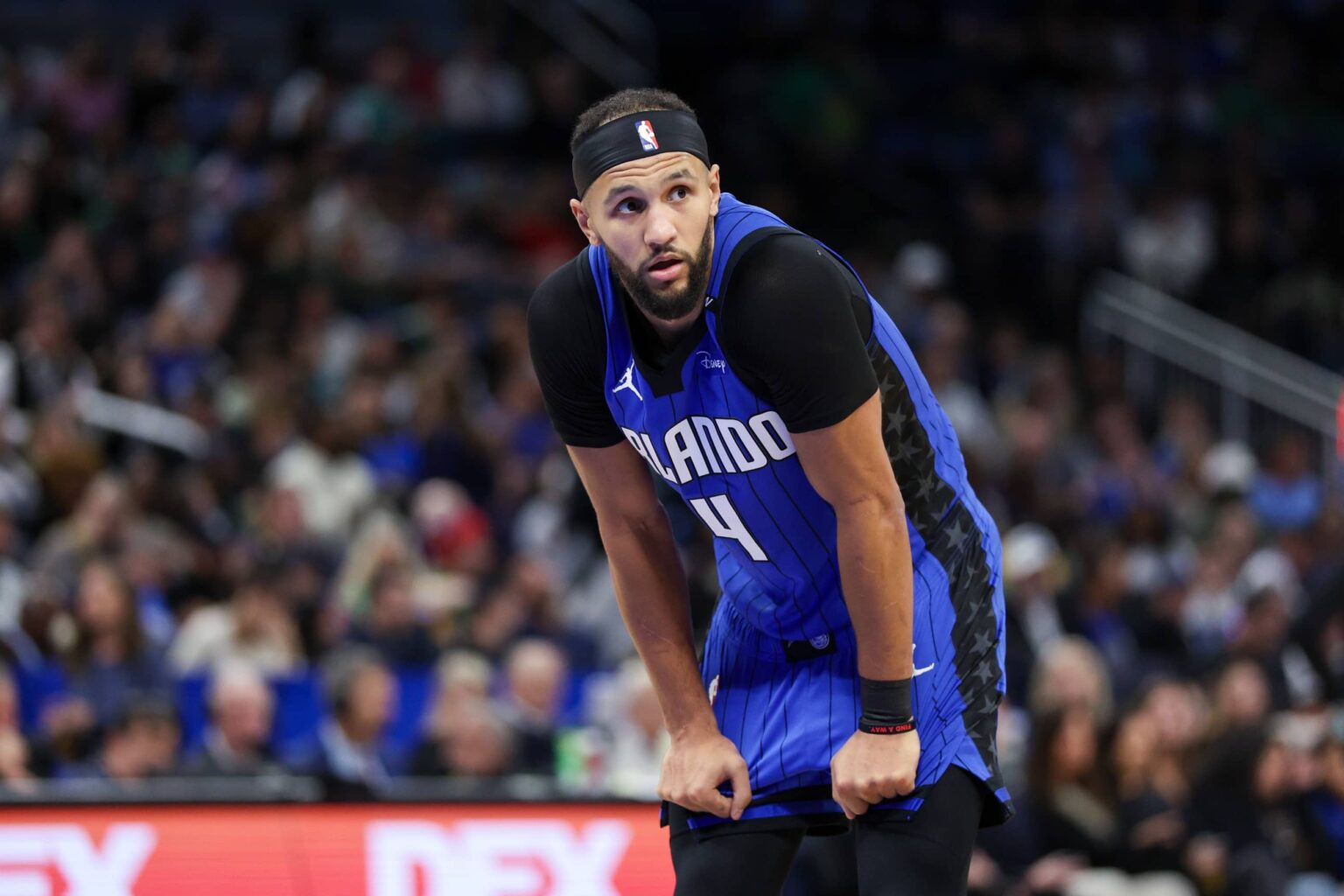
Jalen Suggs struggled all series long with 11.1 points, 4.0 rebounds, and 4.1 assists while shooting a brutal 29.9% from the field and 24.1% from three across seven games. Orlando can survive some bad shooting because Suggs provides elite perimeter defense, but it can’t pay him $32.4 million next season while asking Banchero, Wagner, and Bane to score every time over a defense that’s built to contain them.
That is why Darius Garland would be such an aggressive but logical target. He averaged 18.8 points, 2.4 rebounds, and 6.7 assists on 46.0% from the field and 39.6% from three, then increased his scoring to 19.9 points per game after joining the Clippers.
Garland wouldn’t give Orlando Suggs’ defense, but he would give them the pull-up shooting, pick-and-roll creation and late-game control that disappeared against Detroit.
Mock Trade
Orlando Magic Receive: Darius Garland
Los Angeles Clippers Receive: Jalen Suggs, Jalen Smith, 2032 first-round pick (top-four protected)
Chicago Bulls Receive: Wendell Carter Jr., future second-round pick
Financially, the Magic would send out Suggs at $32.4 million and Wendell Carter Jr. at $18.1 million, giving them approximately $50.5 million in outgoing salary, while Garland would come back at $42.2 million. Orlando would cut roughly $8.3 million from its 2026-27 payroll, which is important because the Magic currently sit above the $209.0 million first apron.
The Clippers would send out Garland’s $42.2 million and receive Suggs plus Jalen Smith, who will earn $9.4 million, for approximately $41.8 million in total incoming salary. Chicago would increase its salary from Smith’s $9.4 million to Carter’s $18.1 million, but that $8.7 million difference fits inside the expanded $9.1 million traded-player matching allowance available to teams below the first apron.
Darius Garland Gives The Magic Their Missing Skill
The Magic have several offensive players, but they still don’t have a natural point guard who forces defenses to defend above the three-point line. Paolo Banchero averaged 22.2 points, 8.4 rebounds, and 5.2 assists, but shot 30.5% from three. Franz Wagner posted 20.6 points, 5.2 rebounds, and 3.3 assists on 48.1% from the field and 34.5% from three. Both are better suited as downhill creators, but become easier to load up against when the primary guard isn’t a threat.
Garland changes that immediately. He can run high pick-and-rolls, score over drop coverage, and hit threes before the defense gets set. His 39.6% shooting from deep gives Banchero and Wagner more space, while his 6.7 assists per game give the Magic a more organized half-court option. Desmond Bane would also get easier catch-and-shoot looks instead of carrying so much secondary creation with the ball.
A starting lineup of Garland, Bane, Wagner, Banchero, and the return of Nikola Vucevic would have four legitimate scoring threats around a skilled passing center. Vucevic came back on a one-year, $3.9 million deal, so moving Wendell Carter Jr. wouldn’t leave the Magic without a starting option. The defensive level would drop, but Garland would raise the shot quality of nearly every offensive set.
The biggest argument for this deal is simple. The Magic didn’t lose to the Pistons because they lacked enough defensive guards. They lost because the offense completely disappeared. They scored only 19 points in the second half of Game 6, the lowest-scoring playoff half in NBA history, before losing the series in Game 7. Another defensive-first season won’t fix that specific weakness.
The Price Is Painful But Reasonable
Suggs still has a lot of value, even after a terrible playoff series. He averaged 13.8 points, 3.9 rebounds, and 5.5 assists on 43.5% from the field in 57 games, while remaining one of the league’s most disruptive perimeter defenders. Trading him would remove the best point-of-attack defender from a roster that has used length and physicality as its main identity.
Carter also has value after averaging 11.8 points, 7.4 rebounds, and 2.0 assists on 51.2% from the field. Yet his role became easier to replace once Vucevic signed for the minimum.
The 2032 first-round pick is the part that makes the deal uncomfortable. Garland is only 26, though, and the top-four protection prevents the worst possible outcome. The Magic have already moved four future first-rounders in the Bane deal. At this point, they have to maximize the current contending status.
Why The Clippers Could Say Yes
The Clippers acquired Garland for James Harden in February, so moving him again would require a strong basketball and asset return. He played well after the trade, but the Clippers still finished 42-40, placed ninth in the West and lost their Play-In game. They also used the No. 5 pick on Keaton Wagler, giving them another young guard who needs touches and development minutes.
Suggs would give the Clippers an elite defensive guard who can play beside Wagler without dominating the ball. His descending contract is also a plus. Suggs will make $32.4 million next season, followed by $29.6 million, $26.8 million, and $26.7 million. That structure becomes more valuable every year as the salary cap rises.
Jalen Smith would give the Clippers more than just a contract needed to balance the money. He averaged 10.2 points and 6.7 rebounds while shooting 37.3% from three for the Bulls, so he could become a solid stretch center behind their starters.
Why The Bulls Join The Deal
The Bulls went 31-51 and finished 12th in the East, so they shouldn’t be treating their roster like no one is untouchable for the right deal. That’s why turning Smith’s expiring $9.4 million contract into Wendell Carter Jr. and another second-round pick would give Chicago a better and more established player without moving any important part of the core.
Carter isn’t a franchise-changing addition, but he rebounds, passes, and can defend stronger centers. His $18.1 million salary is also reasonable for a 27-year-old starter-level center under contract beyond next season. The Bulls already have Nic Claxton, but that doesn’t kill the fit. Carter could back him up, play some minutes beside him against bigger lineups, and give Chicago more frontcourt depth over a full season.
This roster could also be more dangerous than last season’s record suggests. Norman Powell gives the Bulls an established scorer, while Matas Buzelis looks ready for another breakout after taking a major step last season. Adding Carter wouldn’t suddenly make Chicago a contender, but it would give the main guys another solid rotation player.
This Trade Makes The Magic More Dangerous
This trade would hurt the Magic defensively at point guard, there’s no way around that, but it would also make their offense much harder to stop. Garland can pull up from three, push the pace, run pick-and-rolls, and take control late in games, which is exactly what Orlando missed in the playoffs. Suggs brings a lot defensively, but asking him to become a lead creator again probably isn’t fixing this team.
There’s obviously some risk here. Garland has had injury problems, bigger guards can attack him in the playoffs, and Orlando would be giving up two starters plus a future first-round pick. Still, in case they need to hide him, Anthony Black is a 6-foot-7 guard with length, pressure, and already an extended role on the team.
At some point, defense alone won’t carry them deep in the playoffs without a proven guard managing the offense, which keeps falling apart against better teams, and Garland would finally attack that problem directly. He wouldn’t guarantee a Conference Finals run, but he would give the Magic a much better chance than simply running it back and hoping Suggs suddenly becomes the scorer they need.