Already sitting right on the edge of the true contender group last season, the Cleveland Cavaliers are poised for another breakout now. They finished 52-30, fourth in the East, ranked sixth offensively with a 119.2 Offensive Rating, and made it all the way to the Eastern Conference Finals. The ending, though, was brutal, swept 4-0 by the Knicks, in a way that made the whole roster feel a lot further from a title than the regular-season record suggested.
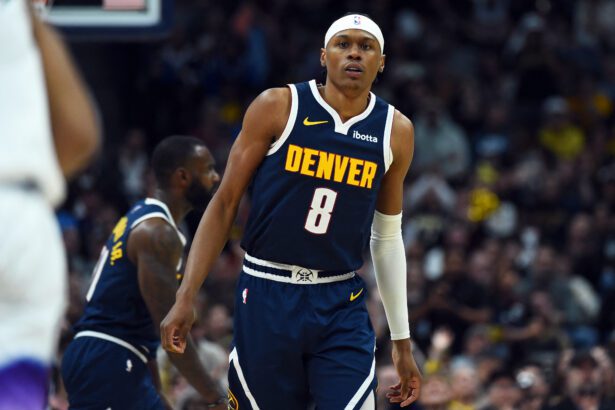
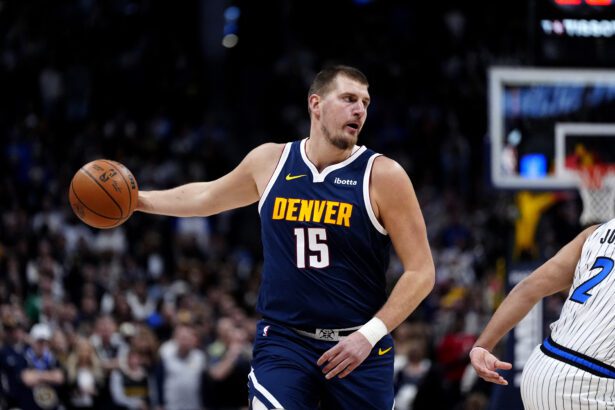
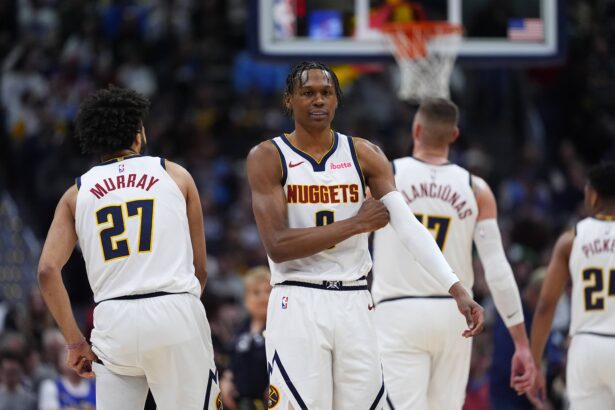
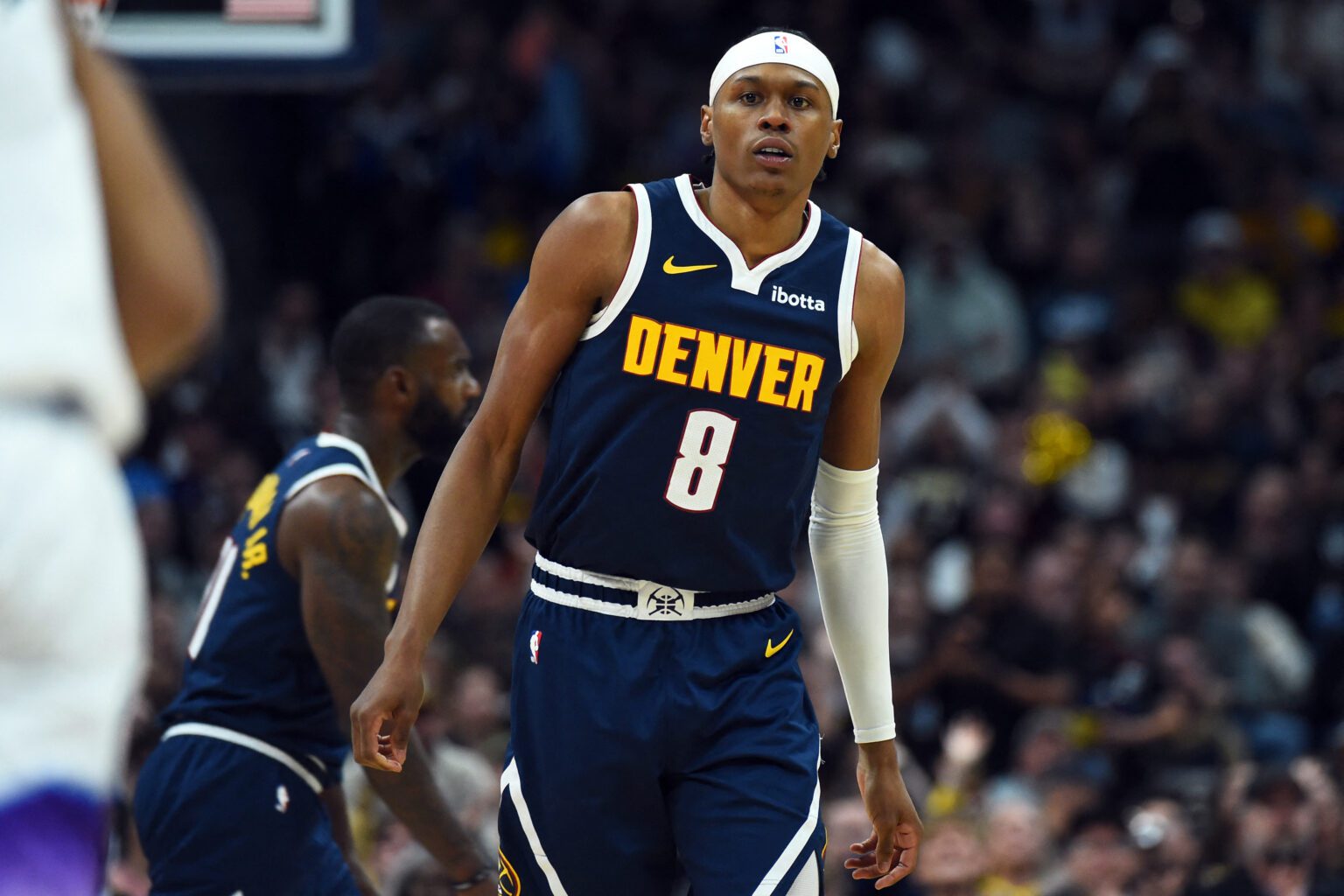
That’s exactly why the Peyton Watson move is more interesting than just another role-player pickup. As Shams Charania reported, Cleveland landed Watson through a massive five-team sign-and-trade, locking him up on a four-year, $88.0 million deal while sending Denver an unprotected 2031 first-round pick. Max Strus heads to the Clippers, and Cleveland also snagged Cam Whitmore by rerouting Tre Mann and a second-rounder to Washington.
That’s a real price to pay. But I get the logic: Cleveland already has Donovan Mitchell, James Harden, Evan Mobley and Jarrett Allen, so a draft pick six years down the road just doesn’t move the needle the way a 23-year-old two-way wing shooting above 40% from three does. Watson’s not a star today, but he has the potential to be something special in Cleveland. He might just be the exact fifth starter this roster was missing.
Peyton Watson Is Much More Than a Defensive Wing
The old scouting report on Watson was easy: 6-foot-8, ridiculous athlete, blocked shots from weird angles, could guard multiple positions… but nobody was scared of him with the ball in his hands. That changed unexpectedly fast last year.
He finished 2025-26 at 14.6 points, 4.9 rebounds, 2.1 assists, 0.9 steals, and 1.1 blocks in 29.6 minutes, shooting 49.1% from the field and 41.1% from three. His usage jumped from 13.8% to 20.4%, and somehow his true shooting still climbed too, from 56.4% to 59.4%. That’s a big jump in responsibility to also come with better efficiency.
And it wasn’t just a handful of hot threes falling. He went 81-for-197 from deep after making just 48 total the year before, and had four 30-point games after posting exactly zero across his first three seasons. Three of those came in January while Jokic was out, and he averaged 21.9 PPG in that 16-game stretch without the Nuggets’ franchise player.
The shooting spots are probably the most encouraging part for Cleveland. Watson shot 54.5% from the left corner and 46.4% from the right, going 43-for-83 from the corners combined: 51.8%. He was only 33.3% on above-the-break threes, so I wouldn’t go calling him an elite shooter from everywhere on the floor. The good news: Cleveland doesn’t actually need that from him.
What they need is a guy who can camp in the corner while Harden or Mitchell runs pick-and-roll and make defenses pay for helping. 97.5% of his threes were assisted last season, so the job description in Cleveland stays simple: run the floor, cut, attack closeouts, finish at the rim, shoot when it comes to you.
Then there’s the defense, which has always been his calling card. He ranks second in field-goal percentage allowed as the contesting defender since he entered the league in 2022-23, among every player who’s contested at least 2,000 shots, per ESPN. That’s a wild number for a guy who’s still only 23.
The raw numbers back it up too: 1.1 blocks and 0.9 steals a game, with his block rate accounting for 38.6% of Denver’s total blocks whenever he was on the floor. He’s not just a wing who stays attached to his man. He can rotate over and protect the rim like a small-ball big man.
The Fit With Cleveland Is Almost Too Perfect
The projected starting five now is Harden, Mitchell, Watson, Mobley, and Allen. That group has two elite creators, three legitimately huge defenders up front, and way more size on the wing than Cleveland had for most of last season.
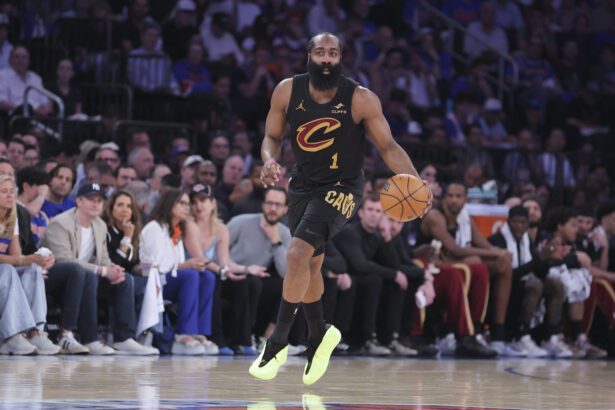
Harden was genuinely good after landing in Cleveland at 20.5 points, 4.8 rebounds, and 7.7 assists across 26 games on 46.6% shooting and a ridiculous 43.5% from three. Mitchell was even better over the full year: 27.9 points, 4.5 rebounds, and 5.7 assists on 48.3% shooting.
Neither of them needs another guy demanding 15 shots a night. They need someone who can guard the other team’s best wing and still score efficiently off scraps. Watson only needed 10.8 shots a game to get to 14.6 points last season, so that part should translate without much friction.
Defensively, it helps even more. Cleveland finished just 15th in Defensive Rating at 115.1, which is pretty disappointing for a team starting Mobley and Allen together. Mobley still put up 18.2 points, 9.0 rebounds, 3.6 assists, and 1.7 blocks, and Allen added 15.4 points, 8.5 rebounds, 1.0 steals, and 0.8 blocks.
The real issue was in front of them. Harden’s 36, Mitchell’s 6-foot-2, and asking either one to spend 35 minutes chasing elite wings while also running most of the offense just doesn’t work. Watson takes that job off their hands now.
Against Boston, he can start on Tatum. Against the Knicks, he can get minutes on Brunson so Mitchell doesn’t get stuck with the toughest assignment. Against Miami, Cleveland suddenly has another long, versatile defender to throw at Giannis actions instead of leaving Mobley to handle everything alone.
It also opens up a lot more lineup flexibility for Kenny Atkinson. He can go big with Allen and Mobley together, downsize with Mobley at the five and Watson at the four, or pair Watson with another wing like Jaylon Tyson, who put up 13.2 points and 5.1 rebounds on an absurd 44.6% from three last season. Cleveland’s suddenly got real size and shooting stacked behind its stars.
The Playoffs Are Still The Real Problem
This is where I don’t want to get ahead of myself. Cleveland’s roster looks great on paper, but we said that last season too, and then watched them get swept in the Conference Finals.
The offense simply fell apart in the playoffs. That 119.2 regular-season Offensive Rating dropped all the way to 110.5 across 18 postseason games, while the defense sat at 114.2, turning a +4.1 regular-season Net Rating into a -3.6 in the playoffs.
Even the core four of Harden-Mitchell-Mobley-Allen struggled together. Across 313 playoff minutes, Cleveland scored just 108.6 points per 100 possessions with that group and posted a -2.1 Net Rating. The defense held up fine at 110.7, but the offense completely disappeared.
Watson helps with that, but he’s not the biggest hit. His 41.1% three-point season is still just one year, and that gap between 51.8% from the corners and 33.3% above the break is significant. Playoff defenses will absolutely test it, and probably help off him whenever he’s not standing in his spots.
The real pressure still sits on Harden, Mitchell, and Mobley. Harden managed just 19.2 points on 41.0% shooting and 29.9% from three in the playoffs. Mitchell finished at 26.0 points but shot only 45.1% from the field and 32.7% from deep. Mobley was at 17.0 points, 8.1 rebounds, and 3.9 assists.
If those three get back closer to their regular-season form, Watson makes this team a lot harder to beat. If Harden’s shot disappears again and Mitchell has to create everything by himself, one more two-way wing isn’t going to save the offense on its own.
So, Are The Cavaliers A Top-5 Contender?
I think they’re right on that line, and I’d probably slot them fifth or sixth heading into the season.
The Knicks just won it all with a ridiculous 104.5 Defensive Rating in the playoffs. The Spurs made the Finals with Wembanyama on his way to MVP contention. Oklahoma City still has most of its championship-level core intact. Miami’s built around Giannis and Bam now. Cleveland belongs in that conversation; I just wouldn’t put them clearly above all of those teams yet.
What sells me on this Cavs group more than before is how manageable Watson’s role actually is. He doesn’t need to become an All-Star. Give Cleveland 14 points, something like 38-40% from three, elite wing defense, and weak-side rim protection, and he’s doing exactly what this starting five needed.
The $88.0 million isn’t cheap, and handing Denver an unprotected 2031 first for one breakout offensive season is a real cost. But Watson’s 23, not 30, and his defense gives him a pretty high floor even if that 41.1% shooting regresses some.
To me, Cleveland’s a better team right now than the one that made the Conference Finals. Watson fills the biggest hole on the roster, Whitmore adds another young scorer off the bench, and Harden finally gets a full training camp alongside Mitchell, Mobley, and Allen.
That’s enough to call the Cavs legit top-five contender material. Now they just have to stop looking the part in February and actually play it in the postseason.