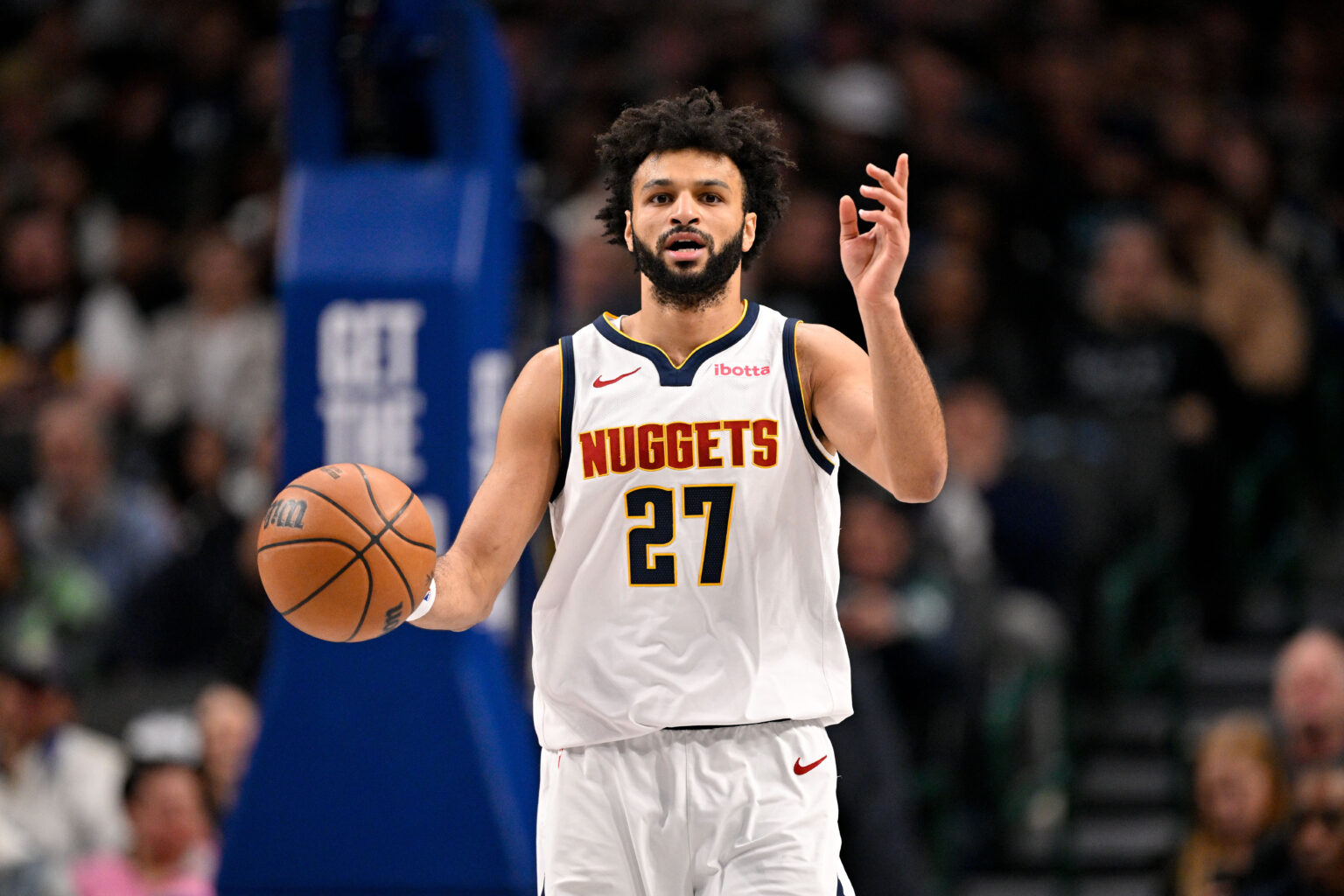
This was one of those games where control never really changed hands; it was established early and maintained throughout. The Denver Nuggets didn’t just beat the Utah Jazz; they dictated every phase of the game, leading for 99% of the night and building a lead that Utah never seriously threatened.
Even with both teams shooting nearly identically from the field (Denver 48.4%, Utah 46.3%), the separation came from execution, shot quality, and star-level shot-making. When you combine elite guard play, a dominant interior presence, and balanced contributions across the roster, this is what it looks like.
1. Jamal Murray’s Shooting Explosion Broke The Game Open
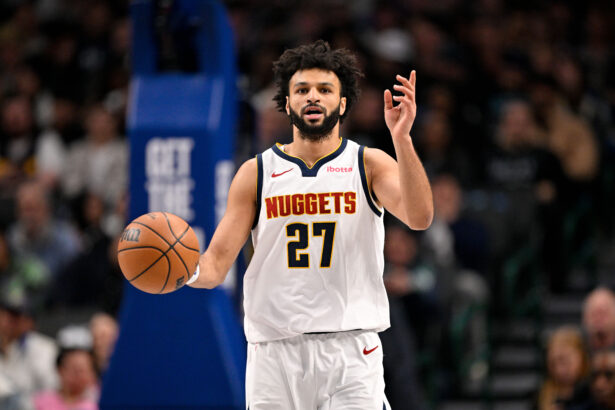
There are hot shooting nights, and then there’s what Jamal Murray did in this one. He finished with 37 points on 12-26 shooting, but the real damage came from beyond the arc, where he drilled 10-16 from three (62.5%).
Every time Utah showed signs of life, Murray answered with another deep shot. His shot profile was aggressive but controlled – pull-ups in rhythm, catch-and-shoot looks off ball movement, and transition threes that completely deflated the defense.
What made it even more impactful is how it warped Utah’s coverage. The Jazz were forced to extend defensively, which opened driving lanes and interior touches for everyone else. Murray bent the game in Denver’s favor.
2. Nikola Jokic Controlled The Game Without Forcing Scoring
This was a classic Nikola Jokic performance in terms of being dominant without needing to dominate the shot attempts. He posted 15 points, 17 rebounds, and 12 assists, shooting 5-10 from the field, while anchoring everything offensively.
Utah had no answer for his playmaking from the elbows and the post. Every double team led to a clean look somewhere else, and even when defended one-on-one, Jokic dictated tempo with patience.
His 17 rebounds (all defensive boards) also neutralized second-chance opportunities, limiting Utah’s ability to generate extra possessions. Add in 12 assists, and Jokic was directly responsible for a massive portion of Denver’s 29 total assists, reinforcing how interconnected their offense looked.
3. Denver’s Efficiency Gap Came From The Margins
At first glance, the shooting percentages don’t suggest a blowout. But once you dig deeper, the efficiency gap becomes obvious. Denver shot 41.0% from three (16-39) compared to Utah’s 32.4% (12-37), and more importantly, dominated the free-throw line.
The Nuggets went 26-31 (83.9%) from the line, while Utah managed just 17-25 (68.0%). That’s a +9 advantage at the stripe, which quietly widened the gap throughout the game.
Denver also turned defense into offense more effectively, generating 18 fast break points and capitalizing on momentum plays. Even with similar turnover numbers (Denver 14, Utah 12), the Nuggets were far more efficient in converting opportunities.
4. The Supporting Cast Delivered Two-Way Impact
While Murray and Jokic led the way, Denver’s supporting cast ensured there was no drop-off. Cameron Johnson contributed 19 points, 9 rebounds, and 6 assists, providing spacing and secondary playmaking. Christian Braun added 18 points on 7-11 shooting, attacking gaps and finishing efficiently.
Off the bench, Jonas Valanciunas gave Denver a physical presence with 13 points and 7 rebounds, including 7-8 from the free throw line, while Bruce Brown added defensive energy with 4 steals.
This was a complete two-way contribution. Denver finished with 9 steals and 4 blocks, consistently disrupting Utah’s rhythm while maintaining offensive flow. That balance is what separates good teams from overwhelming ones.
5. Utah Had Scoring Punch, But No Defensive Answers
The great individual performances were not turned into a strong team performance. Utah’s defense could not withstand Denver’s scoring, and there were zone defense breakdowns leading to Denver having multiple opportunities at the rim. Denver was on fire offensively, and Utah had to play high-pressure defense.
Utah spent the game without a lead and was always searching for what Denver was getting on the floor consistently. Utah had 32 assists, but couldn’t come up with anything to slow down the opposition. A typical case of a tanking team that played offense without fear, but had nothing in the tank to get stops.