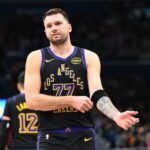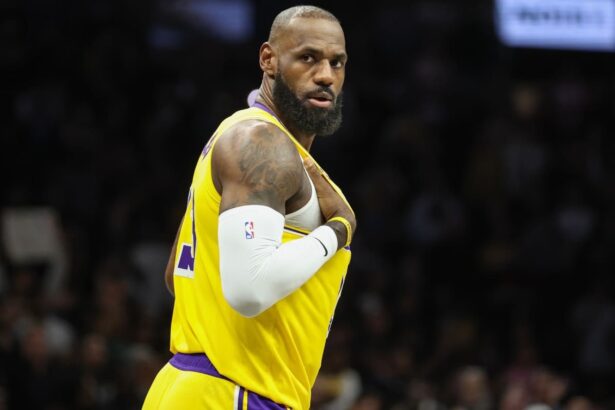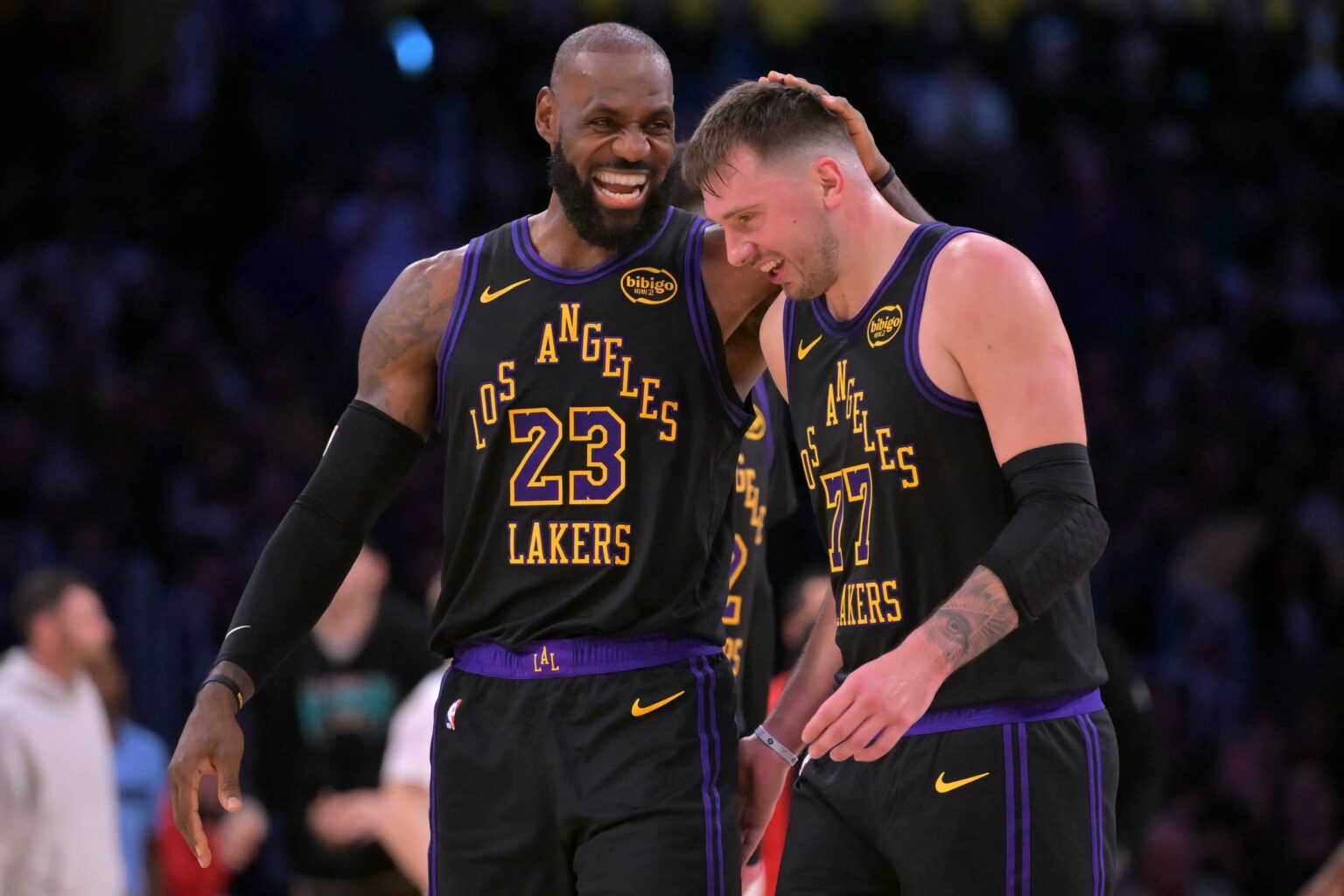
The Los Angeles Lakers delivered one of their most convincing performances since the All-Star break, overwhelming the Cleveland Cavaliers in a 127-113 statement win. From the opening quarter, the Lakers controlled tempo, spacing, and physicality, building a lead that stretched to 27 points at its peak.
Headlined by a dominant night from Luka Doncic, Los Angeles combined elite shot-making with efficient team offense, shooting 54.2% from the field and 41.9% from three while nearly flawless at the line (24-26, 92.3%).
This was a blueprint performance by a team that looks increasingly dangerous as the postseason approaches. Let’s go through the five things we learned after the Lakers took their 4th straight win after their elite performance against the Cavaliers.
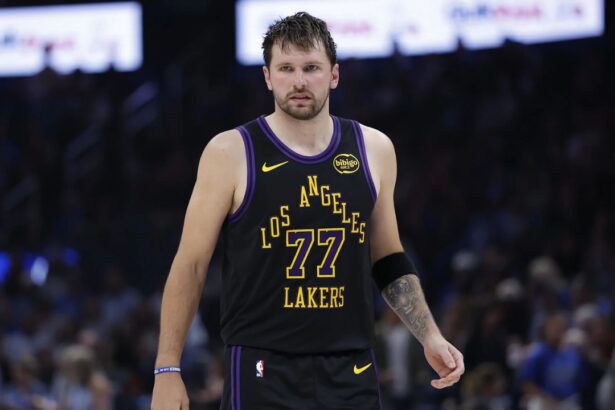
1. Luka Doncic Delivers A True MVP Statement
Doncic controlled every inch of this game, finishing with 42 points, 12 assists, and 5 rebounds on 13-26 shooting, including 6-13 from three and a perfect 10-10 from the line. More importantly, he had zero turnovers, a staggering mark considering his usage rate.
He dictated pace, punished switches, and repeatedly collapsed Cleveland’s defense, creating clean looks across the floor. When the Cavaliers tried to trap, Doncic calmly picked them apart. When they stayed home, he scored in isolation. This was total offensive command.
2. Lakers’ Efficiency Decided The Game
The statistical gap in efficiency was decisive when looking at the box score. The Lakers went 54% FG, 42% 3PT, and 92% FT while the Cavaliers posted 49.4% FG, 33.4% 3PT, and 73.7% FT.
Los Angeles generated cleaner looks all night, particularly from deep and at the free-throw line. The +10 advantage at the stripe (24 vs. 14 made free throws) created consistent scoring separation. Even in similar assist totals (26-26), the Lakers maximized their possessions far better. Cleveland simply could not match that level of shot quality.
3. Frontcourt Control: Ayton Leads Inside
Deandre Ayton provided critical balance with 18 points on 8-13 shooting and 9 rebounds, while also contributing interior defense and physicality.
The Lakers matched Cleveland’s size head-on. Deandre Ayton had 18 points and 9 rebounds compared to Cleveland’s frontcourt (Jarrett Allen + Evan Mobley), who had 24 points and 8 rebounds combined.
That disparity on the glass and inside scoring lanes helped neutralize one of Cleveland’s biggest advantages. Ayton’s efficiency (61%) ensured Doncic had a reliable interior outlet.
4. Secondary Scoring Overwhelms Cleveland
Los Angeles placed five players in double figures, showcasing offensive balance:
- Doncic: 42 points
- Ayton: 18 points
- Austin Reaves: 19 points
- Rui Hachimura: 14 (6-8 shooting)
- LeBron James: 14 points, 6 assists
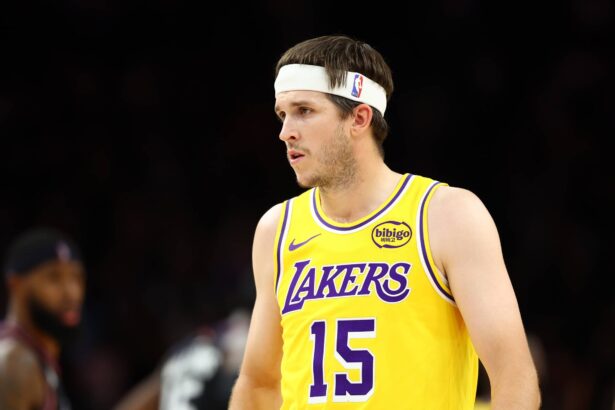
Austin Reaves added efficient secondary creation (19 points, 5-5 FT), while Rui Hachimura provided elite shot efficiency (75%). LeBron James, meanwhile, orchestrated without forcing offense, contributing across the board.
By contrast, Cleveland lacked consistent support beyond Jarrett Allen (18) and James Harden (17). Donovan Mitchell was held to 10 points on 4-10 shooting, never finding rhythm.
5. Defense and Discipline Sealed The Blowout
While the offensive numbers stand out, the Lakers’ defensive execution quietly closed the door. They forced 14 turnovers, held Cleveland to 33% from three (13-39), and recorded 9 steals and 4 blocks.
The Cavaliers’ offensive flow broke down under pressure. Their starters combined for -78 in plus-minus, highlighting how consistently they were outplayed. Additionally, the Lakers maintained composure with only 12 turnovers despite a high offensive pace and controlled fouling (just 19 team fouls vs. Cleveland’s 19 but far more efficient FT conversion).
This combination of discipline and defensive activity ensured Cleveland never mounted a serious comeback.