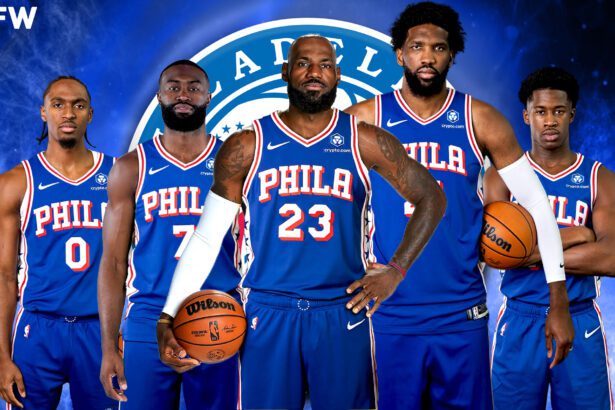
LeBron James essentially shook up the NBA’s landscape by joining the Philadelphia 76ers this offseason. With the 76ers now boasting one of the best rosters in the league, they are widely considered favorites to win it all. Although there is enough reason to praise this decision, especially given the massive pay cut James accepted to make it happen, the superstar continues to be criticized.
At this point, there is virtually nothing LeBron James can do without facing some backlash. With NBA legends like Charles Barkley calling out James for “ring chasing,” others have also shared similar opinions. However, while acknowledging such narratives, Klutch Sports Group CEO Rich Paul wasted no time in disputing these claims.
During a recent episode of the “Game Over” podcast, Paul responded to Barkley’s comments about LeBron James stacking teams to win more rings and stated:
“It’s confusing because what are you supposed to chase? Aluminum cans? I don’t think he chases anything; I just think you want to put yourself in the best competitive position to have a chance of winning.”
“It’s very confusing when you see players talk about whether you’re stacking a team or ring chasing, especially guys who don’t have a ring. That’s even more confusing.”
Paul had to clarify that he wasn’t referring to Charles Barkley, but it was clear that the NBA legend was caught in the crossfire regardless. On that note, Max Kellerman also shared some interesting input on why such narratives developed in the first place. He claimed:
“LeBron has definitely joined teams or put teams together, or been a part of putting teams together that were going to be, at the very least, extremely competitive.”
Kellerman refrained from using Cleveland as a prime example, as LeBron James spent most of his time with the Cavaliers carrying subpar teams to the NBA Finals. With reference to the Miami Heat, however, Kellerman was certain that James stacked the team to improve his chances of winning.
Although Kellerman made a solid point about James building or joining teams to put himself in a better position to contend, Paul reacted:
“I just don’t understand how people get up every day and try to nitpick at you for trying to put yourself in the best position to win at anything. Take sports out of it. Wouldn’t you want to put yourself in the best position to win in life? If you could pick your job and pick your salary… why wouldn’t you?”
Paul effectively dismantled Kellerman’s argument with this question. While the critique surrounding LeBron James and his “team stacking” approach seems reasonable, the reality is, why wouldn’t a player want to be in the best situation to win?
Many glorify past players for remaining with the same team that drafted them over their careers, even if it meant not winning a ring. In this regard, players like Michael Jordan can be viewed as the zenith, having won six titles with the Chicago Bulls.
While Jordan’s dominance in the NBA Finals is often used to justify his GOAT status, it is worth noting that Jordan didn’t win anything without a strong supporting cast. Given the importance of reliable players across the board, it is difficult to understand why LeBron James is routinely chastised for seeking better opportunities.
Thus, in many ways, this is just another example of narratives being peddled from both sides.
At 41, LeBron James remains impactful, but he is not the player he was in his prime. While it is clear that he still intends to win a title, on the 76ers, he is not the best player on the roster.
Realistically, this is not enough to end the media scrutiny. However, with James eyeing a different goal, he is likely to remain unfazed by such remarks.