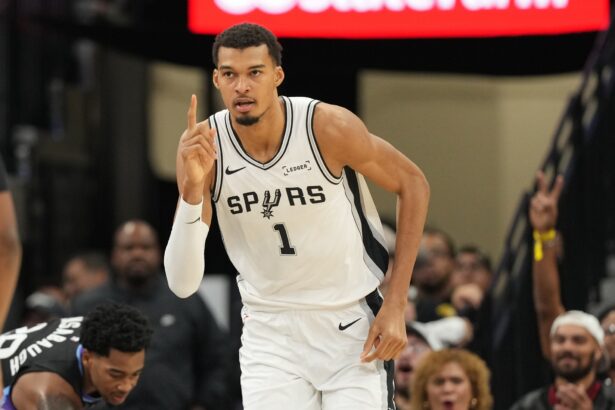
Dillon Brooks never lacks confidence, but even by his standards, this one raised eyebrows. During a recent Twitch stream with N3ON, Brooks flatly claimed he has cracked the code to guarding Victor Wembanyama.
N3ON: “How is it like guarding Wembanyama, bro?”
Dillon Brooks: “I have his number. Go check that out.”
N3ON: “Seriously?”
Dillon Brooks: “Yeah, and he know it too. I have his number. That’s the one guy in the NBA I have his number. And everybody now is taking that blueprint of guarding him.”
N3ON: “Wait, what do you do? Can you put me under the sauce?”
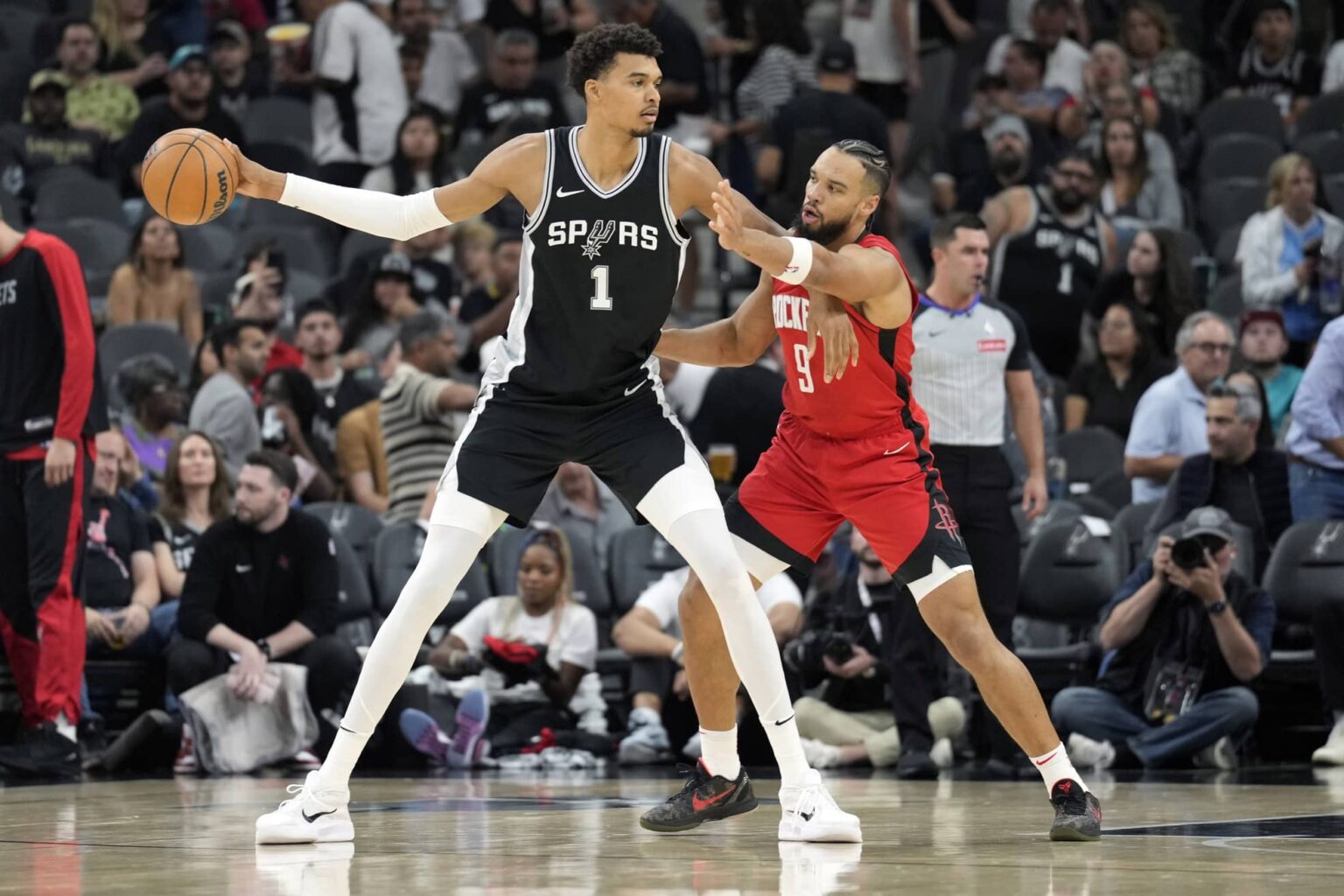
Dillon Brooks: “So you never guard him with a big, or else you’ll see at the beginning of the year, and he was just gonna torch, like torch Dallas, like torch Anthony Davis on him. You gotta put like a guard on him. You gotta crawl up all up in his space, like guard him tight the whole time and not let him set up dribbles. And then keep him away from the rim. Or else he’s gonna come like 2K. You got a 7’6 guy.”
N3ON: “And just f***ing throws that b***h in there?”
Dillon Brooks: “Yeah.”
N3ON: “So when you apply pressure, he panics?”
Dillon Brooks: “Panics.”
N3ON: “You just gave the sauce out to the f***ing NBA, dude. That’s crazy.”
Dillon Brooks on guarding Wemby:
“I have his number. He knows it too.” 👀 pic.twitter.com/mJNIOzXS95
— BrickCenter (@BrickCenter_) February 1, 2026
Brooks broke down a defensive approach that runs completely against traditional NBA logic. According to him, the worst thing you can do against Wembanyama is put a big man on him. That, Brooks argues, is exactly how teams got torched early in the season.
The idea is simple but uncomfortable. Pressure him before he can operate. Make him uncomfortable before his size becomes a weapon. Brooks even claimed that sustained ball pressure forces Wembanyama into mistakes.
It sounds ridiculous on paper. A 6’6” wing harassing a 7’6″ generational big. But there is some evidence behind the talk.
In seven career games where Brooks and Wembanyama have matched up, Brooks holds a 5–2 record. Individually, Brooks averages modest numbers in those games, 9.4 points, 3.1 rebounds, and 1.1 assists, but Wembanyama’s output drops relative to his usual dominance. In those matchups, Wemby has averaged 16.7 points, 12.0 rebounds, 2.7 assists, and 3.9 blocks, still strong, but noticeably less overwhelming than his season-long production.
There are also specific possessions that back Brooks up. When he was with the Houston Rockets, Brooks spent extended stretches guarding Wembanyama straight up. In one matchup, Brooks was the primary defender for eight minutes and allowed just six points while forcing turnovers, without consistent double teams.
In another, Wembanyama was held to 13 points on poor efficiency, one of his least effective scoring outings relative to usage.
Interestingly, Brooks did not even play in one of the most cited examples of this strategy working. Earlier this season, the Phoenix Suns defended Wembanyama using a similar blueprint. Smaller defenders crowded his handle, denied clean catches, and walled off the rim early. Wembanyama finished that game with nine points, nine rebounds, four blocks, and six turnovers while shooting 4-for-14 from the field and 1-for-5 from three. It was one of his rougher nights during his early-season tear.
That context matters. Brooks did not invent the idea, but he may have been the loudest advocate of it. The real limitation is personnel. As Brooks himself admitted, there are ‘only so many’ defenders capable of pulling this off. It requires strength, anticipation, elite footwork, and zero fear of mismatches.
Wembanyama is still a nightmare. Even when slowed, he warps spacing, protects the rim, and alters game plans. But Brooks’ comments highlight something important. There may not be a way to stop Wembanyama, but there might be ways to disrupt him before he turns games into a video game.
Whether Brooks truly ‘has his number’ is debatable. What is not debatable is this: teams are listening, and the blueprint is no longer a secret.