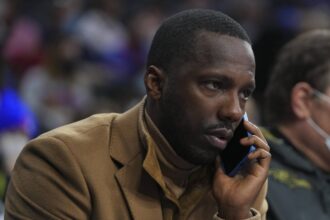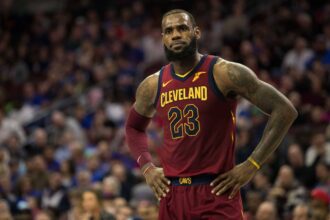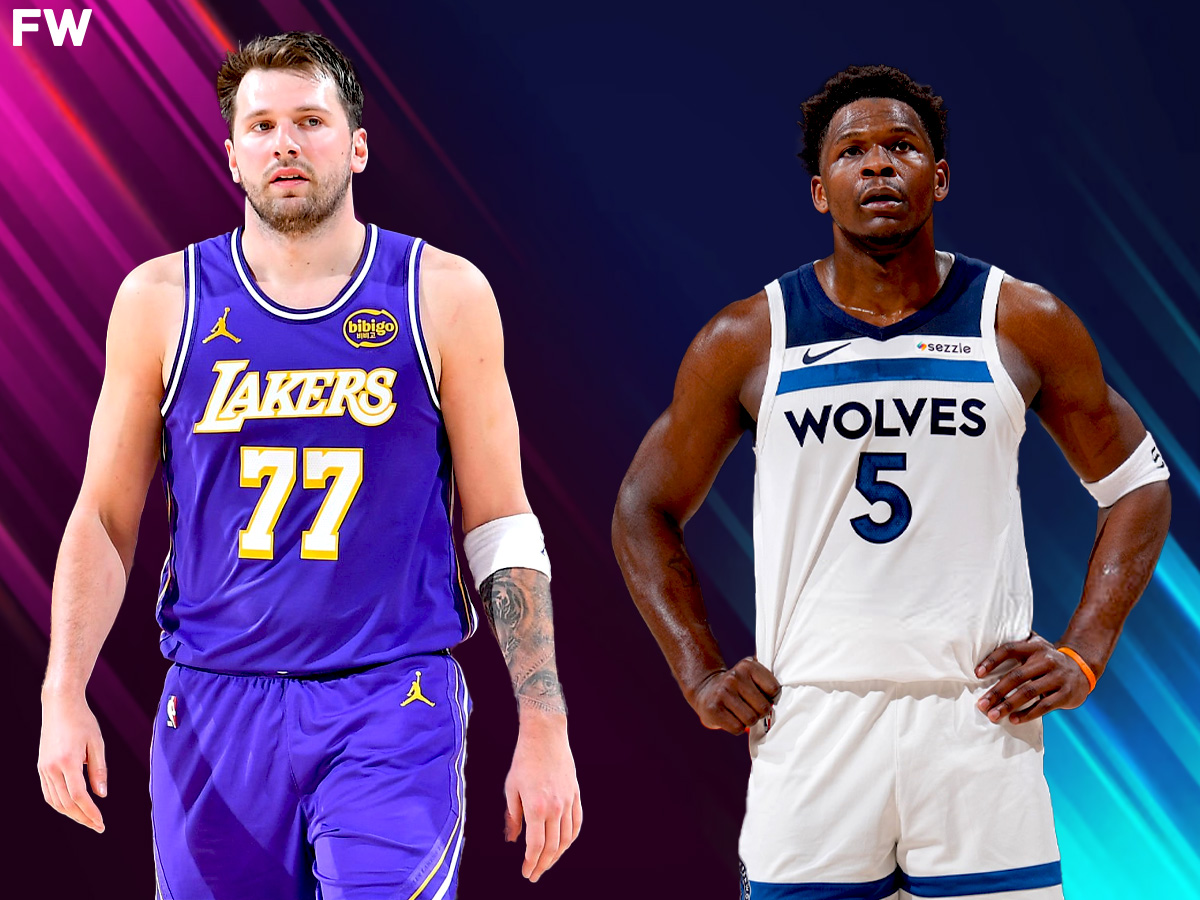
Luka Doncic and Anthony Edwards are the latest stars to fall out of the NBA awards race because of the league’s 65-game rule, and both developments landed at a brutal time. Doncic exited the Lakers’ loss to the Thunder on Thursday night with a left hamstring injury, and an MRI was scheduled for Friday.
That immediately put more attention on his availability for the final stretch of the regular season, especially with awards eligibility already becoming one of the league’s biggest late-season storylines.
Edwards’ case is already decided. The Timberwolves ruled him out against the Pistons on Thursday because of a right knee injury and illness, which officially made him ineligible for postseason awards. Edwards has played in 59 games this season, but only 58 count toward the 65-game requirement, and with the Timberwolves down to six games left, there is no path for him to qualify.
That is the real story here. The 65-game rule was created to reward availability, but once again, it is removing elite players from major award races because of injuries, not load management. Here are 12 NBA stars who will miss postseason awards because of the 65-game rule, starting with Luka Doncic and Anthony Edwards.
1. Luka Doncic
Luka Doncic’s case is the clearest example of how cruel the 65-game rule can look at the end of a season. He left the Lakers’ April 2 loss to the Thunder with a strained left hamstring after trying to play through discomfort that had already shown up earlier in the game.
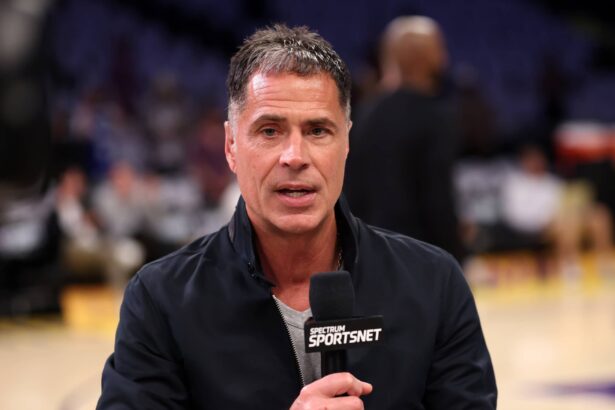
Head coach JJ Redick said Doncic was treated at halftime, returned, then aggravated the injury in the third quarter. An MRI was scheduled for Friday, so there is still no official recovery timeline. What is clear is that a significant hamstring strain can easily cost a player several weeks, and a Grade 2 issue can stretch into the 3-to-6-week range. With the regular season almost over, that creates a very real chance that Doncic does not play again before the playoffs, if he returns at all before then.
That matters beyond the Lakers’ playoff push because Doncic stopped at 64 games played. One more appearance would have made him eligible. Instead, one late injury may remove him from every major award ballot that requires the 65-game minimum. That is a brutal outcome for a player who had a real MVP argument, even if he was not the betting favorite.
Doncic was leading the league in scoring at 33.5 points per game before the injury. He was also at 33.7 points, 7.8 rebounds, and 8.2 assists for a Lakers team that had climbed into the top three in the West before the game. He had just won Western Conference Player of the Month for March after averaging 37.5 points, 8.0 rebounds, 7.4 assists, and 2.3 steals in that stretch.
So even if Doncic was probably chasing First Team All-NBA more realistically than the MVP itself, the bigger point remains the same. One of the best players in basketball produced an award-level season, and the line between eligible and ineligible ended up being one game.
2. Anthony Edwards
Anthony Edwards is already out of the awards race, and in his case, there is no more suspense. The Timberwolves ruled him out for the game against the Pistons with a right knee injury, which officially ended his path to the 65-game minimum.
That is a major hit because Edwards had a serious All-NBA case, even if he was not in the top tier of the MVP race. Before this latest absence, he was averaging 29.5 points, 5.1 rebounds, 3.7 assists, and 1.4 steals per game, while shooting 40.0% from three. Those numbers kept him in the middle of the conversation for one of the three All-NBA teams, especially with the Timberwolves still fighting for a playoff position in the West as the sixth seed in the conference when his knee issue first forced him out in mid-March.
The frustrating part is that this was not one random missed game at the end. Edwards recently lost six straight games because of right knee inflammation, and that stretch did most of the damage. The Timberwolves expected to re-evaluate him in one to two weeks, which showed this was a real injury problem, not simple rest. He did return, but by then the margin for error was gone. One more late scratch finished it.
So while Edwards was not likely to win MVP anyway, he did produce an All-NBA level season. The rule still erased that from the ballot. In a year when availability became the story again, Edwards is one of the strongest examples of how the cutoff can punish real injuries more than anything else.
3. Cade Cunningham
Cade Cunningham also became one of the biggest names pushed out by the 65-game rule, and his case is hard to argue against on basketball value. Cunningham has played 61 games this season, which has already left him with almost no room for error. Then the injury hit. He suffered a collapsed left lung on March 17 against the Wizards, and the Pistons announced on April 2 that he will be out at least one more week. That timeline likely ends his regular season before he can get back to 65 games.
That is a huge loss for the awards ballot because Cunningham had a real All-NBA case and at least an outside MVP argument based on team success and offensive control. He has put up 24.5 points, 9.9 assists, and 5.6 rebounds per game, while shooting 46.1% from the field. The scoring jumped, the playmaking stayed elite, and he became the engine of one of the best stories in the league this season. A lead guard giving you nearly 25 points and 10 assists on a winning team is not a fringe awards profile. That is serious production.
This is also the case that pushed the rule back into the spotlight. After Cade Cunningham’s injury, the NBPA publicly called for the 65-game rule to be changed, arguing that it should at least allow an exception for significant injuries. Cunningham’s agent, Jeff Schwartz, took the same position and said the league should make an exception if a player falls just short because of a legitimate injury after an All-NBA level season.
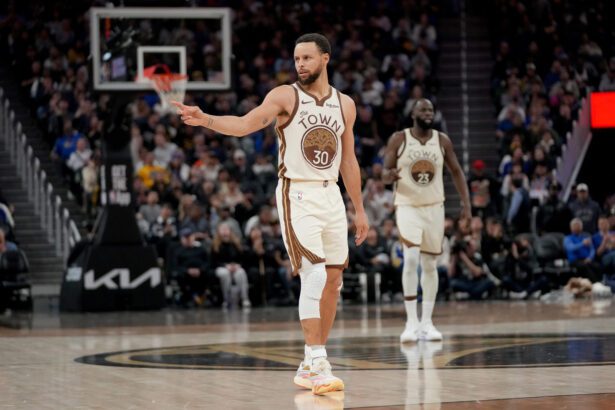
4. Stephen Curry
Stephen Curry was out of the awards picture well before the final week, but his case still belongs on this list because of the level he reached when he was on the floor. A long right knee absence took him below the 65-game mark, and that ended any realistic path to All-NBA. He has not played since January 30, with the Warriors listing him with patellofemoral pain syndrome and bone bruising in his right knee. By late March, he had already missed 23 games, and the team was still waiting for him to clear live scrimmage work before bringing him back.
That shut the door on a season that was still strong enough to deserve real awards discussion. Curry is at 27.2 points and 4.8 assists per game, while shooting 39.1% from three. Those are still elite numbers, especially for a guard carrying that much offensive responsibility every night. Even in a year with several bigger MVP cases around the league, Curry had clearly played at an All-NBA level when available.
The only thing left for Curry now is the return timeline. The Warriors are hoping he can get back on the floor Sunday against the Rockets, but that depends on how his right knee responds after he progresses to live 5-on-5 work. That would not change the awards outcome, because the 65-game mark is already gone, but it would still matter a lot for the Warriors entering the play-in push.
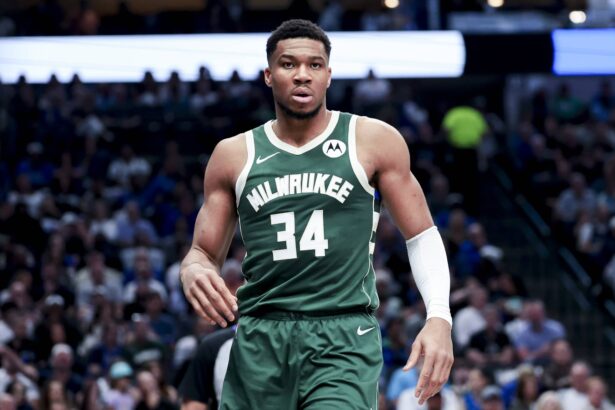
5. Giannis Antetokounmpo
Giannis Antetokounmpo was never close to the 65-game line by the end of the season. His awards case collapsed much earlier because the missed time was simply too heavy. The biggest hit came in January, when he suffered a right calf strain that kept him out for 15 straight games. After that, there was no real margin left.
He returned in March, but the Bucks kept managing his workload, as talk of a season shutdown began, and more absences followed because of a left ankle sprain and then a hyperextended left knee with a bone bruise. By that point, the only focus was getting him healthy enough to finish the year, not trying to save eligibility.
Even with all that missed time, Giannis still produced at his usual level. He was at 27.7 points, 10.1 rebounds, and 5.5 assists per game, which is still clear All-NBA production on value alone. That is what makes his name stand out here. This was not a down year. It was another dominant season from one of the league’s most reliable two-way stars, but the total games played never gave him a chance to stay in the race.
6. LeBron James
LeBron James was officially knocked out of awards eligibility in February, so his case was settled much earlier than some of the others on this list. The turning point came when the Lakers ruled him out against the Spurs on February 10 because of left foot arthritis. That was his 18th missed game of the season, which meant he could no longer reach the 65-game minimum, no matter what happened the rest of the way. Once that number was gone, so was his All-NBA path.
The frustrating part is that James was still playing at an awards level when available. At the time he became ineligible, he was at 21.8 points, 6.9 assists, and 5.7 rebounds per game. For a 41-year-old player still carrying that kind of offensive creation on a contender, those numbers were serious. This was not just a legacy mention or reputation case. James was still one of the most productive forwards in the league, and he was doing it while helping keep the Lakers near the top of the West.
There is also the historical side of it. James had made an All-NBA team in 21 straight seasons, which is one of the most ridiculous sustained runs the league has ever seen. This season was the one that finally broke that line, not because his level fell off completely, but because the games threshold got him first. That is what makes his spot here stand out. For most players, missing the award cut is normal. For James, it ends one of the most durable standards of excellence the league has seen.
7. Jimmy Butler
Jimmy Butler was never going to get close to the 65-game line once his season ended in January. He tore his right ACL on January 19 against the Heat, and that immediately took him out of the awards conversation for good. There was no late push, no final-week math, and no debate about whether he could still make it. The injury ended all of that on the spot, and it also changed the Warriors’ season in a major way because Butler had become one of the team’s most important two-way players before going down.
What makes his name worth including here is the level he reached in limited time. Butler finished the season with 20.0 points, 5.6 rebounds, 4.9 assists, and 1.4 steals per game while shooting 51.9% from the field. Those are strong numbers on their own, but they matter even more when you look at how complete his role was. He only played 38 games, so he was nowhere near All-NBA eligibility, but his impact was still obvious whenever he was healthy.
His case is different from the players who missed the cutoff by one or two games. Butler was nowhere close in raw total. Still, he belongs on this list because the rule does not distinguish between a player who falls one game short and a player whose season is wiped out by a major injury. In both cases, the result is the same: no eligibility, no ballot, no context. For Butler, the torn ACL ended everything months before the season finished.
8. Anthony Davis
Anthony Davis was out of the awards race long before the season reached its final stretch. He only played 20 games, so there was never any path to 65. The bigger issue was health. Davis has not played since January 8, and after the trade deadline move to the Wizards, he still never got back on the floor because of ligament damage in his left hand. That injury kept dragging out, and every update pointed in the same direction: recovery first, no reason to force a late return in a lost season.
Even in that short window, Davis still put up strong numbers. He finished the year at 20.4 points, 11.1 rebounds, 2.8 assists, and 1.7 blocks per game. That is still high-level production from a frontcourt star, but the total sample was too small to matter in the awards discussion. Once a player is sitting at 20 games by early March, the conversation is already over.
What makes Davis fit this list is not that he came close. He did not. It is another elite player who lost his entire awards season to injuries. By late March, the hand still had not fully healed, and the Wizards made clear he needed more time before even thinking about a return. At that point, the season had turned into rehab management for next season.
9. Joel Embiid
Joel Embiid dropped out of the awards race early because the missed games piled up too quickly, but his recent form still deserves attention. He has played only 36 games this season, so there was no path back into eligibility once the right oblique strain kept him out through most of March.
What changes the feel of his season is the level he has shown since returning. In his first game back against the Bulls, Embiid scored 35 points in just 28 minutes and looked in control right away. Soon after, he had 29 points against the Hornets and then added 26 against the Heat despite also dealing with an illness. That stretch showed the same thing as always: when he is available, he is still one of the hardest matchups in the league.
For the season, Embiid is at 26.9 points, 7.4 rebounds, and 3.9 assists per game while shooting 49.5% from the field. Those numbers are below the MVP level he reached in past years, but they are still All-NBA strong. The problem was availability from the start. By the time he found rhythm again, the awards conversation was already finished.
10. Jalen Williams
Jalen Williams lost his path to awards eligibility because the missed games stacked up too early, first with the right wrist issue that required surgery before the season and then with repeated right hamstring problems during the year.
He missed 10 games after the first hamstring injury in January, came back briefly, then hurt it again in his second game back and missed another 16. That is what finished the math. Even before the season reached April, he was already out of the 65-game race.
What gives this case more weight is that Williams is back now and still playing well. In the Thunder’s 139-96 win over the Lakers, he filled the box score with 15 points, six rebounds, five assists, three steals, and one block. It was another reminder of how complete his role is on both ends. He does not need huge scoring totals every night to shift a game because he can create, defend multiple spots, and keep the offense moving next to Shai Gilgeous-Alexander.
His recent stretch before that already showed the same trend. He scored 22 against the Knicks on March 30 in his fourth game back from the hamstring injury, and the Thunder have looked more balanced with him on the floor again. For the season, Williams is at 17.5 points, 5.4 assists, and 4.7 rebounds per game. So while the awards part is over, his return still changes things for the Thunder heading into the playoffs. The rule removed him from eligibility months ago. His impact is still very real now.
11. Austin Reaves
Austin Reaves lost his eligibility because the missed games piled up during his long calf absence in January. He missed 19 straight games after going down with a strained left calf on Christmas Day, and that stretch ended any path to the 65-game minimum. That was a real blow because Reaves was having the best season of his career and had started to look like more than just a strong third option for the Lakers.
His numbers show that jump clearly. Reaves is at 23.3 points, 4.7 rebounds, and 5.5 assists per game while shooting 49.0% from the field. That is not fringe production. That is a really offensive season from a guard carrying a bigger creation load, handling more pick-and-roll work, and still fitting next to LeBron James and Luka Doncic.
He also played through another scare on Thursday against the Thunder. Reaves hurt his back after an awkward stretch for a rebound, went to the locker room for treatment, then came back and finished with 15 points in the blowout loss. The early update sounded encouraging, which matters even more now with Doncic dealing with the hamstring strain. So while the awards side is already closed for Reaves, his role is only getting bigger heading into the final stretch.
12. Ja Morant
Ja Morant’s season never gave him a real chance to stay in the awards mix because the injuries kept interrupting everything. He played only 20 games, and the final blow came when the Grizzlies ruled him out for the rest of the season with a sprained UCL in his left elbow. He suffered that injury on January 21, in just his second game back from a calf issue, and from there, the focus shifted completely to recovery.
The numbers were down from his peak years, but the impact was still obvious when he was available. Morant finished at 19.5 points, 8.1 assists, and 3.3 rebounds per game. The efficiency was not where he wanted it, with 41.0% from the field, but he still gave the Grizzlies pace, rim pressure, and shot creation that few guards can match. That is why his absence changed the shape of the team so much.
There is no real eligibility debate in this case because 20 games is too far from the line. The bigger takeaway is that another star lost almost his entire season to injuries. Morant was expected to be back in time for the start of next season, but for this year, the awards conversation ended almost as soon as it began.