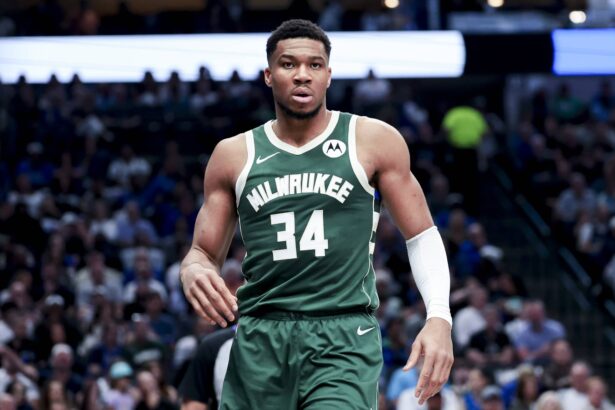
The Bucks could have a very different roster by the end of the summer if the Giannis Antetokounmpo situation keeps moving toward a trade. Marc Stein and Jake Fischer have reported growing noise around Giannis’ future, with the Heat and Trail Blazers already tied to the chase. If the Bucks finally reach that point, it probably wouldn’t stop with only one move.
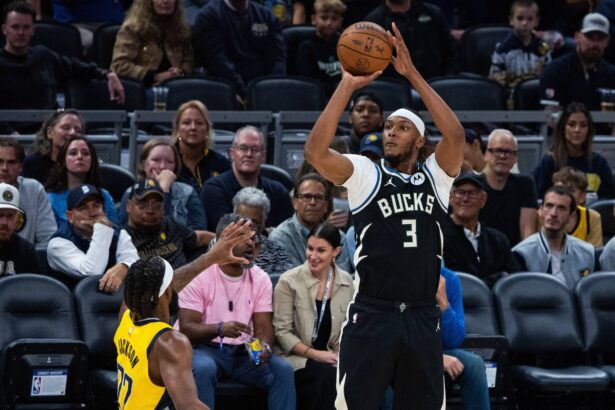
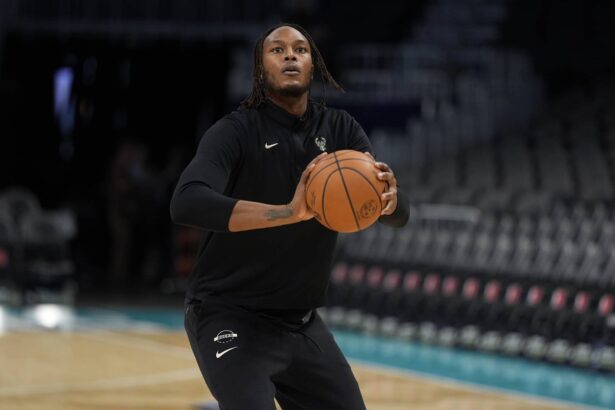
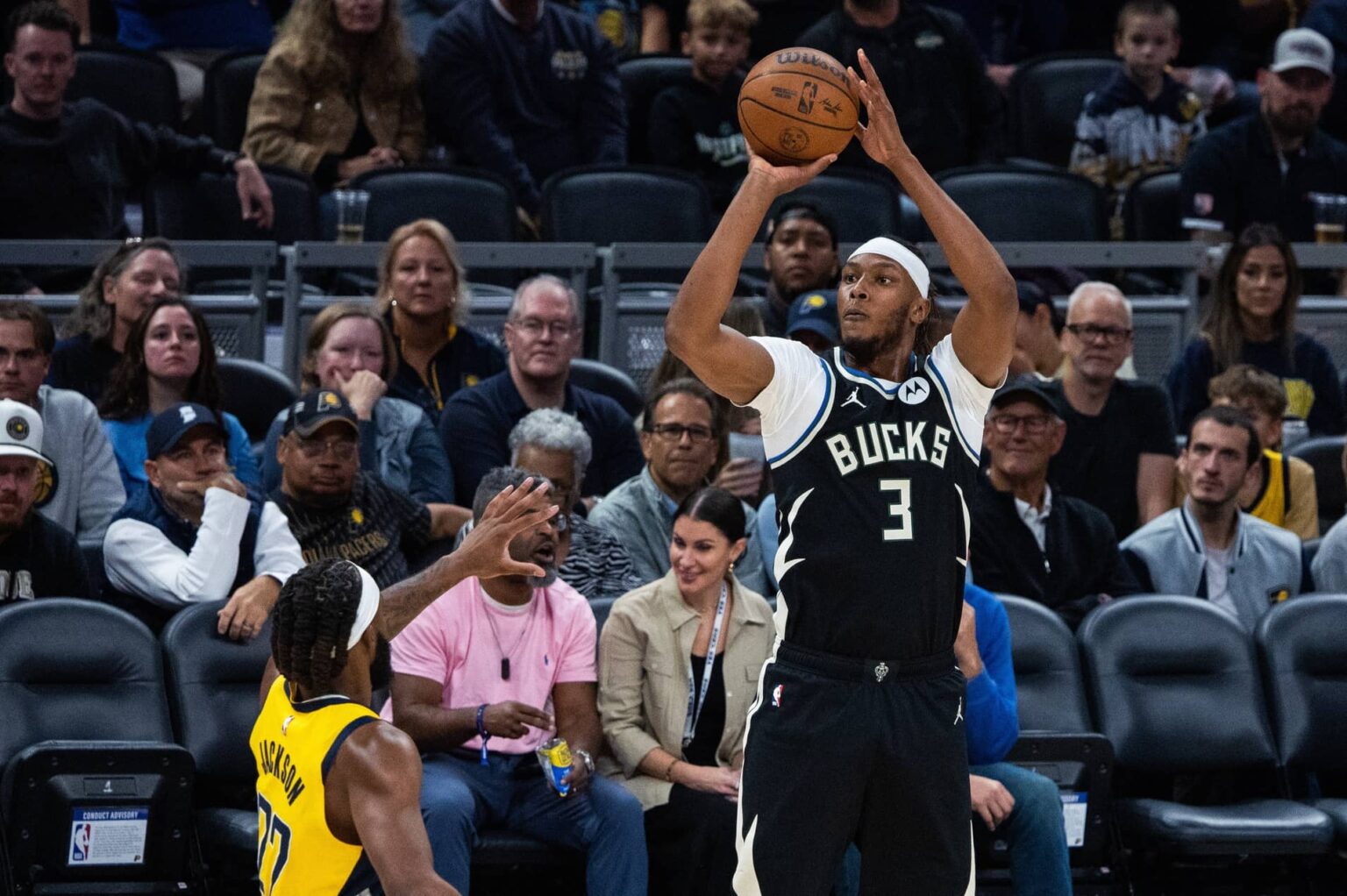
That is where Myles Turner becomes a name to watch. The Bucks signed him in the 2025 offseason after his long run with the Pacers, giving him a four-year, $108.9 million contract. His 2026-27 salary is $26.6 million, with $27.8 million in 2027-28 and a $29.1 million player option for 2028-29.
Turner’s first Bucks season wasn’t his best. He posted 11.9 points, 5.3 rebounds, 1.5 assists, and 1.6 blocks in 26.9 minutes per game, while shooting 44.0% from the field and 38.3% from three. The shooting still gives him value, but the overall production was below what the Bucks expected when they added him next to Giannis.
If the Bucks enter a retool or rebuild, Turner should have a market. Here are four potential landing spots for him in a trade this summer.
4. Orlando Magic
Potential Trade Offer: Wendell Carter Jr., Jett Howard, 2032 first-round pick
The Magic already made one big move for shooting when they traded for Desmond Bane, but the roster still has a spacing question in the frontcourt. Paolo Banchero finished the season with 22.2 points, 8.4 rebounds, and 5.2 assists, but he shot only 30.5% from three. Franz Wagner gave them 20.6 points, 5.2 rebounds, and 3.3 assists, but he was at 34.5% from three. Both can score. Both can pass. But neither is a high-volume movement shooter, and that still leaves the lane crowded too often.
That is where Turner would make sense. The Magic don’t need another player to take the ball away from Banchero, Wagner, or Bane. They need a center who can change the defensive alignment before the possession even starts. If Turner is above the break or in the corner, the opposing center can’t sit in the paint the same way. That gives Banchero more open drives, gives Wagner more space on his left-hand attacks, and gives Bane better angles when he works off the catch.
Wendell Carter Jr. is useful, and this wouldn’t be a small loss. He gives the Magic size, rebounding, and a more physical interior game. But the Magic already have a strong defensive base. Their next jump has to come from making playoff offense less tight. Bane helped that, but one shooter on the perimeter doesn’t fully fix the frontcourt spacing.
For the Bucks, the package is practical. Carter replaces Turner with a younger center on $18.1 million. Jett Howard gives them a young shooting piece on $7.3 million. The first-round pick is the asset that makes it worth discussing if the Bucks start moving veterans after a Giannis Antetokounmpo trade.
This is the type of move the Magic should study if they want to push from strong young team to serious East threat. It isn’t only about adding a name. It is about making Banchero and Wagner easier to use in May.
3. Dallas Mavericks
Potential Trade Offer: Daniel Gafford, Naji Marshall, 2031 first-round pick
The Mavericks are not the same kind of contender as the Lakers, Knicks, or Magic. They finished 26-56, so this landing spot only works if the front office wants a fast retool around Cooper Flagg instead of a long rebuild. If the Mavericks want to be aggressive again, Turner gives them a different center type from Daniel Gafford and Dereck Lively II.
Flagg already gives the Mavericks a franchise forward. He posted 21.0 points, 6.7 rebounds, and 4.5 assists as a rookie, but he shot only 29.5% from three. That means the frontcourt around him has to help the spacing. If the Mavericks play Flagg with a non-shooting center all the time, defenses can keep one center near the rim and shrink his drives. Turner changes that because he forces the opposing five to step out.
Gafford is useful. But he doesn’t give the Mavericks stretch-five spacing. Lively also has long-term value, but he played only seven games this season after foot surgery. The Mavericks can’t build a season plan only on health guesses. Turner would give them a more stable veteran at center, with rim protection and shooting in the same spot.
The money also works without making the offer too messy. Turner is at $26.6 million in 2026-27. Gafford’s new extension puts him at $18.1 million, while Nnaji Marshall is at $9.0 million. That gets the outgoing salary close enough for a framework.
For the Mavericks, this is a bet on balance. Turner wouldn’t fix everything, but he would give Flagg more space, give Kyrie Irving more room if he stays, and give the team a more modern playoff center.
2. New York Knicks
Potential Trade Offer: Josh Hart, Miles McBride, Pacome Dadiet, 2026 No. 24 pick
The Knicks don’t need a desperate center trade after making it to the NBA Finals, but Turner is the kind of move that would make sense if they want more shooting and shot blocking in the same frontcourt. They finished 53-29, third in the East, with the No. 3 offense in the regular season. In the playoffs, the jump has been even bigger: 123.3 offensive rating, 103.5 defensive rating, and the best net rating in the field.
The Knicks already score well with Jalen Brunson. Brunson posted 26.0 points, 3.4 rebounds, and 6.7 assists in the regular season, and he leads their postseason scoring at 26.9 points per game. Karl-Anthony Towns leads them in playoff rebounding at 11.9 per game and gives them elite shooting from the five. But Towns isn’t the same type of rim protector as Turner, and that is the gap this trade tries to attack.
Turner gives the Knicks a different defensive layer. He had 1.6 blocks in 26.9 minutes per game in a down season, and his career mark is 2.1 blocks per game. Put that behind OG Anunoby and Mikal Bridges, and the Knicks can contest more at the point of attack without leaving the back line naked. The price is that Hart would be gone, and that hurts. Hart is a playoff rotation piece, a wing rebounder, and one of their best dirty-work players.
The money works in a basic framework. Hart is at $20.9 million, McBride is at about $4.0 million, and Dadiet is around $3.0 million. That gets the Knicks close enough for a trade structure.
For the Bucks, this gives them a proven rotation wing, a cheap guard, a young prospect, and a first-round pick. For the Knicks, it is a high-cost move, but also one that gives them a rare playoff frontcourt: Towns for shooting, Turner for rim protection, and both bigs capable of playing outside the paint.
1. Los Angeles Lakers
Potential Trade Offer: Jarred Vanderbilt, Deandre Ayton, Jake LaRavia, 2031 first-round pick
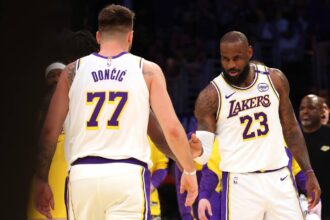
The Lakers are the best Turner landing spot because their weakness is easy to see in the numbers. They finished 53-29, fourth in the West, with a 118.2 offensive rating and a 116.4 defensive rating. The offense was good enough. The defense wasn’t at the same level. With Luka Doncic, LeBron James, and Austin Reaves, the Lakers don’t need another high-usage scorer. They need a center who can protect the rim, shoot threes, and stay on the floor in playoff lineups.
Turner fits that exact need better than Deandre Ayton. Turner didn’t have a big scoring season with the Bucks, but he still gave them 1.6 blocks per game and 38.3% from three. That combination is the reason the Lakers should look at him. Ayton had useful regular-season production with 12.5 points, 8.0 rebounds, 0.8 assists, and 1.0 blocks in 27.2 minutes per game while shooting 67.1% from the field. That is efficient center production, but it still isn’t the same playoff profile. Ayton doesn’t stretch the floor, and the Lakers need more space around Doncic.
The Doncic part is the main point. He led the league with 33.5 points per game and also gave the Lakers 7.7 rebounds and 8.3 assists. A non-shooting center lets the opposing big stay closer to the paint. Turner changes that. If the defense drops, Doncic has room to score. If the defense helps from Turner, the Lakers get a pick-and-pop three from a center who shot 38.3%. If the defense switches, Doncic gets the matchup he wants.
The trade also depends on Ayton’s contract. He has to accept his 2026-27 player option to be included in this structure. If he opts in, the money becomes workable: Vanderbilt is at $12.4 million, Ayton would be at $8.1 million, and LaRavia is at $6.0 million. That gets the Lakers to about $26.5 million going out before the 2031 first-round pick. The salary match is tight, which is why this framework makes sense on paper.
For the Bucks, this is a reset-style return if they move veterans after a Giannis Antetokounmpo trade. Vanderbilt gives them a defensive forward. Ayton gives them a cheaper center with size and efficient finishing. LaRavia gives them a rotation forward who played all 82 games and posted 8.2 points. The 2031 first-round pick is the long-term asset.
For the Lakers, the move is simple. Turner gives Doncic a stretch five, gives LeBron more driving room, and gives the defense a better rim-protection base. That is a much better playoff formula than asking Ayton to be the long-term center answer.