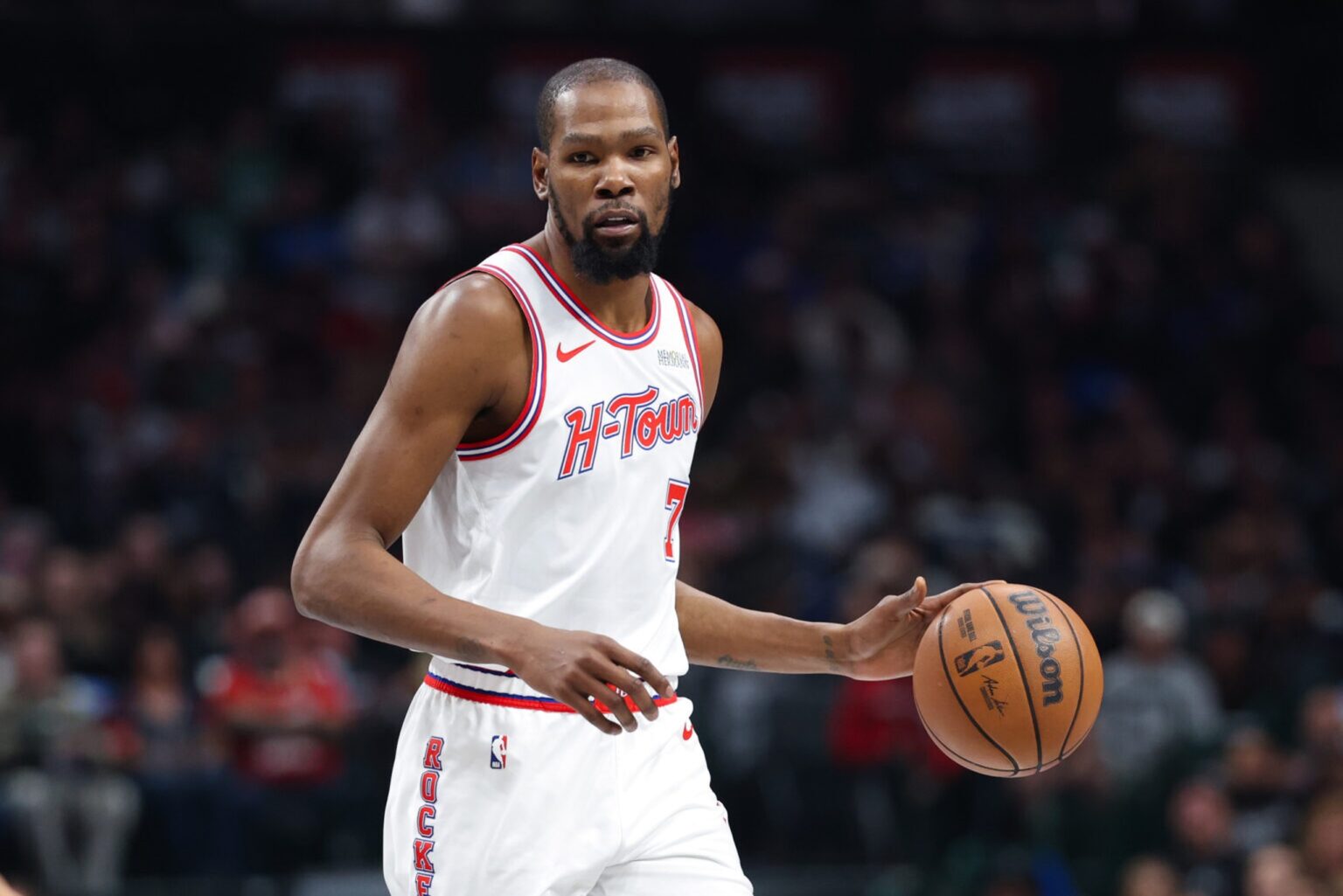
The Houston Rockets already have one of the deepest rosters in the NBA, and they just brought back Jae’Sean Tate as their 15th man, but their 2025-26 season showed that having 10 playable guys doesn’t always solve the biggest problem once the playoffs slow everything down. Houston finished 52-30 and fifth in the West, ranked eighth in offensive rating and owned a top-five defense, and still, the Doncic-Reaves-less Lakers eliminated them 4-2 in the first round because they couldn’t consistently create organized half-court offense with so many inexperienced young players.
Alperen Sengun posted 20.3 points, 10.2 rebounds, and 4.7 assists during the series, but Houston had to play five of the six games without Kevin Durant, who appeared only in Game 2 before a right knee injury ended his postseason. That left the Rockets leaning heavily on Sengun, Amen Thompson, offensive rebounds, and difficult individual creation late in the shot clock, and while that formula helped them extend the series to six games, it also showed why another proven creator would make the roster much better entering next season.
Fred VanVleet should return after missing the season with ACL and meniscus injuries, while Marcus Smart and Bogdan Bogdanovic give Ime Udoka more experienced options in the backcourt. Reed Sheppard also made a serious jump by averaging 13.5 points, 2.9 rebounds, and 3.4 assists while shooting 39.4% from three on 7.0 attempts, but he’s just not there yet as a total floor general.
Still, Amen Thompson shot 21.6% from three, and Sengun made 30.5%, which means the other three players in almost every important lineup must provide high-level shooting and ball-handling. Durant averaged 26.0 points, 5.5 rebounds, and 4.8 assists with 52.0% from the field, 41.3% from three, and a 64.1% true-shooting percentage during his first Rockets season, but he will be 38 when the season begins, so Houston must decide if this squad can make it to the Finals as it stands.
The Rockets don’t need to force a trade before opening night, because this roster is already good enough to compete near the top of the West, although Houston has enough salaries, prospects, and draft capital to at least explore one more major move.
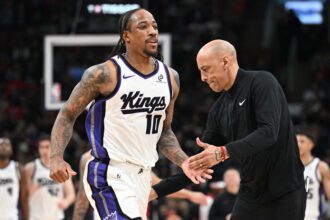
3. Dejounte Murray
Houston Rockets Receive: Dejounte Murray, Jordan Hawkins
New Orleans Pelicans Receive: Fred VanVleet, Dorian Finney-Smith, JD Davison, 2031 first-round pick (top-eight protected)
Dejounte Murray returned from a torn Achilles late in the 2025-26 season and played only 14 games, posting 16.7 points, 5.4 rebounds, 6.4 assists, and 1.6 steals in 27.8 minutes, while shooting 48.4% from the field, 30.6% from three, and 86.7% from the free-throw line. The sample was obviously small, and his perimeter shooting remained a problem, but Murray still showed enough burst, passing, and defensive activity to suggest he can return as a productive starting guard after a full offseason.
The Pelicans finished 26-56 and 11th in the West, missing the Play-In by 11 games even though players still under contract accounted for 93% of their total minutes, the highest rate in the NBA. Bringing almost the same roster back after that type of season feels strange, especially because Jeremiah Fears and Derik Queen need more touches, more freedom, and more opportunities without several expensive veterans controlling the offense.
Murray publicly denied requesting a trade in February, so he’s not pushing to leave the Pelicans, but New Orleans should still consider converting a 30-year-old guard into flexibility and another first-round pick. His $32.8 million salary in 2026-27 isn’t terrible for a healthy two-way starter, although it becomes harder to justify on a team that isn’t close to contention and already has too many guards who need the ball.
Jordan Hawkins would make the framework more interesting for Houston because the Rockets shouldn’t trade for another questionable shooter without adding somebody capable of stretching the floor. Hawkins has shown movement-shooting ability, but his role and value have declined, while Marc Stein and Jake Fischer reported that the Pelicans are exploring ways to move him for financial and roster flexibility.
Houston could send approximately $40.9 million through Fred VanVleet’s $25.0 million expiring contract, Dorian Finney-Smith’s $13.3 million salary, and JD Davison’s $2.6 million non-guaranteed deal, allowing the Rockets to receive Murray and Hawkins without creating a salary-matching problem. New Orleans would get an experienced point guard on an expiring contract, a veteran forward, a salary it could waive and a protected first-round pick.
The basketball fit still isn’t perfect, and there is no reason to pretend otherwise. Murray made only 30.6% from three after returning, while Thompson and Sengun already give Houston two starters whom defenses will willingly help away from on the perimeter, so a Murray-Thompson backcourt could make the paint crowded against playoff defenses.
Udoka could reduce that issue by staggering Murray and Thompson, using Murray to organize the second unit and closing certain games with Sheppard, Durant, and Sengun around him. Murray can still pressure the rim, create pull-up shots from the midrange, defend larger guards, and run pick-and-rolls without asking Durant to create every late-clock possession, which is something Houston clearly needs.
I wouldn’t make Murray the first call because of his Achilles history, limited shooting, and $32.8 million salary, which create too many questions, but this is the type of buy-low move that could become very valuable if he returns near his previous level. Houston would also keep the main young core to keep being a scary roster.
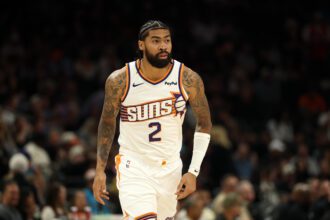
2. Tyler Herro
Houston Rockets Receive: Tyler Herro
Milwaukee Bucks Receive: Fred VanVleet, Reed Sheppard, 2031 first-round pick (top-five protected)
Not his greatest season in the league, but last year, Tyler Herro put up 20.5 points, 4.8 rebounds and 4.1 assists across 33 games, shooting 48.0% from the field, 37.8% from three and 91.7% from the free-throw line. His 60.2% true-shooting percentage was excellent for a guard taking pull-up threes, operating pick-and-rolls, and creating difficult attempts, while his 1.9 turnovers per game were also very low considering his offensive responsibility.
Herro arrived on the Bucks as one of the central pieces in the Giannis Antetokounmpo trade, and there’s been some buzz about Milwaukee exploring trading him before he even plays a game there. This would be Houston’s chance with an aggressive offer, as the Bucks may prefer more assets instead of building around a 26-year-old scorer who will become a free agent in 2027.
Milwaukee finished 32-50 before trading Antetokounmpo and now has a younger group featuring Kel’el Ware, Jaime Jaquez Jr., Kasparas Jakucionis, Nate Ament, Brayden Burries, and Ryan Rollins. Herro could obviously help those players because he provides spacing and shot creation, but the Bucks aren’t one Herro season away from Play-In contention, which is why converting him into Sheppard and another first-round pick would at least deserve consideration.
Sam Quinn of CBS Sports argued that the Bucks should move veterans who still carry trade value, specifically mentioning Herro and Myles Turner, rather than getting stuck between rebuilding and chasing the Play-In. That logic isn’t difficult to understand because Milwaukee doesn’t control enough of its own future first-round picks to gain full value from a traditional tank, making young players and external draft compensation even more important.
Herro will earn $33.0 million in the final season of his contract, while Houston could send VanVleet’s $25.0 million salary and Sheppard’s $11.1 million deal, creating around $36.1 million in outgoing money. The top-five-protected 2031 first-round pick would be the extra value Milwaukee needs because VanVleet is mainly financial flexibility, while Sheppard is the actual development piece.
Giving up Sheppard would hurt because he played all 82 games, made 2.8 threes per game, and gives the Rockets a cheap young shooter who also brings defensive effort. Still, Herro has already averaged at least 20.0 points in four different seasons and can handle an offensive role Sheppard might not be ready to carry during Durant’s remaining championship window.
The fit would be pretty straightforward. A starting group of Herro, Thompson, Smith, Durant, and Sengun would feature four players capable of creating a shot or making the next pass after the defense breaks, while Herro’s movement shooting would make it much harder for defenders to crowd Sengun in the post or load the paint against Thompson.
Herro could run secondary pick-and-rolls, attack closeouts and provide pull-up shooting without needing to control every possession, which makes him more natural beside Durant and Sengun than another high-usage forward. Thompson would also take the toughest perimeter assignment, allowing Udoka to protect Herro defensively without changing the entire system.
The defensive concern is still there because Herro isn’t stopping elite guards by himself, and Houston would be trading one of its best young contracts plus a future first-round pick for a player entering the final year of his deal. The Rockets would need strong confidence that Herro is willing to sign an extension, because losing Sheppard and a pick for one season would make no sense.
Even with that risk, Herro might be the best pure offensive fit of these three. He provides shooting, pull-up creation and secondary playmaking without taking touches away from Sengun or forcing Durant into a completely different role, and those skills are exactly what Houston missed against the Lakers.
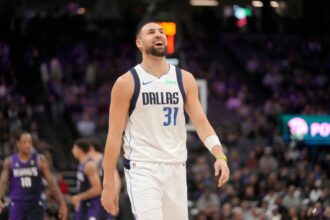
1. Jamal Murray
Houston Rockets Receive: Jamal Murray
Denver Nuggets Receive: Fred VanVleet, Jabari Smith Jr., Reed Sheppard, 2031 first-round pick
Jamal Murray finally became an All-Star after producing the best regular season of his career, averaging 25.4 points, 4.4 rebounds, and 7.1 assists in 75 games, while shooting 48.3% from the field, 43.5% from three, and 88.7% from the line. He finished with a 62.2% true-shooting percentage and committed only 2.3 turnovers in 35.4 minutes, which means he combined elite scoring efficiency with high-level playmaking across a full season.
Unlike the other two names, Murray has also appeared in actual offseason trade noise. Stein and Fischer reported that the Nuggets explored different possibilities involving Murray and Aaron Gordon after team president Josh Kroenke said everything outside of trading Nikola Jokic would be considered, although Denver is still more widely expected to move Christian Braun or Cam Johnson to keep breakout star Peyton Watson.
That doesn’t mean Murray is actively being shopped for the best available offer, because trading a 29-year-old All-Star after his best season would be a huge decision, but it does make the framework more than a random idea. The Nuggets finished 54-28 and third in the West, yet they haven’t returned to the Western Conference Finals since winning the 2023 championship, so the front office clearly has to decide whether another expensive run with the same core is worth it.
Murray will earn $50.1 million in 2026-27 and has three seasons worth around $161.5 million remaining, meaning Houston would need to send several contracts to make the numbers work. VanVleet, Smith, and Sheppard combine for approximately $59.8 million, while the 2031 first-round pick would complete an offer built around immediate help.
Denver would receive VanVleet as an experienced point guard on an expiring contract, Smith as a 23-year-old two-way forward who can shoot and defend around Jokic, Sheppard as one of the league’s best young shooting prospects, and another future first-round pick. The Nuggets would lose the best player in the trade, but they would become deeper, younger, and a lot cheaper for next year’s flexibility with VanVleet expiring.
For Houston, the basketball part is much simpler because Murray would fix its biggest playoff weakness in one move. He can attack switches, create from the midrange, run pick-and-roll with Sengun, play two-man actions with Durant, and score from three whether he has the ball or is running off screens.
A projected lineup of Thompson, Murray, Eason, Durant, and Sengun would give Udoka size, defense, creation, and shooting without requiring Murray to guard the best opposing scorer. Thompson could take the lead guard, Eason could defend the strongest wing, and Durant could remain on a lower-usage matchup, allowing Murray to save more energy for offense.
The combination with Sengun could be especially dangerous because Murray has spent years playing beside an elite passing center. Sengun isn’t Nikola Jokic, but he can still screen, pass from the elbows, punish switches and find cutters, while Murray already understands how to move without the ball and attack the holes created by a playmaking center.
Houston would be giving up a lot, because Smith’s size and shooting are valuable, while Sheppard could eventually become one of the NBA’s better shooters. Still, the point of collecting prospects and picks is eventually converting some of them into a proven star who increases championship probability, especially once the roster already has Thompson, Sengun, Eason, and Durant.
Durant’s timeline can’t wait forever for every young player to reach his ceiling, and Murray is only 29 with a long playoff history, elite shooting, and enough experience to close difficult games. Herro and Dejounte Murray would improve Houston, but Jamal Murray could change the level of the entire team.
The Rockets can enter the season with their current roster and still have a serious chance to finish near the top of the West, so there is no reason to panic or overpay for a name that doesn’t clearly improve the playoff outlook. At the same time, standing still isn’t automatically the smartest option when Durant is still producing at an elite level, and Houston has enough assets to create one more major move.