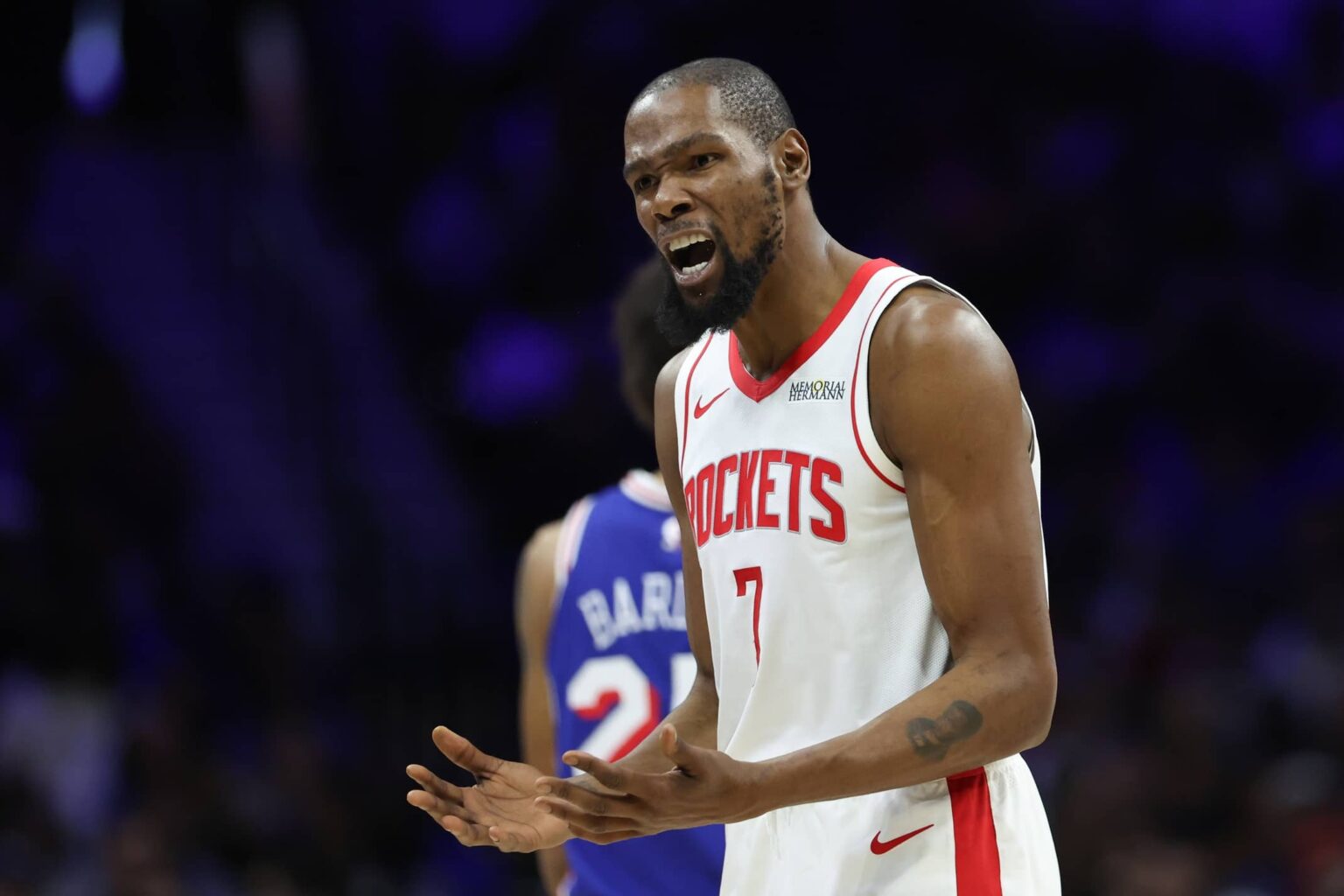
The Rockets tried the Kevin Durant version, and it ended with a first-round exit. They were eliminated by the Lakers in Game 6 after a 98-78 loss, finishing a series where Durant missed five of six games with an ankle injury. The final box score made the problem impossible to ignore: 78 points, 35.0% from the field, 17.9% from three-point range, and no real half-court answer once the game slowed down.
That does not mean Durant was the only reason they lost. Fred VanVleet missed the season, and the Rockets were asking too much from Amen Thompson, Reed Sheppard, Alperen Sengun, and Jabari Smith Jr. in their first real win-now playoff test. But that is also why the offseason cannot be quiet. The Rockets are too talented to rebuild and too flawed to simply run it back.
Michael Pina of The Ringer wrote before the elimination that the Rockets’ offseason could go in almost any direction. He noted that Durant could become a “stepping stone” this summer, with 22 teams having some level of interest if the Rockets make him available. He also mentioned Giannis Antetokounmpo, Kawhi Leonard, Donovan Mitchell, and Joel Embiid as star targets who could enter the conversation if the Rockets go big-game hunting again.
The Rockets do not need a small fix. They need a clearer plan. Durant can still score, but his age, $43.9 million salary, and playoff absence make him both a risk and a trade chip. Sengun is valuable. Thompson is close to untouchable. The picks still have value. But after this ending, the Rockets have to ask a harder question: which superstar actually gives them the best title path?
5. Anthony Davis
Houston Rockets Receive: Anthony Davis, 2030 first-round pick
Washington Wizards Receive: Kevin Durant, Clint Capela
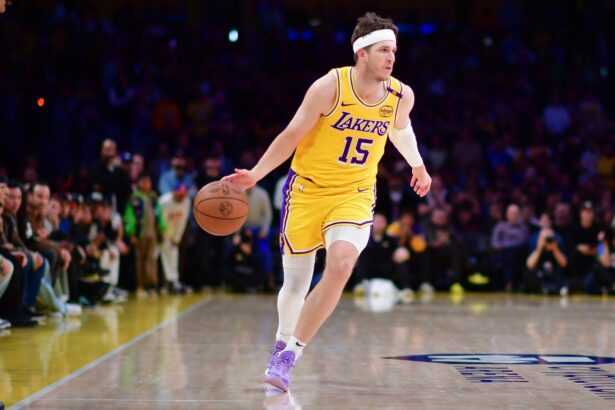
Anthony Davis is the complete opposite of having Durant if the Rockets want to become bigger, stronger, and more defensive without giving up Sengun. The money needs a small matching piece because Davis is owed $58.5 million in 2026-27, while Durant is owed $43.9 million. Adding Clint Capela’s $7.0 million salary gets the framework close enough for a legal offseason structure, and the first-round pick helps cover the risk of taking on Davis’ larger salary and injury history.
This move would completely change the Rockets’ frontcourt. Davis averaged 20.4 points and 11.1 rebounds this season before his hand and groin injuries, but he played only 20 games and did not make his Wizards debut after the trade. That is the obvious concern. He is still elite when healthy, but his availability is the whole trade, as rumors of an exit from the Wizards might be on the cards.
The basketball fit is strong. A Davis-Sengun frontcourt would be huge, skilled, and difficult to score against. Sengun can operate as the offensive hub, while Davis can protect the rim, switch some matchups, roll hard, and punish smaller defenders. The Rockets could also stagger them and always keep one high-level big on the floor.
The tactical idea is clear. Sengun can play at the elbow and short roll. Davis can screen, dive, and clean the glass. Thompson can attack in transition. Sheppard and VanVleet can space. Smith and Eason can defend forward spots. The Rockets would stop relying on Durant pull-ups and build a more physical playoff identity.
For the Wizards, this is about turning Davis into Durant and hoping Durant gives Trae Young a real scoring partner. They went 17-65 and have the league’s best lottery slot, so keeping Davis through another injury-heavy year may not be ideal. Durant gives them a cleaner short-term offensive star next to Young, while Capela gives them a rotation center behind Alex Sarr.
The problem for the Rockets is spacing. Davis and Sengun together can work, but it puts pressure on Thompson’s jumper. Thompson shot only 20.0% from three-point range, so the Rockets would need elite spacing from the other perimeter spots. This trade would make them better defensively, but it would not fix every half-court shooting problem.
Still, Davis is worth targeting because he gives the Rockets something Durant does not: elite interior defense. After watching the offense collapse without Durant, the Rockets may decide the answer is not another older scorer, but a dominant big who can anchor playoff defense and help Sengun survive tougher matchups.
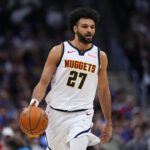
4. Donovan Mitchell
Houston Rockets Receive: Donovan Mitchell
Cleveland Cavaliers Receive: Kevin Durant
This is the simplest Durant trade on the board. The Rockets can trade Durant straight for Donovan Mitchell because the salary gap is workable. Mitchell is owed $50.1 million in 2026-27, while Durant is owed $43.9 million. For the Cavaliers, this means taking back less salary and adding one of the best scorers in league history. For the Rockets, it means getting a younger star guard who gives them more downhill pressure and long-term value.
The Rockets should look at this because Durant did not bring what they needed in the playoffs. Again, the injury was real. But the Rockets need more than a pure isolation forward. They need a guard who can bend defenses, attack in transition, create off the dribble, and give them another real late-clock option next to Sengun.
Mitchell does that. He averaged 27.9 points, 4.5 rebounds, and 5.7 assists this season while shooting 48.3% from the field and 36.4% from three-point range. He is not a pass-first guard, but he is a real creator. He can get two feet in the paint, hit pull-up threes, draw help, and pressure weak defenders.
The Rockets’ offense needs that. In Game 6 against the Lakers, they had no reliable perimeter scorer once Durant was out. Sengun produced 17 points and 11 rebounds, Thompson had 18 points, but the floor was too tight and the shot-making was not good enough. Mitchell would give the Rockets a guard defenses have to guard above the three-point line.
The fit with Sengun is very strong. Mitchell can run high pick-and-roll with Sengun, attack downhill, and use Sengun’s passing when teams trap. Sengun can catch in the middle of the floor and hit Thompson, Smith, Sheppard, or Eason. That gives the Rockets more movement than they had with Durant isolations.
For the Cavaliers, this is risky but understandable. They have James Harden, Evan Mobley, and Jarrett Allen. If they want a short-title push, Durant gives them a bigger wing scorer and a cleaner postseason mismatch. Harden can organize. Mobley and Allen can cover the paint. Durant can take the hardest late-game shots. That core would be older, but it would have a real title path if healthy.
The Cavaliers are currently in a Game 7 fight with the Raptors, and Mitchell has not been perfect in the series. In Game 6, he had 24 points while Mobley had 26 points and 14 rebounds, but the Cavaliers still lost 112-110 in overtime. That makes the question more interesting. If the Cavaliers fall short again, would they consider a different star shape around Harden, Mobley, and Allen?
For the Rockets, Mitchell is the better timeline play. He is 30 next season, not 38. He gives them a true scoring guard. He also lets Thompson play more as a defender, cutter, rebounder, and transition weapon instead of forcing him into too much half-court creation.
This is not the biggest trade on the list, but it may be the cleanest. Durant to the Cavaliers gives them a championship swing. Mitchell to the Rockets gives them a guard who fits the next five years better.
3. Joel Embiid
Houston Rockets Receive: Joel Embiid
Philadelphia 76ers Receive: Alperen Sengun, Dorian Finney-Smith, 2027 first-round pick (via Suns), 2031 first-round pick
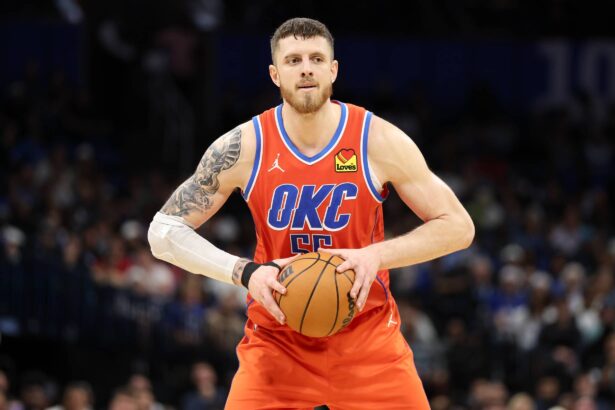
This is the most difficult trade because it forces the Rockets to answer the Sengun question. Sengun is 24, productive, and already a top offensive center. Trading him would be painful. But if Joel Embiid becomes available, the Rockets have to at least make the call.
Sengun alone does not match Embiid’s salary, so Dorian Finney-Smith has to be included for financial reasons. Embiid is owed $58.0 million in 2026-27, while Sengun is owed $35.6 million and Finney-Smith is owed $13.3 million. That puts the Rockets close enough under standard offseason matching, and the two first-round picks would be the real draft value for the 76ers.
The case for the Rockets is simple: Embiid gives them a true MVP-level ceiling if healthy. He averaged 26.9 points, 7.7 rebounds, and 3.9 assists this season despite playing only 38 regular-season games. That is still elite production, but the injuries are the whole issue. Embiid returned in Game 4 against the Celtics after an emergency appendectomy and had 26 points and 10 rebounds, as the 76ers came back from behind against the Celtics and will win-or-go-home in a Game 7.
The basketball fit is different from Sengun. Sengun is more of a passing hub. Embiid is a scoring hub. He gives the Rockets post scoring, free throws, rim protection, pick-and-pop shooting, and a player who can force double teams every game. With Thompson cutting, Sheppard spacing, VanVleet organizing, and Smith stretching the floor, Embiid would have real help.
The defensive upgrade would be large. Sengun has improved, but Embiid gives the Rockets a stronger playoff rim protector. Udoka could build more aggressive perimeter coverages knowing Embiid is behind the play. That is important because the Rockets want to defend with force, not just survive.
The risk is massive. Embiid’s contract is heavy, his health is always part of the story, and he is already 32. If the Rockets trade Sengun and picks, they are no longer building slowly. They are choosing a title window right now. That only makes sense if they believe Embiid can play deep into May and June.
For the 76ers, Sengun would be a strong reset piece if they finally decide Embiid’s timeline is too fragile. Tyrese Maxey would get a younger center who can pass, screen, and score without needing every touch. Paul George’s contract is still difficult, but Sengun gives the 76ers a new offensive base.
The Rockets should not offer any other young piece in an Embiid deal. That has to be the line. Sengun and two first-round picks is already a major package. Adding Thompson, Sheppard, or Smith Jr. would be too much for a player with Embiid’s injury record.
This is the high-risk option. Embiid could make the Rockets a true title team immediately. He could also leave them with a giant contract, fewer picks, and no Sengun. That is why he is third, not first.
2. Kawhi Leonard
Houston Rockets Receive: Kawhi Leonard
Los Angeles Clippers Receive: Alperen Sengun, Dorian Finney-Smith, 2031 first-round pick
Kawhi Leonard is the greatest superstar target if the Rockets want to keep the structure of a wing-led playoff team, while pairing Durant with a better defender and a stronger two-way playoff player.
The money is workable. Leonard is owed $50.3 million in 2026-27. Sengun is owed $35.6 million, and Finney-Smith is owed $13.3 million. That puts the outgoing salary near $49.0 million before the pick. The framework is close enough for an offseason trade if the Rockets manage their apron position properly.
The basketball case is strong. Leonard averaged 27.9 points, 6.4 rebounds, and 3.6 assists in 65 games while shooting 50.5% from the field and 38.7% from three-point range. That is still elite. He was healthy for most of the season, scored at a superstar level, and defended well enough to remain one of the best two-way forwards in the league.
The Clippers’ season still ended in disappointment. They lost in the Play-In Tournament to the Warriors, and Leonard was noncommittal afterward about his future discussions. He is under contract for one more season, so this summer is the natural time for the Clippers to decide whether to extend the era or cash out.
For the Rockets, Leonard would be a great playoff fit next to Durant if healthy. Durant is still taller and smoother as a scorer, and Leonard gives more strength, more defense, more physical shot creation, and more ability to guard elite wings. A VanVleet-Leonard-Eason-Thompson defensive group could be nasty, with Durant able to manage his load.
The issue is again Sengun. This trade costs the Rockets their best young offensive center. That is a serious price. But Leonard gives them a more direct championship build: VanVleet, Sheppard, Thompson, Leonard, Durant. Smith, Eason, Adams, and Capela. That team would be bigger on the perimeter, better defensively, and more suited to Udoka’s preferred style.
The Clippers would do this only if they want to reset without bottoming out. Sengun gives them a 24-year-old All-Star-level center. Finney-Smith gives them a veteran forward. The first-round pick gives them future value. That is a strong return for a 35-year-old Leonard on an expiring deal.
The Rockets would have to be sure Leonard’s body can hold up. That is the entire trade. If he plays 60-plus games and enters the playoffs healthy, he gives them a real chance. If not, they just traded Sengun for another aging star with availability risk.
That is why this is not No. 1. Leonard is an incredible basketball fit, but the age and injury history are too serious. Still, if the Rockets want a two-way superstar who can win playoff matchups without needing the ball every possession, Leonard is the best non-Giannis option.
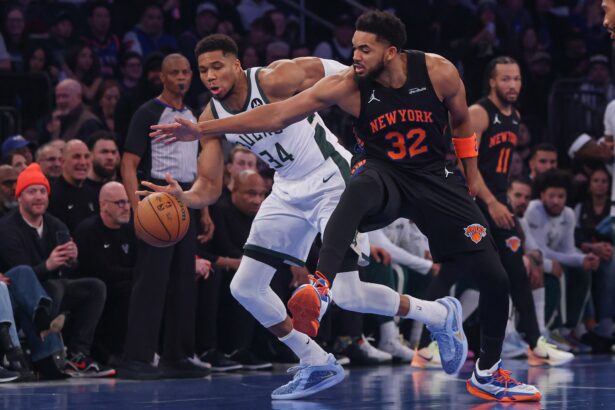
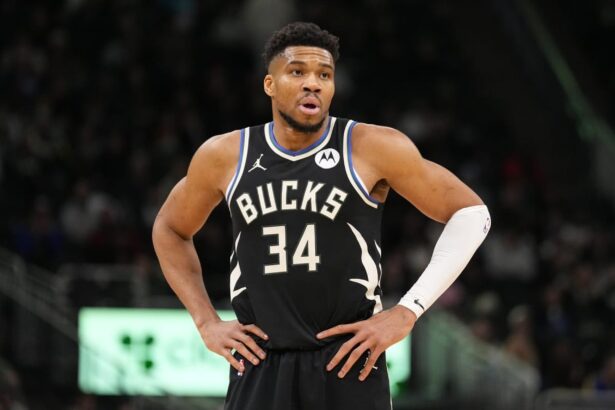
1. Giannis Antetokounmpo
Houston Rockets Receive: Giannis Antetokounmpo
Milwaukee Bucks Receive: Alperen Sengun, Jabari Smith Jr., 2027 first-round pick (via Suns), 2027 first-round pick (via Nets), 2031 first-round pick
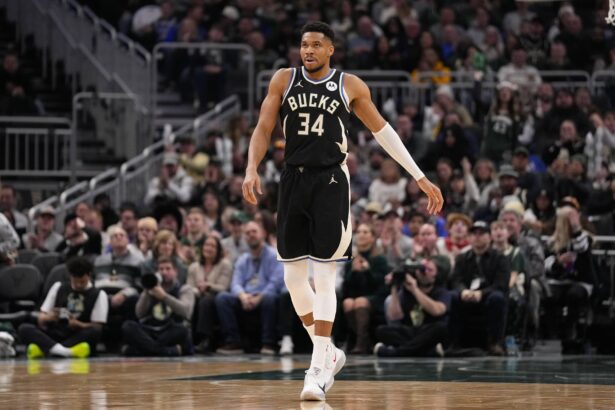
This is the dream target. If Giannis Antetokounmpo becomes available, the Rockets should not waste time. This is the player who changes everything.
The money works because Giannis is owed $58.5 million in 2026-27, while Sengun and Smith combine for about $59.3 million. That makes the salary structure simple compared with most superstar trades. The Bucks would get two young frontcourt starters and three first-round picks. The Rockets would get a top-five player when healthy.
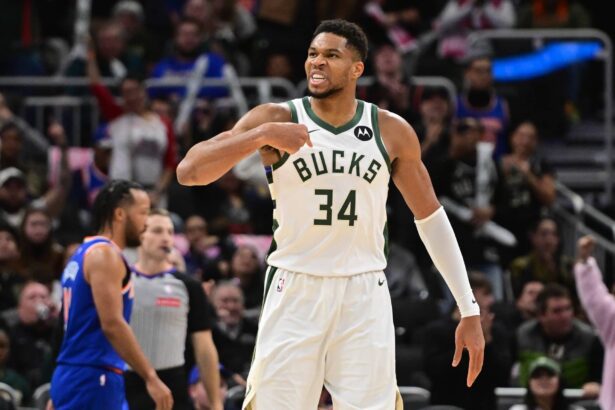
Giannis averaged 27.6 points, 9.8 rebounds, and 5.4 assists this season while shooting 62.4% from the field. The problem was health and team direction. He played only 36 games, and the Bucks finished 32-50 after another broken season. Giannis missed the end of the year with a left knee hyperextension and bone bruise, which adds some risk, but the larger picture is obvious: the Bucks are no longer a contender.
The Rockets are exactly the kind of team that can make a real offer. They have young talent, picks, and a defensive coach. They can send Sengun, Smith, and three first-round picks without touching Thompson or Sheppard. That is the key. If the Rockets can keep Thompson, they can build one of the most athletic teams in the league around Giannis.
The fit is powerful. Giannis and Thompson would be impossible to handle in transition. VanVleet and Sheppard can shoot. Eason can defend. Adams and Capela can soak up regular-season center minutes. Durant could run every possession through him and create a strange but dangerous frontcourt with Giannis.
The half-court questions are real. Giannis needs shooting around him. Thompson is not a shooter yet. Adams and Capela do not space. That means the Rockets would need to manage lineups carefully. But Giannis solves so many things that the trade is still worth it. He gives them rim pressure, free throws, rebounding, help defense, and a superstar who attacks the basket every night.
For the Bucks, this would only happen if Giannis asks out or the franchise decides the current era is finished. Sengun would give them a new offensive center. Smith gives them a young forward who can stretch the floor and defend. The 2027 Suns pick, 2027 Nets pick, and 2031 Rockets pick would give them real draft upside.
This is the one trade where the Rockets should be aggressive. Sengun is excellent. Smith still has upside. Three first-round picks are a lot. But Giannis is the kind of player who changes the franchise’s ceiling in one move.
The Rockets lost to the Lakers because they did not have enough healthy top-end force. Giannis is top-end force. He gives them a real identity: defend hard, run, attack the rim, and make every opponent deal with size and pressure for 48 minutes.
If Giannis is even slightly available, this has to be the first call. He is the best player on the list, the cleanest franchise swing, and the one target who could turn the Rockets from a talented first-round team into a real championship threat.