Every year around this time, the championship conversation basically writes itself around the same handful of teams, and this season is no different. The Knicks are back to defend the title, the 76ers went out and built a genuinely absurd superteam, San Antonio already made a Finals run, and Oklahoma City still has arguably the scariest young core in the sport. Nobody’s arguing with any of that.
But every single season, a few teams sneak up on everybody and finish way better than anyone had them pegged for in preseason, whether it’s because a young guy finally breaks out, a star gets healthy again, or a front office nails an offseason nobody paid much attention to at the time. None of the five teams below deserve to be treated as a title contender walking into this season, and honestly, a couple of them could just as easily slide back into the lottery if things break wrong.
What they do have, though, is enough actual talent on the roster that by March, a bunch of these preseason predictions are going to look pretty silly. Here are five teams worth keeping an eye on heading into 2026-27, ranked from No. 5 up to the team I think has the highest ceiling of the group.
5. Los Angeles Clippers
The Clippers went 42-40 and finished ninth in the West last season, which isn’t a wildly impressive record on its own. Still, their plus-1.2 net rating suggests they were actually a little better than your typical ninth-place team. Their real problem was never talent so much as turning solid regular-season basketball into an actual playoff spot.
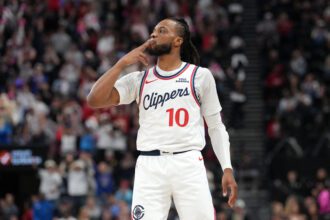
Darius Garland is the biggest reason to keep believing in this group. He put up 18.8 points, 2.4 rebounds, and 6.7 assists on 46.0% shooting and 39.6% from three last season, and he looked noticeably more aggressive once he landed in L.A. from Cleveland, giving the Clippers a younger lead guard who can actually create for himself, push tempo, and run an offense without needing a second superstar standing next to him.
Layer in Bennedict Mathurin (only “if” he comes back) as another physical scorer, and the newly signed Rui Hachimura giving them size and shooting up front, then add the fact that they took Keaton Wagler at No. 5, a 6-foot-6 guard who dropped 26 points in a Summer League game, and suddenly there’s a much younger core than this franchise usually builds around.
The Kawhi Leonard situation is really the whole ballgame here, though. His reported trade to Toronto is still on hold while the league looks into possible salary cap circumvention tied to his endorsement deal, and depending on how that plays out, the Clippers either get Brandon Ingram, Gradey Dick, and draft capital if it’s approved, or Leonard stays on the roster while the legal stuff drags on if it isn’t. Either way, there’s real talent involved, but it makes the final shape of this rotation genuinely hard to project right now.
There’s still enough scoring here to win some games regardless of how that resolves. Garland can organize things, Hachimura can have a bigger impact, and Wagler has a real shot at being one of the better rookies in his class. The defense and the frontcourt depth are much bigger question marks after they moved Ivica Zubac, and this team could struggle against bigger frontcourts as a result.
This isn’t a safe bet to make the playoffs, but it’s not a normal rebuild either, and if the young guards develop on schedule and the Leonard situation doesn’t blow up the roster, 43 wins and a return trip to the Play-In feels very realistic.
4. Chicago Bulls
Chicago finished 31-51 and 12th in the East last year, though that record hides how chaotic the season actually was. Injuries hit Josh Giddey, Matas Buzelis, Jalen Smith, and a handful of other rotation guys at different points, the roster basically got rebuilt on the fly through multiple deadline trades, and the team started 5-0 before somehow ripping off an 11-game losing streak in February.
The version of this roster heading into 2026-27 looks a lot more balanced. Giddey averaged 17.0 points, 8.3 rebounds, and 9.1 assists on 44.8% shooting, and while he still needs to become a more reliable shooter for this to really click, his size, rebounding, and vision already give the Bulls a legitimate offensive identity to build around.
Matas Buzelis is really the whole reason to take this team seriously, though. At 21, he averaged 16.3 points, 5.8 rebounds, and 2.1 assists while knocking down 150 threes and blocking 101 shots, and he’s already combining shot-making with size and weak-side rim protection in a way that’s rare for a player his age. He also averaged 21.4 points and 7.1 rebounds over a 16-game stretch late in the season, and if that carries into a real third-year jump, he’s got a legitimate case for All-Star consideration.
Norman Powell gives this group a proven bucket-getter after averaging 21.7 points, 3.5 rebounds, and 2.5 assists last year, and his two-year, $45.0 million deal should immediately make him their best movement shooter and closing option late in games. Chicago also brought in Nic Claxton, took Caleb Wilson at No. 4, and grabbed Dailyn Swain at 15.
Put Giddey, Powell, Wilson, Buzelis, and Claxton in the starting five, and you’ve got a young, athletic group that’s genuinely tough to match up with physically. Giddey controls the ball, Powell stretches the floor, Buzelis and Wilson attack from the forward spots, and Claxton screens, switches, and protects the rim behind everyone.
There’s still no proven superstar here; Powell just turned 33, Giddey’s jumper could hurt the spacing more than people expect, and asking two young forwards to suddenly become primary scorers is a real risk. Their half-court offense could get ugly whenever a defense forces Giddey away from the paint.
But the East is wide open enough right now for a team like this to move up. If Buzelis takes another step and Powell keeps scoring at a 20-point clip, this team climbs from 31 wins into the Play-In race without much trouble, and something in the 40-42 win range wouldn’t shock anybody.
3. Washington Wizards
Calling a team that just went 17-65 dangerous sounds ridiculous on its face, but last year’s Wizards barely resemble the roster that’s about to open training camp. Washington finished dead last in the East while giving up an ugly 124.9 points a game, though a lot of that comes down to the fact that Trae Young and Anthony Davis combined for only 35 games played and never once shared the floor together after landing in D.C.
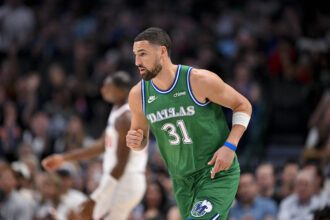
Young himself averaged 17.9 points and 8.0 assists across just 15 games before a right MCL sprain ended his season early, and Washington still handed him a four-year, $212.0 million deal because he remains one of the best pick and roll creators alive, with career averages of 25.1 points and 9.8 assists that give you a sense of what this offense could look like with him actually healthy for a full 82-game sample.
Davis put up 20.4 points, 11.1 rebounds, 2.8 assists, and 1.7 blocks in just 20 games before a left-hand injury shut him down, and he never even suited up for Washington after arriving in the deadline deal, meaning the Wizards essentially added an All-Star big man and got zero actual production out of him last season.
The young talent around them has also come a long way. Alex Sarr posted 16.3 points, 7.4 rebounds, and 2.7 assists in year two, and Washington then landed AJ Dybantsa at No. 1 after he put up 25.0 points a game at BYU, arriving with the scoring ability to become this team’s best wing almost immediately.
Tre Johnson, Bilal Coulibaly, Kyshawn George, and Bub Carrington round out a genuinely deep group of young perimeter pieces, and the Wizards also brought in Deandre Ayton, though fitting Ayton, Davis, and Sarr into the same frontcourt minutes could get complicated fast.
The basketball vision here is exciting when you think it through. Young can create easy looks for any big man on this roster, Davis can clean up defensive mistakes behind everyone, and Dybantsa gets to develop as a rookie without having to carry the offense from day one. Washington has the pieces to play big, or to surround Young and Davis with three athletic wings depending on matchup.
Health is obviously the elephant in the room. Young and Davis both missed most of last season, Davis just turned 33, and Washington’s perimeter defense could still be rough with Young anchoring the backcourt. There’s also a real logjam at center and not nearly enough proven shooting around the edges.
Still, this roster is far too talented to win only 17 games again. A healthy Young and Davis pairing, plus a strong rookie year from Dybantsa, could realistically push Washington toward 38 wins and put them in the Play-In conversation much sooner than people expect.
2. Utah Jazz
The Jazz finished 22-60 and landed 15th in the West, but they were deliberately tanking and had a monstrous trade deadline to get ready for next season. Still, their defense allowed a league-worst 126.0 points a game, and trading away Walker Kessler stripped out their best rebounder and rim protector on top of everything else.
Facing the 2026-27 campaign, though, Utah might actually have one of the more interesting starting lineups in the league on paper. Lauri Markkanen put up 26.7 points, 6.9 rebounds, and 2.1 assists on 47.7% shooting, and even though he only played 42 games, he looked like a genuine All-Star every time the Jazz could keep him on the floor.
Jaren Jackson Jr. adds a second established scorer and a former Defensive Player of the Year to the mix. His season ended early with knee surgery, but a healthy version of Jackson can guard multiple positions, shoot from range, and punish slower centers, and pairing him with Markkanen gives Utah a massive frontcourt with two guys who can both score well beyond the paint.
Then there’s Keyonte George, who developed into a fringe All-Star level last season with 23.6 points, 6.1 assists, and 3.7 rebounds in 54 games. The injuries, trigger-happy scoring, and lack of a true floor-general vision might still hurt the team at times, but he’s become the main perimeter scorer of this group instantly.
Ace Bailey had a solid rookie year too, putting up 13.8 points, 4.2 rebounds, and 1.8 assists on 44.3% shooting. His efficiency and decision-making were both shaky at times, but he’s still a 6-foot-9 scorer who played in 72 games as a rookie, and even a modest second-year jump gives Utah a legitimately dangerous third option.
Then Utah used the No. 2 pick on Darryn Peterson, a 6-foot-6 guard who finally gives them the lead creator this roster was missing, and his ability to shoot, attack the rim, and draw defenders should make life considerably easier for Markkanen, Jackson, and Bailey. Suddenly Utah can send out a lineup of four guys between 6-foot-6 and 6-foot-10 without giving up much scoring at all.
There are still real issues here. Peterson just turned 19, Bailey remains inconsistent, and Jackson’s never really been an elite rebounder for a frontcourt player. Swapping Kessler out for Jaxson Hayes, Mo Bamba, and some smaller defensive pieces isn’t an obvious upgrade either.
But not many 22-win teams walk into a season with two established All-Star-level forwards, two promising young scorers, and the No. 2 overall pick all at once. Utah probably isn’t ready to actually win a playoff series, especially in a brutal West, but 35 to 38 wins and a late Play-In push feel genuinely possible if Peterson looks ready right away.
1. Indiana Pacers
Indiana is easily the strongest sleeper on this whole list, and it isn’t particularly close. They went 19-63 and finished 14th in the East last season, but that record happened during a year when Tyrese Haliburton didn’t play a single game while recovering from the torn right Achilles he suffered in Game 7 of the 2025 Finals.
Even without him, Pascal Siakam averaged 24.0 points, 6.6 rebounds, and 3.8 assists on 48.4% shooting and 35.8% from three, carrying an offense that had lost its lead guard and staying productive even once the season had clearly gotten away from the Pacers.
The front office also went out and traded for Ivica Zubac before the deadline, and he immediately gave them 14.1 points, 10.6 rebounds, and 2.2 assists on 59.8% shooting, exactly the kind of physical rebounder and interior finisher this team was missing during its Finals run the year before. Expect plenty of easy buckets for him once his pick-and-roll chemistry with Haliburton starts to click.
Kelly Oubre Jr. adds another aggressive scoring wing, and Andrew Nembhard, Aaron Nesmith, Jarace Walker, and T.J. McConnell all remain in place around Siakam and Haliburton. Indiana did lose Bennedict Mathurin in the Zubac deal, but they essentially traded his scoring for more size, rebounding, and defensive stability.
Everything really does come down to how Haliburton’s recovery goes from here. An Achilles injury can mess with a guard’s burst, conditioning and confidence in ways that are hard to predict, and Indiana genuinely can’t assume he walks back onto the floor as the exact same player who led them to the Finals. It might take months before this offense is moving the way it did back then.
But this isn’t a normal 19-win roster by any stretch. Indiana already knows its system works with Haliburton, Siakam, Nembhard, Nesmith, and McConnell on the floor together; Zubac gives them a much more traditional anchor at center, and Oubre adds another guy who can generate offense when things stall out.
If Haliburton comes back at even 85.0% of what he used to be, the Pacers should be firmly in the Play-In picture. If he’s looking close to his old self by December, this team can realistically finish in the top six and become the last team anybody wants to see in a first-round matchup.
This was a Finals team just one season before everything fell apart, and that’s exactly why the ceiling here is so much higher than a 19-win record suggests.