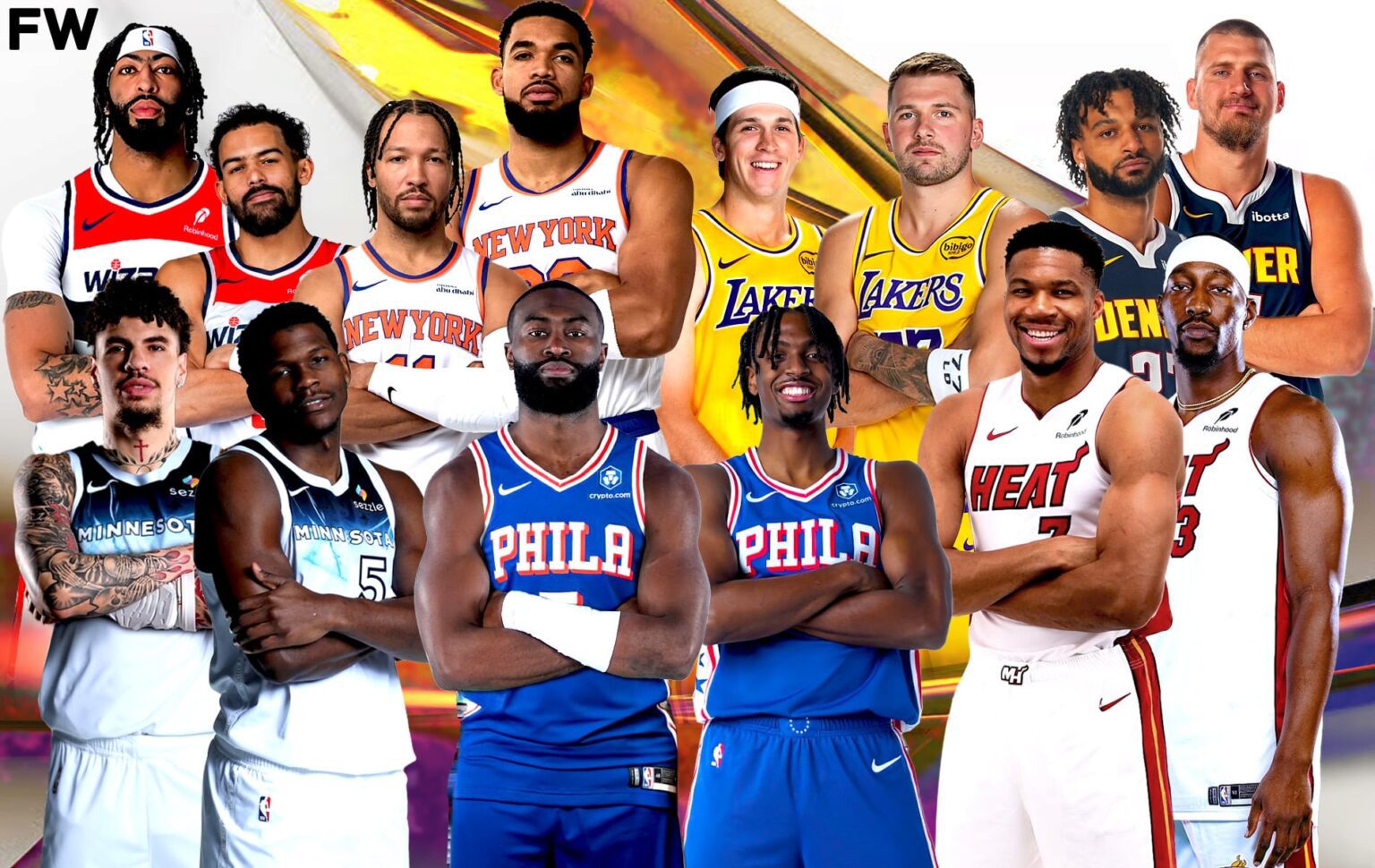
The NBA has more star pairings than ever after a completely crazy offseason, but not every team with two famous names has an elite duo. For this ranking, both players need to carry some big responsibility. A superstar doing everything next to a decent third option doesn’t automatically create a top-five partnership.
Production is obviously important, but so are fit, health, chemistry, playoff results, and how much each player contributes. New duos such as Anthony Edwards and LaMelo Ball have insane upside, while established partnerships like Nikola Jokic and Jamal Murray already know exactly how to attack every defensive coverage.
Some major names also miss the list. Jimmy Butler is recovering from a torn ACL, Paul George has declined too much to rank beside Jayson Tatum, and Devin Booker doesn’t have a massive second star in Phoenix right now.
Here are the 15 best NBA duos entering the 2026-27 season.
15. Ja Morant And Deni Avdija
Portland is taking a huge risk with Ja Morant, but the potential reward is pretty wild. Morant produced 19.5 points, 3.3 rebounds, and 8.1 assists last season, although an elbow injury limited him to only 20 games. Deni Avdija was much more reliable, breaking out with 24.2 points, 6.9 rebounds, and 6.7 assists while helping the Blazers finish 42-40 and reach the playoffs.
The fit could be super fun. Morant gives Portland elite rim pressure and transition speed, while Avdija can grab rebounds, push the ball, and create against bigger defenders. Neither player has to become only a spot-up shooter because both can alternate possessions as the main creator.
The issue is obvious. Morant has played only 79 games across the last three seasons, and Portland already has several guards who need minutes. Avdija also needs the ball to maintain his new production. If Morant stays healthy and accepts sharing control, this duo could jump close to the top 10. Right now, there’s just too much risk.
14. Trae Young And Anthony Davis
This pairing has a very high theoretical ceiling. Trae Young finished his first Wizards season with 17.9 points and 8.0 assists after just 5 games with them, while Anthony Davis recorded 20.4 points, 11.1 rebounds, 2.8 assists, and 1.7 blocks across 20 games before being traded to Washington.
Young has spent his entire career creating easy baskets for normal centers. Davis is one of the best lob threats, short-roll scorers, and defensive big men of his generation. Their pick-and-roll should be almost impossible to defend when both are healthy. Young can handle the offensive creation, while Davis covers a huge amount of his defensive problems.
But that final part is the problem. Davis has missed too many games, and Young’s scoring dropped badly last season. The Wizards also have a strange frontcourt with Alex Sarr, Deandre Ayton, and AJ Dybantsa needing touches and minutes.
This could become a top-seven duo if Davis plays 60-plus games and Young gets back near 25 points per game. Until they actually show it together, putting them higher would be based almost entirely on names.
13. Tyrese Haliburton And Pascal Siakam
Tyrese Haliburton missed the entire 2025-26 season after undergoing right Achilles surgery, so this ranking has to include some projection. During his last healthy campaign, he posted 18.6 points, 3.5 rebounds, and 9.2 assists with only 1.6 turnovers, leading the Pacers to the NBA Finals. Pascal Siakam carried the team without him, finishing last season with 24.0 points, 6.6 rebounds, and 3.8 assists.
This is a properly balanced partnership. Haliburton controls pace, creates open threes, and finds Siakam before the defense gets set. Siakam can attack mismatches, score in transition, and generate his own offense when Haliburton sits or gets trapped.
Indiana already reached the 2025 Finals with these two leading the offense, so the basketball fit isn’t a question. The only serious concern is Haliburton’s body. Achilles injuries can affect burst, conditioning, shooting balance, and confidence for a long time.
If Haliburton returns close to 100%, the Pacers immediately have a top-10 duo again. If he needs most of the season to recover, Siakam will once again carry a much larger part of the offense.
12. Paolo Banchero And Franz Wagner
Paolo Banchero and Franz Wagner still feel slightly underrated because Orlando hasn’t made a deep playoff run. Banchero put up 22.2 points, 8.4 rebounds, and 5.2 assists last season, while Wagner added 20.6 points, 5.2 rebounds, and 3.3 assists. Both are 6-foot-10 forwards who can handle the ball, attack the rim, and create against mismatches.
There isn’t a huge talent gap here. Banchero is the more isolation scorer and primary option, but Wagner is more efficient moving without the ball, cutting, and attacking tilted defenses. Either player can bring the ball up and initiate an action.
The Magic need better shooting and more consistent late-game offense from both. Orlando finished only 45-37 and lost a seven-game first-round series to Detroit, so the duo still has to prove it can turn talent into serious playoff success.
They’re only 23 and 24 years old, though. This could easily become one of the league’s top eight pairings within one season if Banchero improves his efficiency and Wagner stays healthy.
11. Shai Gilgeous-Alexander And Jalen Williams
Shai Gilgeous-Alexander is so good that ranking any Thunder partnership becomes complicated. He led Oklahoma City with 31.1 points, 4.3 rebounds, and 6.6 assists. Jalen Williams had a much quieter season, finishing with 17.1 points, 4.6 rebounds, and 5.5 assists while dealing with injuries and shooting only 29.9% from three.
Williams is still the correct partner over Chet Holmgren because he carries more creation responsibility. He can initiate the offense, attack switches, defend multiple positions, and run possessions when SGA rests. He already proved his ceiling during Oklahoma City’s 2025 championship run.
But right now, this isn’t a top-five duo. SGA handles a massive percentage of the scoring, creation, and late-game offense. Williams needs to return to his All-NBA level and become a consistent 20-point scorer again.
Oklahoma City is deep enough to win without forcing Williams to take 20 shots, which is great for the team but hurts this ranking. The partnership remains elite. It just isn’t as balanced as the ten duos above it.
10. Kevin Durant And Alperen Sengun
This is one of the most skilled frontcourt partnerships in basketball. Kevin Durant remained elite at 37, producing 26.0 points, 5.5 rebounds, and 4.8 assists. Alperen Sengun added 20.4 points, 8.9 rebounds, and 6.2 assists while earning another All-Star selection with the Rockets.
Sengun isn’t standing around waiting for Durant to create everything. He can run the offense from the post, find cutters, attack slower centers, and create easy shots. Durant gives Houston an automatic scorer against switches, and the type of perimeter shot-making Sengun can’t provide.
Their half-court offense can become slow because both players enjoy isolations and methodical possessions. Houston led the league in isolation frequency early last season, which can become predictable during a playoff series.
Still, both players can dominate independently, and their skill sets fit better than people expected. A deeper playoff run would push them higher. Another early exit would raise fair questions about whether this pairing is dangerous enough on offense and can survive on defense.
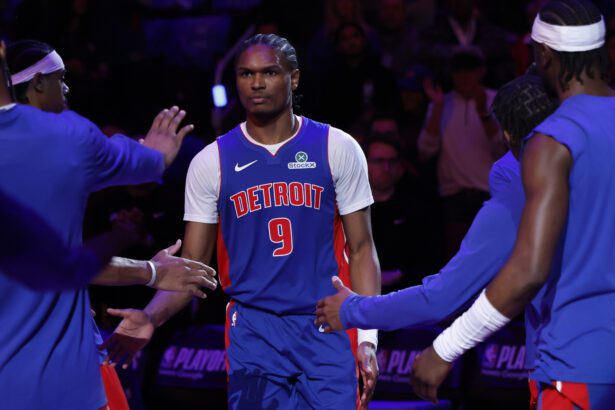
9. Cade Cunningham And Jalen Duren
Detroit isn’t a young, rebuilding team anymore after enduring a harsh process in recent years. The Pistons finished 60-22 and earned the No. 1 seed in the East, with Cade Cunningham and Jalen Duren both making All-NBA teams. Cunningham delivered 23.9 points, 5.5 rebounds, and 9.9 assists, while Duren added 19.5 points, 10.5 rebounds, and 2.0 assists on 65.0% from the field.
Their pick-and-roll is already one of Detroit’s biggest weapons. Cunningham uses his size and patience to manipulate the defense, while Duren finishes lobs, attacks the glass, and punishes smaller defenders.
I’m keeping them ninth because Duren still depends heavily on Cunningham for his best scoring opportunities. His All-Star and All-NBA cases also benefited from injuries to several bigger frontcourt candidates, and his playoff performance cost him a max contract, most likely.
That doesn’t erase a 20-point, 10-rebound season on a 60-win team. If Duren adds more passing, short-range shooting, or self-created offense, this duo can move much higher very quickly.
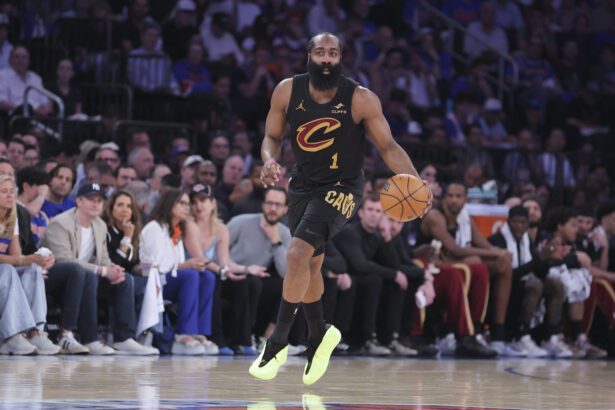
8. Donovan Mitchell And James Harden
Cleveland has two guards capable of completely controlling an offense with Donovan Mitchell, who posted 27.9 points, 4.5 rebounds, and 5.7 assists last season, and James Harden, who remained highly productive at 36, delivering 23.6 points, 4.8 rebounds, and 8.0 assists.
The roles are pretty obvious. Harden can organize the team, run pick-and-rolls, and create easier shots for the frontcourt. Mitchell can focus more energy on scoring, attacking closeouts, and closing games. The Cavs already saw the value of that setup during its playoff run, as they reached the ECF for the first time in over 30 years without LeBron James.
The defensive fit isn’t amazing. Mitchell is undersized, Harden is getting older, and opponents will attack both during playoff series. There’s also only one ball, so Cleveland has to avoid turning every possession into one guard watching the other isolate, which cost them the Knicks series.
Offensively, though, this duo can produce 50 points and 14 assists on any night. That level of creation makes them impossible to rank outside the top 10.
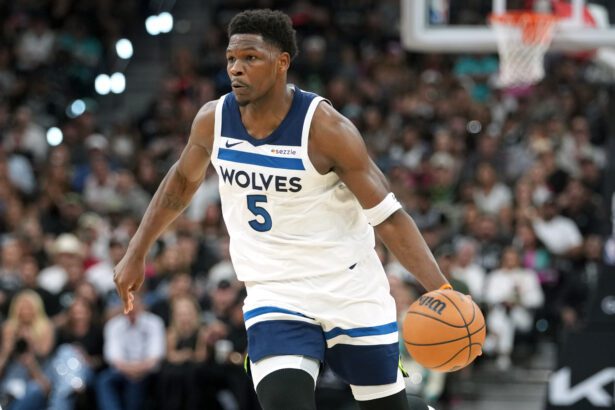
7. Anthony Edwards And LaMelo Ball
The Timberwolves paid a gigantic package because they believe this can become a championship backcourt. Anthony Edwards finished last season with 28.8 points, 5.0 rebounds, and 3.7 assists. LaMelo Ball arrived after producing 20.1 points, 4.8 rebounds, and 7.1 assists across 72 games with the Hornets.
Ball solves one of Edwards’ biggest problems: Ant no longer has to go and create every possession against a loaded defense focusing solely on him. LaMelo can push the pace, make advanced passes, and find Edwards before help defenders are ready to jump.
The upside is insane, but there are fair concerns. Both guards enjoy controlling the ball, neither is an elite defender, and Minnesota gave up significant frontcourt depth to complete the trade. Ball also needs to prove last season’s health wasn’t a one-year exception.
I still love the basketball idea. Edwards is the scorer and closer. Ball is the primary passer and transition engine. If LaMelo can defend at an acceptable level, they can become the most entertaining backcourt in the NBA and easily finish much higher than seventh.
6. Giannis Antetokounmpo And Bam Adebayo
Good luck scoring in the paint against Miami next season. Giannis Antetokounmpo comes in after producing 27.6 points, 9.8 rebounds, and 5.4 assists. Bam Adebayo had one of his best seasons with 20.1 points, 10.0 rebounds, and 3.2 assists, while obviously having that historic 83-piece over the Wizards.
This could become the best defensive duo in basketball immediately. Bam can defend the main big man, switch onto guards, and allow Giannis to roam as a help defender while Giannis protects the rim from the weak side, grabs rebounds, and turns stops into transition points before the opponent even gets organized.
The half-court offense could become ugly, and that’s the Heat’s main issue. Neither player is a dangerous high-volume shooter, and opponents will pack the paint during playoff games. Miami needs to find more shooting around them to keep driving lanes open.
Still, Bam isn’t some role-player second option. He’s a 20-point, 10-rebound All-Defensive center who can pass and create from the elbow. Giannis is clearly better, but both will carry huge responsibility. That makes this a legitimate top-six duo.
5. Victor Wembanyama And De’Aaron Fox
Victor Wembanyama and De’Aaron Fox already reached the NBA Finals during their first full season together. Wembanyama recorded 25.0 points, 11.5 rebounds, and 3.1 assists while winning Defensive Player of the Year. Fox added 18.6 points, 3.8 rebounds, and 6.2 assists as San Antonio’s main perimeter creator.
Wemby is obviously the franchise player, but Fox has a very demanding role. His speed forces defenses to protect the rim before Wembanyama even enters the action. He can run pick-and-rolls, attack in transition, and take late shots when Wemby is doubled. Fox struggled badly during the Finals, including two seven-point performances, and that prevents this duo from ranking higher.
Still, the structure is perfect. Wembanyama controls the defense and creates impossible matchup problems. Fox supplies speed, ball-handling, and perimeter pressure. Wemby can become the best player in basketball this season, and Fox should look better with a full, healthy year beside him.
4. Tyrese Maxey And Jaylen Brown
This might be the most statistically balanced duo on the entire list. Tyrese Maxey finished with 28.3 points, 4.1 rebounds, and 6.6 assists, and now he gets to play next to Jaylen Brown, who produced career highs of 28.7 points, 6.9 rebounds, and 5.1 assists. And by the way, they were the two highest-scoring players in the East last season.
Neither player is entering this partnership as a passenger. Maxey gives the 76ers elite speed, pull-up shooting, and primary guard creation. Brown adds size, physical rim pressure, wing defense, and the ability to score without depending on Embiid or LeBron.
That final point also creates the main question. The 76ers suddenly have four stars, so Maxey and Brown probably won’t repeat their exact 28-point production. Joel Embiid and LeBron James will take shots and control the games too.
I’m still putting them second because this ranking is about duos, not only team hierarchy. Maxey and Brown are both in their primes, are a lot more available than Embiid and LeBron have been in the past seasons, and can each carry an offense for long stretches. They only need to prove the fit on the court.
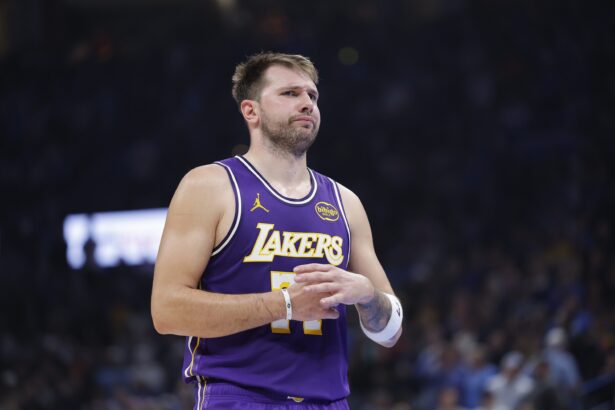
3. Luka Doncic And Austin Reaves
The highest-scoring duo in basketball deserves a top position. Luka Doncic led the NBA with 33.5 points while adding 7.7 rebounds and 8.3 assists, and Austin Reaves took another massive step with 23.3 points, 4.7 rebounds, and 5.5 assists. Together, they combined for 56.8 points per game.
Reaves isn’t just Luka’s spot-up shooter anymore. He can run pick-and-rolls, reach the free-throw line, create against second units, and close games. That allows Doncic to rest during possessions without the Lakers’ offense completely collapsing.
Their defensive ceiling is the obvious concern. Both can be attacked by fast guards, and the Lakers need Walker Kessler plus strong perimeter defenders to cover those weaknesses. They also missed important playoff time last season, which destroyed Los Angeles’ postseason momentum.
Offensively, there might not be a better backcourt. Luka creates almost any shot he wants, while Reaves has become good enough to punish every defensive adjustment made against him.
2. Jalen Brunson And Karl-Anthony Towns
The defending champions have already proven their partnership works at the highest level. Jalen Brunson produced 26.0 points, 3.3 rebounds, and 6.8 assists before leading the Knicks through the playoffs. Karl-Anthony Towns added 20.1 points, 11.9 rebounds, and 3.0 assists as New York’s second offensive star.
Brunson handles the late-game creation and difficult perimeter scoring while Towns stretches opposing centers away from the basket, punishes smaller switches, and controls the defensive glass. Their two-man game creates difficult choices because dropping against Brunson gives him space, while switching leaves a smaller defender on Towns.
Their playoff impact wasn’t only based on reputation. The Knicks outscored opponents by 258 points during Towns’ 578 postseason minutes, the best plus-minus for one player in a single postseason during the play-by-play era.
They aren’t the league’s most athletic duo, and both can be targeted defensively. None of that stopped them from winning the championship. Results have to count.
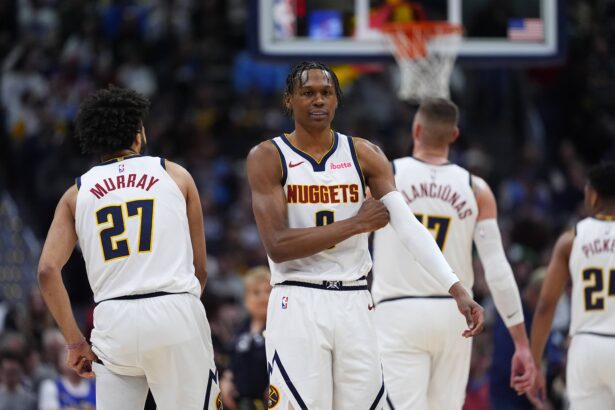
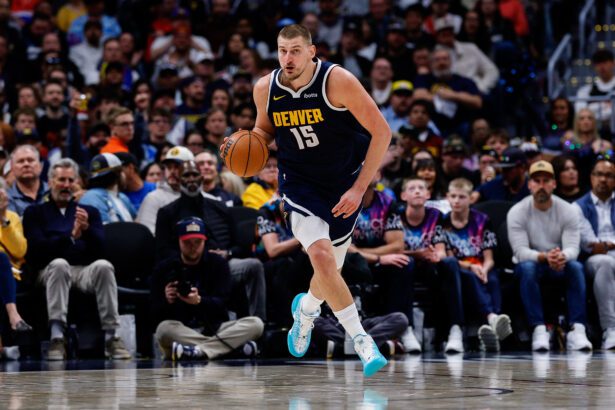
1. Nikola Jokic And Jamal Murray
Nikola Jokic and Jamal Murray remain No. 1 because their production, balance, and chemistry are still unmatched. Jokic completed another ridiculous season with 27.7 points, 12.9 rebounds, and 10.7 assists. Murray had the best regular season of his career, putting up 25.4 points, 4.4 rebounds, and 7.1 assists as a first-time All-Star.
This isn’t Jokic carrying another player with his creation. We’ve all seen Murray create his own shot, run the offense, score 30 in playoff games, and close games as the main scorer. His two-man game with Jokic has seen every coverage possible, and they still find ways to beat every adjustment.
Their connection also shows up directly in the numbers. Murray assisted Jokic 127 times through early March, the highest passer-to-scorer combination in the league at that point.
Denver’s first-round exit was disappointing, and Murray had a bad Game 6 against Minnesota. One rough series doesn’t erase years of proven chemistry or their championship history. Jokic is the best offensive big man in basketball. Murray is finally producing like a regular-season superstar, and until another duo proves more, they stay first.