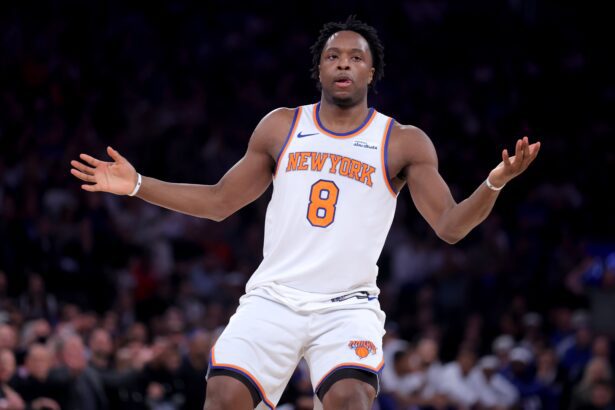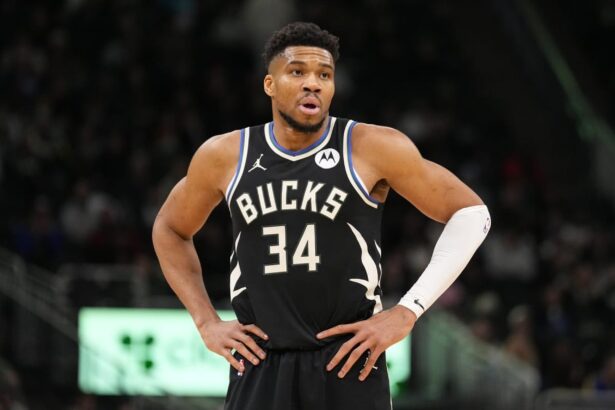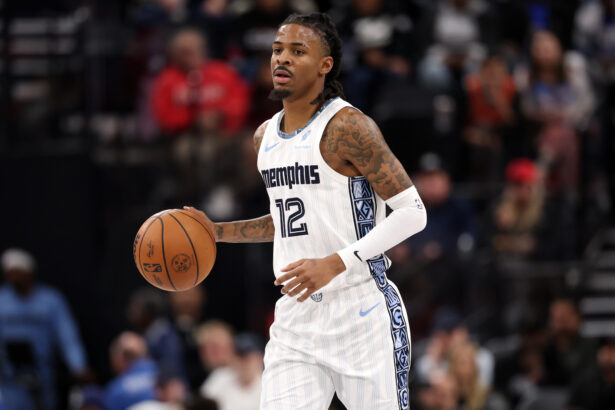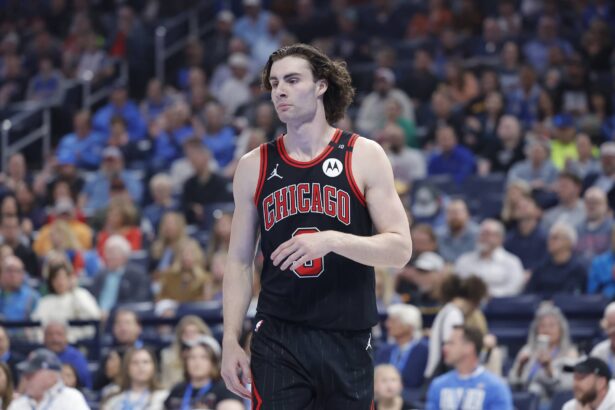
The NBA All-Star Game is always an interesting talking point because, over the past few seasons, it hasn’t been remotely competitive, as the stars don’t play hard. To their defense, why should they?
Their salaries are guaranteed for the most part, the season is already long, and risking injury is not the modern way of professional sports. Adam Silver did his best to fix that by introducing a new format featuring All-World against Americans, but analyst Nick Wright might have taken it a step further.
Wright introduced the controversial idea of having the All-White and All-Black teams go head-to-head to motivate them to play hard:
“I’m telling you right now – guys would play fucking hard,” he continued. “There would be a real edge to the game.”
He believes there would be far more bragging rights for each team to prove they are the most talented, and it might be a fair way to split the current landscape of NBA superstars.
So, would making the All-Star Game racially driven fix everything? We don’t think so at all, but for the sake of taking Wright’s idea and running with it playfully, let’s see how that could pan out.
All-Star Starters
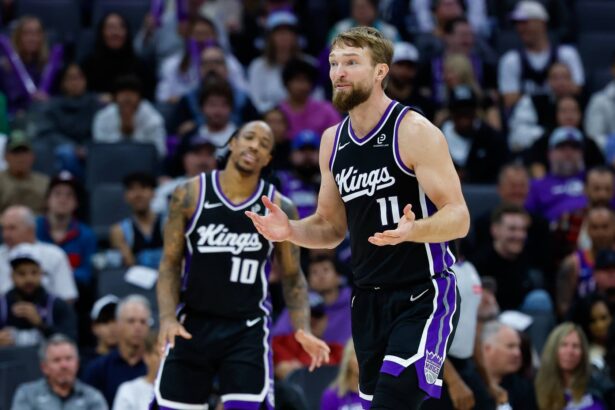
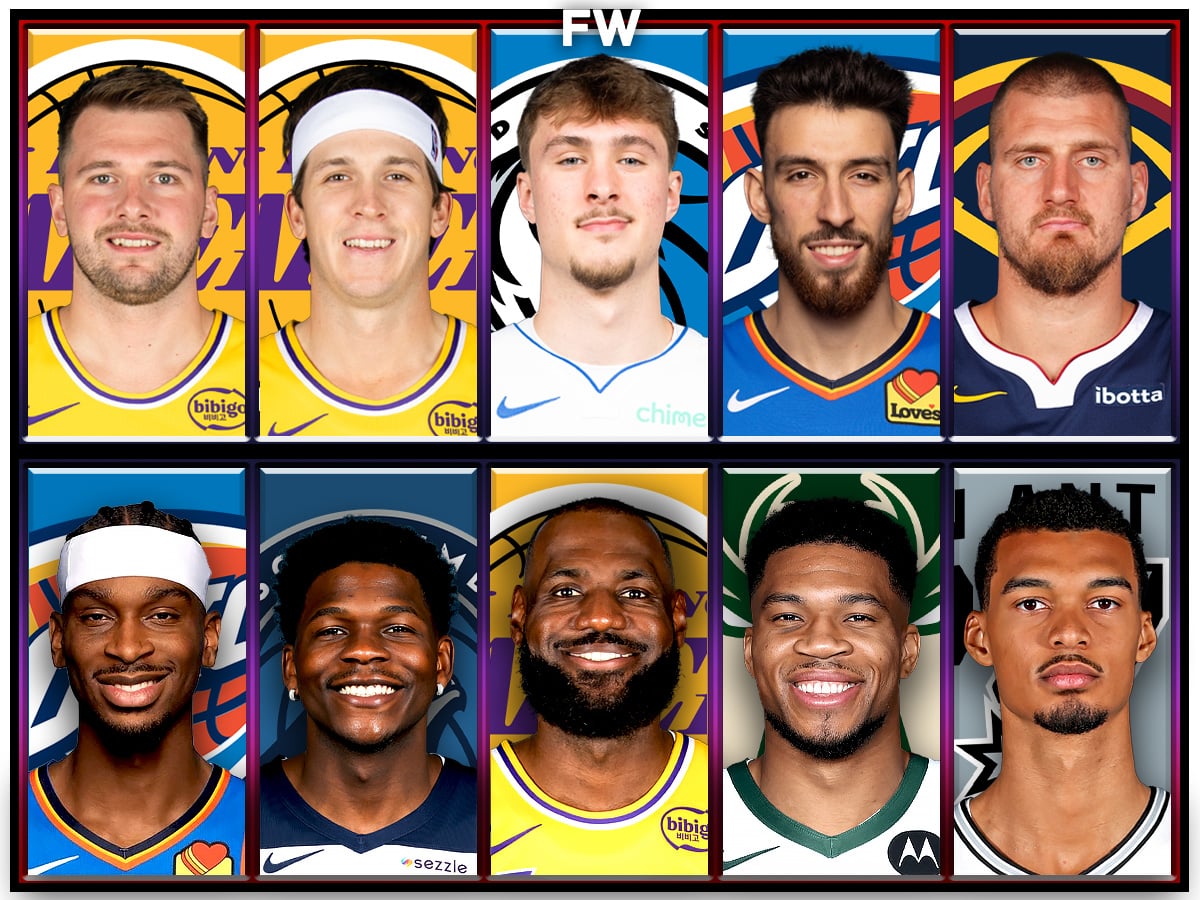
All-White Team: Luka Doncic, Austin Reaves, Cooper Flagg, Chet Holmgren, Nikola Jokic
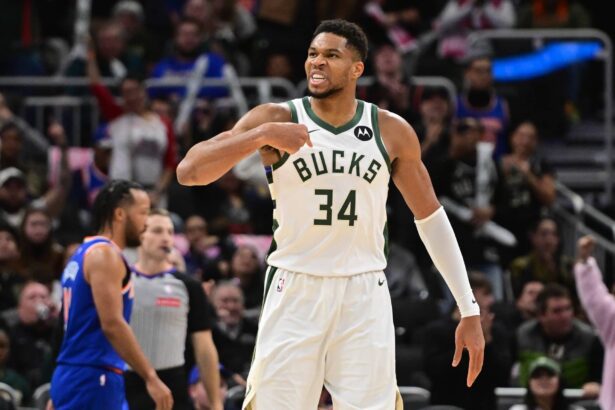
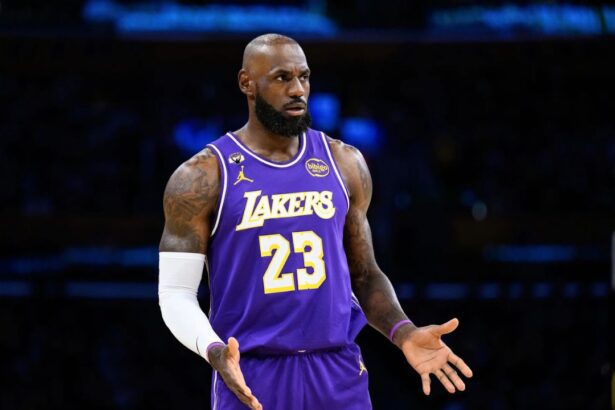
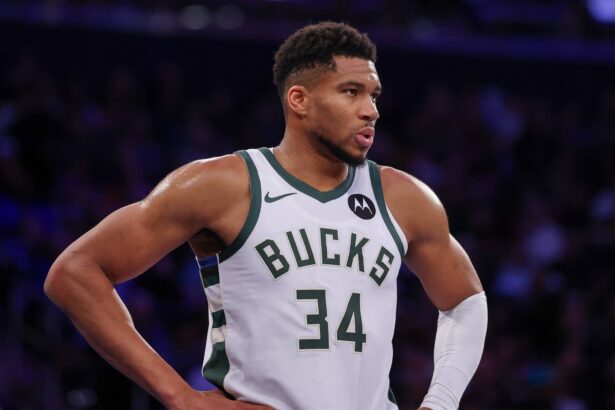
All-Black Team: Shai Gilgeous-Alexander, Anthony Edwards, LeBron James, Giannis Antetokounmpo, Victor Wembanyama
The All-White starting lineup is built around pace control. Luka Doncic and Nikola Jokic form arguably the most creative offensive pairing imaginable as two jumbo playmakers who can score 35 or dissect a defense with 15 assists. Add Chet Holmgren’s rim protection and floor spacing, Cooper Flagg’s athleticism, and Austin Reaves’ shot creation, and you have a lineup that prioritizes IQ, skill, and half-court precision.
Jokic would be the hub, operating from the elbow and high post, allowing Luka to work off-ball at times, a terrifying concept for defenses. Holmgren stretches the floor to the arc while protecting the rim on the other end, and Flagg’s motor fills in the gaps. Reaves thrives in chaotic scoring environments, which the All-Star Game inevitably becomes.
On the other side, the All-Black starters may be the most physically overwhelming five-man unit imaginable. Shai Gilgeous-Alexander controls tempo with his herky-jerky brilliance, Anthony Edwards brings explosive scoring bursts, LeBron James supplies generational IQ and size, Giannis Antetokounmpo adds downhill devastation, and Victor Wembanyama provides alien-level length.
This group blends speed, strength, and skill in a way that feels almost unfair in transition. In terms of athleticism, the All-Black team has the edge, along with raw physicality and size. So who has the edge? We are calling it even because Doncic and Jokic’s IQ is too high to ignore.
Advantage: Even
All-Star Bench Players
All-White Team: Tyler Herro, Josh Giddey, Alex Caruso, Franz Wagner, Lauri Markkanen, Ivica Zubac, Alperen Sengun
All-Black Team: Stephen Curry, Donovan Mitchell, Jaylen Brown, Jayson Tatum, Kawhi Leonard, Kevin Durant, Joel Embiid
The All-White bench is deeper than it may initially appear. Tyler Herro offers microwave scoring. Franz Wagner provides smooth two-way versatility. Lauri Markkanen stretches defenses to 30 feet. Alperen Sengun mirrors Jokic’s playmaking creativity in shorter bursts, while Ivica Zubac supplies traditional interior size. Alex Caruso brings elite perimeter defense, a rarity in All-Star settings, and Josh Giddey adds another oversized facilitator.
This second unit would likely emphasize ball movement and shooting. With Sengun orchestrating from the post and shooters spaced around him, the offensive flow would remain intact even when Luka and Jokic rest. The versatility across positions ensures no major drop-off in skill level.
Meanwhile, the All-Black bench looks like a closing lineup in an NBA Finals game. Stephen Curry bends defenses with unlimited range. Donovan Mitchell’s shot-making. Jaylen Brown and Jayson Tatum’s two-way wing dominance. Kawhi Leonard’s methodical scoring. Kevin Durant’s unstoppable midrange game. Joel Embiid’s interior force. The sheer scoring density is staggering.
In an All-Star setting where defense is optional and rhythm scorers thrive, this bench unit might be the ultimate cheat code. You could stagger Curry with Shai, pair Durant with Giannis, or run Embiid and Wembanyama together for absurd length. There’s simply no weak link offensively.
Advantage: All-Black Team
All-Star Coaches
All-White Team Coach: Steve Kerr
All-Black Team Coach: Tyronn Lue
Steve Kerr leading the All-White squad makes stylistic sense. His motion-heavy offense and emphasis on spacing align perfectly with a roster filled with playmakers and shooters. Kerr would likely lean into ball movement, encouraging Jokic to quarterback possessions while Luka operates in space. The system would prioritize flow over isolation.
Kerr also understands how to manage egos in star-studded environments. Having coached dynasties and international squads, he’d likely ensure everyone touches the ball, and the pace remains controlled, crucial against a transition-heavy opponent.
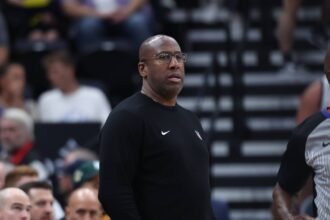
Tyronn Lue, meanwhile, thrives in adaptability. His ability to adjust on the fly and empower stars to attack mismatches would be invaluable. Lue would likely simplify the approach: give Shai and LeBron control, unleash Giannis in transition, and let the shooters orbit around them.
In a free-flowing All-Star atmosphere, Lue’s comfort with improvisation could provide the subtle edge. When talent levels are this high, sometimes the coach who best reads the moment wins.
All-White Team Advantages
The biggest advantage for the All-White squad would be offensive synergy. Luka and Jokic are two of the smartest offensive players alive, and their combined passing vision could create a beautiful brand of basketball. In a game often defined by chaotic possessions, having structure can be powerful.
Floor spacing would also be elite. Holmgren, Markkanen, Herro, Wagner, and even Sengun can stretch defenses, opening lanes for Luka to operate. In a half-court shootout, this team could trade buckets with anyone.
Lastly, their size across all positions prevents them from being physically overwhelmed. Jokic and Holmgren can battle inside, Flagg offers length, and Caruso brings perimeter resistance. They wouldn’t dominate athletically, but they wouldn’t be outmatched either.
All-Black Team Advantages
Athleticism is the glaring separator. With Giannis, LeBron, Edwards, Wembanyama, and Shai pushing pace, this group would turn defensive rebounds into instant fast breaks. In an All-Star Game, where transition defense is minimal, that’s devastating.
Shot creation depth is another major edge. If one star cools off, there are five more capable of dropping 30 in a quarter. Curry warps coverage, Durant scores over anyone, and Embiid draws fouls at will. The offensive ceiling feels limitless.
Defensively, even at 70% effort, the length and versatility of Giannis and Wembanyama alone can erase mistakes. Add Kawhi and Brown on the perimeter, and there are legitimate two-way disruptors – something rarely seen in All-Star contests.
Who Would Win The All-Star Game?
For stretches, the All-White team would likely control tempo, carving up defenses with precision passing and three-point shooting. Luka and Jokic might combine for 50 points and 25 assists, creating highlight after highlight.
But over 48 minutes, the sheer scoring avalanche from the All-Black roster would be difficult to contain. Transition buckets, isolation brilliance, and overwhelming athleticism would gradually tilt the scoreboard. When the game inevitably becomes a track meet, speed and explosiveness matter.
In the final minutes, Shai Gilgeous-Alexander’s calm midrange mastery would seal it. With LeBron orchestrating and Giannis collapsing the defense, Shai would find his spots and close the show.
Final: All-Black vs. All-White 169-154
All-Star Game MVP: Shai Gilgeous-Alexander