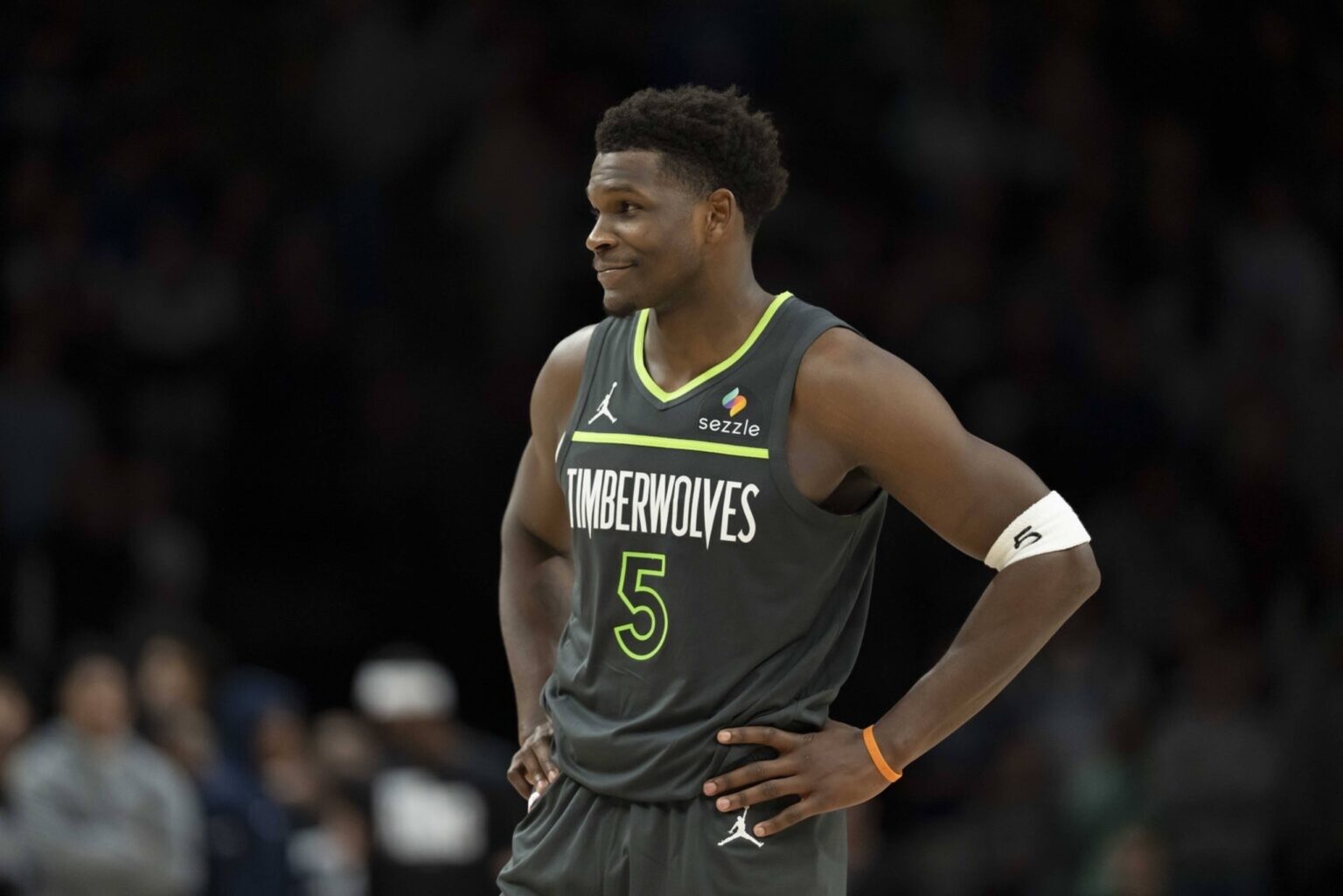
When Minnesota needed a tone-setter, Anthony Edwards gave them a takeover.
Edwards erupted for 40 points on 16-30 shooting, drilling 5-13 from three and adding 6 rebounds in 38 high-energy minutes to power the Timberwolves to a 122-111 win over the Mavericks. Minnesota led for 94% of the game and built a lead that stretched to 18, largely because their star guard never let the Mavericks settle defensively.
Dallas had balance and effort, but they never had the best player on the floor. Edwards made sure of that. Here’s the instant breakdown.
1. Edwards Dictated The Game From The Jump
Edwards didn’t just score; he controlled the rhythm. His 40 points came across all three levels: transition bursts, pull-up threes, and downhill attacks in half-court sets. Even when Dallas tried sending extra attention, he calmly rose over defenders or split coverage.
He shot 53.3% from the field, accounted for five of Minnesota’s 16 threes, and was +17 in his minutes. His efficiency stood out even more considering Minnesota as a team shot 47.5% overall. When the Mavericks trimmed the lead to single digits, Edwards responded with timely buckets to push it back out.
There were only three turnovers in his near 40-minute workload, a sign of poise against pressure. Dallas simply didn’t have a defensive answer.
2. Rudy Gobert Owned The Glass
While Edwards scored, Rudy Gobert ruled the paint. He scored 22 points on 9-11 shooting and an incredible 17 rebounds, 10 coming on the offensive side, destroying Dallas’ second-chance defensive strategies.
Gobert was dominant on the glass, with the Timberwolves out-rebounding the Mavericks 54-46. Minnesota had 17 offensive rebounds versus 15 for Dallas. Gobert was the most active player on the floor.
With Minnesota shooting 42.3%, Gobert’s 3 blocks and presence in the paint won’t show up in the stats, but his defense altered a number of shots.
3. Minnesota’s Perimeter Shooting Broke It Open
With 38.1% from three, the Timberwolves number from beyond the arc was almost twice that of the Mavericks. Minnesota shot 16-42 while Dallas scored only 8-25 (32.0%), giving Minnesota a 24-point advantage from three.
DiVincenzo shot 3-5 from three and had 9 assists. Reid scored 21 points and hit 4-8 from three. Even Bone Hyland scored a three in limited minutes.
Their spacing forced Dallas’ defense to stretch, which opened lanes for both Edwards and Gobert to attack. The Mavericks were constantly rotated by Minnesota’s quick ball movement, leading to an impressive 28 assists on 47 made shots.
4. Dallas Had Balance, But Not Efficiency
Dallas reached five double figures, with Khris Middleton leading with 18 points and 7 rebounds. Tyus Jones was among the top 3 with 13 points and 6 assists, and Marvin Bagley III was strong coming off the bench with 15 points and 13 rebounds in 24 minutes.
Efficiency was the main issue. P.J. Washington went 5-17, Naji Marshall 5-16, and Klay Thompson was even worse at 4-12, going 3-9 from three. Overall, Dallas went 41-97, so 42.3%.
They were competitive with the rebounds and even turned the ball over less than Minnesota (12 to 18), but the poor shooting was the only thing that made a significant comeback push impossible.
5. Timberwolves Controlled The Tempo
Minnesota managed the pace and, from fighting in the front, separated from the back. Compared to the Mavericks’ mistakes, the Timberwolves were able to take advantage of the remaining 20 fast-break points.
Even though the Timberwolves lost the ball 18 times, they were still in control of the game. The Timberwolves defense came up with 8 blocks and were moving to all the right spots, making it difficult for the Mavs to get the look they wanted. Minnesota controlled the game from start to finish, with Dallas only having the lead for 1% of the game.
Edwards’ scoring wasn’t just for the purpose of scoring; he gained control of the game. It was another example of a big game from a player who consistently steps up in big situations.