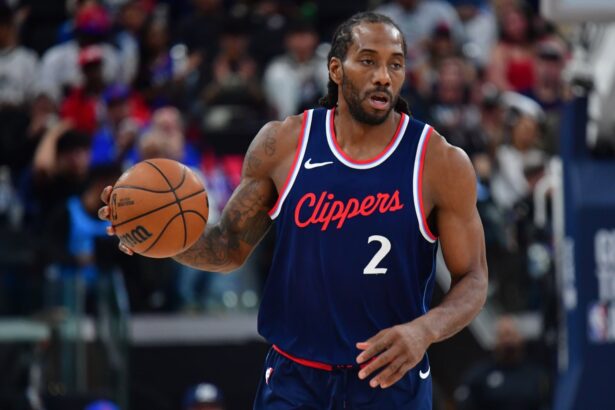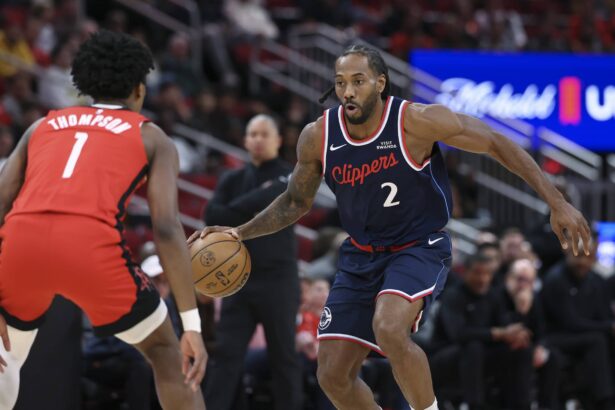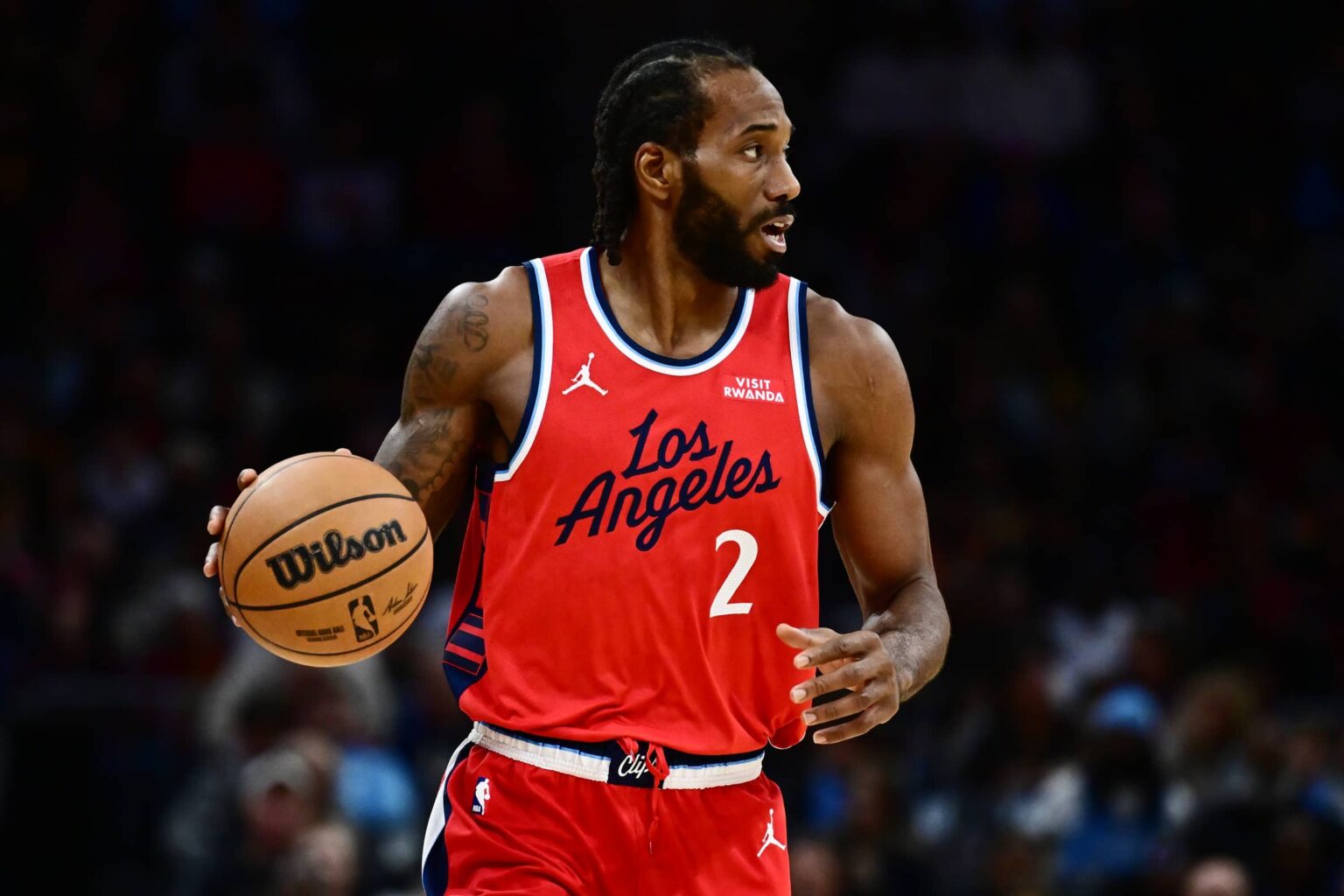
Kawhi Leonard needed a big game to lead the Los Angeles Clippers to victory on Friday night, and he posted 28 points against the Chicago Bulls to tie Bob McAdoo for 44 consecutive games with 20 or more points. The Clippers rise to 8th in the Western Conference, and they seem to be one of the hottest teams in the league at the moment.
While the Bulls received solid production from several starters, the Clippers’ balance on both ends proved decisive. Leonard led the scoring effort, Bennedict Mathurin sparked the offense off the bench, and the Clippers’ defense dominated the interior as Los Angeles maintained control for nearly the entire game.
1. Kawhi Leonard Reaches Another Milestone In Clippers History
Kawhi Leonard once again reminded everyone why he remains the centerpiece of the Clippers’ success by tying McAdoo’s record for most consecutive 20-point games. The veteran forward finished with 28 points, four rebounds, and three assists in 33 minutes, leading the team offensively while setting another milestone in franchise history with his scoring output.
Leonard shot 8-22 from the field and knocked down 10-12 free throws, repeatedly attacking the paint and forcing Chicago’s defense to foul. Even on a night where his jumper wasn’t falling at an elite rate, his ability to draw contact and finish through physical defense kept the Clippers’ offense steady.
More importantly, Leonard delivered when Los Angeles needed stability. During stretches when Chicago attempted to close the gap, he slowed the pace and created efficient possessions, helping the Clippers maintain their advantage throughout the night.
2. Bennedict Mathurin Provides A Major Scoring Spark
One of the biggest reasons the Clippers maintained offensive momentum was the explosive scoring off the bench from Bennedict Mathurin. The young guard erupted for 26 points in 28 minutes, shooting 10-19 from the field and adding six rebounds.
Mathurin consistently attacked Chicago’s defense, particularly in the second half when the Bulls tried to trim the deficit. His ability to score both in transition and in half-court sets kept the Clippers’ offense flowing whenever Leonard rested.
The bench production proved critical for Los Angeles. While several role players chipped in smaller contributions, Mathurin’s scoring burst gave the Clippers a reliable second offensive weapon and prevented Chicago from making any sustained comeback runs.
3. Clippers Dominate The Paint
A lot of Los Angeles’ offensive success was also due to the fact that they were able to dominate the paint. The Clippers had a whopping 14-point advantage in the paint by scoring 70 compared to the 56 that the Bulls had.
Mathurin and Leonard were able to drive the ball to the paint over and over, but the big men also had a role to play. Lopez scored 11, grabbed 7 rebounds, and had an impressive 5 blocks while also having a presence that made the Bulls players hesitate to drive to the rim.
Even the role players on the Clippers were able to score in the paint when they showed up. Jones Jr scored 10 points in the game on 4-5 shooting, which was very efficient due to the fact that he was able to finish a lot of plays around the rim. The Clippers were able to dominate the paint which resulted in the Bulls expending a ton of energy on defense.
4. Defensive Pressure And Rim Protection Set The Tone
The Clippers had a lot of important plays in terms of their offensive effort, but their defense was just as impressive and just as crucial to their overall success as everything else. They had 12 blocks and 8 steals, which resulted in disrupting attempts by the Bulls’ offense.
Lopez registered five blocks as the defensive anchor for the Clippers, while Jones Jr. exhibited his defensive prowess with three blocks and two steals. Chicago struggled to look for opportunities to score with the length and athleticism the Clippers had.
As a group, the Clippers exhibited tremendous ball security, and the Chicago Bulls had a 15-6 turnover ratio. This gap in turnovers played a big part in the Bulls’ being unable to score in transition, and also allowed the Clippers to control the game.
5. Bulls Receive Strong Individual Performances But Lack Efficiency
Although Chicago lost, several of the Bulls players had strong individual performances. Jones scored 21 points for the Bulls and led the team in scoring while also going for 10-11 from the field, and his scoring provided assistance in the backcourt.
Giddy also had a strong performance, as he finished with a 20-11-10 triple-double. His playmaking kept the Bulls’ offense active and moving while he added a couple of steals and a block to his stat line as well.
Chicago suffered from general inefficiency and poor ball control. The team’s field goal percentage was only 44.2%, and the 3-point shooting was 29.3%. In addition, they committed 15 turnovers, giving the Clippers too many free points. Mistakes like these deter Chicago from making a serious comeback to end the game.