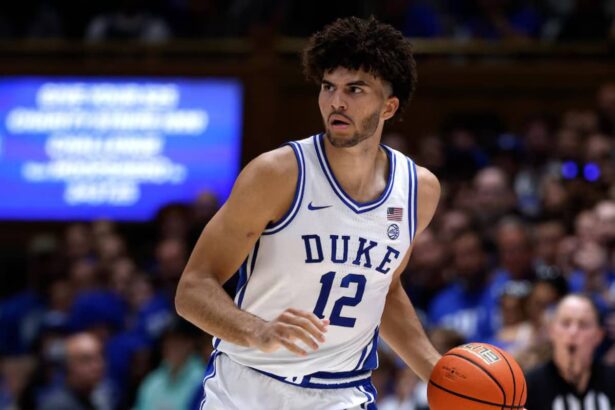
With the 2026 Final Four now set after UConn stunned Duke 73-72 on Braylon Mullins’ buzzer-beating 35-footer, March Madness is back at the center of the basketball world.
UConn, Illinois, Arizona, and Michigan are the four teams still alive, and the tournament now moves to Indianapolis for the national semifinals on April 4. That makes this a good time to look at the other side of the college game. Not the stars who built their name in the NCAA tournament, but the ones who never got that chance at all.
This story is about iconic NBA players who played Division I college basketball and still never appeared in March Madness. Some were stuck on bad teams. Some came from programs that could not break through. Some left for the NBA before their school could get there. But the result is still surprising. These were major talents, future All-Stars, even all-time greats, and yet none of them ever played on college basketball’s biggest stage.
That is what makes the list so interesting. March Madness is usually treated like a key part of a star’s story. For these players, it never happened. Their NBA careers became huge anyway.
Ben Simmons
Ben Simmons arrived at LSU as one of the biggest freshman names in the country. He was a 6-foot-10 point forward, the No. 1 recruit in his class, and the type of prospect people already saw as a future No. 1 NBA pick before he played a college game. His one season there was productive on paper. Simmons averaged 19.2 points, 11.8 rebounds, 4.8 assists, and 2.0 steals in 33 games while shooting 56.0% from the field. He finished with 632 points, 388 rebounds, and 158 assists, which is a huge all-around line for a freshman.
That is why his March Madness miss still feels strange. Simmons clearly played well enough. LSU did not. The Tigers finished 19-14 overall and 11-7 in the SEC, then lost 71-38 to Texas A&M in the SEC tournament semifinals. After missing the NCAA tournament, LSU announced it would not play in any other postseason event. So Simmons’ college career ended without one NCAA tournament game.
The main reason was team failure, not a lack of star power. LSU had NBA talent, but the season never really came together. By late February, Simmons and LSU were in danger of missing the field, as rumors of him shutting down for the season started to rise. That is what made the year so disappointing. Simmons did his part as a scorer, rebounder, and playmaker, but LSU spent too much of the season on the bubble and never built a strong enough résumé to survive Selection Sunday.
Simmons became one of the most famous one-and-done stars of the modern era, went No. 1 in the draft a few months later, and his NCAA career ended without March Madness. For a player that big, that talented, and that discussed, it is still one of the strangest college endings any future NBA star has had.
Anthony Edwards
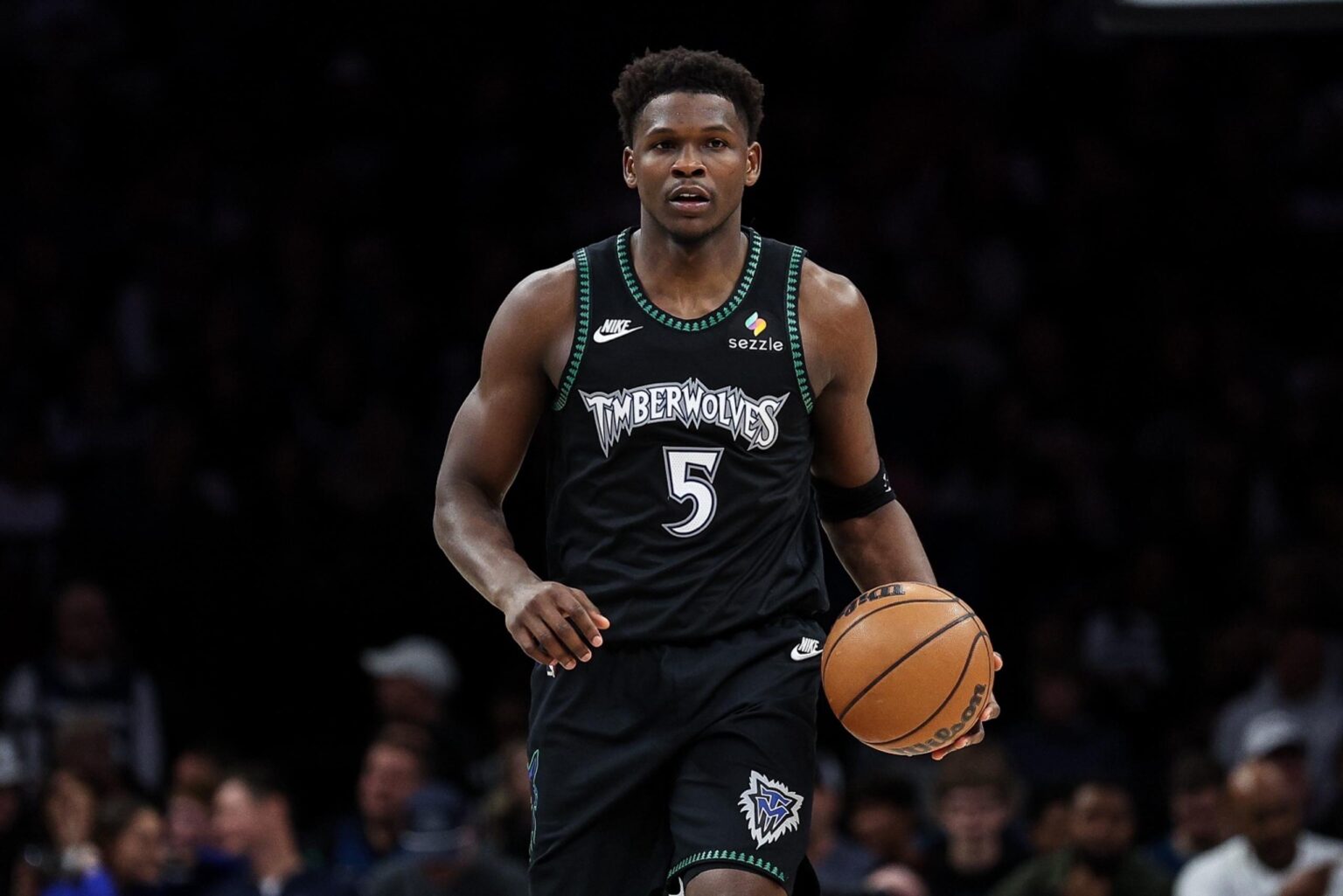
Anthony Edwards’ case is different because his college season ended in a way nobody expected. He spent one year at Georgia as a 6-foot-5 freshman guard and was the clear center of everything the Bulldogs did. Edwards averaged 19.1 points, 5.2 rebounds, and 2.8 assists per game, and his 610 Georgia points ranked seventh on the school’s single-season scoring list and second among freshmen. He was also named SEC Freshman of the Year.
The team results were not strong enough to put Georgia in a normal NCAA tournament position. The Bulldogs finished 16-16 overall and 5-13 in SEC play, which left them 13th in the conference. They did beat Ole Miss in the first round of the SEC tournament and were set to face Florida in the next game. Then everything stopped.
On March 12, 2020, the NCAA canceled the men’s and women’s basketball tournaments and all remaining winter and spring championships because of the COVID-19 public health threat. So Edwards never got a March Madness game, but not in the usual way. The tournament itself disappeared.
Even without the tournament, Edwards still left a strong college résumé. He had a 37-point game against Michigan State, and he finished as one of the most productive freshman scorers in program history. He was not on a contender, and Georgia was not building around a deep roster. It was mostly Edwards creating offense, taking tough shots, and carrying the scoring load as an NBA talent on a middle-of-the-pack SEC team.
That is what makes his name so interesting in this article. He played in Division I, he was one of the biggest stars in college basketball, and he still never played in the NCAA tournament. In his case, it was part team context and part history. Georgia was not good enough, and then the entire event was canceled before anyone could play.
Paul George
Paul George did not arrive in college with the same hype as Ben Simmons or Anthony Edwards. He was not seen as a future NBA headliner on day one. But at Fresno State, the talent showed fast. George played two seasons there and averaged 15.5 points, 6.7 rebounds, and 2.4 assists across 63 games. As a freshman, he put up 14.3 points and 6.2 rebounds while shooting 47.0% from the field and 44.7% from 3. As a sophomore, he rose to 16.8 points, 7.2 rebounds, 3.0 assists, and 2.2 steals per game.
The reason he never played in March Madness was simple. Fresno State was not close to that level during his two years. The Bulldogs finished 13-21 in his freshman season and 15-18 in his sophomore year. In 2010, George was clearly the best player on the team, but Fresno State still ended the season in the WAC quarterfinals. He scored 22 points with 11 rebounds in a 74-66 loss to Louisiana Tech, and that ended his college career.
That is what makes George a strong name for this article. He was not on a one-and-done powerhouse. He was a future NBA star playing for a team that simply could not reach the tournament. Fresno State never finished above fifth in the WAC during his time there, and the school never gave him the kind of stage that most future All-NBA wings get in college.
A lot of future stars miss March Madness because of one bad season. George missed it twice, then still became the No. 10 pick in the draft. Looking back, that college run feels like a preview of the player he would become: big wing, real scoring talent, two-way tools, and NBA value that was bigger than the team around him.
Damian Lillard
Damian Lillard is one of the clearest examples of how hard it can be to reach March Madness from a one-bid league. He played at Weber State, not at a major program, and he spent four years there. By the end of his college career, he had become one of the best players in school history. Lillard averaged 18.6 points, 4.3 rebounds, and 3.5 assists in 103 games, finished with 1,934 career points, and left as Weber State’s career leader in 3-pointers made, free throws made, and free throw percentage.
His best seasons were good enough for much more attention than he got at the time. As a sophomore, Lillard averaged 19.9 points and led Weber State to a 20-11 record and the Big Sky regular-season title. In 2011-12, after returning from a foot injury that wiped out most of the previous season, he averaged 24.5 points, 5.0 rebounds, and 4.0 assists for a 25-7 team. He won Big Sky Player of the Year twice and entered the 2012 draft as the No. 6 pick.
So why no March Madness? Twice, Weber State got close and still could not finish the job. In 2010, the Wildcats lost 66-65 to Montana in the Big Sky title game and went to the NIT instead. In 2012, they again lost to Montana in the conference championship, this time 85-66, and had to settle for the CIT. In between, Lillard played only nine games in 2010-11 before a foot injury ended his season.
That is why Lillard belongs so high on a list like this. He was good enough to be a national name, but the structure around him gave him no margin for error. One loss in March, and the NCAA dream was over.
Klay Thompson
Klay Thompson is probably the most surprising name in this part of the list. He played three years at Washington State, became one of the best scorers in school history, and still never got to the NCAA tournament. That sounds wrong when you look back at his college résumé. Thompson was a sharpshooting guard who averaged 17.9 points over 98 college games. His scoring jumped every season, from 12.5 points as a freshman to 19.6 as a sophomore and 21.6 as a junior. In his final year, he led the Pac-10 in scoring and ranked 11th in the country.
The team results explain it. Washington State went 17-16 in Thompson’s freshman season, 16-15 in his sophomore year, and 22-13 in his junior year. Those are decent records, but not strong enough for an NCAA berth in that conference. Instead of March Madness, Thompson spent two of his three years in the NIT. Washington State lost in the first round of the NIT in 2009, missed even that event in 2010, and then returned to the NIT in 2011 and reached the semifinals in New York.
His junior season was the closest he came to changing that. Thompson scored 43 points against Washington in the Pac-10 tournament quarterfinals, which set a tournament record, but Washington State still lost and missed the NCAA field. He then scored 69 points in four NIT games as the Cougars made a deep run before losing to Wichita State in the semifinals. So the production was there. The stage just was not the one most people remember in March.
That is why Thompson is such a good fit here. He was already an elite shooter, already a high-level scorer, and already one of the best guards in his league. But his college career still ended without one NCAA tournament appearance.
John Stockton
John Stockton is probably the name that feels the strangest here. When people think of Gonzaga now, they think of a program that lives in the NCAA tournament. That was not the reality in Stockton’s years. He played four seasons there from 1980 to 1984, and by the time he left, he was already the best player in school history.
Stockton left as the program’s all-time leader in assists with 554 and steals with 262, while also ranking sixth in scoring with 1,340 points.
His senior season was the peak. Stockton averaged 20.9 points per game, led the West Coast Athletic Conference in scoring and steals, and won conference Player of the Year in 1984. He set single-season school records with 204 assists and 109 steals, both in that last year. So this was not a hidden role player who became great later. He was already a dominant college guard.
The reason he never played in March Madness was mostly timing and conference structure. Gonzaga finished 17-11 and 6-6 in the WCAC in 1983-84. There was no conference tournament then, and the NCAA bid went to San Diego as the regular-season champion. Gonzaga’s season simply was not enough to get into the 53-team field. That was Stockton’s last college season, so his career ended without an NCAA tournament game.
That is what makes him such a strong fit for this list. Stockton became one of the greatest point guards in NBA history, but in college, he was still a star from a program that had almost no margin for error. One great senior year was not enough. Gonzaga was not Gonzaga yet, and Stockton never got the stage that players from that school now almost expect every March.
Chris Bosh
Chris Bosh had only one college season, but it was enough to show why he became the No. 4 pick in the 2003 draft a few months later. He was a 6-foot-10 freshman forward at Georgia Tech and put up 15.6 points, 9.0 rebounds, 2.16 blocks, and 56.0% shooting from the field in 31 games.
Bosh had an all-time season for the program, as he won ACC Rookie of the Year, made second-team All-ACC, and was the only freshman on the first or second All-ACC teams. So the production was there right away. Bosh was not just a promising recruit learning on the fly. He led the ACC in field goal percentage and blocked shots, ranked second in rebounding and eighth in scoring, and finished with 13 double-doubles.
He opened his college career with 26 points and 14 rebounds, and he finished the year with 485 points, 278 rebounds, and 67 blocks.
The problem was the team. Georgia Tech finished 16-15 overall and 7-9 in the ACC, which left it outside the NCAA field. The Yellow Jackets ended the season after reaching the NIT quarterfinals, not the NCAA tournament. Bosh played well in that event, averaging 18.0 points and 9.3 rebounds in the NIT, but it was not March Madness.
Bosh was one of the best freshmen in the country, played in a major conference, and still never got an NCAA tournament game. Georgia Tech was respectable, but not good enough. Then Bosh left after one year as the No.4 overall pick in 2003. So his college story ended as a high-level one-and-done season with strong numbers, major draft value, and no March Madness appearance.
Robert Parish
Robert Parish has the most unusual case on this entire list. He did not miss March Madness because his team was weak. He missed it because Centenary was blocked from postseason play during his whole college career. Parish played four seasons there from 1972 to 1976, and put up huge numbers.
His college stat line was 21.6 points and 16.9 rebounds per game across 108 games, and as a senior, he averaged 24.8 points and 18.0 rebounds. The backstory is what makes it so different.
Shortly before Parish enrolled, the NCAA ruled that he and four other Centenary players were ineligible because of the way the school had converted standardized test scores. Centenary refused to pull the scholarships, and the NCAA placed the program on six years of probation. During that period, the school was barred from postseason play, and its results and statistics were excluded from weekly summaries and annual NCAA guides.
That means Parish never had a real path to March Madness, even though the team was good enough. During his four years, Centenary went 87-21 and spent 14 weeks in the AP Top 20, mostly in his senior season. Parish also became a first-team All-American as a senior. So this was not a case of empty stats far from the national level. He was a major college star on a winning team, but the NCAA system around him made that success almost invisible.
His college career was elite enough to make him the No. 8 pick in the 1976 NBA draft, yet the biggest stage in college basketball was closed to him from the start.
Julius Erving
Julius Erving played only two varsity seasons at Massachusetts, but the production was huge from the start. He was a 6-foot-6 forward, and as a UMass Hall of Famer, he averaged 26.3 points and 20.2 rebounds in 52 career games.
In 1969-70, he put up 25.7 points and 20.9 rebounds per game. In 1970-71, he rose to 26.9 points and 19.5 rebounds. Erving failed to record a double-double only once in his entire college career. Those are not normal star numbers. Those are historic numbers.
The team was good, too. Very good, actually. UMass went 18-7 in Erving’s first season and 23-4 in his second, and the school won back-to-back Yankee Conference titles with him as its best player. Erving led the program to its first two NIT appearances, in 1970 and 1971. That is the key detail here. Even with Erving putting up monster numbers, Massachusetts still never reached the NCAA tournament during his time there.
That is what makes Erving such a strong fit for this story. He was not putting up empty numbers on a bad team. He was one of the best players in college basketball, on a team that went 41-11 across his two seasons, and his college résumé still ended without an NCAA tournament game due to the lower exposure against other bigger schools that ended up invited to the tournament.
Then he turned pro after his junior year, and the rest became basketball history. Looking back, it is still surprising that a player this dominant, this productive, and this famous never got a March Madness run.
Pete Maravich
Pete Maravich is probably the most famous name in this whole article, and his college résumé still looks unreal more than 50 years later. An all-time LSU performer, Maravich finished with 3,667 career points in 83 games, an NCAA record 44.2 points per game.
Maravich had an insane three-year scoring explosion: 43.8 points per game in 1967-68, 44.2 in 1968-69, and 44.5 in 1969-70. LSU History also notes that he was a unanimous first-team All-American in all three seasons and the Naismith Award winner in 1970.
The strange part is that a player this big never made the NCAA tournament. The reason was not a lack of production. It was team success. LSU went 13-13 in 1968-69, then improved to 22-10 and finished second in the SEC in 1969-70. That last season was the closest Maravich came to a real postseason run, but it still ended in the NIT, not the NCAA tournament.
That is why Maravich belongs at the top of a list like this. He was not only a future Hall of Famer. He was one of the greatest and most influential college scorers ever, and still, the biggest stage of the sport never happened for him. He won national player of the year honors in 1970, led the nation in scoring every season, and made LSU a complete powerhouse for future newcomers, but the NCAA tournament never became part of his story. For a player with that level of fame and that level of offense, that still feels almost impossible.