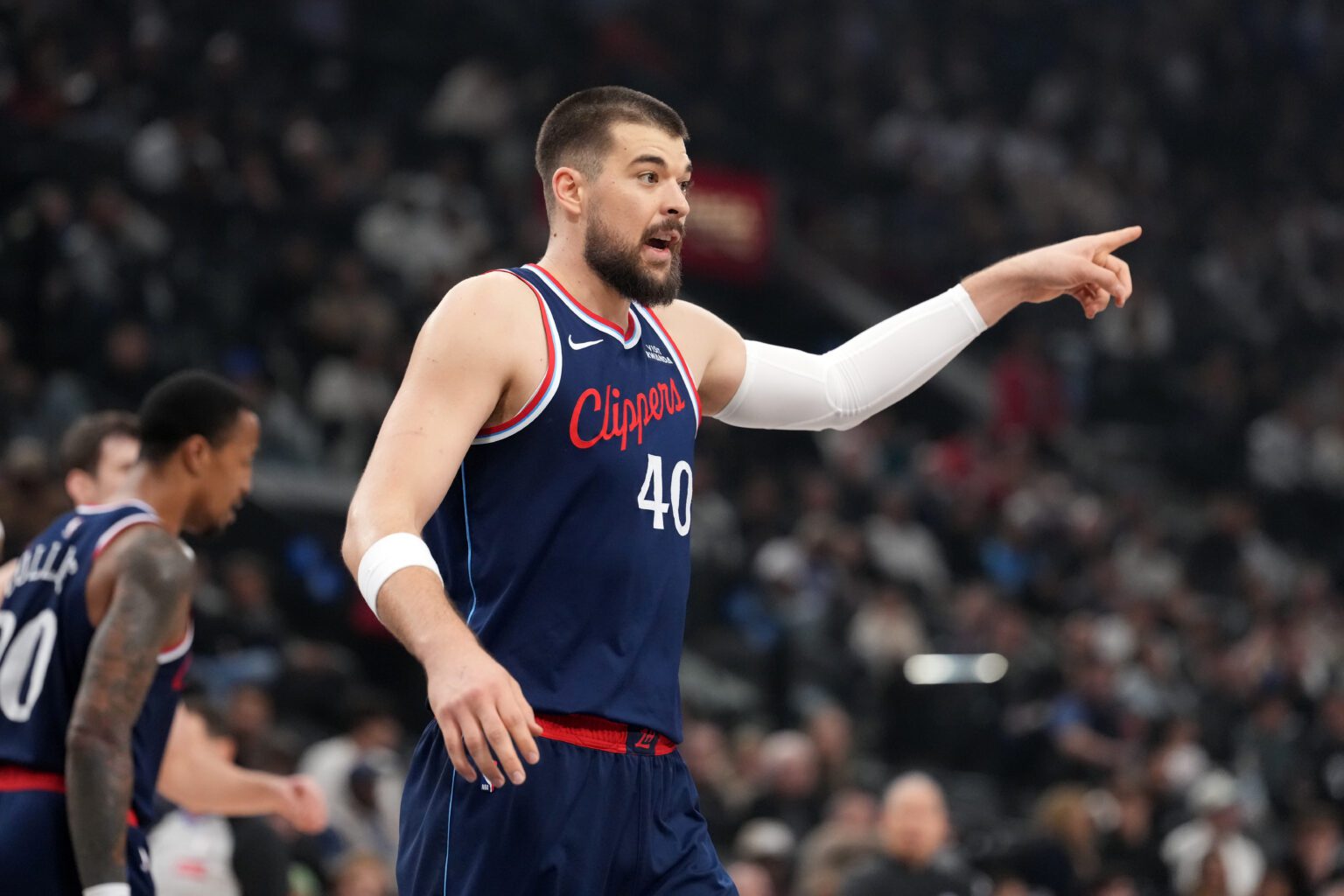
The Los Angeles Clippers are not done making moves after trading James Harden for Darius Garland, and the next player to go is Ivica Zubac. The big man, posting 14.4 PPG and 11.0 RPG this season, heads to the Indiana Pacers to pair up with Pascal Siakam and Tyrese Haliburton (once he returns).
Meanwhile, the Clippers continue their rebuild by acquiring two first-round picks, a young player in Bennedict Mathurin who is looking for a new payday, and some other assets, including Isaiah Jackson and a second-round pick.
Full Trade Details
Los Angeles Clippers Receive: Bennedict Mathurin, Isaiah Jackson, 2026 first-round pick (1-4 protected, 10-30 protected; converts to 2031 1st if not 2026), 2029 unprotected first-round pick (IND), 2028 second-round pick (DAL)
Indiana Pacers Receive: Ivica Zubac, Kobe Brown
This trade will completely shake up the Clippers in both the short and long term because one of their best players is immediately gone as the future becomes more important. Meanwhile, the Pacers start their path to building a contender next season. Let’s dive into player grades.
Los Angeles Clippers: B+
This is a forward-looking move from a team that clearly recognized its contending window is closed. Ivica Zubac (28 years old) was productive and dependable, but he didn’t align with where the Clippers are heading after reshuffling their star core. By turning him into 23-year-old Bennedict Mathurin (17.8 PPG, 5.4 RPG) and two first-round picks, Los Angeles heads to a reset.
Mathurin gives the Clippers a young scorer who can grow into a featured role, something he was never fully guaranteed in Indiana. The draft capital is the real win, though. An unprotected 2029 first-rounder and a conditional 2026 pick give the front office multiple avenues to either build patiently or accelerate another major move down the line.
The grade stops short of an A because Zubac’s on-court impact will be felt immediately. The Clippers lose size, rebounding, and defensive stability, and there’s no guarantee Mathurin develops into a star. Still, for a team prioritizing the future over short-term wins, this is solid business.
Indiana Pacers: B
Indiana makes a very clear bet here: Zubac fills one of the biggest holes on the roster and replaces Myles Turner, who departed in free agency. With Tyrese Haliburton orchestrating the offense and Pascal Siakam handling frontcourt scoring, the Pacers needed a center who could rebound, set hard screens, and protect the paint without demanding touches. Zubac checks all those boxes.
His presence should immediately stabilize Indiana’s defense and help them survive against bigger, more physical teams in the East. Offensively, he meshes well with Haliburton’s passing instincts. This is about reliability, not star power.
The cost, however, is high. Two first-round picks plus Mathurin is a heavy price for a non-All-Star center. If Zubac tops out as a solid starter rather than a difference-maker in playoff series, this trade could look expensive in hindsight. That uncertainty keeps the grade in the B range.
Ivica Zubac: B+
Zubac had a chance to play on a team that made the NBA Finals last season, as he looks to replace the departed Myles Turner. Zubac has been a double-double machine for the past few seasons, and leaving the uncomfortable situation in Los Angeles makes sense for him.
There will be some getting used to as he learns the playing style of All-Star Pascal Siakam in the frontcourt, but we expect him to get there. Playing with the unselfish Tyrese Haliburton in Rick Carlisle’s team will also benefit him.
Overall, this trade could work out well for Zubac as he looks to transition away from a team in constant turmoil and have some stability for arguably the first time in his career.
Bennedict Mathurin: B-
Mathurin finally gets what he’s been searching for: a clearer path to opportunity. In Indiana, his role fluctuated, and his next contract loomed large without a guaranteed showcase. With the Clippers, he has a chance to establish himself as a core piece rather than a rotational scorer.
The talent is obvious, but the consistency hasn’t always been there. This move puts pressure on Mathurin to round out his game, particularly defensively and as a decision-maker. The Clippers won’t expect him to be a finished product, but they will expect growth.
That’s why the grade is modest. The opportunity is real, but so is the risk. If he doesn’t take a leap, he becomes just another young scorer chasing efficiency (43.3% FG, 37.2% 3-PT FG this season). If he does, this trade could quietly look like a steal for Los Angeles.
Kawhi Leonard: C
For Kawhi, this trade is another reminder that the Clippers are no longer fully built around immediate contention. Losing Zubac strips away a reliable interior presence who made life easier on both ends of the floor, especially defensively. With Harden and Zubac gone, Kawhi has to mull his future carefully.
This trade signals a longer-term vision that may not align with Kawhi’s championship window. The roster feels thinner and younger, which could lead to more responsibility and physical toll for a player who already has to manage his health carefully.
While this doesn’t close the door on competitiveness entirely, it does lower the short-term ceiling. Does Kawhi want to retire in Los Angeles, no matter what? Does he care about winning? These are questions that only Leonard can answer.
Isaiah Jackson: C+
Jackson (6.4 PPG, 5.5 RPG) is a classic “change-of-scenery” piece. He brings athleticism, energy, and rim-running ability, but he’s yet to put it all together consistently. In Los Angeles, he’ll likely be asked to fill minutes, defend, and have a simpler role.
There’s upside here. Jackson can block shots, finish above the rim, and run the floor, traits that always have value. If the Clippers commit to development minutes, he could carve out a real niche.
Kobe Brown: C+
Brown (2.9 PPG in 8.7 MPG) heads to Indiana as a low-risk, system-fit addition. He’s not expected to change games, and in a limited role, he can provide energy and soak up minutes without hurting spacing.
His offensive ceiling is modest, and he’s unlikely to command a featured role. But on a team prioritizing structure and balance, that’s not necessarily a negative. That’s why the grade is steady but unspectacular. Brown fits, but he doesn’t move the needle.