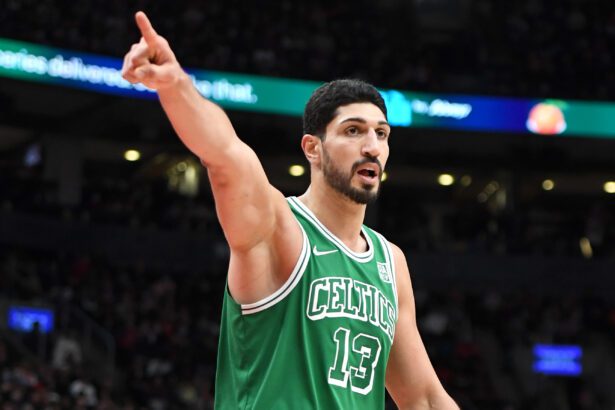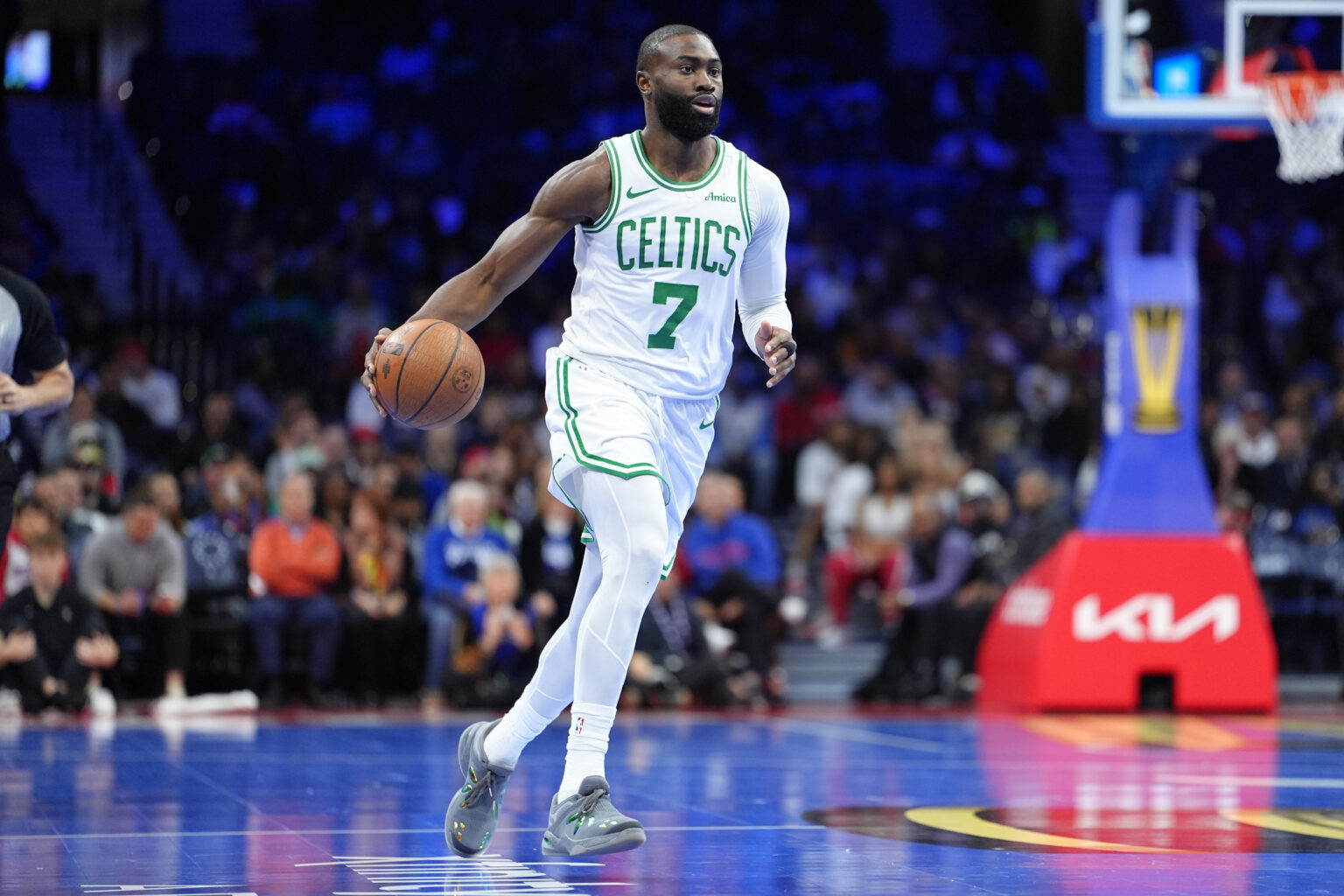
For the second consecutive offseason, Jaylen Brown finds himself at the center of trade speculation involving a host of NBA teams. Whenever a superstar like Giannis Antetokounmpo becomes available, executives immediately start connecting the dots to championship contenders.
Especially since the Celtics would reportedly pull the trigger on a Brown for Giannis deal.
The Boston Celtics are no exception. Despite a disappointing first-round exit in 2026, rumors continue to swirl that Boston could consider moving Brown if it meant landing another MVP-caliber talent.
It seems Brown’s time in Boston could be coming to an end due to some off-court and even personality factors.
The problem? Trading Brown to the Bucks, or even a team like the star-hungry Houston Rockets, would be an enormous gamble for a franchise that already knows it can win a championship with him.
Brown is a former 2025 NBA champion, the 2024 Finals MVP, an All-NBA performer, and one of the league’s premier two-way wings.
Boston already possesses one of the NBA’s best duos in Brown and Jayson Tatum. Together, they have nine playoff runs, appeared in the NBA Finals twice, and captured the 2024 NBA Championship. That’s not something franchises should casually dismantle.
Here are four reasons the Celtics should keep Brown and resist the temptation of a blockbuster deal.
1. Brown Is An MVP-Caliber Talent In His Prime
Players like Jaylen Brown simply do not become available very often. At just 29 years old, Brown is entering what should be the absolute peak of his career, and the 2025-26 season may have been his best yet.
With Tatum sidelined for most of the year, Brown embraced the role of franchise centerpiece and responded by finishing sixth in MVP voting. He earned another All-Star selection, secured All-NBA Second Team honors, and carried Boston to the second seed in the Eastern Conference (56-26) with only 4.0 games behind the top seed despite facing enormous pressure every night.
The superstar wing averaged 28.7 PPG, 6.9 RPG, 5.1 APG, 1.0 SPG, and 0.4 BPG on 47.7% FG, 34.7% 3-PT FG, and 79.5% FT. Brown posted career highs in points, rebounds, assists, and free throws made while maintaining his elite defensive reputation.
Few players in the league can impact games on both ends the way he does. He can score 30-plus points and defend the opposing team’s best perimeter player. Arguably, no player offers a better combination of offensive firepower and defensive versatility from the perimeter.
Replacing that level of production would be nearly impossible. The Celtics already have one MVP-caliber player in Tatum. Brown gives them another.
Digging deeper, Brown is on a max salary: $57,078,728, $61,015,192, and $64,951,656 over the next three seasons, but that’s what you expect from a franchise cornerstone. For an MVP-caliber talent, the Celtics need to realize what they have regardless of the hefty investment.
2. Championship Continuity Matters More Than People Think
The Celtics’ first-round playoff exit, when blowing a 3-1 lead, has created an overreaction. Boston wasn’t eliminated because Brown and the core suddenly stopped working. They were eliminated because Tatum missed virtually the entire season, and a late return spearheading a title run is not realistic.
Before this season, the Brown-Tatum era was one of the NBA’s most successful partnerships. Together, they have reached nine playoff runs, five Eastern Conference Finals appearances, two NBA Finals, and delivered Boston’s first championship in over a decade. Very few star duos in modern NBA history can match that sustained level of success.
Championship chemistry is one of the hardest things to build in professional sports. It takes years to build, and the Celtics have one of the best cores in the NBA when looking at their salary cap situation.
Breaking up that continuity for a theoretical upgrade ignores how fragile title windows can be. Talent alone doesn’t guarantee championships. Chemistry matters just as much. The Celtics already know Brown and Tatum can win a title together because they already have.
3. Giannis Is Older And Comes With Significant Risk
If Boston were to trade Brown, most people assume the return would involve Giannis Antetokounmpo. On paper, that sounds like an easy decision. Giannis is a two-time MVP, former Finals MVP, and one of the greatest players of his generation. He averaged 27.6 PPG, 9.8 RPG, 5.4 APG, 0.9 SPG, and 0.7 BPG on 62.4% FG.
However, the reality is far more complicated since Brown probably doesn’t want to play in Milwaukee. But there are basketball reasons also.
Giannis will be approaching his age-32 season soon and has dealt with a growing list of injuries over the past several years. He only played 36 games this past season, and appeared in at least 65 games three times over the last seven seasons. For a player who relies on his physical gifts, that is concerning.
Brown, meanwhile, is younger, healthier, and entering his prime years. He also provides more perimeter shooting and spacing, which remains essential in today’s NBA.
While Giannis is unquestionably one of basketball’s most dominant forces, his fit alongside Boston’s existing roster is not necessarily seamless.
Trading a 29-year-old Finals MVP for an older superstar with durability concerns is too risky. However, if Boston could acquire Giannis without giving up Brown, that is certainly a move worth considering.
4. Brown Is Still Improving
Perhaps the strongest argument for keeping Brown is the simplest one: he’s getting better as he looks forward to next season.
Many players plateau by their late twenties. Brown has improved his awareness, defense, and ball-handling after they were his weak points early in his career. Most importantly, his confidence has reached superstar levels.
Brown looked more complete than at any previous point in his career this season in what he called his “favorite year”. He averaged career highs across the board (PTS, REB, AST, FGA) while shouldering responsibilities he had never previously carried for an entire season. He posted 21.7 field-goal attempts, which is much higher than his career average of 15.6 attempts.
Defensively, Brown remained one of the NBA’s premier wing stoppers. Night after night, he accepted the toughest assignments while still being elite offensively.
The scary part for the rest of the league is that he still appears to be ascending. At 29 years old, he is stronger, smarter, and more confident than ever before. The Celtics have already invested years into his development and are now reaping the rewards.
Trading him now could mean wasting a player they molded for so 10 seasons.