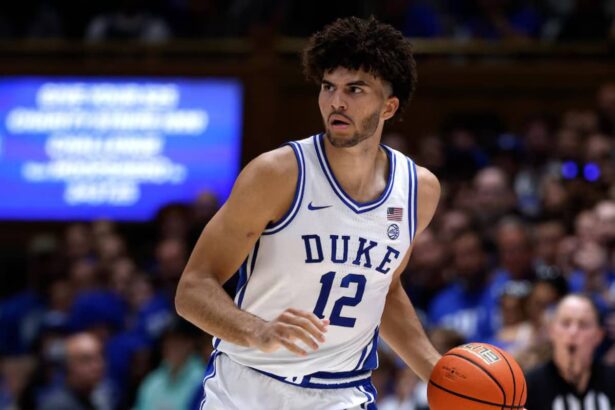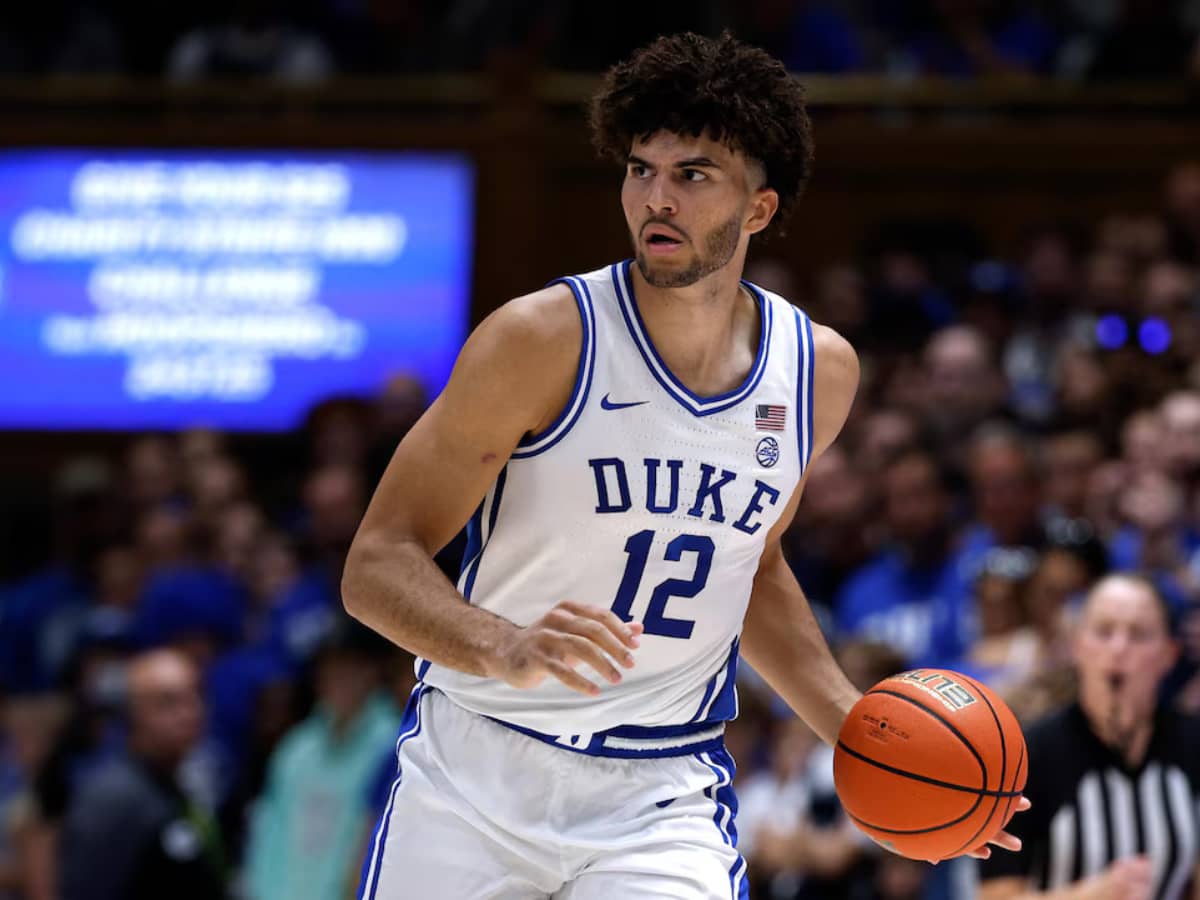
Bill Simmons isn’t sold on how Cameron Boozer will translate to the NBA, and his concern comes down to style more than production. Speaking on his podcast, Simmons pointed to Boozer’s go-to approach at Duke Blue Devils, where much of his offense is built around strength, positioning, and getting as close to the rim as possible.
It works at the college level. Simmons questioned how reliable that same approach will be against NBA size and speed.
“I watched a lot of Duke over the last 5 weeks. His big go to move is he basically bullies you and does these little spin moves and ends up with the same little jump hook or turn around. His goal is always to get as close to the basket as possible.”
“Which you can do in High school and even do in College. I don’t know if you can do that in the NBA as comfortably.”
Boozer’s numbers don’t suggest any weakness. He averaged 22.4 points, 10.3 rebounds, and 4.1 assists this season while shooting 55.9% from the field and 39.6% from three. That kind of efficiency, combined with his feel for the game, is why he’s projected as a top pick in the 2026 draft. In Duke’s Elite Eight loss to the UConn Huskies, he finished with 27 points, eight rebounds, and four assists, continuing a trend of producing in high-pressure moments.
Simmons isn’t arguing against the production, but questioning how it’s created. He described Boozer’s game as physical and methodical, built on backing defenders down, spinning into the lane, and finishing with short hooks or turnarounds. That style has been effective against high school and college defenders who struggle to match his strength and footwork.
The concern is what happens when those same moves are met by bigger, faster, and more disciplined defenders at the next level. In the NBA, space is tighter, help defense arrives quicker, and post touches don’t come as easily.
Players who rely heavily on interior scoring often need counters, either through elite athleticism, advanced shot creation, or consistent perimeter shooting. Boozer has shown flashes of that versatility, especially with his improving jumper, but Simmons questioned whether it’s developed enough to carry over immediately.
Reports have already linked him to teams at the top of the draft, including the Indiana Pacers, who are expected to select him if they land the No. 1 pick. Former players have also backed his profile, with some pointing to his ability to fit within a team structure rather than dominate it. His father, Carlos Boozer, has even described him as a modern version of Tim Duncan, highlighting his fundamentals and efficiency.
Duncan’s game wasn’t built on flash either. It was built on positioning, touch, and decision-making. The difference is that Duncan entered the league with a polished defensive identity and a bankable mid-range game that translated immediately. Boozer is still developing those layers.
That’s why Simmons’ point stands out. It’s not about whether Boozer will succeed. It’s about how smooth that transition will be. Players who dominate in college often need time to adjust when their primary strengths are no longer overwhelming advantages.