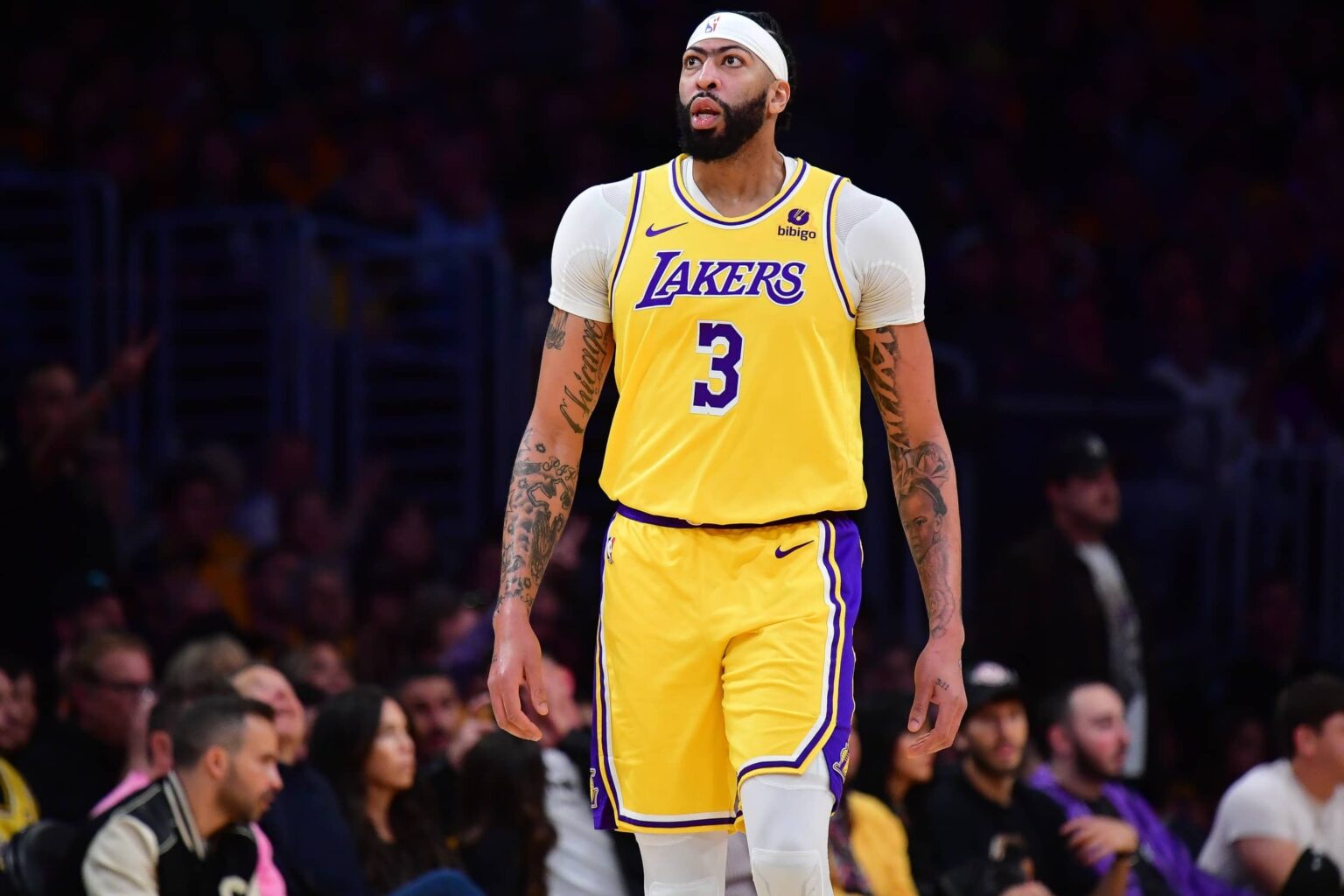
With the offseason underway, many eyes have turned toward the Washington Wizards, who are currently in possession of the No. 1 pick in the NBA Draft. Given the opportunity to select a franchise player this season, the Wizards are in a great place to add to their current core of Anthony Davis and Trae Young.
Currently, there appears to be some dispute regarding who the first overall pick will be, with AJ Dybantsa and Darryn Peterson being viewed as the most likely candidates. But as the day of the draft nears, there could be bigger moves in the works.
Rumors suggest that the Utah Jazz, with the No. 2 pick in the draft, are interested in moving up and drafting Dybantsa. While promising, facilitating such a deal with the Wizards, who are also interested in Dybantsa, may be challenging. Hence, by expanding the scale significantly, NBA insider Brandon “Scoop B” Robinson presented a “mega-deal” that could not only shake up the draft but could potentially see Anthony Davis return to the Los Angeles Lakers.
On that note, here is Robinson’s trade proposal:
Proposed Trade Details
Los Angeles Lakers Receive: Anthony Davis, Ace Bailey, 2026 second-round pick (WAS), 2026 second-round pick (WAS), 2027 second-round pick (UTA), 2027 second-round pick (UTA)
Washington Wizards Receive: No. 2 overall pick, Lauri Markkanen, Jarred Vanderbilt, Dalton Knecht, 2030 first-round pick (LAL), 2032 first-round pick (LAL), portion of LAL’s pick swaps, and draft assets
Utah Jazz Receive: No. 1 overall pick, Trae Young, Jake LaRavia, No. 25 overall pick (LAL), portion of LAL’s pick swaps, and draft assets
The sheer magnitude of Robinson’s trade proposal is difficult to capture at a single glance. Hence, with the need to delve further, we examine the finer details and the impact of this deal.
Financial Outlook
From a financial perspective, this trade sees several contracts moving around. Anthony Davis’ $58.4 million contract, Trae Young’s $48.9 million player option, and Lauri Markkanen‘s $46.1 million deal are the most significant ones in this regard.
In the Lakers’ case, the Purple and Gold would be seeing a combined incoming cap hit of $67.9 million from Davis and Ace Bailey ($9.5 million). For the most part, the Lakers’ ample free cap space of nearly $60.0 million would be enough to absorb this. However, with Jarred Vanderbilt ($12.4 million), Jake LaRavia ($6.0 million), and Dalton Knecht ($4.2 million) on the way out, the Lakers clear up approximately $22.6 million in cap room, making it marginally easier to absorb the incoming contracts.
Like the Lakers, the Jazz would also have ample cap space to absorb the combined incoming cap hit of $54.9 million from Young’s and LaRavia’s contracts. With Markkanen and Bailey headed out, the resultant impact on Utah’s overall payroll is negligible.
Unlike either of the aforementioned teams, the Wizards are shedding a considerable amount in salary from this trade. With roughly $107.4 million in outgoing contracts, the Jazz’s incoming cap hit of $62.7 million leaves them with $44.7 million in free cap space, bringing them well below the tax apron.
Financially, this deal seems quite reasonable for all teams involved. However, the sheer amount of incoming salaries for the Lakers may raise some questions.
Who Benefits From This Deal?
Like every trade scenario, there are pros and cons. In this case, too, there are several major positives.
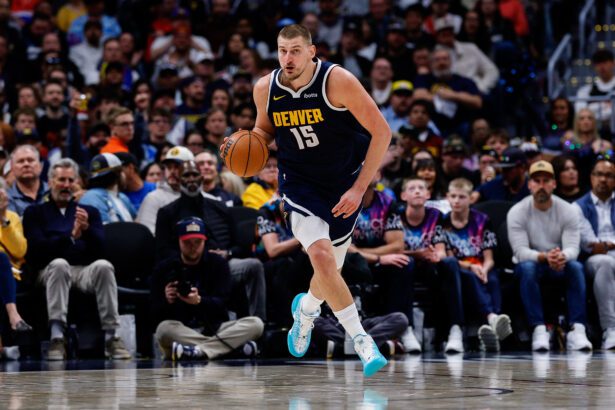
The real winners of Robinson’s trade proposal appear to be the Utah Jazz. Apart from gaining the first overall pick and a clear shot at drafting AJ Dybantsa, Utah also effectively swaps Lauri Markkanen for Trae Young, giving the team the ideal playmaker to bring out the best in players like Jaren Jackson Jr., Walker Kessler, and Keyonte George.
Although he missed 67 games last season, primarily due to recurring injuries, when available, Young was still effective. With averages of 17.9 points, 2.0 rebounds, and 8.0 assists per game on 45.8% shooting from the field and 33.8% from three-point range, Young remains an elite floor general. On an up-and-coming team like the Jazz, he could be an ideal fit.
Along with Young, the Jazz would also acquire Jake LaRavia (8.2 PPG, 4.0 RPG, 1.3 SPG), who has proven himself effective as a two-way player. With another first-round pick (No. 25) in the 2026 draft thrown in with the other draft assets, Utah stands to gain the most from this trade.
Apart from the Jazz, the Lakers also stand to gain a lot from making this trade.
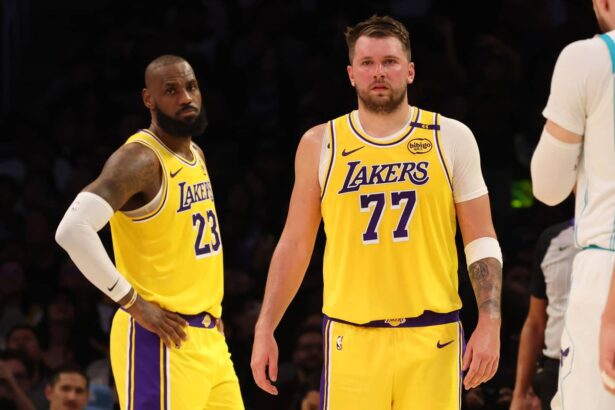
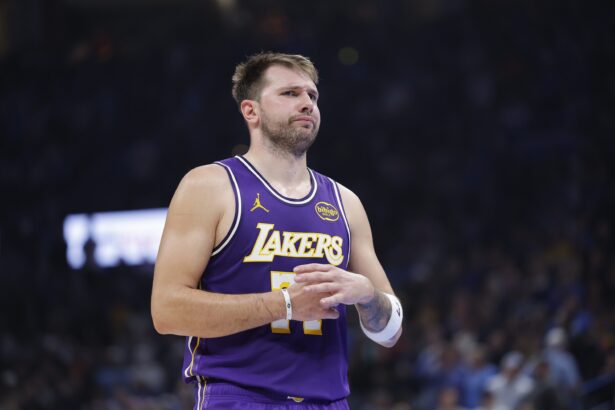
In light of Luka Doncic’s explicit demands for roster upgrades, the Purple and Gold have set their sights on several targets. With the acquisition of an athletic big man emerging as a priority, the arrival of Anthony Davis in this trade scenario may be viewed favorably.
Anthony Davis not only benefits from his history with the Lakers’ organization, but his overall skill set also suggests he could be a great fit alongside Luka Doncic. As an elite pick-and-roll big man with a versatile offensive arsenal and defensive upside, Davis’ addition could be transformative for the Purple and Gold.
Davis was largely underwhelming last season, as injuries kept him sidelined for extended periods. Still, considering his averages of 20.4 points, 11.1 rebounds, 1.1 steals, and 1.7 blocks per game, the 33-year-old has the potential to be dominant when healthy.
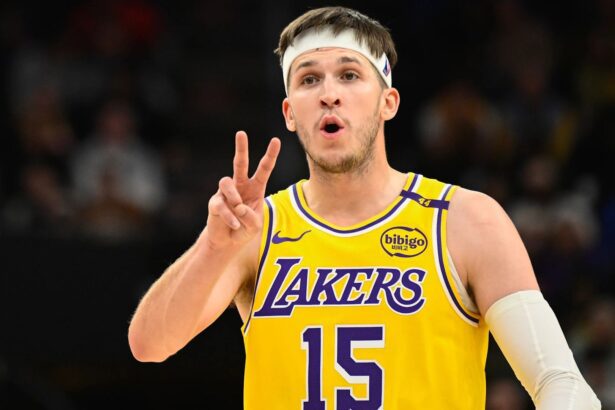
The Lakers would also be adding the Jazz forward Ace Bailey, who will be entering his sophomore season, as part of this deal. Bailey’s rookie season did not gain much attention, despite averaging 13.2 points and 4.8 rebounds per game while shooting 44.3% from the field and 34.4% from three-point range. Still, his efficiency and overall offensive upside may be worth cultivating.
Why This Trade Does Not Work
While there is some merit in doing this deal for the aforementioned teams, there are greater risks that demand attention. Most importantly, however, the Washington Wizards stand to gain virtually nothing from this trade.
As constructed, the Wizards are on the verge of a new era with Trae Young and Anthony Davis forming the core. With reports indicating Young’s wishes to opt out of his contract and potentially sign a new one with the Wizards, it is clear that the guard is committed to growing with the team. On that note, parting with Young to acquire Lauri Markkanen (26.7 PPG, 6.9 RPG, 47.7% FG) makes no sense.
Although Markkanen is a gifted offensive threat, he may not be a good fit on a team that already features a floor-spacing big man like Alex Sarr. Additionally, given Utah’s inclination to draft AJ Dybantsa, bringing Markkanen on board would create another positional clash, stunting Dybantsa’s growth trajectory.
Even if Markkanen is viewed as Davis’ replacement, which would still be sensible, gaining Jarred Vanderbilt and Dalton Knecht in return for Young cannot be viewed positively, even if it implies multiple draft assets. This trade scenario effectively sends Washington back a few steps in their rebuild, forcing them to start from scratch before they’ve even had a chance to test their core. Although there may be some merit in this, too, it may also be perceived as a waste of time.
Aside from the Wizards, the Jazz and the Lakers may also face issues stemming from similar concerns involving Trae Young and Anthony Davis.
Although both players are impressive, they have developed a reputation for being injury-prone. While this may not affect the Jazz as much, who are working their way back to being a playoff contender, for a team with title aspirations like the Lakers, seeing Davis miss time during crucial segments of the season could be disastrous.
Overall, it can be argued that the cons far outweigh the pros in this deal. Given the relatively uninspiring risk-to-reward ratio, all three teams may be dissuaded from making this trade.
Do The Lakers Need Anthony Davis?
As mentioned earlier, Anthony Davis’ skill set and his two-way upside make him a tremendous fit alongside Luka Doncic. Given the success the Lakers enjoyed by pairing Davis with LeBron James, there is enough evidence to suggest that the formula could be repeated. Unfortunately, at this stage in his career, Davis may not be the player that the Lakers need.
While he remains brilliant in every way, the Lakers’ requirements for their center are very different. Although he fits the bill as a defensive stalwart, the Purple and Gold need a “service” big man who effectively functions as a lob threat and solid screen-setter. In many ways, Davis’ versatility makes him a poor fit for this role.
For all intents and purposes, despite his connection to the organization, it may be better for him not to return to the Lakers. With Los Angeles pursuing a completely different route while building around Doncic, there may not be much room for the former NBA champion to shine.
In this regard, reports about Anthony Davis’ commitment to staying with the Washington Wizards seem much more promising. Although the big man was initially against the move, it appears that building something with the talented young players in Washington may be a more fruitful endeavor.