The 2026 NBA Draft has enough talent to change several franchises, but the players selected might not be the biggest story of the night.
Giannis Antetokounmpo and Ja Morant are two major names who could be traded around the draft. The Pelicans are listening to interest in Trey Murphy III, while the Thunder are expected to explore moving up from picks No. 12 and No. 17. The top of the draft also has some uncertainty, with AJ Dybantsa and Darryn Peterson both having real arguments for the No. 1 pick.
Some of these trades are connected to direct reporting. Others are predictions based on team needs, available picks, contracts, and the direction of each franchise. Not every framework will happen exactly like this, but all five involve teams that have a reason to make a major move.
The draft gives teams a natural deadline. Picks have more value before they become actual players, and front offices can build deals around the exact prospects available when they are on the clock.
Here are five blockbuster trades that could happen during the 2026 NBA Draft.
5. The Jazz Move Up For The No. 1 Pick
Utah Jazz Receive: No. 1 pick in the 2026 NBA Draft
Washington Wizards Receive: No. 2 pick in the 2026 NBA Draft, Cody Williams, 2027 first-round pick (second-most favorable of Jazz, Cavaliers and Timberwolves)
This could be the least likely trade on the list, but it also could become possible if the Jazz and Wizards have different players at the top of their boards. The Wizards have been very public about the possibility of trading down, which makes this a realistic scenario.
AJ Dybantsa and Darryn Peterson are the main candidates for the No. 1 pick. Dybantsa averaged 25.5 points, 6.8 rebounds, and 3.7 assists at BYU. Peterson produced 20.2 points and 4.2 rebounds at Kansas, although injuries limited him to 24 games.
Peterson only met with the Wizards before the draft, while Dybantsa met with both the Wizards and Jazz. That doesn’t confirm what either team will do, but it creates an interesting situation. The Jazz might be willing to move up if they see Dybantsa as the better franchise player and believe the Wizards are also considering him.
The Wizards finished 17-65 and the Jazz went 22-60. Both teams need a player who can become the main piece of the rebuild. The difference is that the Wizards could move down one spot, select Peterson, and still add two more assets.
Cody Williams would be the first part of the extra value. The former No. 10 pick averaged 8.8 points, 3.0 rebounds, and 2.0 assists in his second season while shooting 46.8% from the field. His 21.4% from three was poor, but he improved late in the year and averaged 13.4 points, 4.0 rebounds, and 3.8 assists over his final 25 games.
Williams is still only 21 years old and will make $6.0 million in 2026-27. The Wizards could give him minutes without needing immediate results, especially next to Alex Sarr, Bilal Coulibaly, Tre Johnson, and another top prospect.
The 2027 first-round pick would be the real price for moving one position. The selection would be the second-most favorable pick between the Jazz, Cavaliers, and Timberwolves. It’s likely it won’t become a top pick, since the Jazz now have a brekaout star in Keyonte George, plus Lauri Markkanen, Jaren Jackson Jr., and a potential No. 1 pick.
The Wizards shouldn’t accept this offer unless they are comfortable selecting Peterson at No. 2. They can’t move down only for extra value, although they reportedly believe Dybantsa is not a ‘franchise savior’. In that case, receiving Williams and another 2027 first-round pick for moving down one position would be difficult to reject.
4. The Thunder Trade Picks No. 12 And No. 17 To Move Up
Oklahoma City Thunder Receive: No. 7 pick in the 2026 NBA Draft
Sacramento Kings Receive: No. 12 pick and No. 17 pick in the 2026 NBA Draft
The Thunder don’t have a comfortable draft situation. They finished 64-18, earned the first seed in the West, and reached Game 7 of the Western Conference Finals one year after winning the championship. They also own picks No. 12, No. 17, and No. 37.
Jake Fischer reported that rival executives expect the Thunder to be aggressive. Marc Stein also reported that they are looking at ways to move up for a highly rated big man. They have too much players, draft assets, and guaranteed contracts. Adding three more rookies to the roster doesn’t make much sense.
Shai Gilgeous-Alexander averaged 31.1 points, 6.6 assists, and 4.3 rebounds while shooting 55.3% from the field and 38.6% from three. Jalen Williams and Chet Holmgren are already long-term second and third options. The Thunder don’t need another player who simply fills a rotation spot. They can target one prospect with a higher ceiling.
The No. 7 pick would put them in range for a big man or large forward such as Aday Mara, depending on how the first six selections develop. Mara has been mentioned as a realistic trade-up target for the Thunder. They need more size after facing Victor Wembanyama and the Spurs in the Western Conference Finals.
The Kings have a different problem. They finished 22-60 and need young talent at several positions. Their 2025 draft class gave them a start. Maxime Raynaud averaged 12.5 points and 7.5 rebounds while shooting 57.1% from the field, and Nique Clifford showed value as a two-way wing.
One player at No. 7 could have more upside than anyone available at No. 12 or No. 17. Still, rebuilding teams need more chances. The Kings could select one guard or wing at No. 12 and then add another frontcourt prospect at No. 17.
There is no salary issue because this is only a pick trade. It also gives the Kings two rookie contracts instead of one, which helps a team that needs cheap young players after spending too much money on an older roster.
The final decision would depend on which prospect is available at No. 7. If the Kings love Darius Acuff Jr., Mikel Brown Jr., or another guard, they should keep the pick. If their preferred options are close, turning No. 7 into No. 12 and No. 17 is a logical move.
This is also the trade on the list with the best chance of happening. The Thunder have been directly connected to moving up, and the Kings are in the exact range where their pick could attract several offers.
3. Pistons Add Trey Murphy III To Fix Their Playoff Offense
Detroit Pistons Receive: Trey Murphy III
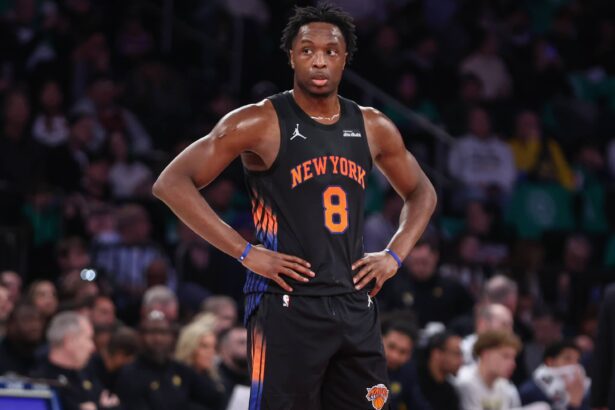
New Orleans Pelicans Receive: Ron Holland II, Isaiah Stewart, No. 21 pick in the 2026 NBA Draft, 2028 first-round pick, 2030 first-round pick (top-four protected)
The Pistons made one of the biggest jumps in the NBA. They finished 60-22, earned the first seed in the East, and reached Game 7 of the second round before losing to the Cavaliers.
Their next step is adding another high-level scorer next to Cade Cunningham. Trey Murphy III would be one of the best possible options.
Marc Stein reported that the Pistons have expressed interest in Murphy and that the Pelicans are willing to listen to offers. This isn’t only a random fit. There is actual interest behind the idea.
Murphy averaged 21.5 points, 5.7 rebounds, 3.8 assists, and 1.5 steals in 2025-26. He shot 47.0% from the field, 37.9% from three, and 88.6% from the free-throw line. At 6-foot-8, he can shoot over smaller defenders, attack closeouts, finish in transition, and defend multiple positions.
Cunningham averaged 23.9 points, 9.9 assists, and 5.5 rebounds. The Pistons built a strong offense around his pick-and-roll creation, but they still need another player who can score without controlling the ball. Murphy made 3.2 three-pointers per game on 8.6 attempts. Defenders can’t leave him to help on Cunningham.
Murphy will make $27.0 million in 2026-27, followed by salaries of $29.0 million and $31.0 million. That is a good contract for a 26-year-old wing producing more than 20 points per game.
Isaiah Stewart will make $15.0 million and Ron Holland II will make $9.1 million. Their combined $24.1 million is enough for the Pistons to legally receive Murphy’s $27.0 million salary under normal matching rules.
The Pelicans would get one of the better young players the Pistons can offer. Holland averaged 8.2 points, 4.0 rebounds, 1.2 assists, and 1.2 steals in 19.9 minutes. His 25.3% from three remains a major problem, but he is only 20 years old and already brings athleticism, transition scoring, rebounding, and defensive pressure.
Stewart averaged 10.0 points, 5.0 rebounds, and 1.6 blocks while shooting 55.0% from the field. He could back up Derik Queen, play some minutes next to him, or become another contract for a later trade.
The three first-round picks make the offer serious. The Pelicans would receive No. 21 immediately, an unprotected 2028 first-round pick, and a 2030 pick with only top-four protection.
The Pelicans finished 26-56 and have to decide whether their current roster can become a contender down the road. Murphy might be their most valuable healthy player, but that is also why trading him could bring the type of package needed for a real reset.
I would only make this trade if the Pistons believe they are ready to compete for the Finals now. Giving up Holland and three first-round picks is expensive. Murphy’s shooting, age, contract, and fit with Cunningham make the risk reasonable.
2. Ja Morant Joins Anthony Edwards In A Blockbuster Move
Minnesota Timberwolves Receive: Ja Morant
Memphis Grizzlies Receive: Julius Randle, Terrence Shannon Jr., Joan Beringer, No. 28 pick in the 2026 NBA Draft
ESPN already proposed the main structure of this trade, with Ja Morant going to the Timberwolves for Julius Randle, Terrence Shannon Jr., and Joan Beringer. Adding the No. 28 pick gives the Grizzlies another future asset and makes the return more acceptable.
The Timberwolves finished 49-33 as the sixth seed and eliminated the Nuggets before losing to the Spurs in the second round. Anthony Edwards averaged 28.8 points, 5.0 rebounds, and 3.7 assists while shooting 48.9% from the field and 39.9% from three.
Edwards is already a franchise player, but the Timberwolves still ask him to create too much of their late-game offense. Morant would give them another guard who can break down a defense, enter the paint, and create open shots for Edwards, Jaden McDaniels, Naz Reid, and Rudy Gobert.
Morant averaged 19.5 points, 8.1 assists, and 3.3 rebounds in only 20 games. He shot 41.0% from the field and 23.5% from three, both well below his normal level. A left elbow ligament injury ended his season, although he is expected to be ready for 2026-27.
This would be a huge risk. Morant has played only 79 games over the last three seasons because of injuries and suspensions. His lack of shooting would also create spacing questions next to Gobert.
Still, the talent is real. Morant has career averages of 22.4 points and 7.4 assists. A healthy version of him would give the Timberwolves a level of speed and passing they don’t currently have. Edwards would also help reduce the pressure on Morant to be the main scorer every night.
Morant will make $42.2 million in 2026-27 and remains under contract through 2027-28. Randle will make $33.3 million, Shannon will make $2.8 million, and Beringer will make $4.4 million. The Timberwolves would send out approximately $40.5 million, enough to take back Morant’s contract.
Randle had another good regular season, averaging 21.1 points, 6.7 rebounds, and 5.0 assists on 48.1% from the field. His value dropped in the playoffs, where he averaged 16.0 points and shot 39.0% from the field. Replacing him with Morant would move more creation into the backcourt while allowing Reid to take a larger role at power forward.
The Grizzlies finished 25-57 and already traded Jaren Jackson Jr. to the Jazz. They now have the No. 3 pick and are building around a younger group.
Shannon averaged only 5.6 points in the regular season, but he shot 40.8% from three and increased his production to 11.8 points in the playoffs. Beringer averaged 3.9 points, 2.3 rebounds, and 0.7 blocks in limited minutes while shooting 66.3% from the field. He is a long-term center prospect who fits a rebuild better than a veteran roster.
Randle wouldn’t fit the Grizzlies’ timeline, but he could keep the team competitive or be moved again. His contract has another season before a player option in 2027-28.
The No. 28 pick is not a premium asset, but it gives the Grizzlies another chance to add a young player or move up from No. 3 in a separate deal.
The Timberwolves would be betting that their structure can bring back the best version of Morant. It might fail because of health, shooting, or availability. It could also give Edwards the most talented backcourt partner of his career. That upside makes it a real draft-night possibility.
1. Giannis Antetokounmpo Finally Forces His Way To The Heat
Miami Heat Receive: Giannis Antetokounmpo
Milwaukee Bucks Receive: Tyler Herro, Kel’el Ware, Jaime Jaquez Jr., Nikola Jovic, No. 13 pick in the 2026 NBA Draft, unprotected 2030 first-round pick, unprotected 2032 first-round pick
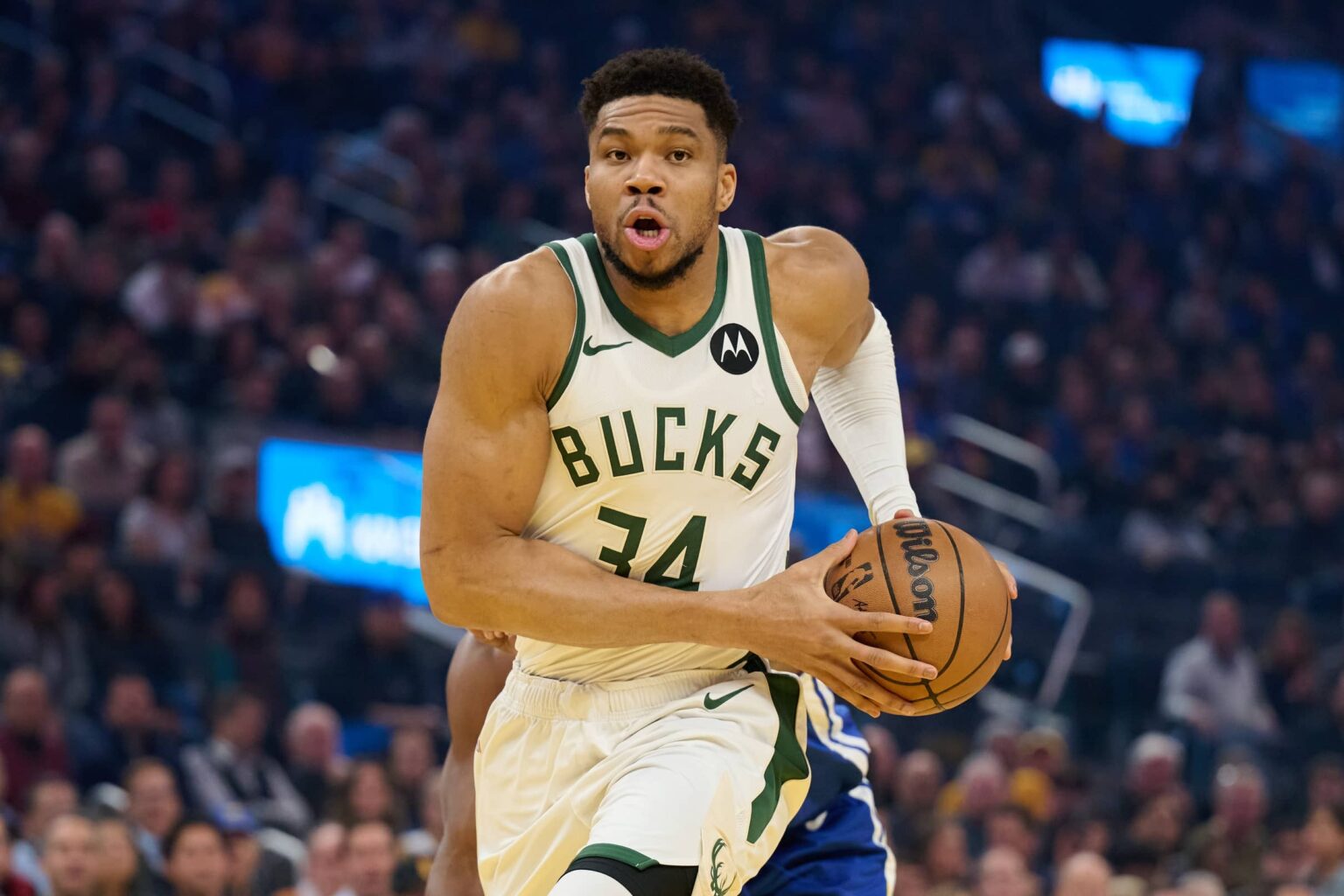
This is the obvious No. 1 trade because it has the strongest reporting, the biggest player, and a natural deadline before the draft. ESPN reported that Giannis Antetokounmpo has focused on joining the Heat. Talks between the Heat and Bucks intensified, and Giannis would reportedly be open to signing an extension after the trade.
The Bucks finished 32-50 and missed the playoffs for the first time since 2016. Giannis played only 36 games because of several injuries before hyperextending his left knee in March. He still averaged 27.6 points, 9.8 rebounds, and 5.4 assists while shooting 62.4% from the field.
He will make $58.5 million in 2026-27 and has a $62.8 million player option for 2027-28. The Bucks can’t enter next season without a clear answer. They either need an extension or a trade before his value starts dropping.
The Heat finished 43-39 and missed the playoffs after ending the season in 10th place. They were competitive, but the roster didn’t have the superstar scorer needed to become a serious contender.
Giannis would immediately change that. A frontcourt of Giannis Antetokounmpo and Bam Adebayo could become the best defensive pairing in the league. Adebayo averaged 20.1 points, 10.0 rebounds, and 3.2 assists in 2025-26. Both can defend on the perimeter, switch, protect the rim, rebound, and push the ball on the break.
The spacing wouldn’t be perfect. Adebayo shot 31.8% from three, and Giannis has never been a reliable outside shooter. Erik Spoelstra would need to use more movement, screening, transition offense, and smaller lineups around them.
The Heat would still make the trade without thinking too much. Players at Giannis’ level almost never become available, and he reportedly wants to join them. The package gives the Bucks four players, three first-round picks, and enough salary to complete the deal.
Tyler Herro will make $33.0 million in 2026-27. He averaged 20.5 points, 4.8 rebounds, and 4.1 assists in 33 games. He is already a former All-Star and could become the main offensive guard for the Bucks or be moved later for more assets.
Kel’el Ware is probably the most important young player in the deal. He averaged 11.1 points, 9.0 rebounds, and 1.1 blocks while shooting 53.0% from the field and 39.5% from three. A young center who can rebound, protect the rim, and shoot has major value.
Jaime Jaquez Jr. had the best season of his career, averaging 15.4 points, 5.0 rebounds, and 4.7 assists on 50.7% from the field. He can play immediately and is still on a cheap rookie contract worth $5.9 million next season.
Nikola Jovic struggled in 2025-26, averaging 7.3 points, 3.3 rebounds, and 2.2 assists while shooting 36.6% from the field. He starts a new extension worth $16.2 million next season, so his value isn’t as strong as it looked one year ago. The Bucks would be betting on his size, passing, and previous flashes.
Herro, Ware, Jaquez, and Jovic will combine for approximately $59.8 million in 2026-27 salary. That is enough to match Giannis’ $58.5 million contract.
The No. 13 pick gives the Bucks a young player from a strong draft. Since the trade would likely be finalized after the selection, the Heat could choose the player requested by the Bucks and then include his draft rights in the deal.
The 2030 and 2032 first-round picks would need to be unprotected. The Bucks can’t trade the best player in franchise history for distant selections with heavy protection. Those picks could also become valuable because Giannis and Adebayo will be older by then.
This is not the strongest possible offer the Bucks could receive. Other teams can provide better young stars or more first-round picks. The Heat’s advantage is Giannis’ reported preference and willingness to extend.
That can reduce the market. A team will not offer its best assets if Giannis refuses to commit beyond one season. The Heat can offer him the destination he wants, a star teammate in Adebayo, an elite coach, and a franchise that has repeatedly built Finals teams around major trades.
The Bucks might ask for Kasparas Jakucionis, another pick swap, or help from a third team. The basic structure still works. Herro provides salary and scoring, Ware is the main prospect, Jaquez adds value, No. 13 gives them an immediate lottery pick, and the two distant first-round picks protect the rebuild.
Of all five trades, this is the one I expect to control draft night. The Bucks can wait for a stronger offer, but the situation can’t continue forever. Giannis wants the Heat, the Heat need a superstar, and the draft gives both teams the best moment to complete the biggest trade of the offseason.