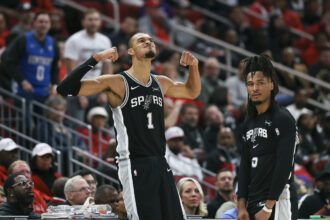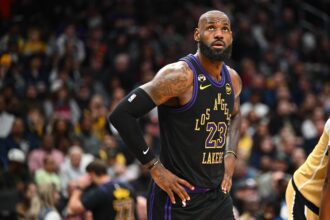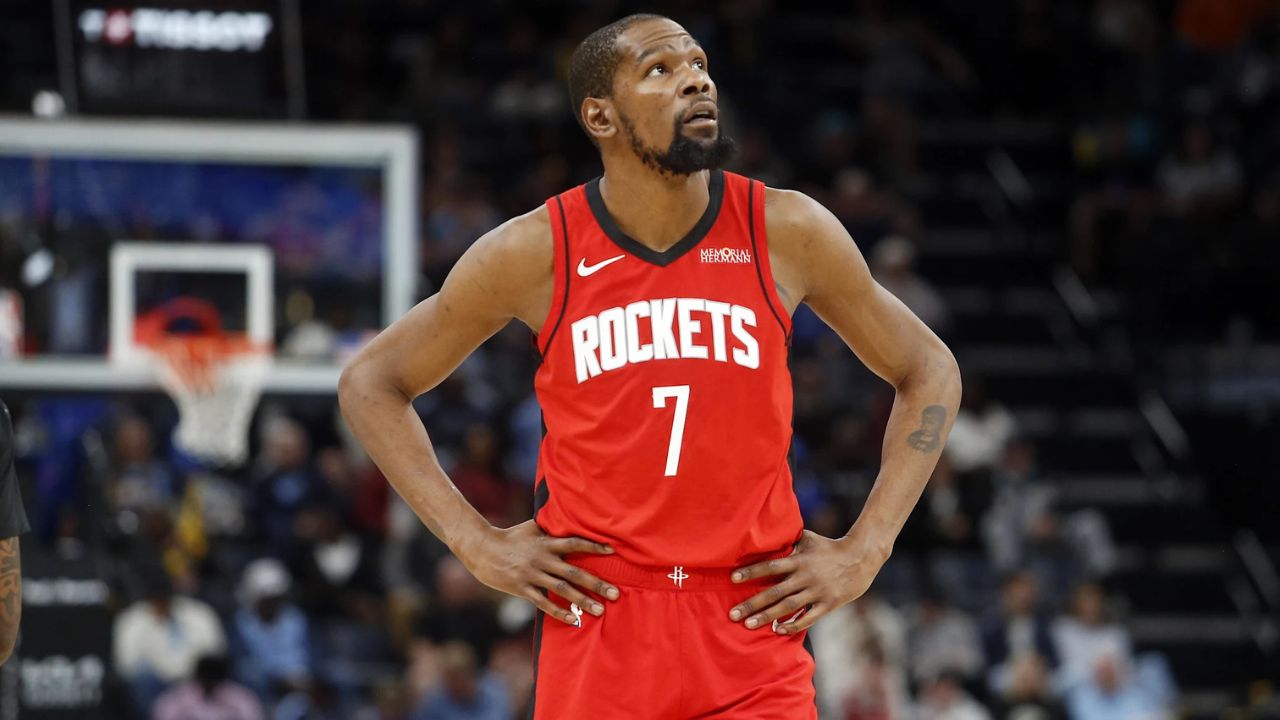
The Rockets’ season ended with the same problem that followed them all year: the roster looked deep on paper, but it was not complete enough when the game became slow, physical, and half-court based. They lost 98-78 to the Lakers in Game 6, ending their first-round series in six games after trying to fight back from a 3-0 hole. They won Games 4 and 5, but the comeback died fast in the closeout game. The Rockets shot only 35.0% from the field and 17.9% from three-point range, while Kevin Durant missed his fifth game of the series because of an ankle injury. Alperen Sengun had 17 points and 11 rebounds, but the offense never found enough scoring around him.
That is the frustrating part. The Rockets are not bad. They went 52-30, finished with a strong regular-season profile, and still have one of the better young cores in the league. But they also spent the year without Fred VanVleet, lost Steven Adams in the middle of the season, and saw Durant’s ankle injury change the entire playoff series. The result was another early exit, and now the contract sheet becomes the main story.
The Rockets are not entering a rebuild. They are entering a pressure offseason. Durant is still here. Sengun is still here. Amen Thompson, Reed Sheppard, and Jabari Smith Jr. are still young enough to improve. But this team is already expensive, and the next move has to be more exact than emotional.
The Rockets Already Have 10 Players Under Contract
The Rockets will face an offseason with 10 players on their 2026-27 active roster. That group includes Durant, Sengun, VanVleet, Smith, Dorian Finney-Smith, Adams, Thompson, Sheppard, Clint Capela, and J.D. Davison. VanVleet has a $25.0 million player option, while Davison has a $2.6 million club option.
1. Kevin Durant: $43.9 million
2. Alperen Sengun: $35.6 million
3. Fred VanVleet: $25.0 million, player option
4. Jabari Smith Jr.: $23.6 million
5. Dorian Finney-Smith: $13.3 million
6. Steven Adams: $13.0 million
7. Amen Thompson: $12.3 million
8. Reed Sheppard: $11.1 million
9. Clint Capela: $7.0 million
10. J.D. Davison: $2.6 million, club option
This is a serious roster, but it is also a strange one. The Rockets have a lot of good players and still do not have a perfect playoff shape. They have size. They have defense. They have rebounding. They have young talent. They also have a spacing question, a ball-handling question, and a health question at the top of the roster.
Durant at $43.9 million is not the problem if he is healthy. He averaged 26.0 points, 5.5 rebounds, and 4.8 assists while shooting 52.0% from the field and 41.4% from three-point range. The Rockets brought him in to give them elite half-court scoring, and that part worked when he was available. The problem is that he is 38 for the 2026-27 season and just missed almost the entire playoff series with an ankle injury.
Sengun at $35.6 million is also easy to understand. He averaged 20.4 points, 8.9 rebounds, and 6.2 assists while shooting 51.9% from the field. That is All-Star production from a center who can pass, post, screen, and create offense from the elbows. The issue is not whether Sengun is good. The issue is how to build the right spacing and defensive coverage around him.
VanVleet’s $25.0 million player option is one of the key offseason points. He missed the entire season, and the Rockets had to ask Thompson and Sheppard to handle more guard responsibility. If VanVleet is healthy, he gives them structure, shooting, low-turnover pick-and-roll play, and late-game organization. If he is not fully back, the Rockets are again relying on young guards to run a win-now team. That is not fair to them, and it is not safe for the roster.
Smith’s $23.6 million cap hit changes his evaluation. He is no longer just a young forward on a rookie deal. He is now a paid core player. He averaged 15.8 points, 6.9 rebounds, and 1.9 assists while shooting 44.9% from the field and 36.5% from three-point range. Those are good numbers, but the Rockets need more consistency from him as a two-way forward. At that salary, he has to be more than a stretch forward who has good weeks and quiet weeks.
A Bet On Experience As The Win-Now Frame
The Rockets’ best version is not hard to see. It starts with Durant as the top scorer, Sengun as the offensive hub, and VanVleet as the organizer. That gives them shooting, passing, and decision-making at three different spots. It is a good base for playoff offense because it gives them more than one way to attack.
Durant is the simple part. He can score without needing a perfect action. That is what the Rockets lacked for years. When the first pick-and-roll gets stopped, Durant can still get to a pull-up jumper. When a switch happens, he can shoot over the top. When the offense gets tight, he can create a decent look without forcing three extra passes. That has real value in the playoffs.
The issue is that Durant cannot be the only answer. The Lakers series showed that. Once Durant went out, the Rockets had to build offense through Sengun, Thompson, Sheppard, and Smith. That group has talent, but it did not have enough shot creation against a defense that could load up. The Rockets finished Game 6 at 5-of-28 from three-point range. That is not only bad shooting. It is a sign that the offense did not create enough good looks.
Sengun gives them a different kind of pressure. He is one of the few centers who can run offense from the middle of the floor. He can hit cutters, throw corner passes, punish switches, and score against single coverage. But if the Rockets do not put enough shooting around him, opponents can crowd the lane. That is where roster balance becomes important.
The Rockets need to think about spacing in a direct way. A lineup with Sengun, Thompson, Adams or Capela, and another non-elite shooter can become too tight. Thompson is excellent, but he shot only 20.0% from three-point range. If he is playing heavy minutes next to Sengun, the other three spots have to carry shooting. That means Durant, VanVleet, Sheppard, Finney-Smith, and Smith all become more important as floor spacers.
VanVleet can fix part of that because he brings pull-up shooting and real point guard control. He also lets Thompson move back into a more natural attack role instead of carrying so much half-court creation. That should be a priority. Thompson can pass, but he is most dangerous when he is moving downhill, cutting, screening, defending, and running in transition. The Rockets need his force, not 35 minutes of him trying to be a classic point guard every night.
This is the main tactical question for Ime Udoka: does he want Thompson as the lead guard, or does he want him as a wing with speed, size, defense, and rebounding? The second version is probably better for a playoff team. VanVleet’s return would help that happen.
The Young Core Is Still The Most Needed Piece
The Rockets’ future is still strong because Thompson, Sheppard, Smith, Sengun, and Tari Eason are all young enough to improve.
Thompson is the most important young piece because he gives the Rockets something nobody else does. He averaged 18.3 points, 7.8 rebounds, 5.3 assists, and 1.5 steals while shooting 53.4% from the field. Those are big numbers for a 23-year-old who also takes hard defensive assignments. He is a transition weapon, an elite athlete, and one of the best guard rebounders in the league.
The problem is shooting. Thompson shot 20.0% from three-point range. That changes playoff geometry. Defenses will help off him until he proves he can make them pay. That does not mean he cannot close games. It means the Rockets have to build his lineups carefully. Put him with Durant, VanVleet, Sheppard, and a shooting big look, and he can destroy gaps. Put him with two centers and another average shooter, and the paint gets crowded.
Sheppard is the other key. He averaged 13.5 points, 2.9 rebounds, and 3.4 assists while shooting 43.0% from the field and 40.0% from three-point range. That shooting is not optional for the Rockets. It is a need. Sheppard gives them movement shooting, quick decisions, and enough playmaking to keep the offense alive when VanVleet sits.
But Sheppard is still young. Game 6 was a reminder of that. The Rockets needed more shot-making, and the team’s young guards could not carry the offense. That is normal, but it is also why the Rockets cannot put the whole season on his growth. He should be part of the answer, not the entire answer.
Smith remains one of the swing contracts. His size and shooting should make him easy to fit next to almost any star. At his best, he is the forward every contender wants: 6-foot-11, switchable enough, able to hit trail threes, corner threes, and midrange shots over smaller defenders. But the Rockets need him to get stronger in the small details. He has to defend without fouling, rebound in traffic, make faster reads, and punish mismatches with more force.
Eason is the key free-agent question. Spotrac lists him with a 2026-27 qualifying offer of $8.0 million, which means the Rockets have to deal with his restricted free agency. He averaged 10.5 points, 6.3 rebounds, and 1.5 assists while shooting 37.2% from three-point range, and his defense gives the team another athletic forward.
The Rockets should try to keep him unless the price gets crazy. Eason fits what they need around Durant and Sengun: defense, offensive rebounding, energy, and enough shooting to stay on the floor. He is not a perfect offensive player, but he does not need the ball. That makes him valuable.
The Frontcourt Money Has To Be Used Better
The Rockets have a lot of frontcourt money. That is both a strength and a problem. Sengun, Adams, Capela, Smith, Durant, Finney-Smith, and possibly Eason all live in the forward-center group.
Adams at $13.0 million still has a purpose. He averaged 5.8 points and 8.6 rebounds in only 22.8 minutes, and his screening and offensive rebounding make life easier for guards. The Rockets were also strong when Adams played with Thompson. CraftedNBA listed the Adams-Thompson two-man group as one of the team’s best groups, with a strong plus mark in 525 minutes.
Still, Adams is not a floor spacer, and he is 33 for the 2026-27 season. Capela is also a non-shooting center. He is useful at $7.0 million because he can rebound, protect the rim, and play regular-season minutes. But the Rockets have to be honest. In the playoffs, it is hard to play too many minutes with two non-shooting bigs unless the rest of the lineup is elite from three-point range.
That is where Finney-Smith helps. At $13.3 million, he is a logical role player for this team. He can defend bigger wings, space the floor, and play low-usage minutes next to stars. He does not solve the offense by himself, but he gives the Rockets a playoff-style forward. The bigger question is whether the Rockets need another version of that player with more shot creation.
Davison’s club option is small. It is not a major cap decision. The bigger issue is roster spots. If the Rockets want to add a guard or wing, they have to be careful about how many developmental players and older frontcourt pieces they keep.
The Rockets do not need to dump all their size. Their identity is built on pressure, rebounding, and physical defense. But they need a better balance between size and shooting. Too many lineups looked strong defensively but limited offensively. Against elite playoff teams, that becomes a problem fast.
Final Thoughts: The Rockets Cannot Waste Kevin Durant
The Rockets have enough talent to run it back, but that does not mean they should run it back without changes. The Game 6 loss was too clear. A team trying to contend cannot finish a closeout game with 78 points, 35.0% shooting, and 17.9% from three-point range. Durant’s injury is a real explanation, but it cannot be the only one.
The roster needs more dependable perimeter offense. Not just more guards. Not just more names. The Rockets need someone who can create a shot, make a quick pass, and stay on the floor defensively. They also need to know what VanVleet looks like after missing the season. If he is close to normal, the offense gets easier. If he is not, the Rockets need another guard badly.
But the Rockets still have to choose a direction inside that base. Are they a big, defensive team that wins with rebounding and pressure? Are they a Durant-Sengun half-court team? Are they building around Thompson as a lead creator, or using him as a star role player who destroys games without needing every touch?
Those answers will decide the offseason. The contract sheet says the Rockets have enough players. The playoffs said they do not have enough answers.
That is the difference. The Rockets are not far away because they lack talent. They are far away because their best pieces do not all fit perfectly yet, and their health broke at the worst time. The front office does not need to panic, but it cannot be passive.
The Rockets have a good roster. Now they need a sharper one. They need more shooting around Sengun, more creation behind Durant, and more clarity on Thompson’s role. If they get that right, this group can be back in the playoffs with a better chance to survive. If they do not, the same problem will return: strong regular-season team, hard playoff matchup, not enough half-court scoring when the series turns slow.




![Knicks Fans Assault Police, Destroy Cab And Five Guys Restaurant In Violent Game 4 Aftermath [Video]](https://fadeawayworld.net/wp-content/uploads/2026/06/Knicks-Fans-riot-after-Game-4-615x410.jpg)