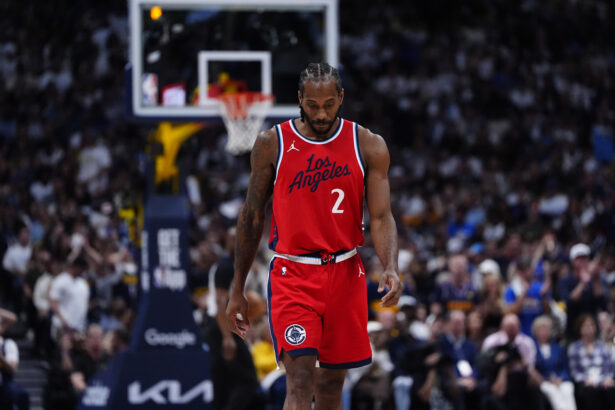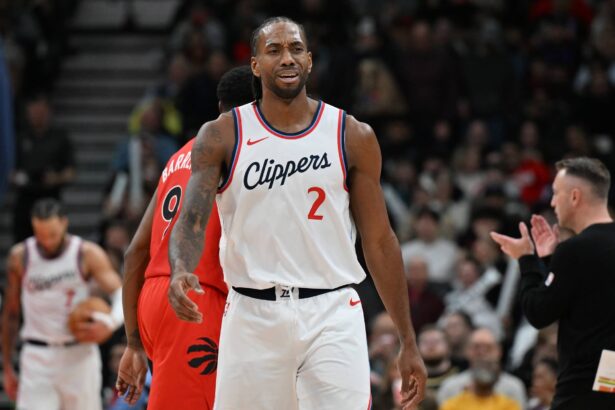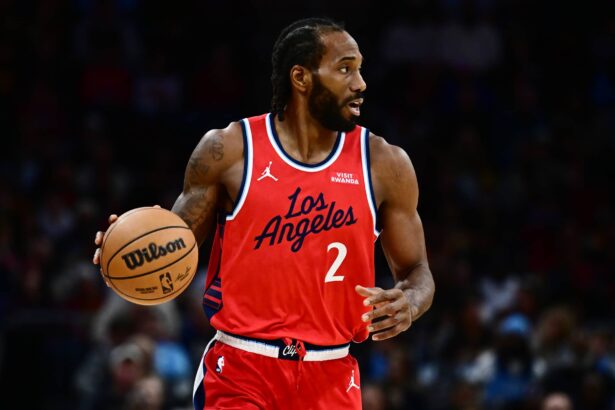
The Los Angeles Clippers received another dominant scoring performance from Kawhi Leonard, before he left in the fourth quarter due to injury, but it wasn’t nearly enough to overcome a balanced and highly efficient effort from the Sacramento Kings. Sacramento controlled the game for most of the night and walked away with a convincing 118-109 victory.
Despite Leonard’s scoring outburst and solid contributions from a few other Clippers, Los Angeles struggled to generate consistent offense and couldn’t match Sacramento’s efficiency. The Kings shot nearly 60% from the field and dictated the pace for the majority of the contest, exposing several weaknesses in the Clippers’ performance.
1. Kawhi Leonard Dominated But Received Little Support
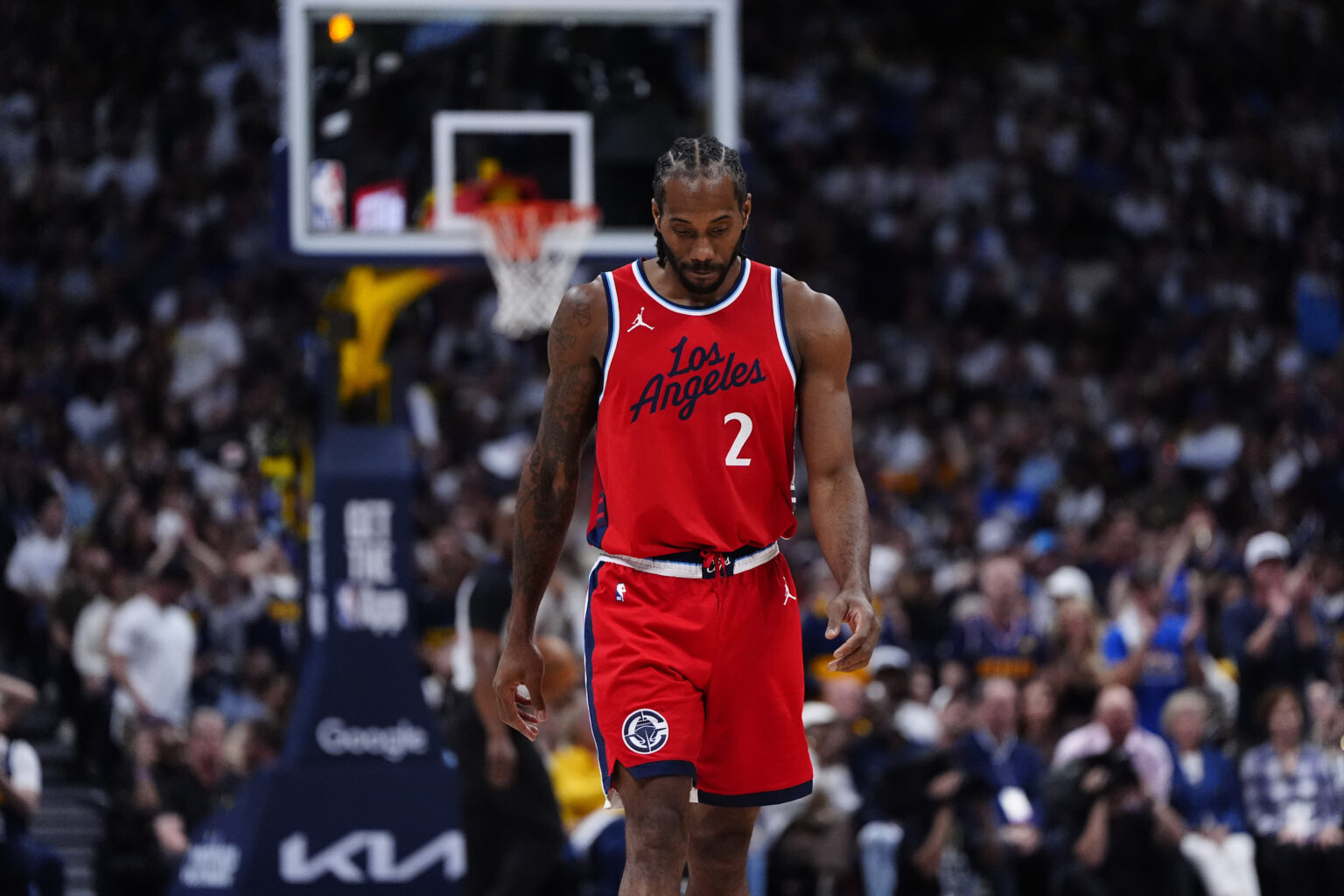
Kawhi Leonard was clearly the best player on the floor for the Clippers. The star forward poured in 31 points on 13-23 shooting, adding six rebounds and two steals while aggressively attacking Sacramento’s defense throughout his 26 minutes on the court.
Leonard was especially effective in the midrange, consistently creating space and knocking down difficult shots. Even when the Kings sent additional defensive attention his way, he continued to find scoring opportunities and kept the Clippers within striking distance early in the game.
However, the lack of offensive help around him ultimately proved costly. Outside of Leonard, only Darius Garland (25 points) and Bennedict Mathurin (24 points) managed to generate reliable scoring. The rest of the Clippers’ starters combined for just 7 total points, leaving far too much pressure on Leonard to carry the offense.
2. Sacramento’s Offensive Efficiency Was Overwhelming
The Kings delivered one of their most efficient offensive performances of the season. Sacramento shot a remarkable 48-82 from the field, finishing the night at 58.5%, while also knocking down 12-27 three-pointers (44.4%).
That efficiency was spread across the lineup. DeMar DeRozan led the scoring with 27 points on an incredible 11-14 shooting, constantly finding open looks in the midrange and attacking mismatches when the Clippers switched defensively.
Sacramento’s ability to consistently convert high-quality shots prevented the Clippers from mounting any serious comeback. Even when Los Angeles managed to score in short bursts, the Kings answered immediately with another efficient possession.
3. The Kings’ Frontcourt Controlled The Paint And Glass
Sacramento’s frontcourt completely dictated the interior battle. Precious Achiuwa finished with 25 points, 13 rebounds, and four blocks, dominating both ends of the floor with his physical presence around the rim.
The Kings also received a major contribution from Maxime Raynaud, who delivered an extremely efficient performance with 23 points on 11-12 shooting. His finishing inside gave Sacramento a reliable scoring option whenever the offense moved into the paint.
As a team, the Kings outrebounded the Clippers 48-35, controlling the defensive glass and limiting second-chance opportunities for Los Angeles. That rebounding edge helped Sacramento maintain control of the tempo throughout the night.
4. Sacramento’s Ball Movement Created High-Quality Looks
The most important factor for the Kings was the offensive flow they had throughout the game. Sacramento had 29 assists, showing their ability to create shots and move the defense.
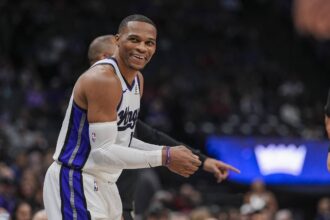
Russell Westbrook directed the offensive flow by getting a triple-double with 12 points, 12 rebounds, and 10 assists. Although his shooting was bad at 4-15, his ability to playmake let Sacramento create easy shots.
Sacramento was able to create a lot of great shots and a high overall shooting percentage by getting Westbrook the ball and letting him dictate. Ball movement essentially allowed Sacramento to exploit LA’s defensive weaknesses.
5. Clippers’ Starters Struggled Across The Board
Besides Leonard and Garland, most of the Clippers’ starters failed to have a positive impact on the offense. Derrick Jones Jr. scored two points on 1-4 shooting, and Brook Lopez didn’t even score in 22 minutes, going 0-2 from the field.
The point guard position also struggled as Kris Dunn scored just five points on 2-7 shooting, although he did have 6 rebounds and 4 steals. Even though Dunn played some good defense, his lack of scoring made it very easy for Sacramento to shift their focus defensively.
This meant that the Kings were able to easily run the Clippers’ defense and build a 20-point lead over them. The Clippers were never able to find a rhythm, and this meant that Sacramento was able to maintain their advantage, controlling the lead for 84% of the game.