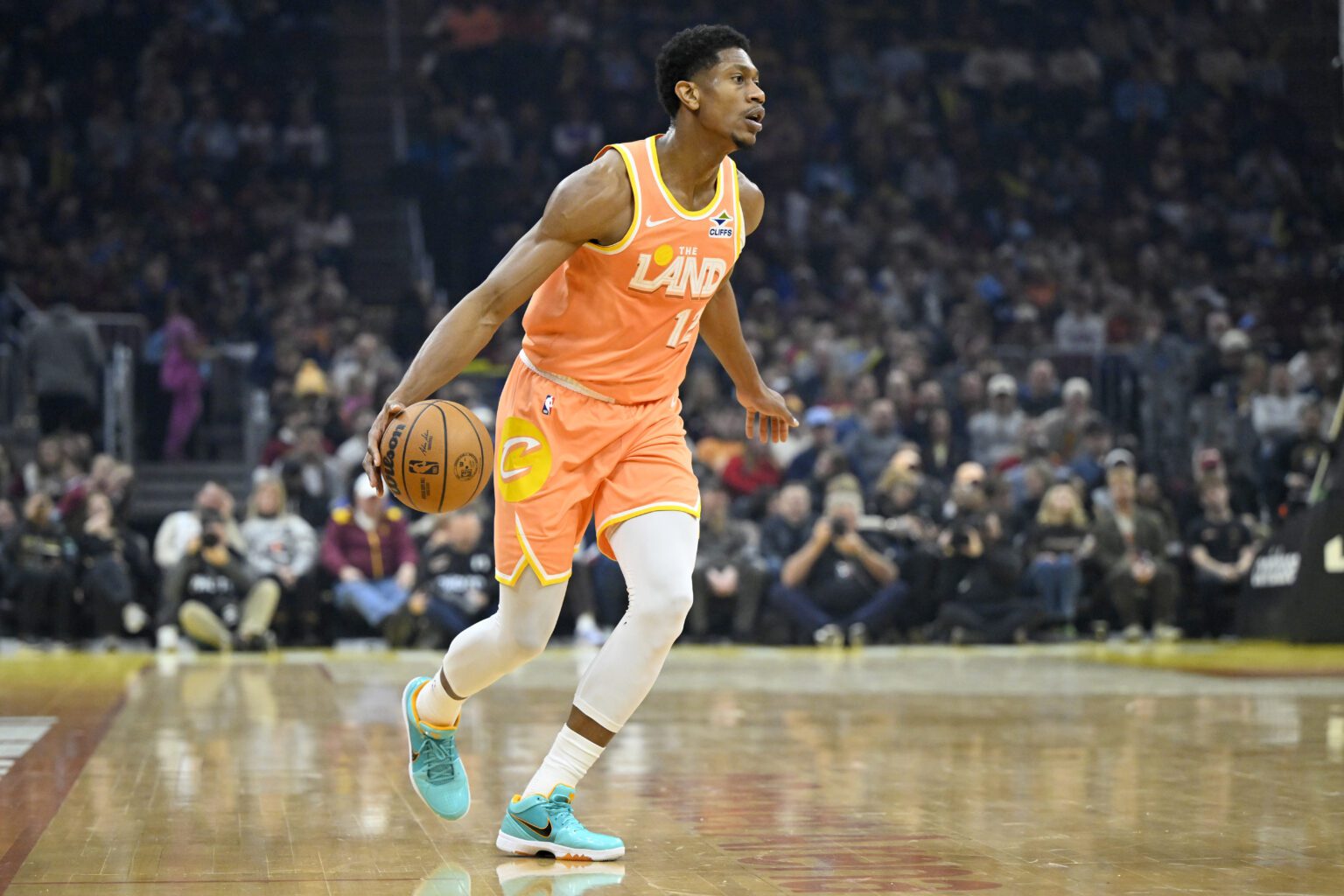
The Cleveland Cavaliers weren’t going to keep the same lineup for most of the season after a poor 29-21 start to the 2025-26 campaign. They have moved on from two-way swingman De’Andre Hunter for a package of Keon Ellis and Dennis Schroder, giving them an improved backcourt pairing that should give them depth on both ends. The Chicago Bulls also end up with veteran big man Dario Saric and two second-round picks.
Trade Details
Cleveland Cavaliers Receive: Keon Ellis, Dennis Schroder
Sacramento Kings Receive: De’Andre Hunter
Chicago Bulls Receive: Dario Saric, two second-round picks
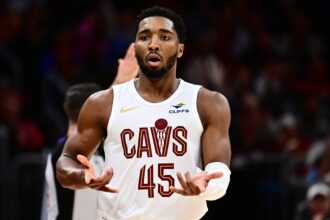
For their lofty standards as last season’s No. 1 seed in the East, falling on both ends of the court has been concerning. Despite Donovan Mitchell‘s 29.1 PPG on 48.4% from the field and Evan Mobley adding 17.9 PPG, 8.8 RPG, and 2.0 BPG, the Cavaliers only rank 8th in offensive rating and 14th in defensive rating.
Not to mention, the Cavs have been shopping Hunter for most of the season, and to get 26-year-old Keon Ellis and FIBA EuroBasket MVP Dennis Schroder looks great for their roster for most of the season. Meanwhile, the Kings move two of their pieces in an effort to tank. Without further ado, here are the trade grades.
Cleveland Cavaliers: A
Cleveland addressed real roster flaws. De’Andre Hunter never fully carved out a consistent role in this system, and moving him now prevents his value from dipping further. In return, the Cavs land Keon Ellis (5.6 PPG, 1.1 SPG, 0.5 BPG on 36.8% 3-PT FG), who has become one of the more impactful young perimeter defenders in the league.
He brings energy, point-of-attack defense, and floor spacing, all things Cleveland has needed next to its star backcourt. At this stage, Ellis looks like the most upward-trending player in the deal.
Then there’s Dennis Schroder (12.8 PPG, 3.1 RPG, 5.3 APG), whose value goes beyond the box score. Darius Garland’s injury history has forced Cleveland to rely on patchwork ball-handling too often, and that’s where games have slipped away.
Schroder gives them a veteran who can run the offense, push tempo, and survive playoff possessions without things falling apart. Financially, this move makes even more sense.
The Cavs will save nearly $50 million in luxury tax and salary cap with this move, according to Bobby Marks. Moving a player who hasn’t improved the defense for a better selection of talent with a major salary-shedding benefit makes perfect sense for them.
Sacramento Kings: C+
From a value standpoint, it’s hard to love this for Sacramento, and we give them a C+. Keon Ellis was one of the few young players on the roster outperforming his role, and moving him without landing a first-round pick feels light.
For a team sitting at 12-38, asset accumulation should be the priority, and this trade leans more toward reshuffling talent than building a future war chest. Hunter is still a useful player (14.0 PPG, 4.2 RPG), but at 28, he doesn’t align perfectly with a long rebuild timeline.
He’s more of a complementary wing for a playoff team than a foundational piece for a bottom-tier squad. If Sacramento flips him later for picks, this trade could look better in hindsight, but as it stands, it feels like they sold a promising young defender without clearly improving their long-term outlook.
Chicago Bulls: B
The Bulls got two second-round picks, which isn’t the worst deal considering they didn’t have to give anything up. Taking on Dario Saric’s contract (expires at the end of the season) won’t mean much, considering the Bulls will be a play-in team, the way things are going. Saric is averaging only 8.2 minutes per game in five appearances for the Kings so far this season.
The Bulls ultimately fill up their stash of picks for the future, and as we have seen in the NBA over time, there is nothing to lose when you get something for free. A B grade is given, as a result.
Donovan Mitchell: A
This trade is a win for Mitchell (easy A) in both the short and long term. Cleveland finally added players who ease the burden he’s been carrying as both a scorer and secondary playmaker.
Schroder can initiate offense, get Mitchell off the ball, and help stabilize those non-Garland minutes that have hurt the team. That alone should make the offense less predictable and less draining on Mitchell over an 82-game grind. Ellis also fits beautifully next to him.
Mitchell has had to expend a lot of energy defensively guarding bigger wings and quick guards; Ellis can take on those tougher perimeter assignments while still spacing the floor. That’s the kind of two-way support star players need in the playoffs, and it raises Cleveland’s ceiling without forcing Mitchell to do even more.
De’Andre Hunter: B+
A change of scenery might be exactly what Hunter needs, so this deal is a B+ for him. His role in Cleveland felt undefined at times, and his production dipped as a result. In Sacramento, he’ll likely get a longer leash offensively and more opportunities to handle the ball and hunt his own shot. On a team with fewer established scoring options, his numbers should naturally climb.
There’s also less pressure. Instead of being expected to be a key piece on a contender, he can focus on reestablishing his rhythm and confidence. If he puts up efficient scoring lines and stays healthy, he could either become part of the Kings’ future plans or rebuild his value around the league.
Dennis Schroder: B+
For Schroder, this is a clear upgrade and a B+ for him. Moving from a lottery-bound environment to a playoff race brings meaningful games back into his nightly routine. His skill set, speed, shot creation, and playmaking in space tend to shine more when surrounded by talent, and Cleveland offers exactly that.
He won’t need to carry an offense, just steer it when needed and inject pace into the second unit. That’s a role he’s thrived in before, and on a team with real postseason aspirations, his experience and edge could become sneaky-important when rotations tighten, and every possession starts to matter.