The Mavericks got a breakout night from Cooper Flagg. They got efficient scoring from their starting center. They even shot the ball well from deep. And somehow, it still ended in a loss.
Dallas fell 111-107 to the Rockets in a game that felt winnable deep into the fourth quarter, but the small details kept tilting Houston’s way. Extra possessions, cleaner execution, and just a bit more late-game composure outweighed Flagg’s electric 34-point, 12-rebound performance, leaving the Mavs to sort through a frustrating one that slipped away more than it was taken.
1. Cooper Flagg Did Everything He Could
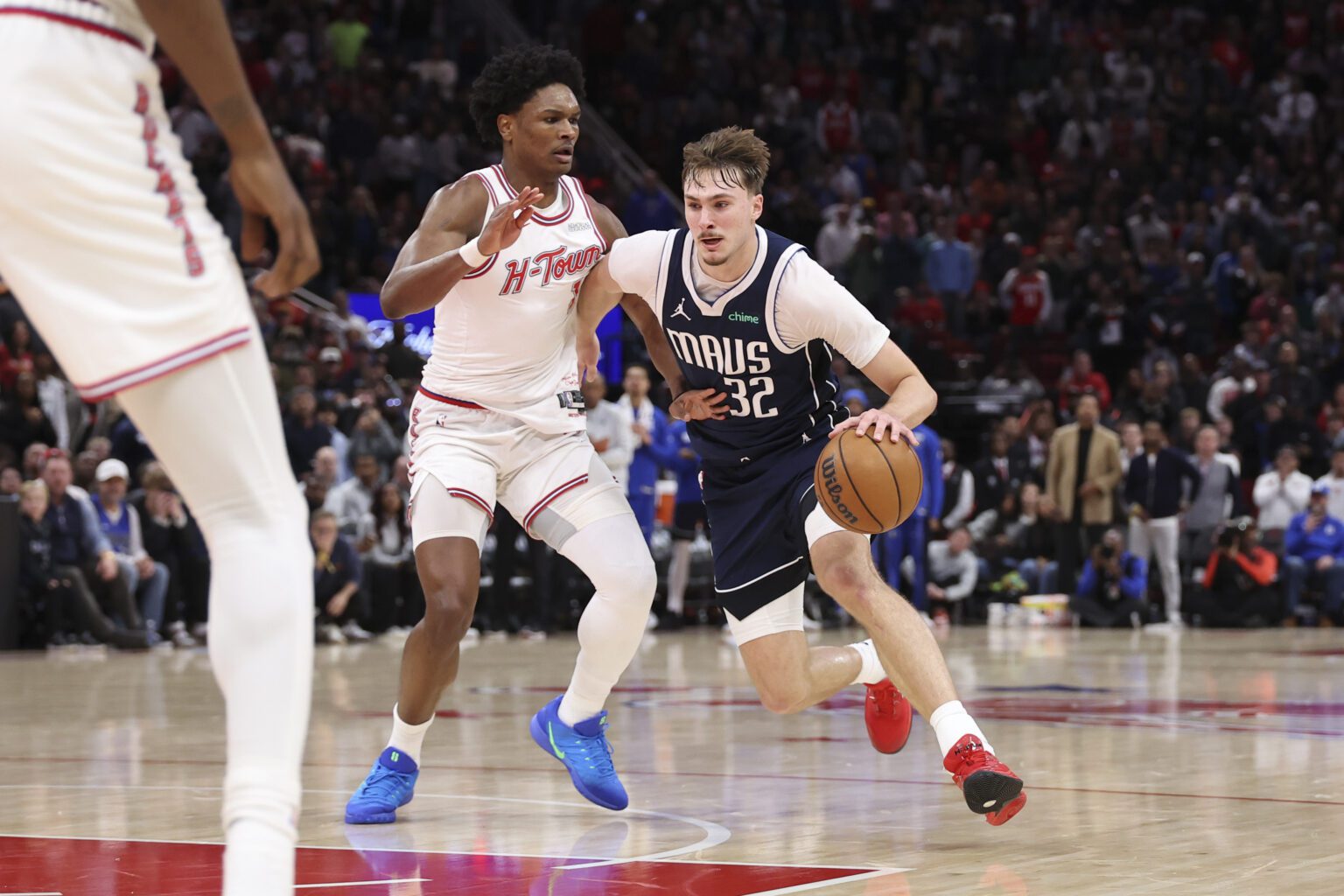
Scoring 34 points on 13-of-25 shooting, while also contributing 12 rebounds and 5 assists in 39 minutes, Flagg was clearly the center of attention on the offense. He attacked mismashes, got in the fast break, and was fouled 10 times, converting 7 of his free throws. Dallas required all of that production to remain in the game.
What made it more impressive was the efficiency under pressure. Flagg shot 52.0% from the floor and didn’t rely on the three-ball to build his night, going just 1-of-4 from deep. Most of his damage came inside the arc and at the rim, where Houston struggled to contain his length and body control. The problem? He didn’t get enough help when the game tightened late.
2. Second-Chance Points Sank Dallas
The biggest statistical gap came on the glass. Houston pulled down 18 offensive rebounds compared to Dallas’ 11, and those extra chances added up in a four-point game. Alperen Sengun alone grabbed 6 offensive boards on his way to 14 rebounds, and Amen Thompson added 5 more second-chance opportunities.
Those extended possessions helped Houston overcome a 41.7% shooting night from the field. The Rockets took 108 shots to Dallas’ 92, a massive difference that erased the Mavericks’ efficiency edge. Even when Dallas forced a miss, they often couldn’t finish the stop, and that slowly wore down the defense.
3. Ball Movement Told the Story
Houston’s offense wasn’t just about volume – it was about flow. The Rockets piled up 33 assists on 45 made field goals, consistently creating open looks off penetration and interior touches. Amen Thompson steered the ship with 21 points and 9 assists, while Kevin Durant added 8 assists to go with his 13 points.
Dallas, on the other hand, managed just 19 assists as a team. Flagg had 5, Caleb Martin chipped in 5 off the bench, but too many possessions stalled into late-clock isolations. When the Mavs needed a clean look in crunch time, the offense often felt one pass short of something better.
4. Free Throws and Missed Opportunities
In a game decided by four points, the Dallas Mavericks fell short on the free-throw line, shooting 15-of-26 (57.7%), leaving 11 points on the board. Naji Marshall made just 2-of-6 free throws, and Flagg, despite a strong night, missed three. Dallas lost on free throws.
Houston wasn’t perfect either, but 73.3% (11-of-15) free throws was consistent enough not to hurt them. Missing free throws changed the last few minutes of the game. Dallas had to shoot threes to catch up. They lost control of the game, and Houston was able to stay just far enough ahead.
5. Strong Individual Nights, Not Enough Collective Impact
Daniel Gafford contested the interior for Dallas, scoring 16 points on 7-of-10 shooting and 11 rebounds with 5 offensive rebounds. Max Christie scored 11 points, going 3-of-4 from three, and Brandon Williams was a bench spark, scoring 13 points in 9 minutes on 5-of-7 shooting.
Still, the Gafford supporting cast had quite a few issues. P.J. Washington had 9 points and 3 turnovers, Naji Marshall was 3-of-11 from the field, and Klay Thompson was 3-of-9. Dallas shot decent for them, 43.5% from three (10-of-23), but couldn’t control the game with enough defensive stops. Dallas was always playing from behind in a game that Houston led for 86% of the night, and ultimately ran out of time.