The Clippers didn’t “tweak” at the 2026 trade deadline. They basically rewired the roster.
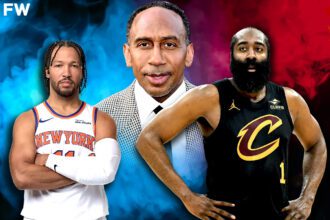
Trade No. 1 was the headline: James Harden is gone, flipped to the Cavs for Darius Garland and a second-round pick. Harden was still producing like a star at 25.4 points and 8.1 assists, so this is not a salary dump. It’s a clear pivot toward a younger lead guard while keeping the offense functional when Kawhi Leonard sits.
Trade No. 2 hit the frontcourt: Ivica Zubac and Kobe Brown were sent to the Pacers for Bennedict Mathurin, Isaiah Jackson, a 2026 protected first-round pick that can roll into a 2031 unprotected first if it doesn’t convey, a 2029 unprotected first, and a second-round pick. Zubac was a nightly double-double threat (14.4 points, 11.0 rebounds), so this one is about picks and athleticism, not replacing production one-for-one.
And then the Clippers cleared more air: Chris Paul was moved in a multi-team deal that landed him with the Raptors, with the Clippers opening flexibility and moving on from what had become a short, messy stint.
The standings context matters here. At 23-27, the Clippers were stuck in the middle of the West pack, good enough to sniff the play-in, not stable enough to feel safe.
Now, let’s look at how the roster shapes up after these trades.
Starters
Point Guard: Darius Garland
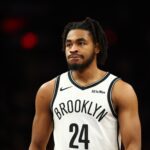
Shooting Guard: Bennedict Mathurin
Small Forward: Kawhi Leonard
Power Forward: John Collins
Center: Brook Lopez
Quick note before the fun part: Garland and Mathurin are not on the official roster yet, same as Jackson, so the very first “real” starting five could be different until they get cleared and available.
Everything starts with Darius Garland. If the Clippers are serious about staying competitive while getting younger, Garland is the bet. He’s at 18.0 points and 6.9 assists this season, shooting 45.1% from the field, 36.0% from three, and 86.1% at the line. He’s also coming off a toe injury that has kept him out since mid-January, which is why this may take a minute to look clean.
Bennedict Mathurin is the swing piece. The Clippers didn’t just need “another scorer.” They needed a younger wing who can live with physical playoff reps and still get his own shot when the offense breaks. Mathurin is at 17.8 points and 5.4 rebounds, and the jumper has been solid (37.2% from three) with strong efficiency (58.9% true shooting). The $9.1 million contract angle is big too: he’s headed towards restricted free agency, so the Clippers can decide if he’s a core extension guy or a premium trade chip later.
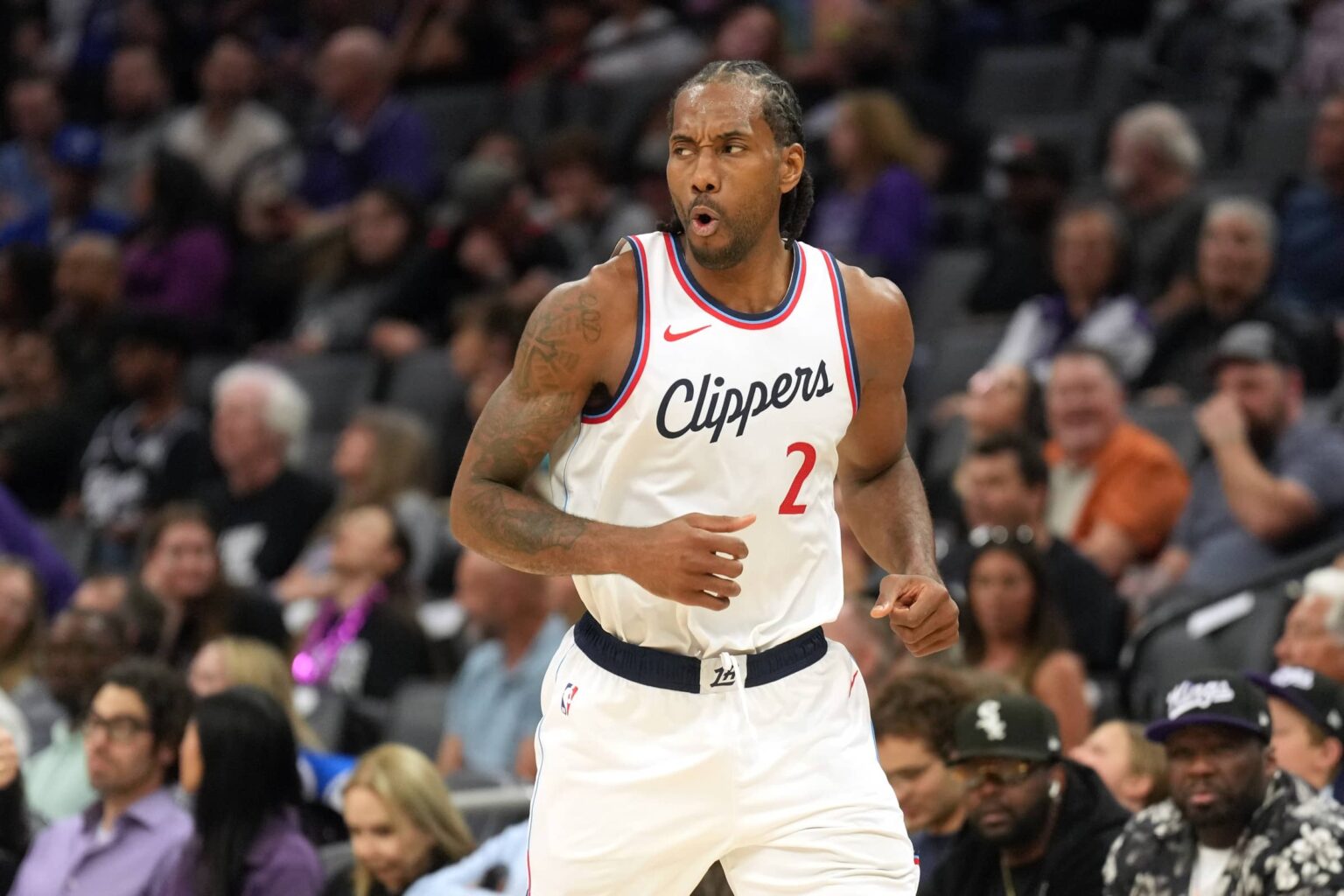
Kawhi Leonard is the reason this isn’t a full rebuild. He’s playing like a top-tier No. 1 again, putting up 27.6 points, 6.1 rebounds, and 3.6 assists with 49.7% from the field, 39.0% from three, and 91.4% at the line. If you’re trying to build a two-year bridge between “compete now” and “don’t get old overnight,” Kawhi playing at this level is the bridge.
John Collins is a really clean fit next to Kawhi because he doesn’t need plays called for him. He’s at 13.6 points and 5.0 rebounds while shooting 56.1% from the field and 42.7% from three. That’s the profile you want next to a high-usage wing and a pick-and-roll guard: finish, space, don’t hijack possessions.
Center is where the Clippers are most different. Brook Lopez isn’t Zubac as a rebounder or screener, but he gives you rim protection structure and spacing. Even in a smaller role, he’s averaging 1.0 blocks, and the spacing matters because it keeps the lane clearer for Garland and Kawhi drives. The concern is obvious: you’re lighter on the glass and you’re older at the 5, so the margin for error drops if the perimeter defense slips.
Bench Unit
Bench: Kris Dunn, Bogdan Bogdanovic, Derrick Jones Jr., Nicolas Batum, Isaiah Jackson, Kobe Sanders, Jordan Miller, Cam Christie, TyTy Washington Jr., Yanic Konan Niederhauser
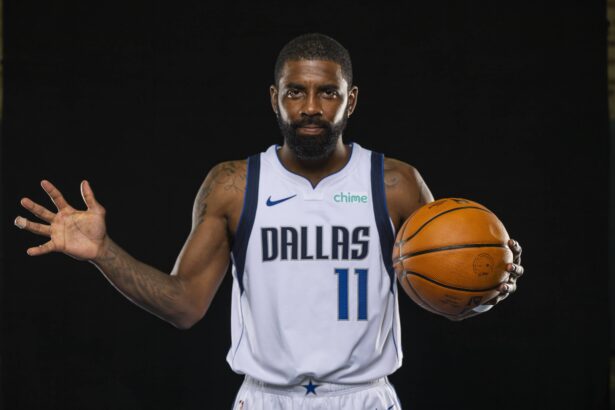
Kris Dunn is going to matter a lot more than people want to admit. Garland is a skill upgrade over Harden long-term, but defensively you still need a guard who can pick up the nastiest matchup and survive. Dunn’s at 7.7 points, 3.2 assists, and 1.5 steals, and he gives the Clippers a real “close games” option when they want defense on the floor.
Derrick Jones Jr. is the second half of that “close games” idea. He’s at 10.2 points per game, hitting 38.6% from three, and he can guard up the lineup while still being athletic enough to finish plays around the rim. If the Clippers want to lean into a defense-first closing group, Jones becomes a plug-and-play piece.
Bogdan Bogdanovic is the bench shooting valve. The percentages are a little shaky in a small sample (33.3% from three this season), but the role is simple: come in, make the defense guard you, and punish teams that overload on Kawhi.
Jordan Miller is the sneaky depth win here. He’s at 9.4 points on 52.5% shooting and 37.1% from three in a real minutes role. That matters because after you trade two big names, you need cheap rotation players who can play without being hidden.
And Isaiah Jackson is the upside big. He’s averaging 6.4 points and 5.6 rebounds in 16.8 minutes, finishing efficiently, bringing energy, and giving the Clippers a younger rim runner option behind Lopez. If he’s healthy and consistent, he’s the easiest way for this roster to avoid getting bullied inside after moving Zubac.
Side note: Bradley Beal is out for the season, but he has a player option for 2026-27 that he might accept, and he would join the bench unit in that scenario. Beal won’t make an appearance for the 2025-26 season, ruling him out of the Clippers’ depth chart at least for now.
Why This Roster Can Actually Work Out
This is the rare “sell and still try” deadline. The Clippers gave up production, yes, but they also fixed their most dangerous problem: aging out with no picks and no flexibility. Two first-round picks (including a 2029 unprotected) are the kind of ammo that lets you keep reshaping the roster instead of being trapped by it.
On the court, the bet is that Garland plus Kawhi is cleaner than Harden plus Kawhi, especially late in games. Harden is a genius passer, but the Clippers often played heavy and slow. Garland changes tempo, and Mathurin adds downhill pressure that the roster needed. The trade-off is defense at the point of attack and physicality at center, which is why Dunn, Jones, and Jackson suddenly feel like “core” pieces instead of just rotation names.
I like the direction. It’s not a perfect roster today, but it’s a roster with options. And for a team headed toward a rebuild when Kawhi’s contract expires, these pieces offer a glimmer of hope, a reason to believe they can avoid a long stretch of tanking.