The 2026 Defensive Player of the Year race starts with Evan Mobley as the reigning winner, but everyone knows why the door opened. Victor Wembanyama was shut down early last season, after the Spurs announced a blood clot issue in his right shoulder, and once he was out, the award became a real, wide race instead of a formality.
Mobley took it and earned it the right way, as the rare big who can protect the rim, switch onto guards, and still keep a defense organized possession to possession.
Now the league is back to the version of this award that makes the most sense. Wembanyama is healthy, leading the NBA in blocks again, and playing like he’s trying to snatch the trophy back with both hands.
But it’s not just him. There are a lot of legit contenders this year, from elite rim anchors to perimeter pests who blow up entire offensive game plans. Here is a tier list with the favorites and the best candidates.
Tier 1 – Victor Wembanyama
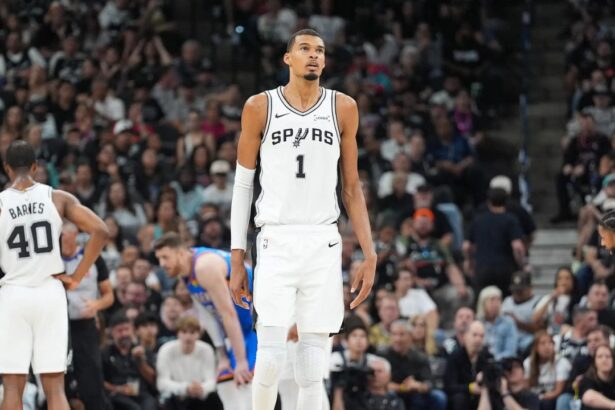
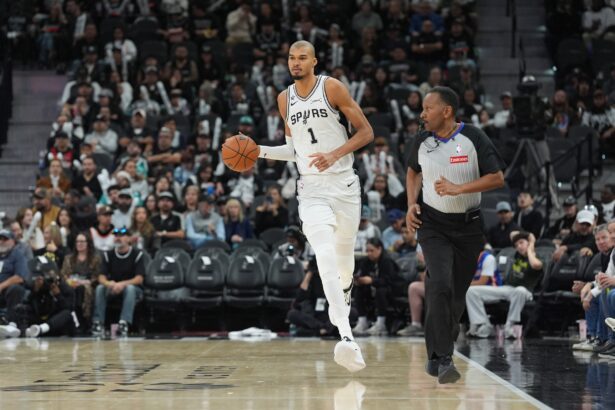
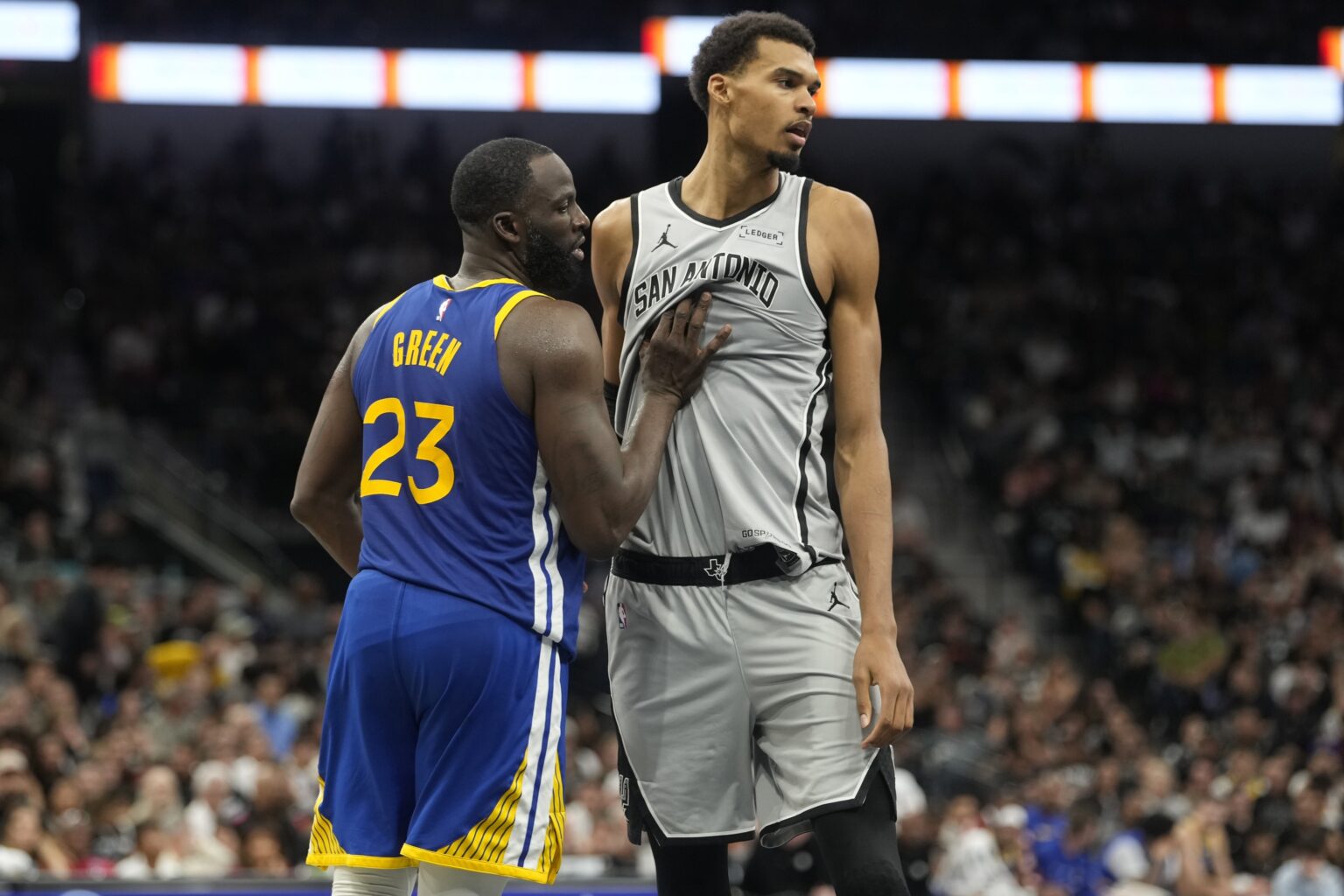
Victor Wembanyama is Tier 1 by himself because he’s got the cleanest DPOY formula: monster individual rim impact, and the Spurs are actually winning at a level that forces voters to take the defense seriously. They’re 38-16, second in the West, and they just walked into the break on a six-game win streak.
The headline stat is obvious. Wembanyama is leading the NBA in blocks at 2.7 per game. But the better argument is what happens to opponent shot quality when he’s on the floor. NBA.com’s on-off tracking has it laid out clean: opponents take fewer shots in the paint with Wembanyama on the court (39.7% of their attempts vs. 50.4% with him off), and they finish way worse once they get there (50.8% FG in the paint with him on vs. 58.8% with him off). That’s the definition of a defensive anchor.
That’s also why the blocks number isn’t empty. It’s not just swats. It’s deterrence plus bad decisions. You get possessions where guards turn the corner, see the length, and immediately pick up the dribble. You get bigs catching at eight feet and rushing a flip shot because they know the second contest is coming. The Spurs’ entire shell defense is built around that fear.
And the team context makes it stronger. San Antonio’s defensive rating is 111.8 this season, which puts them in the league’s top-3 tier, only behind the Thunder and Pistons. When you pair that with a top-two seed, the story writes itself: this isn’t a bad team padding one guy’s numbers. This is a contender-level profile where the defensive identity starts at the rim.
Offensively, he’s not coasting to play defense either. He’s at 24.4 points and 11.1 rebounds on 51.1% from the field, meaning he’s carrying a real load while still bringing the defensive energy every night. Most bigs lose some edge when they’re also the main option. He hasn’t, and that’s a huge part of why he’s alone at the top of the pyramid.
If Wembanyama stays on the floor, everyone else is basically arguing for “best of the rest.” His case has the stat lead, the tracking impact, and the winning. That’s Tier 1.
Tier 2 – Chet Holmgren, Rudy Gobert
Chet Holmgren sits right under Wembanyama because his case has the two things voters usually demand: elite rim protection, and a team defense that looks dominant even when the game gets serious. The Thunder are 42-14 and first in the West, and they’ve been the best defense in the league by defensive rating.
Holmgren’s individual line is already in the “DPOY big” neighborhood: 17.4 points, 8.7 rebounds, and 2.4 blocks in 39 games. The blocks matter because they’re not empty chase blocks. The Thunder’s scheme is built to pressure the ball and funnel drives into a back line that can erase mistakes, and Holmgren is the eraser. That’s why his presence shows up in the Thunder’s identity, not just his box score.
The best argument for him is how clean their team defense is possession to possession. They don’t need to overhelp, they don’t need to gamble for steals to survive, and they rarely have to choose between protecting the rim and staying home on shooters. Being No. 1 in defensive rating while also playing at a high offensive level is the dream context for a DPOY candidate, because it removes the usual “great defender on a mediocre defense” objection.
On the other hand, Rudy Gobert is still the league’s most bankable regular-season rim anchor, and the 2026 race is basically asking whether voters want “the best system big” again or something newer and louder. The Timberwolves are 34-22 and sixth in the West, and they rank sixth in defensive rating, which is strong enough to keep his candidacy real.
Gobert’s box-score production is exactly what you’d expect: 11.0 points, 11.1 rebounds (fourth in the NBA), and he’s finishing everything at 70.3% from the field. The DPOY case, though, is how much worse opponents shoot when he’s involved. NBA.com’s midseason on-off breakdown put it in plain terms: with Gobert on the floor, opponents shot 52.2% in the paint, and with him off, that number jumped to 59.8%. That’s the entire Gobert argument in one split.
He’s not just blocking shots at 1.6 per game. He’s shrinking the paint. The opponents also took a slightly lower share of their shots in the paint with him on the court (49.6% vs. 52.7% with him off), which speaks to deterrence, not just contests. And deterrence is the part that doesn’t show up in traditional stats, but changes game plans. Guards pull up early, bigs short-roll into floaters, and suddenly an offense is living on midrange variance because the rim feels expensive.
Tier 3 – Evan Mobley, Bam Adebayo, Draymond Green
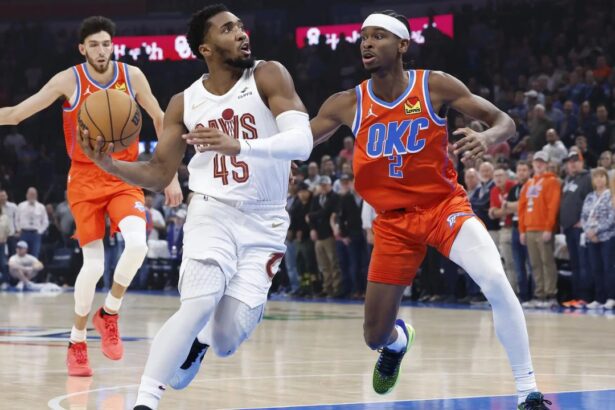
Evan Mobley is here because the backbone of a DPOY case is still intact: real rim protection, real versatility, and a team that’s winning enough for voters to pay attention. The Cavaliers are 34-21 and fourth in the East, and that matters because DPOY almost always drifts toward players who are driving elite possessions for teams with real stakes. Mobley’s season line is 17.9 points, 8.8 rebounds, and 4.0 assists per game on 51.2% from the field.
The defensive box-score hook is also strong: he’s at 2.0 blocks per game, which is exactly the kind of “you cannot play at the rim normally” signal voters understand. The reason he’s Tier 3, not Tier 2, is team dominance. The Cavaliers’ defense has not been as good, and they’ve been closer to “okay defense” than “best defense” this year. If the Cavaliers tighten up after the break and that defense starts looking top-five again, Mobley’s candidacy gets loud fast, because the individual résumé already looks like an award winner.
Bam Adebayo sits in Tier 3 because his defense is harder to sell in one stat, but it’s still the kind that keeps a team’s entire scheme afloat. The Heat are 29-27 and eighth in the East, so the record isn’t doing him any favors compared to the top-seed anchors. His production is heavy: 18.4 points, 9.9 rebounds, and 2.8 assists per game, even if the efficiency is shakier than his best seasons at 44.3% from the field.
The team context is actually solid on defense: the Heat’s defensive rating is ranked No. 4, and they sit in the league’s upper tier in opponent field goal percentage at 6th. Bam’s value is the stuff that doesn’t spike the box score every night: switching onto guards, containing drives without giving up the rim, and being the communicator who keeps rotations clean. If the Heat climb a few spots and the defense stays in that top group, Bam is the type of name that becomes a “smart voters” pick again.
Draymond Green is Tier 3 because the defense still runs through his brain, even if the candidacy is more fragile than it used to be. The Warriors are 29-26 and eighth in the West, which makes it harder to build the classic DPOY framing when the team is living in the play-in neighborhood. Individually, Green is at 8.4 points, 5.6 rebounds, and 5.1 assists per game, shooting 41.6% from the field.
The team defense is respectable: the Warriors’ defensive rating is 113.5, good enough for the No. 10 spot, but not dominant enough to carry an older candidate by itself. The pitch with Draymond is still the same: he blows up actions early, he’s the best “calling it before it happens” defender in the league, and he can still win playoff-style possessions. To climb tiers, he needs the Warriors to finish with a top-end defensive profile so the numbers match the film.
Tier 4 – Scottie Barnes, Ausar Thompson, Amen Thompson, Dyson Daniels
Scottie Barnes is the wing-sized wild card who can still look like a DPOY-level disruptor on the right night, even if the Raptors aren’t giving him the “top-seed defense” (No. 7 right now) runway the award usually wants. The clean hook this season is stocks. Barnes is sitting at 1.5 blocks and 1.3 steals per game, as he’s one of the rare forwards also clearing the “one block and steal per game” threshold, which is why his name keeps popping up in the broader candidate pool.
The case is versatility: he can guard up, guard down, blow up actions with length, and then finish possessions by cleaning the glass. He’s not a rim anchor like the bigs above him, but he’s the kind of defender who can carry a scheme for stretches because he covers so many mistakes.
Ausar Thompson is the easiest Tier 4 pick because the defensive stats are loud, and they match the eye test. He’s averaging 1.9 steals per game, and that’s the kind of number that changes an opponent’s ball security and pace. He’s also active around the rim for a wing, with 0.8 blocks per game, which helps explain why he feels like a “possession multiplier” defensively instead of just a point-of-attack guy. The reason he’s Tier 4 and not higher is that he’s still building the reputation piece. Guards and wings don’t win this award unless the narrative gets huge, but if you want a name that could jump tiers fast with one dominant defensive month, Ausar fits.
Amen Thompson is a similar profile, just with a slightly different role. He’s at 1.4 steals per game, and it’s coming from activity that’s consistent: pressure at the point of attack, digs into the lane, and the quick hands that turn live dribbles into runouts. His candidacy is basically the “best defensive athlete on a team that wants to turn defense into transition” case. He’s not piling up blocks, and he’s not the back-line anchor, so he needs either a top-tier team defense narrative or a steals title-type season to get real DPOY traction. But the base is real.
Dyson Daniels is the perimeter chaos pick. If you’re building a pyramid, you want at least one guard who can wreck an offense without being seven feet tall, and Daniels is the cleanest version of that archetype. He’s at 1.8 steals per game, and it’s not gimmicky. It’s pressure, anticipation, and hands that turn routine passes into scramble possessions. The “why Tier 4” part is more on the Hawks as a team than on himself. The storyline was overwhelming last season as the top defensive guard, but voters usually default to rim protection. Daniels’ path is basically: lead the league in steals by a margin again like he did last season, and have the Hawks’ defense finish in that top tier once more, so the impact feels team-shaping, not just personal.