The easiest way to frame the 2028 question is time. The men’s Olympic tournament runs in July 2028. By then, LeBron James will be 43, Stephen Curry will be 40, and Kevin Durant will be 39. You never fully rule out legends, but that age band is usually where the conversation shifts from “can he still play?” to “is it worth building the whole program around him for one more run?”
That’s why this cycle matters. We just watched the NBA test-drive a more competitive “USA vs. the World” All-Star format, and the energy came from the younger guys actually treating it like something to win. It even popped a ratings number the league hadn’t sniffed in 15 years, which tells you fans are ready for the next era to take the mic. Anthony Edwards winning MVP in that setting felt like a breadcrumb. Not proof, but a pretty loud hint at where the league is headed.
So if you strip out the old core, you’re left with a USA roster that looks different stylistically. Less “stack five Hall of Famers and improv.” More “two-way wings, multiple creators, and a center who can switch without bleeding points.” The names below fit that shape.
Depth Chart
Point Guards – Cade Cunningham, Tyrese Haliburton
Shooting Guards – Anthony Edwards, Devin Booker, Donovan Mitchell
Small Forwards – Jayson Tatum, Jaylen Brown
Power Forwards – Cooper Flagg, Scottie Barnes
Centers – Bam Adebayo, Chet Holmgren, Jalen Duren
Start with the guards, because this is where Team USA usually separates. Cade Cunningham has already become the kind of big lead guard who can run an offense without shrinking the floor. He’s at 25.3 points, 9.6 assists, and 5.6 rebounds this season, and that’s with a real diet of tough shots. The jumper is the swing skill at the very top level, but 33.0% from three with that workload is workable when you’re also creating advantages every possession.
Tyrese Haliburton is the cleanest fit next to him because he plays fast without playing sloppy. Haliburton tore his right Achilles in the 2025 Finals and missed the entire 2025-26 season. But the talent is still the talent: in 2024-25, he put up 18.6 points and 9.2 assists while hitting 38.8% from three. If he returns close to that level by 2027-28, the Cunningham-Haliburton pairing gives Team USA two organizers who don’t need to dribble the air out of the ball.
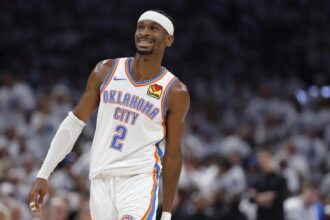
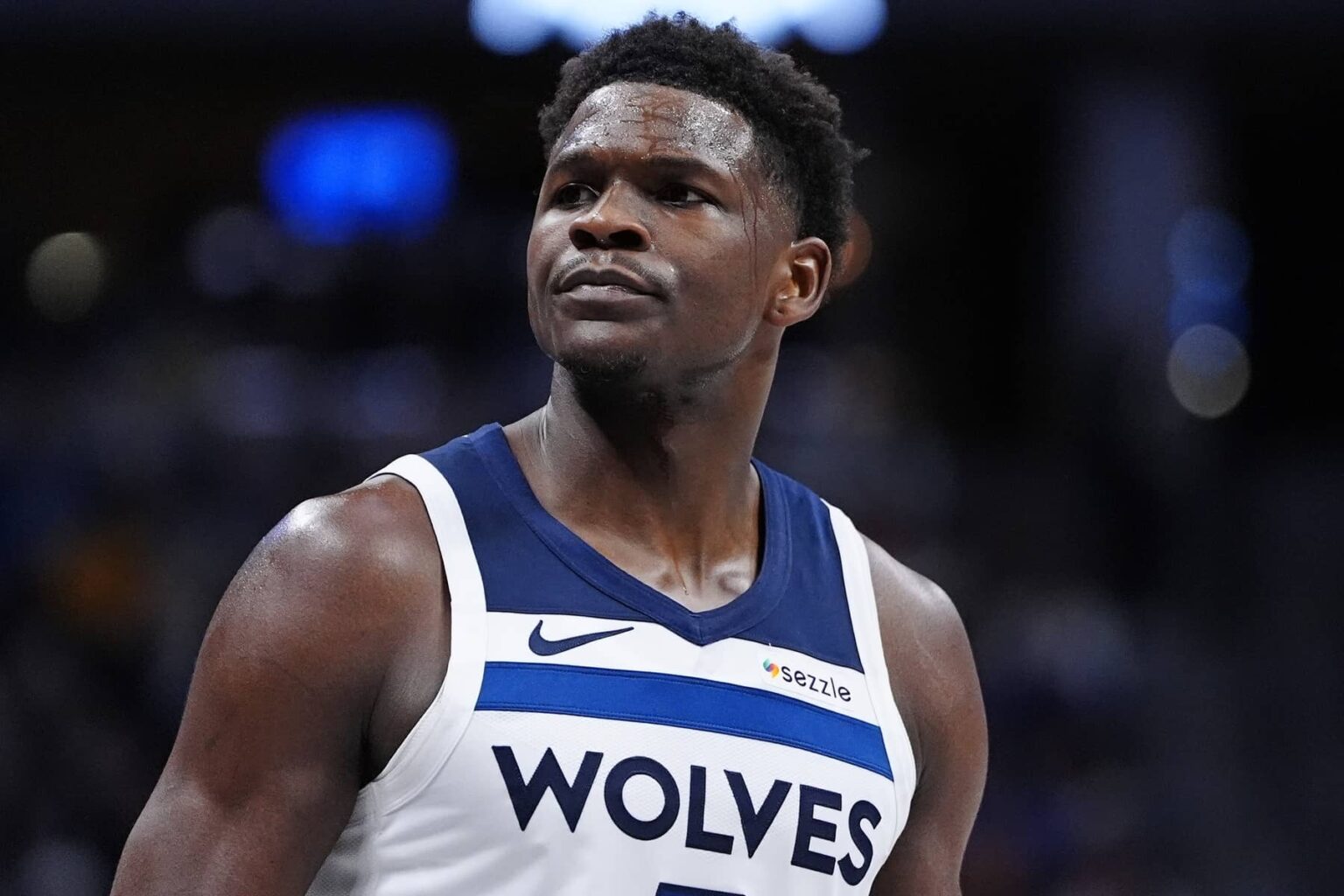
On the wing, Edwards is the headline. He’s averaging 29.3 points and drilling 40.2% from three this season, which is the exact mix that turns “great scorer” into “international cheat code.” He also just won All-Star MVP in the new USA vs. World setup, and that is another data point that he likes the stage.
Devin Booker is still the adult in the room as a connector scorer, even if his three-point percentage (31.1%) is unusually down this year. Donovan Mitchell gives you the microwave shot-making, and he’s at 29.0 points per game with 38.5% from three.
The forward spots get interesting because the USA pipeline is shifting from “pure scorers” to “two-way size.” Jayson Tatum is the obvious plug-and-play star, though he’s still working back from Achilles surgery. The last full season we saw (2024-25) was 26.8 points, 8.7 rebounds, 6.0 assists, and 34.3% from three. Jaylen Brown is a different kind of hammer, more downhill and physical, and he’s at 29.3 points with 34.8% from three this season.
Then there’s the “new USA” frontcourt: Cooper Flagg, Scottie Barnes, Bam Adebayo, Chet Holmgren, and Jalen Duren. Flagg has already looked like an international-style forward as a rookie: 20.4 points, 6.6 rebounds, 4.1 assists, with real defensive activity. He missed All-Star weekend with a left midfoot sprain, but the trajectory is the point.
Barnes is the utility wing-forward at 19.3 points, 8.4 rebounds, 5.6 assists, even if the three (30.1%) needs to stabilize. Bam is still the best “play any coverage” USA center type, and Holmgren is the modern counter, a spacing big who can protect the rim. Duren is the changeup: vertical pressure, offensive boards, and a physical ceiling if the free throws keep trending (73.7%).
That’s a depth chart built for FIBA basketball: length, rim protection, and enough shooting to keep the floor from collapsing.
2028 Team USA Starting Lineup
PG: Cade Cunningham
SG: Anthony Edwards
SF: Devin Booker
PF: Jayson Tatum
C: Bam Adebayo
Bench: Tyrese Haliburton, Donovan Mitchell, Cooper Flagg, Jaylen Brown, Jalen Duren, Scottie Barnes, Chet Holmgren
This starting five makes sense because it checks the three boxes Team USA always needs in the Olympics.
First, you need a real table-setter who can win against set defenses. Cunningham is that. He’s basically built for the grind possessions that show up in medal games, where there are fewer transition freebies and every team knows your first option. His 25.3 points and 9.6 assists profile is already “engine,” not “nice young guard.”
Second, you need an alpha scorer who can decide a quarter. Edwards has turned into that guy. The cleanest proof is not just the 29.3 points, it’s the efficiency from deep at 40.2% while taking real volume. FIBA spacing is tighter, and the paint is crowded, so a wing who can both shoot and bully switches is usually Team USA’s trump card. Edwards fits.
Third, you need a center that can survive on an island. Bam is still the safest bet for that job because he’s comfortable switching, recovering, and playing in space. He’s at 18.4 points and 9.9 rebounds this season, and he’s even taking enough threes (33.8%) that you can at least force a closeout.
The two “glue stars” are Booker and Tatum.
Booker’s value is that he can play next to anyone: spot-up, secondary pick-and-roll, quick-hit midrange against switching, and he won’t hijack possessions if Edwards is cooking. His overall scoring line is still 25.2 points with a solid 58.0% true shooting, so the offensive floor is still high. If the three normalize by 2028, he becomes even cleaner as the “quiet assassin” wing.
Tatum is the swing of the whole roster, mostly because of the Achilles. The optimistic case is straightforward: the last full season we saw from him was a complete star line, and he’s big enough to guard up, skilled enough to punish mismatches, and experienced enough to play within a team concept. If he’s back to 90% of that player by 2028, he’s the perfect power forward in a small-ball USA lineup because he lets you keep size on the floor without sacrificing creation.
Now the bench is where the real separation happens, because this group gives Eric Spoelstra multiple looks without changing the identity.
Flagg is the most important “new face” piece, because he changes how Team USA can defend. A 6-foot-8-ish forward who can rebound, push, pass, and guard is basically the template for modern Olympic dominance.
Barnes is the utility tool. You can play him as a small-ball four, switch everything, and let him attack tilted defenses. The shot is the issue, because 30.1% from three this season is the kind of number opponents will test. But if Barnes is your ninth or tenth guy, the pressure is different. You can pick the matchups and use him as a stopper and connector rather than asking him to be a floor spacer.
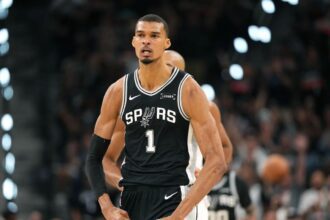
Holmgren is the spacing big that changes geometry. He’s at 17.4 points, 8.7 rebounds, 2.2 blocks, and 34.9% from three. That’s not just “stretch five,” that’s “your rim protector can also punish drop coverage.” It matters because it lets them play a more traditional big without losing the modern spacing advantage.
Duren is the one I’d keep on the roster even if he never starts, because he gives the team a different type of problem. When the game slows down, and defenses load up on wings, having a big man who can dunk through traffic and win the glass is a real way to steal possessions.
The Other Faces To Consider
This list is already 12 deep, but in reality, Team USA always has a “last two” conversation that’s about skills, not fame. That’s where guys like Tyrese Maxey, Kon Knueppel, and Jalen Johnson start to get loud.
Maxey is the cleanest omission. He’s averaging 28.9 points and 6.8 assists, hitting 37.9% from three. That’s not a fringe player. That’s a primary scorer who can also play off another guard. If Haliburton’s recovery is slower than expected, Maxey is the first name I’m circling because he can cover a lot of what Haliburton provides (speed, scoring, pressure) even if the passing style is different.
Knueppel is the archetype the USA has been missing in some recent runs: a specialist shooter who is also big enough to stay on the floor defensively. As a rookie, he’s at 18.9 points per game while hitting 43.1% from three and 90.2% at the line. That’s basically a walking spacing weapon. In Olympic games, one heat-check shooter can decide a quarter because the court shrinks and every help rotation is calculated. If Knueppel keeps proving he isn’t a target on defense, he’s the kind of “role player” that ends up playing starter minutes in medal games.
Johnson is the wild card because he’s doing too much to ignore. He’s averaging 23.3 points, 10.6 rebounds, and 8.2 assists. That is a point-forward line. He also hits 35.3% from three, which is enough to keep teams honest. If you wanted to replace Barnes with a different type of forward, Johnson gives you more playmaking and more half-court creation without losing size.
If you want a simple, blunt projection: Edwards feels like the face of 2028. Cunningham feels like the organizer. Bam feels like the defensive spine. And the roster wars will be about shooting and forward depth, because the USA talent pool is about to flood that part of the map.