High school stardom is the easiest thing in basketball to overvalue. The mixtapes are loud, the bodies look NBA-ready early, and the comparisons get made before the player has to solve real NBA problems: decision-making, shooting under pressure, defending in space, and accepting a smaller role.
When these prospects enter the league at 18, the margin for error is thin. Development is not linear, and teams rarely have the patience, structure, or minutes to let a teenager fail repeatedly in public. If the jumper never comes, if the handle is loose, if the motor runs hot and cold, or if injuries hit early, the “next superstar” label turns into a career-long weight.
This list is about that gap. These were elite high school names who were drafted with star expectations and never delivered on them. Some were undone by health. Some were exposed by skill limitations that were always there. Some landed in bad situations and never recovered. And in several cases, the league simply moved on before the player had time to catch up.
Seven high school phenoms, huge hype, and NBA careers that never matched the billing.
7. Kendall Marshall
Kendall Marshall was not a typical high school “phenom” built on dunks and viral scoring bursts. He was a control guard whose calling card was feel. At Bishop O’Connell, he ran the show, won on the high school stage, and built a reputation as one of the purest passers in his class. The recruiting industry was all-in on that identity. ESPN slotted him as the No. 7 point guard in the 2010 class and had him in the top 30 nationally. He also reached the McDonald’s All-American tier, which is usually the cleanest shorthand for “this is a real blue-chip prospect.”
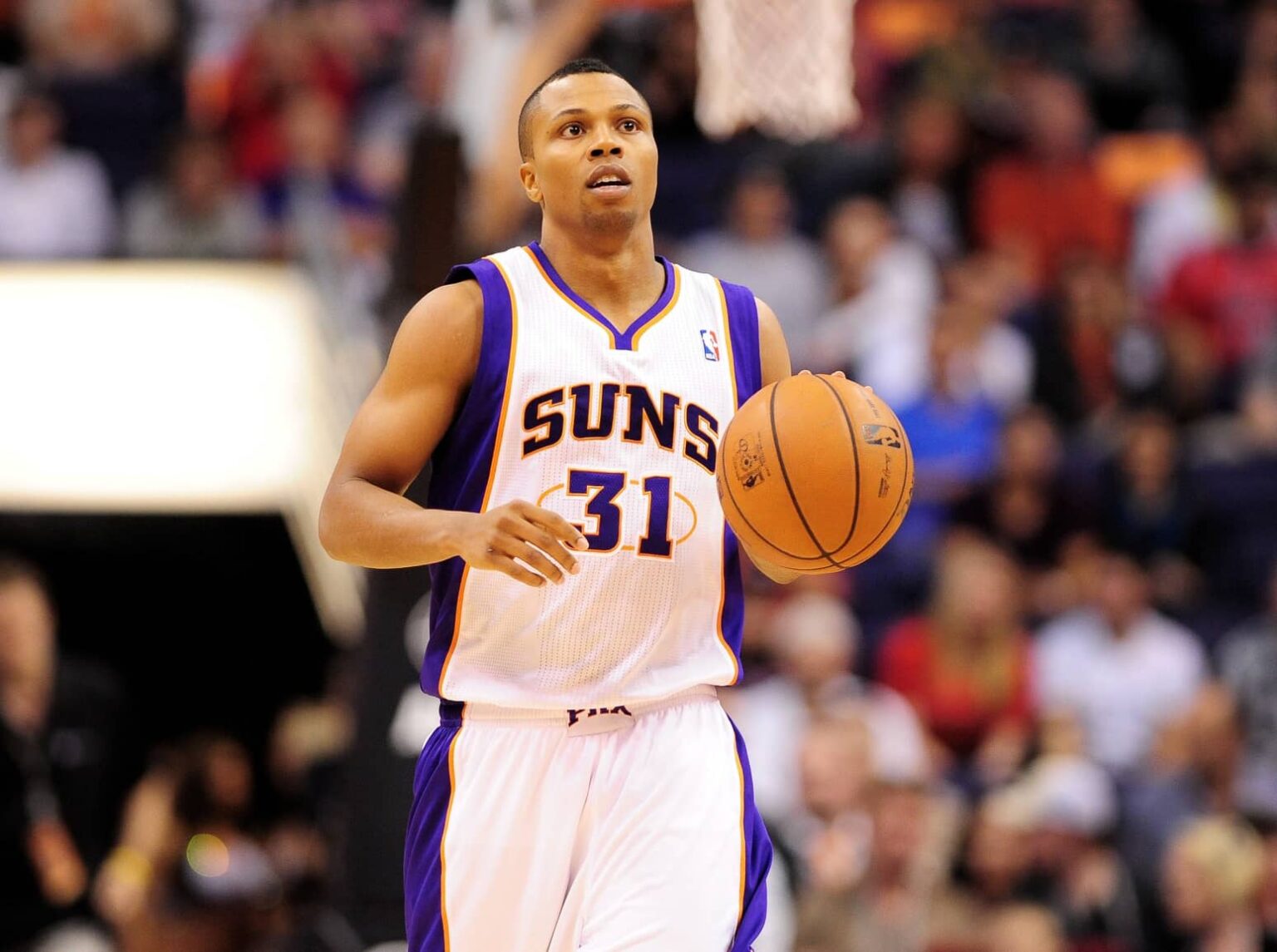
That profile translated immediately at North Carolina, where Marshall’s vision popped because he played with pace and clarity. But once he hit the NBA, the weaknesses that were survivable in college became the center of the scouting report. The Suns took him 13th overall in 2012, expecting a long-term organizer.
The problem was that his scoring gravity never arrived. He was not a dynamic rim threat, he didn’t live at the free-throw line, and he struggled to separate against NBA athletes. If you are a pass-first guard without elite burst, defenses eventually stop fearing you and start sitting on the passing lanes.
His best real NBA stretch came with the Lakers in 2013-14, when injuries forced them to hand him the keys. In 54 games that season, he started 45 and put up 8.0 points and 8.8 assists per game, while hitting 39.9% from three. For a moment, it looked like he had carved out a niche as a value playmaker who could at least punish teams for going under screens.
Then the path collapsed. He bounced to smaller roles, and in January 2015, he tore his ACL with the Bucks, ending that season and taking away even more of the limited athletic margin he had. From there, it was mostly short stints and G League stops, with the league moving toward bigger, more explosive creators. He finished with 160 NBA games and career averages of 5.0 points and 4.9 assists.
Marshall did not “forget how to play.” The league simply demanded a scoring threat he never became, and injuries made the development curve even steeper.
6. James Wiseman
James Wiseman entered the pipeline as the cleanest kind of high school bet: size, tools, production, and consensus status. At Memphis East, he looked like a modern NBA center before he was old enough to vote. He was widely treated as the top prospect in the 2019 class, and ESPN explicitly described him as the No. 1-ranked player in that group when he committed to Memphis. That reputation was not just hype. Wiseman also won national-level recognition in high school, including Gatorade National Player of the Year, which speaks to how complete his profile looked at 17.
The college stop was supposed to be the final step. Instead, it became a detour. The NCAA ruled him ineligible early in the 2019-20 season, and the situation dragged into court and suspension headlines. Wiseman eventually left Memphis to prepare for the draft, and the Warriors still took him No. 2 overall in 2020, basically treating him as an NBA-ready rim runner with upside as a finisher, shot blocker, and vertical spacer.
The NBA reality was harsher because his learning curve was brutal, and his runway kept getting cut by injuries. In Golden State, he walked into the hardest environment for a young center: read-heavy offense, constant screening decisions, and defensive rotations that punish even half-second mistakes. When he was on the floor, the tools showed, but the processing lagged. He fouled, missed coverages, and struggled to play with the speed and physicality the role required. Then the development reps disappeared. He tore his right meniscus as a rookie, and the recovery cost him the entire 2021-22 season, which is basically the worst-case scenario for a raw big who needs live minutes to learn.
The Warriors eventually moved on, sending him to the Pistons in the four-team deal that reshuffled Saddiq Bey and brought Gary Payton II back to the Warriors. The Pistons gave him the kind of opportunity he never had with a contender: longer stints, simpler reads, more touches. He had stretches where he looked like an NBA scorer at center, including 12.7 points and 8.1 rebounds per game in 24 games after the trade in 2022-23. But the bigger sample never turned into real impact. In 2023-24, he played 63 games in Detroit and averaged 7.1 points and 5.3 rebounds in 17.3 minutes, still a bench-level profile for a former No. 2 pick.
The final swing was the Pacers, and it went sideways fast. Wiseman tore his left Achilles in the 2024-25 opener, got traded to Toronto at the deadline, and was waived almost immediately. He made it back to the Pacers in 2025-26, but he only logged four appearances (3.3 points, 2.0 rebounds in 14.5 minutes) before they waived him on October 28.
5. Emoni Bates
Emoni Bates was treated like the next American wing superstar before he was even old enough to drive. He popped nationally as a freshman at Lincoln, led the program to its first Division 1 state title, and immediately became a “best prospect in the country” type of name, not just “best for his age.”
The awards matched the hype. Bates won Gatorade National Player of the Year as a sophomore, which is basically unheard of on the boys’ side, and the Gatorade write-up explicitly notes he was ranked as the nation’s No. 1 recruit among all high-school-age players by ESPN. That is the peak version of the Bates story: a jumbo wing scorer who could create shots from anywhere, with the marketing, the comparisons, and the expectation that the NBA was a matter of “when,” not “if.”
Then the curve flattened. Once in the NCAA, Memphis was where the “can’t-miss” aura really cracked. Bates entered 2021-22 as the youngest player in college basketball, but the season became a stop-start mess: role changes, injuries, and ugly efficiency.
In 18 games, he averaged 9.7 points and 3.3 rebounds while shooting 38.6% from the field. For a prospect built on scoring talent, that kind of inefficiency and instability is what nukes draft stock.
He transferred to Eastern Michigan and rebuilt some surface value as a high-usage scorer, but the off-court situation became part of the evaluation. Bates’ gun case ended with a misdemeanor plea and an 18-month probation sentence, which kept his name in headlines for the wrong reasons during the exact window when teams were deciding how much risk they were willing to take.
The Cavaliers drafted him 49th in 2023 and used him as a two-way developmental scorer, mostly parked in the G League with short NBA cameos. The most notable NBA moment of his Cleveland run came at the very end: he dropped a career-high 25 points in the regular-season finale against the Pacers. But the broader picture stayed the same. He logged only 10 NBA appearances in 2024-25, averaging 3.7 points, and even had a meniscus procedure that slowed him early that season.
After that, the Cavaliers didn’t keep him, and Bates fell into the typical fringe-player churn. He landed in the 76ers ecosystem on an Exhibit 10 in the 2025 preseason pipeline, then ended up in the G League. Then he got moved: Delaware traded him to Texas in exchange for Charles Bassey, which is the clearest signal of where his NBA value sits right now, a G League scorer whose rights get shuffled more than his minutes get guaranteed.
That’s the full arc. In high school, Bates was marketed like a future franchise wing. In the NCAA, injuries plus role confusion plus poor efficiency turned him into a project. In the NBA, he has been treated like what his draft slot says: a low-commitment flyer who has to dominate the G League to force a real rotation opportunity.
4. Harry Giles
Harry Giles was the definition of a high school “can’t-miss” big: elite length, real touch, plus uncommon mobility for his size. He was the No. 1 recruit in the 2016 class on ESPN, and the hype was not just about highlights. Scouts talked about him like a future two-way hub, a center who could finish, pass, and eventually anchor a defense. The problem was that the warning signs were already baked into the profile.
Giles’ knees were a story in high school, and by the time he got to Duke, he was trying to build his body back up instead of building momentum. ESPN’s own coverage framed him as the most closely monitored knee situation in college basketball, and it showed in the way his year played out: limited availability, inconsistent explosiveness, and a role on a stacked roster that never allowed him to play through mistakes and find rhythm. He flashed skill, but he never had the sustained runway to look like the No. 1 recruit on a nightly basis, which is what the NBA needed to see to justify top-tier draft capital.
The Kings still took the swing, drafting him 20th in 2017, and the league was basically betting on the high school version of Giles returning with pro development. In the NBA, you could see why the gamble was appealing. He had soft hands, he could make quick reads, and he wasn’t just a dunker. But he never became a reliable rotation center because the two things that matter most for that job never locked in: availability and a clear, scalable role.
The modern backup 5 has to be clean and repeatable, screen hard, rebound, protect the rim, and survive in space. Giles had talent, but he didn’t bring one elite “this keeps me on the floor” trait every night, and he couldn’t stack uninterrupted seasons of reps to sharpen the defensive processing and physical edge that separate real rotation bigs from “nice skill, but.”
He played 160 NBA games across stops with the Kings, Trail Blazers, and Nets, and finished with career averages of 5.4 points, 3.5 rebounds, and 1.1 assists, which is not nothing, but it is a miss relative to the No. 1 high school hype and the expectations that come with it.
More recently, he has been in the G League, putting up strong production when healthy and featured, which tracks with the same frustrating truth that has followed him since he was 17: the skill is real, but the combination of health, role fit, and NBA-level defensive reliability never lined up long enough for a team to commit to him as more than a flyer.
3. Skal Labissiere
Skal Labissiere was supposed to be the next clean, modern big-man hit: long, fluid, soft touch, and enough face-up skill that people talked about him like a future two-way centerpiece, not just a rim runner.
Coming out of Lausanne Collegiate in Memphis, he had legit five-star hype across the major recruiting outlets, with ESPN’s recruiting profile tracking him as the No. 2 prospect in the 2015 class and a Kentucky-level headline recruit. The appeal was obvious on tape: a 6-foot-11 big who moved like a wing, could finish above the rim, and looked like he would grow into a stretch component once the jumper tightened.
That is why his freshman year at Kentucky was such a draft-stock swing point, and it’s also why it disappointed. The production was modest for a player with top-tier expectations, and the role never became what the hype promised. He barely posted 6.6 points, 3.1 rebounds, and 1.6 blocks per game on 51.6% from the field, which is fine in a vacuum, but not what you want from a supposed franchise big in a system built to showcase NBA talent.
The bigger issue was how he looked within the games: flashes of timing as a shot blocker, flashes of touch, but not the consistent physicality, motor, or assertiveness you needed to justify “build around him” talk. Instead of entering the draft as a top-five lock, he slid into the back end of the first round.
The Suns still took him 28th in 2016, and his rights were moved to Sacramento on draft night, which is basically the league saying “we love the tools, but we’re not paying top-of-the-draft prices for the risk.” His NBA stretch had moments that teased why scouts bought in. In Sacramento, he had a career-high 32-point game as a 20-year-old, one of those nights where the touch and athleticism briefly looked like it could scale.
But the day-to-day reality never matched the ceiling. He never stabilized as a dependable rotation 5 because the league’s standards for centers got sharper. Labissiere was skilled, but he wasn’t dominant at any of those NBA necessities long enough to force coaches to live with the mistakes. He bounced to Portland in 2019, and even there, the story was the same: a few loud flashes, like the 29-point, 15-rebound season finale when the Blazers rested starters, followed by the league moving on because the baseline impact wasn’t consistent.
Labissiere is still around the NBA margins in 2025-26, but it’s on short-term deals and emergency depth, not a real role. He’s been on several teams with 10-day contracts, right now with the Kings again. His current season line is 4.3 points, 3.0 rebounds, and 1.0 assists per game on 60.0% shooting, which tells you exactly what his NBA life is now: tiny sample, spot minutes, prove-it windows.
That is why Labissiere belongs on a “flopped” list. The high school version looked like a future building block. The Kentucky year didn’t pop enough to keep him at the top of the draft. And in the NBA, the flashes never turned into a stable identity that a team felt comfortable penciling in every night.
2. Josh Jackson
Josh Jackson came into the sport with real, earned hype. He was a five-star wing who looked like a day-one NBA athlete, the kind of prospect scouts tag as a future two-way stopper with upside. ESPN had him No. 3 in the ESPN 100 for the 2016 class, and he was a headliner-level recruit nationally, not a “nice prospect” the way most top-30 guys are.
He also showed on the biggest high school stages, including the McDonald’s All-American Game, where he led the West with 19 points. The appeal was obvious: length, bounce, defensive playmaking, and the confidence to take big shots, with the idea that the jumper and decision-making would tighten once he got into a pro development system.
The college season at Kansas did not wreck his stock, but it exposed the first set of warning signs that later became his NBA story. He produced, defended, and played with edge, but the shooting was never stable enough to turn him into a clean offensive projection. He was always going to need either (1) real shot growth or (2) elite defense every night to justify star-level usage in the league. That’s a thin line for a wing, because if you are not a shooting threat, teams go under, load help, and dare you to make the simple read repeatedly.
The Suns still took him fourth in 2017 because the draft logic made sense: big wing, elite athletic tools, competitive motor, and a runway on a young team. His rookie year was also the best snapshot of what teams thought they were buying: 13.1 points, 4.6 rebounds, 1.0 steal in 77 games, but with the same efficiency problem hanging over everything, including 41.7% from the field, 26.3% from three, and 63.4% at the line.
After that, the career turned into a loop of short leashes and missed chances. He never became a reliable shooter, so his offensive value depended on transition, energy, and occasional shot creation that came with turnovers and tough attempts. The defensive flashes stayed real, but not consistent enough to offset the spacing issues. He bounced through roles with the Grizzlies, Pistons, and Kings, mostly as a stopgap wing who could soak minutes but not hold a long-term job. Across his NBA career sample, he has averaged 11.3 points, 4.0 rebounds, and 1.8 assists per game.
And for “right now,” he is still on the margins. Jackson is an unrestricted free agent, playing for the Stockton Kings in the G League. Jackson had top-five talent tools and never developed the one skill that keeps wings afloat. If you can’t shoot, you have to be elite on defense every night. If you’re not elite on defense, you have to shoot. He did neither consistently enough, so the hype turned into a career of flashes instead of a role teams trusted.
1. Sebastian Telfair
Sebastian Telfair is one of the clearest examples of how high school fame can become its own trap. At Abraham Lincoln, he was not just a top recruit. He was a national storyline, the New York guard with the “next great” label, the cousin of Stephon Marbury, the kid with celebrity courtside energy before NIL was even a concept. He stacked the classic blue-chip markers too: Mr. Basketball USA, New York Mr. Basketball, and a First-team Parade All-American nod.
That hype created a very specific expectation: immediate NBA lead-guard impact straight out of high school. The Trail Blazers drafted him 13th in 2004, and the jump was unforgiving. Telfair had real quickness and real handle, but he entered the league at 19 as a 6-foot point guard without a reliable jumper, without the strength to finish consistently through contact, and without the defensive base teams need to trust a small guard. If you are that size and you are not a knockdown shooter, you have to be a constant rim pressure guy or an elite organizer. He was neither, at least not at a level that held up across seasons.
The NBA part became a cycle: flashes, then a new stop, then a smaller role. He moved through Trail Blazers, Celtics, Timberwolves, Clippers, Cavaliers, Suns, Raptors, and Thunder, never staying long enough to build a stable identity as a starter or a high-end backup. Over 564 NBA games, he averaged 7.4 points and 3.5 assists, which is fine for a fringe guard, but nowhere near what “future star straight out of high school” was supposed to mean.
And the off-court track record kept dragging the story down after the league moved on. In 2019, he was sentenced to 3.5 years in prison in a New York gun case, though the New York Court of Appeals later overturned that conviction in 2023. Separately, federal prosecutors charged him in the NBA welfare plan fraud case in 2021 as part of a broader group, a reminder that his post-NBA life stayed messy instead of clean.
Telfair “flopped” because the league never got the version it was sold. High school Telfair was a phenomenon. NBA Telfair was a small guard without a bankable NBA skill that forces minutes, and once that happens, the league treats you like a replaceable roster slot forever.