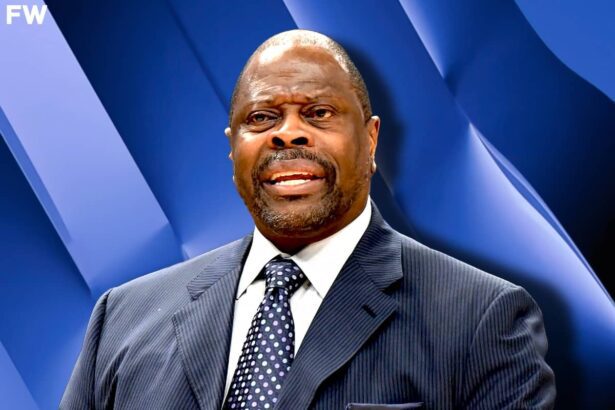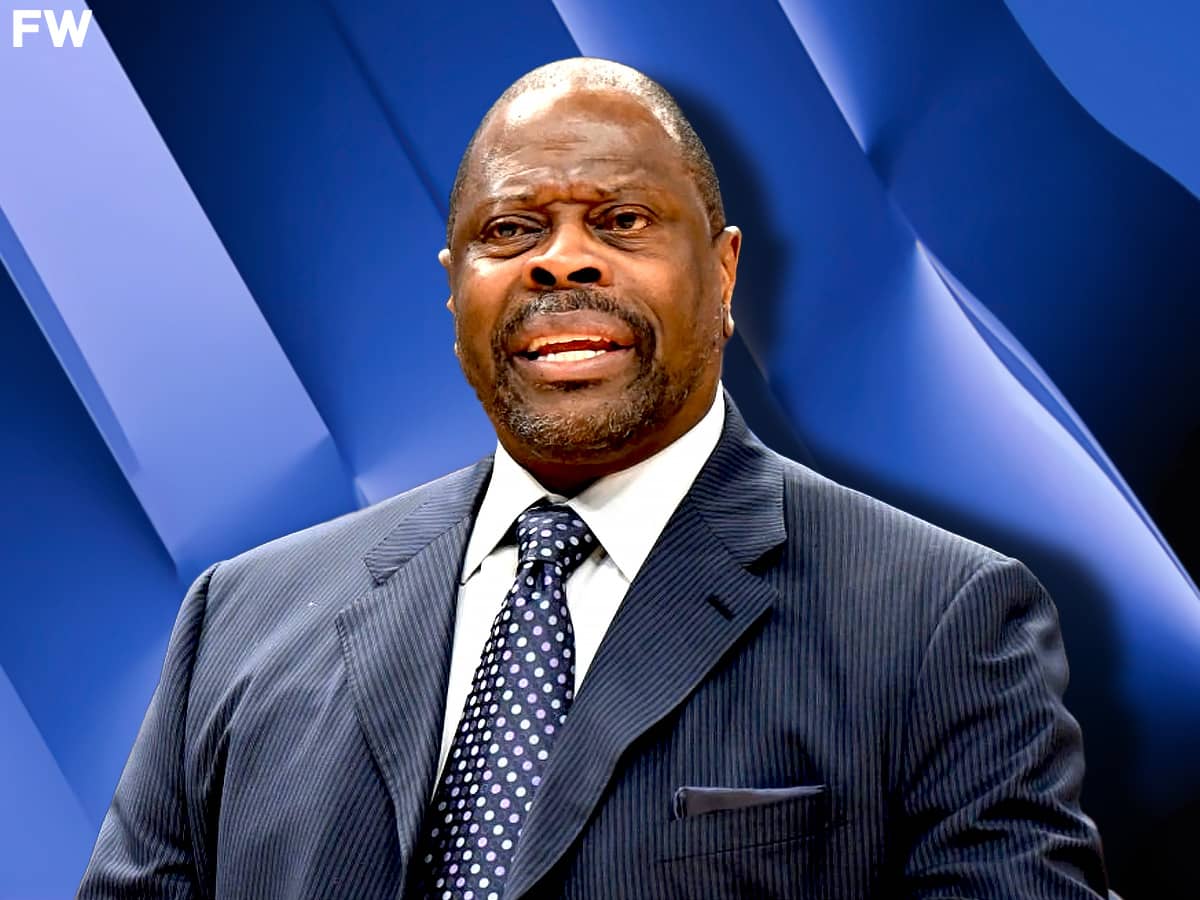
Patrick Ewing grew up poor in Kingston, Jamaica, so when the opportunity arose for him to move to the United States, he was over the moon. While the relocation greatly helped Ewing in the long run, he shared on The Pivot Podcast how it wasn’t all rosy at first when he arrived in Cambridge, Massachusetts, in 1975.
“We weren’t rich, we were all poor,” Ewing said. “So, it was a struggle, and then hearing that we’re moving to America, and back then, you’re like, man, we’re moving to America? The streets are paved with gold and all this… Thinking about how great it’s going to be. I moved, I get off the plane, I’m like this [is it]? It was a shock, and then all the negatives being in Boston.
“The Black Americans didn’t want you there because they’re like you’re coming here to take our jobs,” Ewing continued. “The Whites didn’t want you there because you’re Black. So you had to go through both of those obstacles.”
That would have indeed been a rough position to find yourself in. The Ewings persevered, and in Patrick, they found their golden ticket.
Ewing had never played basketball in Jamaica, but would become one of the best high school players in the U.S. at Cambridge Rindge and Latin School. His exploits led to heavy recruitment, and he’d eventually commit to Georgetown.
Ewing and the Hoyas made it to the national title game in 1982, where they’d lose to Michael Jordan and the North Carolina Tar Heels. Losing to Jordan would, unfortunately, end up being a theme in his career.
Two years later, in 1984, Ewing found himself in the championship game again, this time against Hakeem Olajuwon and the Houston Cougars. The Hoyas would make up for the disappointment of 1982 by winning 84-75. That remains the only national title they’ve ever won.
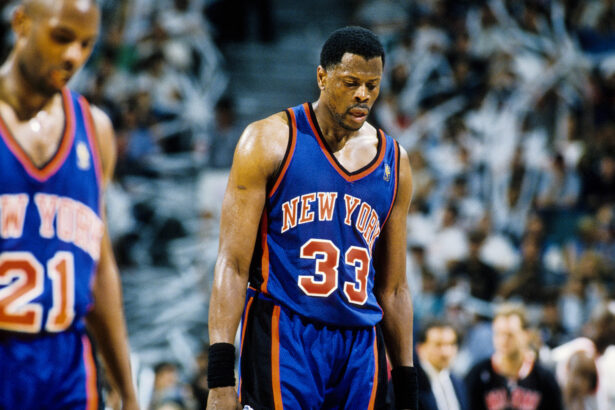
Ewing’s heroics in college turned him into a can’t-miss prospect for NBA teams, and the New York Knicks would select him with the first pick in the 1985 NBA Draft. He didn’t live up to the ridiculous hype, but had an incredible Hall of Fame career nonetheless.
Ewing averaged 21.0 points, 9.8 rebounds, 1.9 assists, 1.0 steals, and 2.4 blocks per game over his 17-year NBA career. Along the way, he made 11 All-Star, seven All-NBA, and three All-Defensive teams.
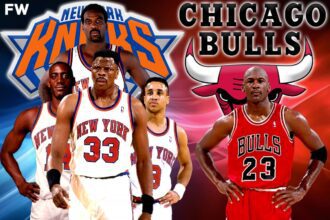
The NBA championship would elude Ewing, though, and the two men we mentioned earlier are a big reason why. Jordan and the Chicago Bulls notably eliminated the Knicks from the playoffs in 1989, 1991, 1992, 1993, and 1996. He points to Jordan as the primary reason for being ringless.
Ewing did manage to get the better of the Bulls in the 1994 playoffs, but that was when Jordan was in retirement. He and the Knicks would eventually make their way to the 1994 NBA Finals, where they took on Olajuwon and the Houston Rockets. Unfortunately, history didn’t repeat itself for Ewing. Olajuwon powered the Rockets to victory in what was a brutal seven-game series.
Ewing and the Knicks would get to the NBA Finals again in 1999, but were swept aside with ease in five games by the San Antonio Spurs. All of this means he has gone down as one of the greatest players never to win a championship. That is one category no one really wants to find themselves in.