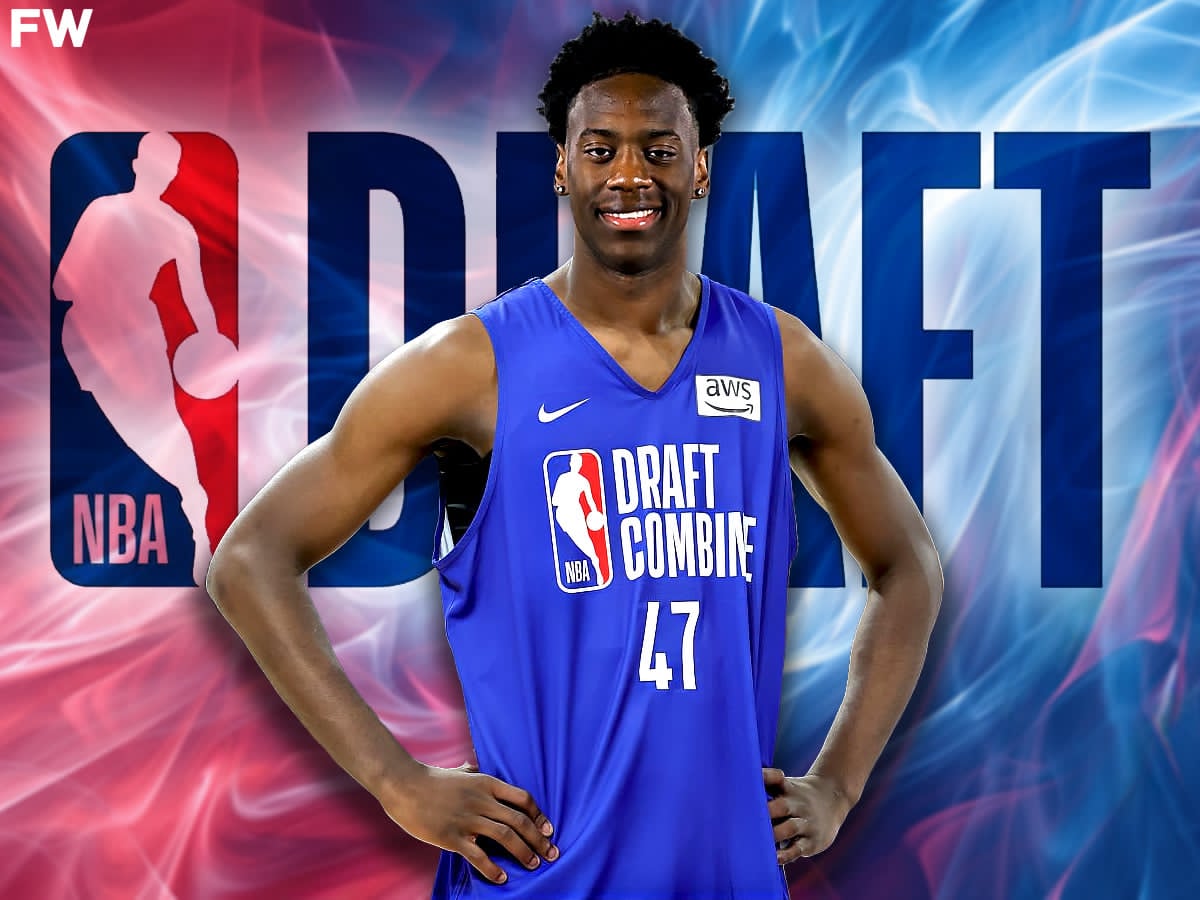
Well before AJ Dybantsa openly declared that he wants to be the No. 1 pick in this year’s NBA draft, the former BYU prospect visualized that outcome during various meditation sessions.
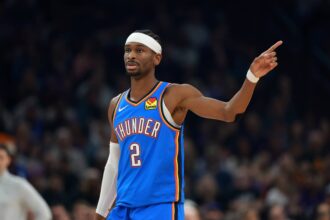
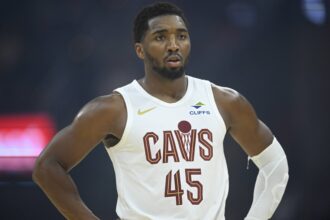
Brandon Ball, Dybantsa’s former AAU trainer, talked to Fadeaway World about Dybantsa’s meditation sessions and why he should become the No. 1 pick. Ball also detailed Dybantsa’s training sessions and the work he did to model his game after Kevin Durant, Kawhi Leonard, Shai Gilgeous-Alexander and Paul George.
Editor’s note: The following one-on-one interview has been edited and condensed
Can you catch me up on your timeline on the ranges you trained AJ and what that work entailed?
Ball: “Absolutely. I did a lot of training for Expressions Elite, the Nike EYBL team. I met AJ when he was in fourth grade. He came and did a workout. It was a little bit too tough for him. I didn’t see him again until he was in sixth grade. That was through a friend of mine at Expressions Elite. They did a workout again. Next thing you know, we hit it off. We probably worked out four or five days a week. If we weren’t at a tournament during a week, we would work out four days a week. We would work out Monday and Tuesday, and usually take Wednesday off. Then we would work out on Thursday and Friday.
AJ was a workhorse. We started young. We first started working on his footwork, his shooting, his form and his ball handling. As he got older, we began to work on reads, how to get to his spots and how to play off of the pick-and-roll. In seventh grade, he came off the block and began working on becoming a perimeter player and being more guard-oriented. He’s coming off ball screens and being able to play strictly on the perimeter. Before that, he was strictly on the block. In seventh grade, he didn’t win a game when he played for Expressions. It was a struggle and rough. I didn’t coach him, but I was training him every day. So he went through his growing pains. But he worked through it.
In eighth grade, he wound up winning. Then he reclassified and played in eighth grade again. That’s when he played up for EYBL, 15U. Cooper Flagg and Cam Boozer were there as well. Boozer’s team won it, but there were a ton of great battles. That was a great development year for AJ. I remember that year, we really focused on him getting the rebound and pushing himself and make something happen. In ninth grade, he played EYBL, 17U. He led EYBL in scoring that freshman year. After that, he went on to Prolific Prep and reclassified up. Instead of being in 10th grade, then he was in 11th grade. Here he is now today.”
What did AJ show you both when he struggled in that first workout and then afterwards as he grew?
Ball: “He’s super coachable. The difference with AJ is that you only have to show him something one time. You don’t have to show him seven or eight times and keep repeating it. He’s going to get it. He’s extremely intelligent. If you show him a read, he’ll be able go right out and see what you’re trying to show him with a move or a footstep. He’ll be able to go out and perform that.
I’ve been training for over 15 years. For a lot of kids, you have to repeat it several times. With AJ, you can show him the first time and he’s going to get it. If we’re doing that workout and repping the drill six times, AJ got six good reps. If you add that up through the years with downloading things, listening and applying, it’s huge. You don’t have to tell him over and over. That was special.”
I saw one of your 15-minute workout videos with AJ. You did a lot of ball handling work with two basketballs or one basketball and a tennis ball. He dribbled up the court while you passed to him. And he did a lot of different skill and shooting work…
Ball: (interrupts). “Yeah, we would go from stationary ball handling to movement. Then we incorporated ball-handling work with contact. He would create space with the contact. Then he would drive against confrontation. Then we went into form shooting. Then AJ would work out at his way to the 3-point line.
I believe in five levels to the game. Level one: being able to finish at the basket high off the backboard and on either foot or two. Level two: shooting floaters and playing off your pivots, post or fade moves. It’s not a layup, but not quite a mid-range shot. Level three: that’s your pullups and playing in the mid-post and pivoting. Level four: that’s the regular 3-point line. Level five: that’s the Dame [Lillard] and Steph Curry range. That’s the way I see the game. We would work the first three levels in pretty much every workout. Then we would work our way out and work on his whole game.”
What do you think those kind of workouts have done for his readiness both last season at BYU and ahead of the NBA Draft?
Ball: “The main thing is his confidence and understanding. He put the work in. With the work ethic that he has and consistency that he and Ace (his father) showed, they begin to build a supreme confidence. As far as being ready, we went through a lot of reads and footwork. So a lot of the things that he’s doing happens in the game instinctually. If I show him a move or show him a read, he can see it in a game instinctually. Once it happens instinctually, then you can manipulate.
As he’s gotten older, you’ve seen it every year get easier and easier. He’s finding his spots. He knows how to take advantage of the mismatches with a small guy, big guy, strong guy or fast guy. He’s able to identify all those things, get to his spots and make the game easy. One of the things I used to always say to him: “We’re bringing in all of this stuff, but keep it simple.’”
That simplicity is one of the reasons why he admired Kevin Durant so much growing up. That drill work seems similar to stuff KD has done. How else did you see AJ try to model his game after Durant?
Ball: “We didn’t necessarily watch film of KD. But we would talk about him a lot. We had a TV in the back of that church where we worked out. So when we would do our workouts during the playoffs, we would have the games on in the background. But we would show him clips on how KD gets to his spots and raises up over defenders that are smaller than him. The main thing we used with KD was watching how he gets to his spot and gets to where he wants to get. He’s not rushed. He’s not out of control. Once he gets there, he’s going to raise up.
We always talked about T-Mac [Tracy McGrady] all the time with his hesitation pull-up. We worked out of that because he can either ‘hesitate and go, or he can ‘hesitate and cross. If you get one to fall, you always have to respect it. We studied a lot of T-Mac’s games. We would watch film [of AJ] before games and after workouts. We’d look at AJ’s effort. We’d look at the places that AJ did well or could’ve done better to get to his spots. We’d look at how ready he is to shoot. He has to be ready to catch-and-shoot. Early on, he would not shoot that 3 as much as we wanted him to do so. He wanted to dunk on everybody (laughs). So it was also about being ready to catch-and-shoot.”
What went into AJ evolving as a 3-point shooter?
Ball: “Just wanting to win. It’s about understanding what happens sometimes when you pass up a shot. The offense can work so hard to get you an open shot. If you pass up that shot, now you don’t read the close out and you don’t take the shot. So now you have to work hard to get another shot with the shot clock [winding down]. You pass that up, you have to get a tougher shot or garbage shot. So it was about going through film and being able to identify those things.
Flim doesn’t lie. If you go down and they close out, sometimes you might be able to get a dunk or an And1. But those are tough and contested shots. You have to be able to see it and read it. In his ninth-grade year, he started to shoot the ball a lot better. It’s still not all the way there. But he can shoot it. A lot of times, it just becomes whether or not he’s confident in it. His shot has come a long way from when we started in sixth grade.”
AJ also said in interviews that he watches a lot of Shai and Kawhi. How have you seen him incorporate their games into his?
Ball: “Shai, Kawhi and PG [Paul George] are guys that we would talk about over the years. I always wanted him to be into the game, be into the other guys and study them. Look at what they’re doing, what they do well and study guys that are his size and around his weight level. Then take it and put it into a bucket and put it all together. Then he can create himself. He’s done that. He’s able to watch guys. He’s very much a student of the game. He continues to have a high IQ and learns.”
AJ said he thinks he can play in a Cade Cunningham-type role as a lead guard and an Anthony Edwards-type role as an on-the-ball and off-the-ball scorer. How do you look at that?
Ball: “AJ is going to fit in like a Swiss Army knife anywhere he goes. Whatever the team needs, that will be draw out what that role entails for him. That’s out of my paygrade, for now, I guess. But I’m extremely proud of him and extremely happy for him and his family. I’m excited to continue to watch the journey and see him grow.”
AJ has said he’ll embrace whichever teams selects him, but that it’s a goal to be the No. 1 pick.
Ball: (interrupts). “100%. A funny thing is that we used to talk about that. I’m a big advocate for meditation. For all of my kids that I train, I introduce them to meditation. That’s one of the things that we did. He would meditate about being the first pick in the NBA Draft. So to see this come to fruition is incredible.”
What was AJ’s meditation routine?
Ball: “We would do it before the training. Sometimes, I would go on the road with them before an AAU tournament, and we would do it before games. But if I didn’t go to a game, I would always tell him to do it before games and find a quiet place for your own spot and just focus and lock in. Focus on your breathing. First, try to get into the moment where nothing matters in the world, except for you breathing. Then take control of your thoughts and envision what you want for yourself.
Oftentimes, I would tell my kids to visualize themselves and be unrealistic with what you want. Dream big and think what you want for yourself. One of the things I would always say, ‘Everybody says the NBA. But let’s not say the NBA. Let’s say the Hall-of-Fame. Let’s say the first pick. Let’s say what school you’re going to go to. Imagine yourself in that jersey. Who are you playing against? What does it feel like? What does it smell like? Who is your coach? Then visualize it.’”
What would be your case on why AJ should be the No. 1 pick considering your familiarity with him and the strength of this draft class?
Ball: “It’s a no-brainer. You got a 6’8 player with a seven-foot wingspan. But the measurements don’t really matter. This kid is going to work. He’s a workhorse. In the last two years that I worked with him, he would literally have five workouts in a day. That’s a real thing. I’m counting a game as a workout. We would workout at 6 am. Then he would lift around 10 am. At around 12:30 pm, he would do a 30-minute or 45-minute shooting workout. Then he would have a Summer League game from anywhere between 4 – 6 pm. Then he would come back to the gym in the evening and do another hour or hour-and-a-half workout. That was his whole summer. On the weekends, he would travel to EYBL or wherever he would play. He did that for two or three summers before he left us. So I know he’s still doing that kind of work.
He’s extremely coachable. AJ is a special kid. There are lot of great kids in this draft. This is going to be one of the best drafts ever, since ’96. It’s going to be one of those drafts. I’m not saying it’s better. I’m not a comparison guy. But this is going to be one of those drafts that are special. I think this kid is different. I’m excited to see the journey. I hope he goes No. 1 and gets his dream.”
What do you think the training that he did with you and afterwards helped his durability and availability this season at BYU?
Ball: “It was about his work in the weight room. Just like when he trained with us, he’s just like that in the weight room. He’s on the court. He’s in the weight room. It’s the whole package. That’s how you’re able to stay available. It’s his work ethic. But he’s also competitive. He wants to play. He’s not looking for an edge here just to get drafted high. He wants to play. He wants to compete. He wants to win. He can do some special things with that basketball. He’s super, super smart. He’d be a tough guy to pass on.”
AJ showed up at the Combine interview in a suit and tie and likened it to ‘a job interview.’ When you trained with him, what moments did AJ show you that conveyed that professionalism and maturity?
Ball: “That comes from his parents. That comes from Ace and his mother. Ace was a police officer and comes from Africa. AJ’s mother comes from Jamaica. They’re very, very strict and very traditional parents. That’s where that comes from. Ace is always going to be on time. Ace is always going to be buttoned up. That’s always been them as a family and the way that they handle things. It’s A-1 professional.”
Mark Medina is an NBA contributor to Fadeaway World. Follow him on X, Blue Sky, Instagram, Facebook and Threads.