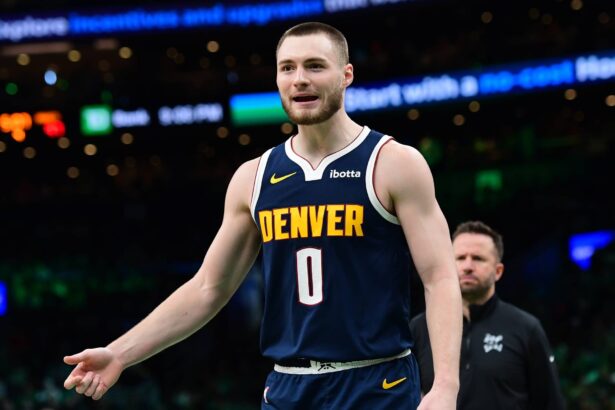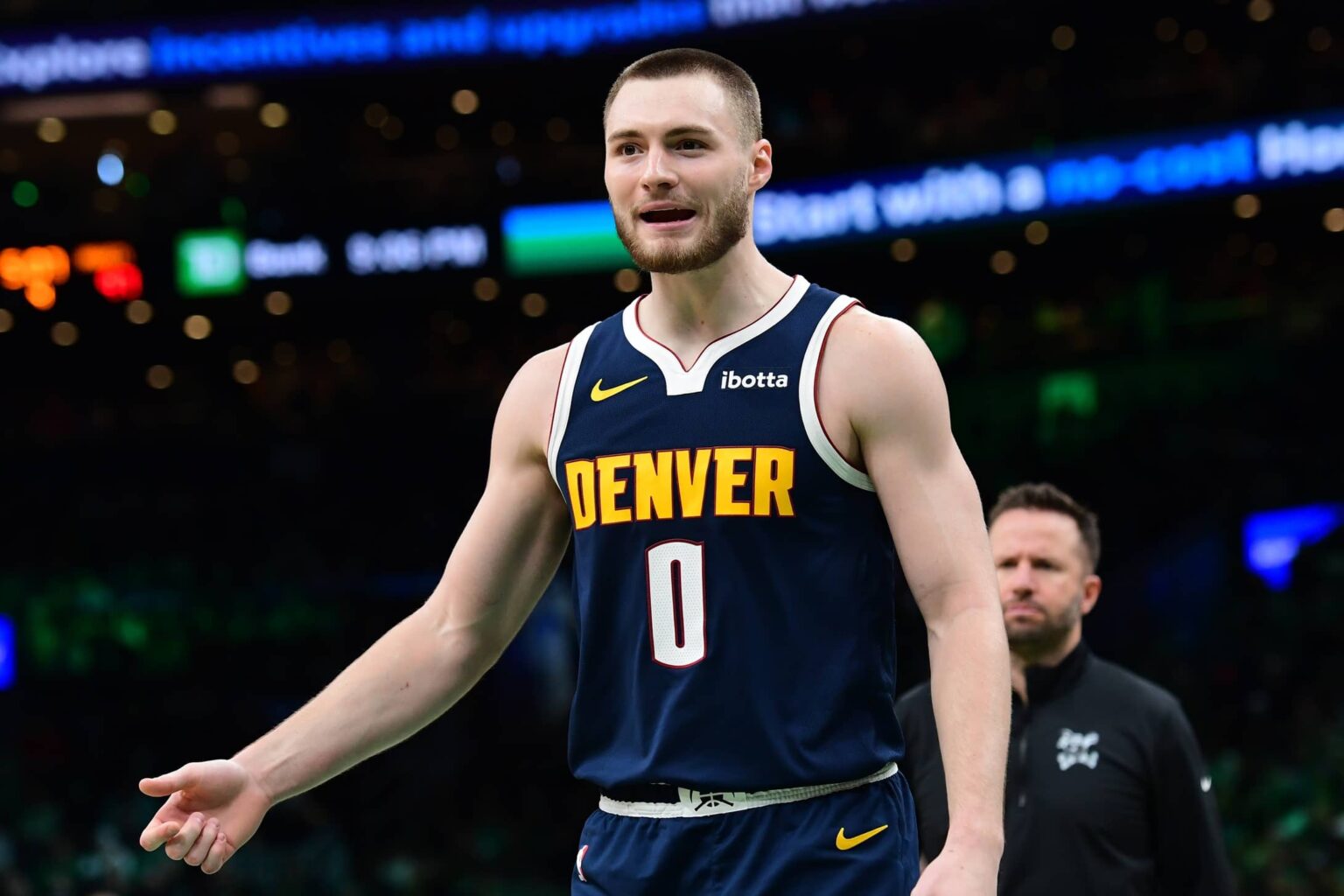
Christian Braun is one of the main names to watch around the Nuggets this offseason. Tim Bontemps reported that the Nuggets could move either Cameron Johnson or Braun to create enough room to keep Peyton Watson, who is entering restricted free agency after a strong season.
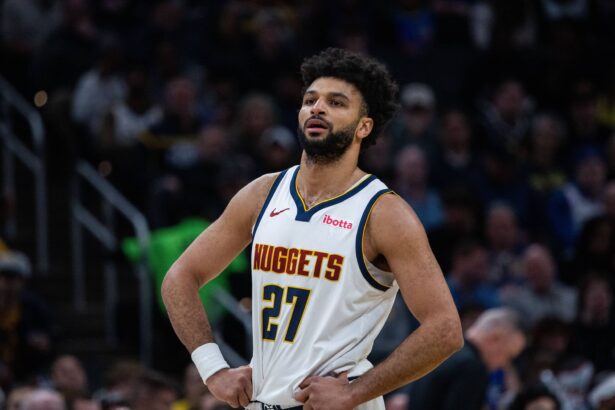
That is the financial problem. Braun’s five-year, $125.0 million extension starts in 2026-27, with a first-year salary of $21.6 million. Watson is also expected to get a major offer sheet, likely in the $20.0 million-per-year range or higher. The Nuggets already have Nikola Jokic, Jamal Murray, Aaron Gordon, and Johnson on the books, so paying both Braun and Watson would push the payroll into a very difficult area.
Braun is still useful. He defends, cuts, runs the floor, and fits next to Jokic. But his playoff dip made the contract look heavier. If the Nuggets choose Watson’s upside, Braun becomes the easier salary to move.
These deals are not about equal salary matching. They are about saving money while still getting one rotation player back. The Nuggets can’t just dump Braun for nothing if they still want to chase a title. They need lower salary, but they also need someone who can play real minutes.
5. Detroit Pistons
Detroit Pistons Receive: Christian Braun
Denver Nuggets Receive: Caris LeVert, 2027 second-round pick
The Pistons are a strong salary-relief trade partner because they project to have enough flexibility at $27.9 million to take on extra money without sending the Nuggets an equal salary back. This deal would send Braun’s $21.6 million salary to the Pistons and bring Caris LeVert’s $14.8 million salary to the Nuggets. That saves the Nuggets about $6.7 million before tax calculations.
That number is the reason this works. The Nuggets would not be clearing the full contract, but they would cut enough money to help with Watson’s next deal while still getting a veteran rotation player.
LeVert is not a perfect replacement for Braun, but he gives them a different skill set. He had 7.4 points, 2.0 rebounds, and 2.7 assists in 19.2 minutes per game this season while shooting 41.7% from the field and 33.3% from three. The scoring dropped, but the passing and secondary creation still have value in a bench role.
The Nuggets need more players who can create something when Jokic sits. Braun is a better cutter and stronger transition player, but he is not a true on-ball creator. LeVert can run second-side pick-and-roll, attack a closeout, and make basic passing reads. That has value for a contender that often gets too dependent on Jokic’s shot creation.
For the Pistons, Braun fits because they need more wing defense around Cade Cunningham and Jalen Duren. They finished as one of the best regular-season teams in the East, but their playoff issues were clear. They needed more reliable two-way role players, more movement, and better defensive balance on the perimeter. Braun gives them a 25-year-old wing under long-term control.
The second-round pick keeps the value reasonable for the Nuggets. LeVert is older and on a smaller deal, so the Pistons need to add something. This is not the best talent return, but it is a realistic money-saving move that still gives the Nuggets a playable veteran.
4. Chicago Bulls
Chicago Bulls Receive: Christian Braun
Denver Nuggets Receive: Isaac Okoro, 2028 second-round pick
The Bulls are one of the cleanest cap-space fits. They are projected to have major room with $63.5 million, so they can take Braun’s $21.6 million salary while sending back Isaac Okoro’s $11.8 million contract. That would save the Nuggets about $9.7 million in 2026-27 salary before tax impact.
That is a real number. If Watson’s new salary starts around $20.0 million to $23.0 million, moving Braun for Okoro would cover almost half of that first-year number. It would also replace Braun with a cheaper defender who can handle some of the same assignments.
Okoro had 9.3 points, 2.7 rebounds, and 1.6 assists this season. He shot 46.0% from the field. He is not a high-volume shooter, and that is the issue. The Nuggets would lose some offensive movement and cutting value by moving Braun. But Okoro gives them a stronger point-of-attack defensive body and a lower-usage wing who does not need plays called for him.
The Nuggets’ title math would be simple here. Jokic and Murray already control the offense. Gordon gives them size and downhill force. Johnson gives them shooting. Watson would become the bigger wing investment. Okoro would not need to be more than an 18-to-24-minute defender who takes the toughest guard or wing matchups and keeps the ball moving.
For the Bulls, Braun makes sense because they need more real wings who can play fast and defend. Braun is expensive for his production, but the Bulls are not in the same tax position as the Nuggets. They can absorb the salary and bet that his role grows outside of a Jokic-heavy system.
The second-round pick is the small cost of the salary relief. The Nuggets would not be getting a premium asset, but they would save nearly $10.0 million and still keep a defensive rotation piece. That is the whole point of this type of move. It is not about winning the trade on name value. It is about creating enough space to keep Watson and staying useful in the playoffs.
3. Brooklyn Nets
Brooklyn Nets Receive: Christian Braun
Denver Nuggets Receive: Day’Ron Sharpe, 2027 second-round pick, 2029 second-round pick
The Nets may be the best cap-space team for this type of move because they can absorb $46.9 million and still send back a useful young player. Braun’s $21.6 million salary would go to the Nets, while the Nuggets would take back Day’Ron Sharpe at $6.3 million. That would save the Nuggets about $15.3 million in first-year salary.
That is the strongest cap result on this list so far. It would give the Nuggets real room to handle Watson’s offer sheet without losing every useful piece around Jokic. The bonus is that Sharpe is not dead salary. He is a productive backup center on a cheap contract.
Sharpe had 8.7 points, 6.7 rebounds, and 2.3 assists in 18.7 minutes per game while shooting 60.1% from the field. The per-minute numbers are strong. Per 36 minutes, that is roughly 16.7 points, 12.9 rebounds, and 4.4 assists. For a team with Jokic, that type of backup big has specific value. The Nuggets don’t need Sharpe to close games. They need him to win non-Jokic minutes with rebounding, screen-setting, passing, and rim pressure.
Sharpe also fits the Nuggets’ style better than a normal backup center because he can pass. That is important. When Jokic sits, the Nuggets often lose the offensive hub that makes their cutters and shooters useful. Sharpe is not close to Jokic, but he can run dribble handoffs, make short-roll reads, and keep the offense from becoming only guard isolations.
For the Nets, Braun would be a bet on a stable wing entering his prime. They have cap space, draft picks, and a young roster that still needs dependable two-way players. Braun’s contract is large, but the Nets can afford to take on a player who is already playoff-tested and under contract through his prime years.
The two second-round picks help the Nuggets justify moving from a starter to a backup big. This deal is mostly about payroll, but Sharpe gives them a cheaper playoff rotation option at a position where they still need support.
2. Los Angeles Lakers
Los Angeles Lakers Receive: Christian Braun
Denver Nuggets Receive: Jarred Vanderbilt, 2027 second-round pick, 2031 second-round pick
The Lakers make sense if they keep real cap flexibility. Their projected $48.4 million room gives them a path to take Braun’s $21.6 million salary while sending back Jarred Vanderbilt’s $12.4 million salary. That saves the Nuggets about $9.1 million in 2026-27 salary and gives them a defensive forward who can still play specific playoff matchups.
Vanderbilt had 4.4 points, 4.5 rebounds, and 1.3 assists in 65 games this season while shooting 47.1% from the field and 29.3% from three. The shooting is the problem. He does not help spacing, and that can be difficult in any Jokic lineup. But the Nuggets would not be trading for him to solve offense. They would be trading for a cheaper defender, rebounder, and energy forward who can guard bigger wings.
That skill set still has value. Vanderbilt can pressure the ball, switch across forward spots, rebound outside his area, and play short bursts against elite wings. Around Jokic, Murray, Johnson, and Watson, he would not need touches. His job would be defensive activity, loose balls, cuts, and offensive rebounding.
For the Lakers, Braun is a better two-way fit than Vanderbilt because he can stay on the floor in more offensive lineups. He is a better cutter, a better transition guard-wing, and a more natural connector next to a high-usage offensive star. The Lakers need rotation players who can run, defend, and make decisions without slowing the offense. Braun fits that better than most mid-tier wings.
The Nuggets would need both second-round picks because Vanderbilt’s offensive limitations are real. This is not equal value in a vacuum. It is a financial trade. The Nuggets would take a less complete player, save more than $9.0 million, and add two draft assets.
This deal only works if the Nuggets believe Watson can take over the better two-way wing role. If Watson becomes the priority, Vanderbilt can be a cheaper defensive specialist behind him. That keeps the Nuggets’ playoff defense stronger without carrying Braun’s full $125.0 million deal.
1. Grizzlies
Memphis Grizzlies Receive: Christian Braun
Denver Nuggets Receive: Jaylen Wells, 2028 second-round pick, 2030 second-round pick
The Grizzlies are the best Braun destination because they can create the biggest salary relief while still sending back a useful wing. After the Jaren Jackson Jr. trade, the Grizzlies created a $28.8 million trade exception. Braun’s $21.6 million salary fits into that exception, which makes this one of the cleanest financial paths for the Nuggets.
The Nuggets would take back Jaylen Wells, who is set to make $2.3 million in 2026-27. That creates about $19.3 million in salary savings compared to Braun’s first-year number. That is almost a full Watson starting salary by itself. From a cap-management view, this is the strongest deal.
Wells is also not just filler. He had 12.5 points, 3.2 rebounds, and 1.7 assists this season. The shooting was not elite, but he has real wing size, movement value, and enough scoring to be developed in a smaller role. For the Nuggets, he would be a cheaper version of the same basic wing archetype: defend, run, spot up, cut, and play off Jokic and Murray.
The difference is cost. Braun is starting a five-year, $125.0 million deal. Wells is on a second-round rookie contract. That gap is massive for a team trying to keep Watson. If the Nuggets believe Watson is the better long-term bet, swapping Braun for Wells and two second-round picks gives them the best financial outcome without leaving the wing spot empty.
For the Grizzlies, Braun fits because they need real NBA players around their young group. They have moved major salary, collected picks, and reset the roster. Braun would give them a 25-year-old wing who has played high-level playoff minutes and can fit without heavy usage. That is useful for a team trying to rebuild without only adding raw prospects.
The two second-round picks are needed because the Grizzlies would be absorbing a large contract. Braun is good, but his salary is high for his production. The Nuggets get huge relief, a young wing, and extra picks. The Grizzlies get a proven rotation player who can stabilize their perimeter group.
This is the best trade because it solves the Nuggets’ exact problem. It cuts enough salary to help keep Watson, returns a cheap playable wing, and avoids taking back another mid-tier contract.