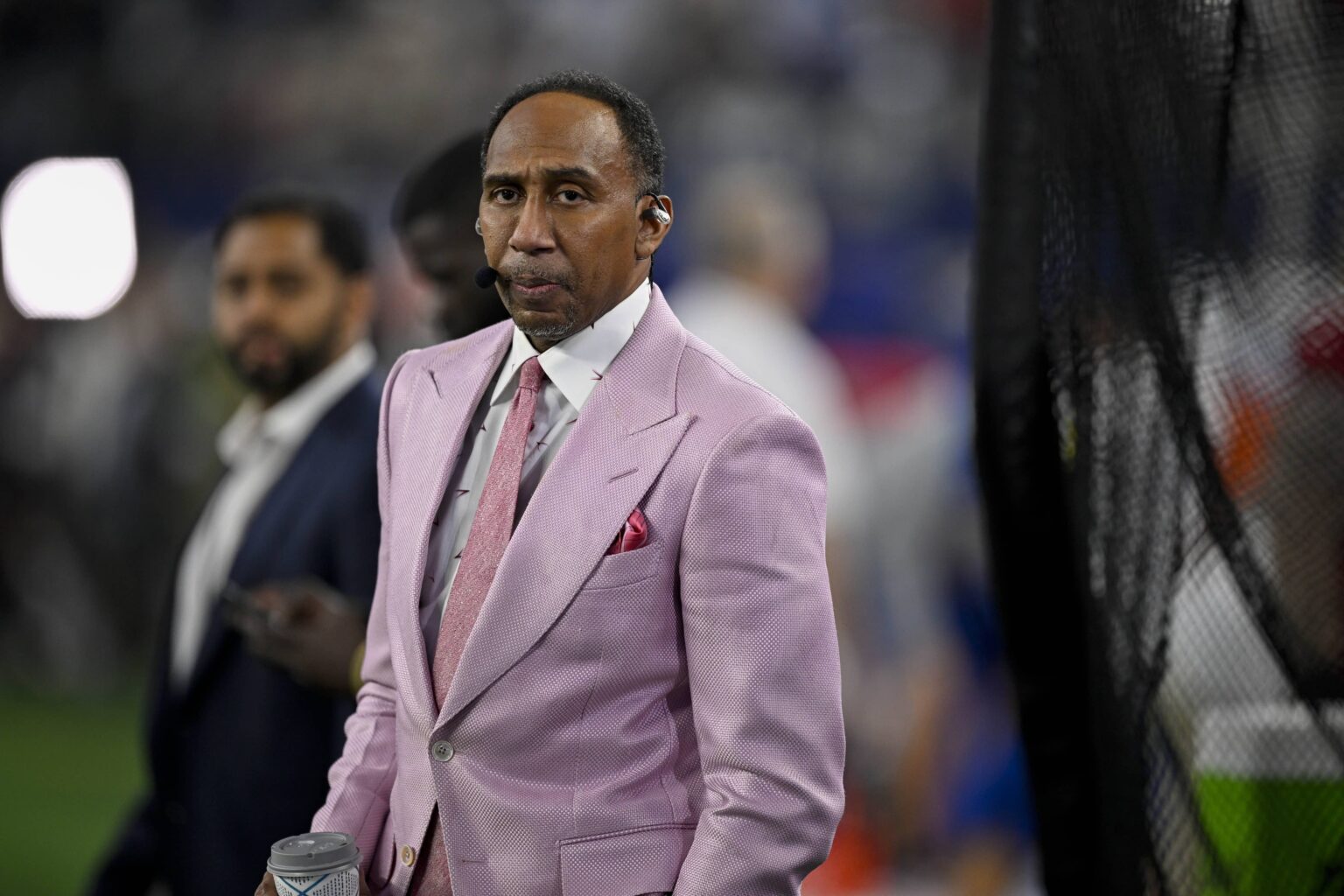
Stephen A. Smith is known today for his fiery debates and commanding presence on television. But during a revealing interview on In Depth with Graham Bensinger, the ESPN personality shared one of the most painful moments from his childhood, a moment that forced him, at just 17 years old, to choose loyalty to his mother over obedience to his father.
Smith recalled the incident while reflecting on his complicated relationship with his father.
Graham Bensinger: “He did throw the infidelity in your face a little bit, didn’t he? Like when he picked you up after you lived in Texas for a couple months?”
Stephen A. Smith: “No. I went to Texas to see my brother for a month, and I came back. He picked me up at LaGuardia Airport, and some little kid jumps into my arms that I’ve never seen in my life. Then I see my father with a big smile on his face, and I’m like, what is this? He said, ‘That’s your brother.’ That was the first time I found out I had a little brother.”
“That was a big moment because obviously I wasn’t happy about that. It was nothing against the kid. He’s a little kid, for crying out loud. But it was clearly a violation of my mother. When he dropped me off, he left me at the corner. He told me, ‘Don’t tell your mother that I picked you up with somebody,’ because when he took me to the car, the mistress was in the car. He said, ‘Don’t tell your mother.’ So I get home.”
“I walk up the block, and my mother says, ‘I didn’t see him drop you off.’ I said, ‘He did drop me off.’ Then out of nowhere my mother asked me, ‘Was he alone?’ And I said yes. My mother died when I was 49 years old, approaching my 50th birthday. That was the only lie I ever told my mother in my life. I never lied to my mother, ever, except that day. Because I knew what pain it would cause her, and I ate it.”
“I go to school the next day. I come home from school, and my mother is in the bedroom crying. My brother Basil had died in 1992. She didn’t cry then. Strong as an ox. Very sad, but strong for the family. The only time I ever saw my mother cry was that day. I went in and said, ‘Mommy, what’s the matter?’ She wiped the tears from her eyes, looked at me and said, ‘Why did you lie to me?’ I said, ‘What are you talking about?’ She said, ‘I asked you yesterday. Was your father alone? Why did you lie to me?'”
“Come to find out, he had gone and bragged about how his two sons had seen each other, embellishing the story like we were hugging each other and so happy to be together. So I said, ‘Hold up. I’m sorry that I lied to you. Here’s what happened.’ When I told her what happened and that I couldn’t bring myself to hurt her like that, she said, ‘You’ve never lied to me before. Don’t lie to me now. Don’t start anything new.'”
“I said, ‘Yes, ma’am.’ She said, ‘I’m going to talk to your father. I’ll confront him tonight when he gets home.’ I said, ‘No, no, no. I will.’ I was 17. I said, ‘I have to handle this. I’ve got to man up.’ He came home that night. I asked him to come in the bedroom, and I said, ‘This is what you did, and that was wrong.’”
“He said, ‘No, it wasn’t. You have a right to know your brother.’ I said, ‘That’s not the point. The point is, you got me involved in hurting my mother. If you want to do that, you do that on your own. You don’t use me to do it.’ My father was a very intimidating figure whose default position was to put his hands on you if he felt you were out of line.”
“But I couldn’t be scared because my relationship with my mother was on the line. Nothing came before her. So I looked him dead in the face and said, ‘Dad, I love you, but I need to tell you something. You don’t come close to being as important as mommy on any day. If I have to choose between that kid and mommy, it’s going to be mommy. If I have to choose between you and mommy, it’s going to be mommy.”
“That’s the way it is, and that’s the way it’s going to stay for the rest of my life.’ He said, ‘Well, she’s wrong, and you’re wrong. And if that’s the way you feel, we have nothing to say to each other.’ I said, ‘Then we have nothing to say to each other.’ And that was that.”
The story offers a revealing look at the environment that shaped Smith’s personality long before he became one of the most recognizable voices in sports media. At just 17 years old, he was placed in the middle of a deeply complicated family situation, forced to balance loyalty, honesty, and emotional responsibility in a moment that most teenagers would struggle to process.
His initial decision to lie was not born from selfishness but from an attempt to shield his mother from pain. Yet the moment also forced him to confront the reality that protecting someone sometimes requires confronting uncomfortable truths.
Smith’s decision to stand up to his father also reflects the early development of the fearless personality viewers see today on television. Challenging an intimidating parent, particularly in a household where discipline was strict, required a level of conviction uncommon for someone his age. The confrontation was not about rebellion. It was about principle. In that moment, Smith made it clear that respect for his mother and personal accountability mattered more than avoiding conflict.
Smith was raised in Queens, New York, by a deeply disciplined mother who played a major role in shaping his values. He grew up alongside five siblings, including his four sisters, in a household where education and responsibility were emphasized. That upbringing, he says, built the resilience that later helped him succeed in journalism and broadcasting.
Today, Smith often speaks about how his mother remains the most influential figure in his life. Even as his career has grown into one of the most prominent voices in sports media, he says the lessons she taught him still guide his decisions.
Smith is also a father himself and has spoken publicly about his two daughters, often emphasizing how becoming a parent gave him a deeper appreciation for the sacrifices his mother made. For Smith, the moment at 17 years old was more than just a family dispute. It was a defining choice about loyalty, responsibility, and the values he would carry for the rest of his life.