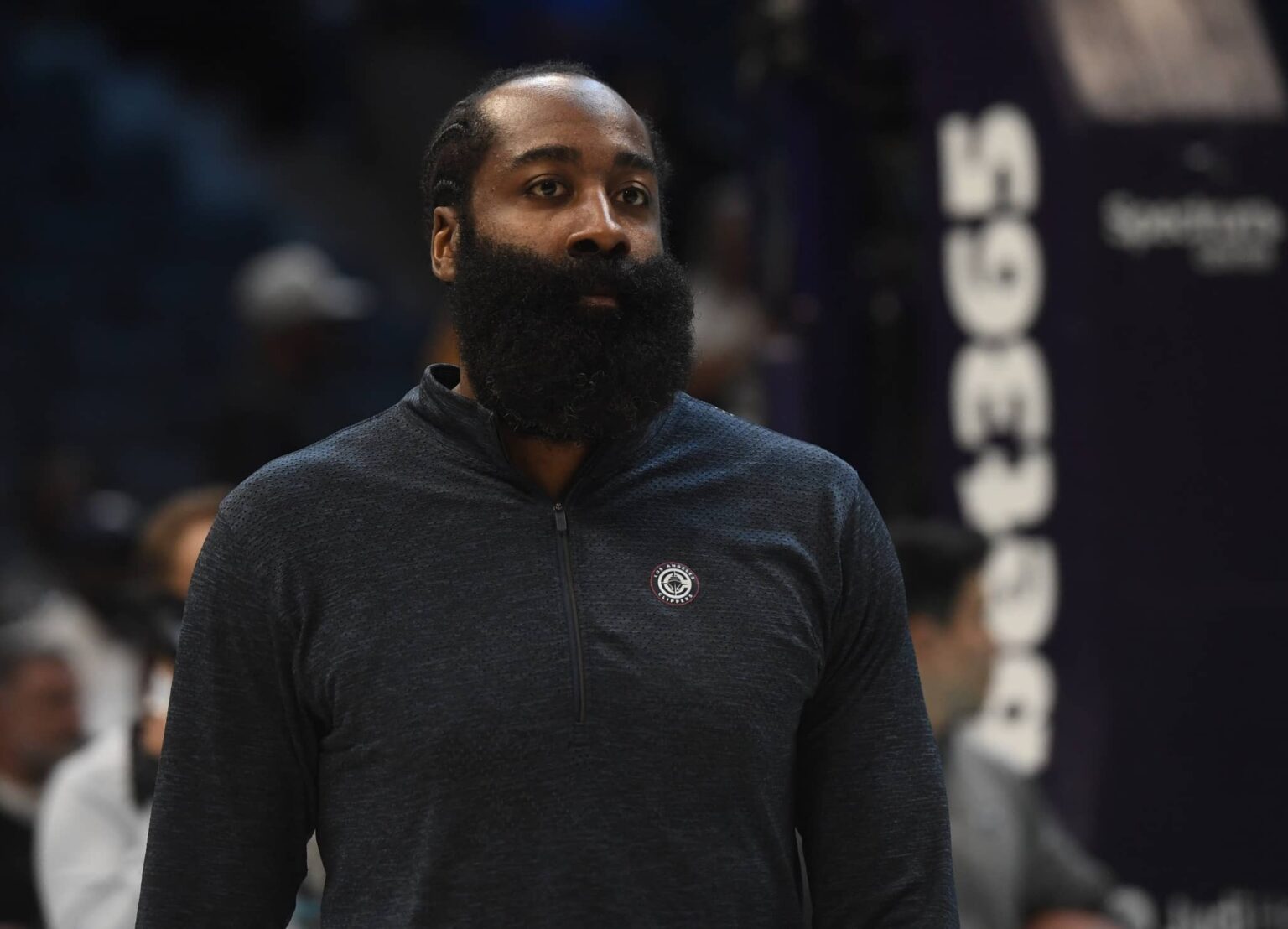
Kevin Durant sparked another all-time debate as he placed James Harden ahead of Dwyane Wade on the all-time shooting guard list. Speaking on the Unguarded podcast, Durant was asked a question: Who is the third-best shooting guard ever, behind Michael Jordan and Kobe Bryant?
“I’mma say James because of the level of scoring that he reached, and the assisting that he reached, and his teams were contenders every year too.”
It was a very KD answer. Direct, analytical, and rooted in production. And when you look at Harden’s peak, especially during his time in Houston, you can understand why Durant sees it this way.
Harden’s run in Houston was unlike anything the modern NBA had ever seen from a guard. Over eight seasons with the Rockets, he averaged 29.6 points, 7.7 assists, and 6.0 rebounds in 621 games, carrying an offensive burden that very few players in league history have handled.
From 2016 to 2020, Harden put up 32.4 points, 8.8 assists, and 6.7 rebounds per game across four seasons. He was the Rockets’ main scorer, playmaker, and closer every single night for four seasons in a row.
The 2018–19 season remains the clearest example of his dominance. Harden averaged 36.1 points per game, the highest scoring average since Michael Jordan. And then there was the stretch that still feels unreal even years later. Between December 13, 2018, and February 21, 2019, Harden averaged 41.1 points, 7.6 rebounds, and 7.4 assists over 32 games.
During that run, he recorded 32 straight games with at least 30 points, the second-longest streak in NBA history, trailing only Wilt Chamberlain. Defenses knew exactly what was coming, and it didn’t matter.
Harden’s career resume supports Durant’s argument. He has an MVP award from 2018, is an 11-time All-Star, has six All-NBA First Team selections, won three scoring titles, led the league in assists twice, and captured Sixth Man of the Year early in his career.
His career averages sit at 26.0 points, 8.2 assists, and 5.2 rebounds while shooting 44.0 percent from the field and 37.6 percent from three. He was also named to the NBA 75th Anniversary Team, cementing his place among the game’s elite.
Dwyane Wade’s legacy, however, is built differently. His career averages of 22.0 points, 5.4 assists, and 4.7 rebounds came with elite two-way impact. Wade was a three-time NBA champion, won Finals MVP in 2006, made 13 All-Star teams, and earned eight All-NBA and three All-Defensive selections.
The 2006 NBA Finals run still remains the most dominant postseason performance by a guard in the 21st century, and his ability to come up big in clutch moments is out of question.
Wade’s resume shines brightest in championships and playoff moments, especially alongside Shaquille O’Neal and later LeBron James. Harden’s case rests on individual dominance and offensive responsibility at a scale rarely seen. For several years, he was asked to be the scorer, the playmaker, and the closer every night, and he delivered at historic levels.
The way Harden has been able to adapt in the late stages of his career also makes his case stronger. After uneven stints with the Brooklyn Nets and Philadelphia 76ers, he reshaped his game with the Los Angeles Clippers, leaning more into playmaking while still producing efficiently. Wade, by contrast, struggled to make the same impact outside Miami during his brief stops with the Chicago Bulls and Cleveland Cavaliers.
The debate ultimately comes down to what you value most. Wade’s case is built on championships, defense, and legendary postseason moments. Harden’s case is built on individual dominance and offensive responsibility at a scale rarely seen. For years, Harden had to be everything for his team, and he delivered historic results.
Durant’s ranking ultimately reflects a belief in peak performance and offensive burden. From an individual standpoint, Harden’s highs are hard to match. Wade may have the rings, but Durant sees Harden’s scoring and playmaking ceiling as something the position had never truly witnessed before.