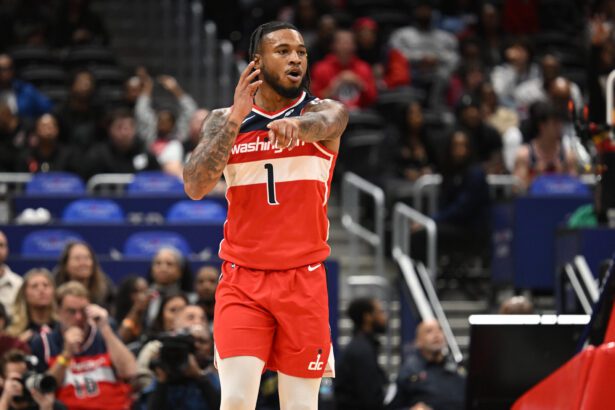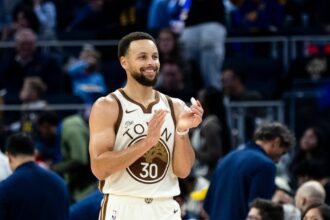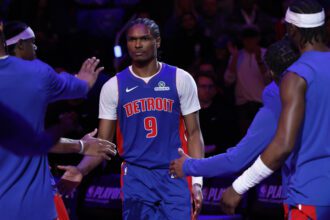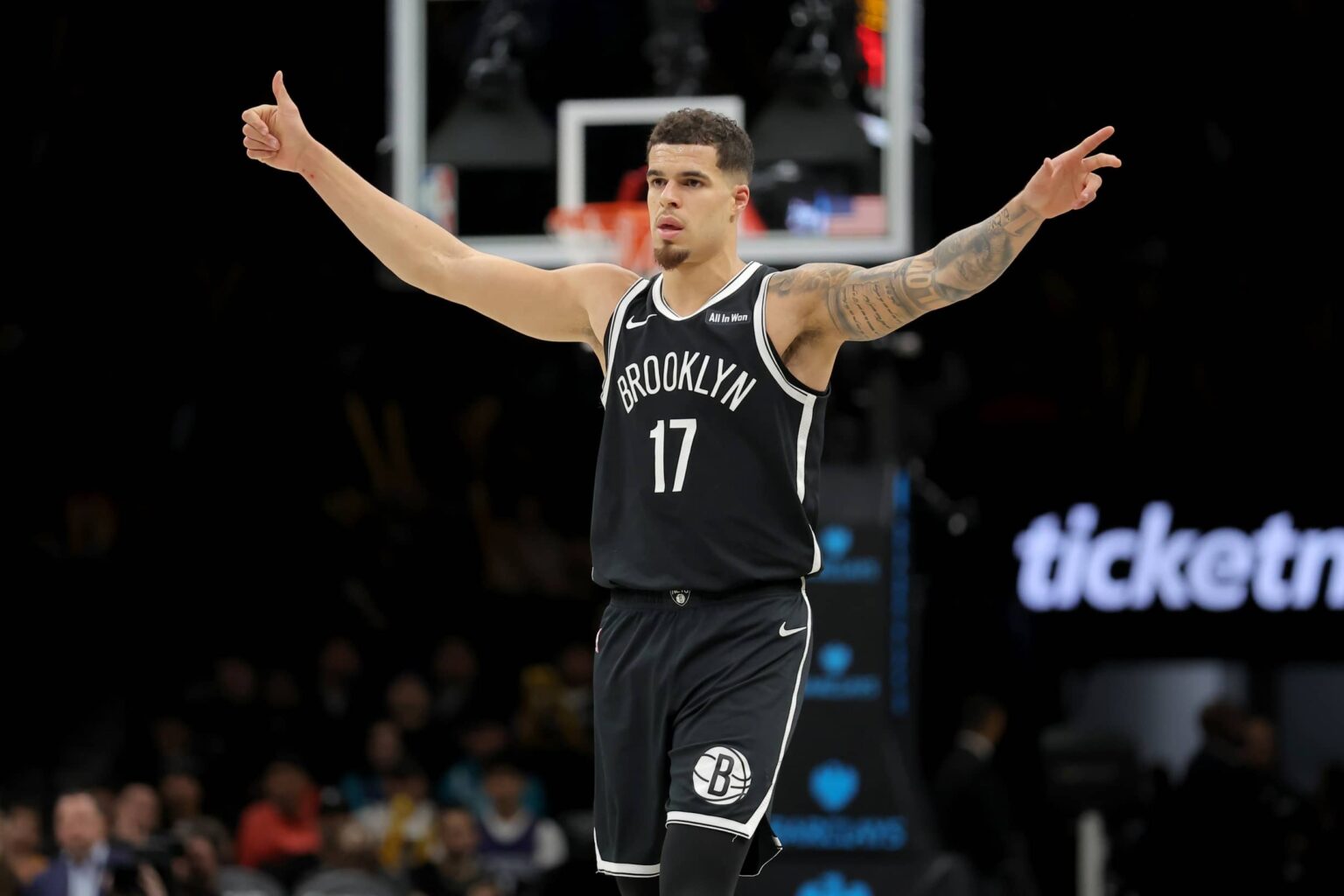
The Chicago Bulls have been circling for a real wing upgrade, the Golden State Warriors are still trying to squeeze a meaningful second act out of the Stephen Curry era, the Detroit Pistons are sitting on flexibility and looking for a legitimate scoring punch next to Cade Cunningham, and the Milwaukee Bucks are basically operating on one rule: add firepower before Giannis Antetokounmpo gets tired of waiting.
That’s why it didn’t surprise anyone when Jake Fischer’s latest reporting tied all four franchises to Michael Porter Jr. as a name to monitor ahead of the February 5 trade deadline.
Multiple reports frame the Brooklyn Nets as at least willing to listen and engage in discussions rather than treating Porter as completely untouchable. And Porter’s value has flipped fast, going from “big contract question” to “wing scorer you actually have to gameplan for,” which is why the calls are coming in now.
And yeah, the numbers are a big reason why. Porter has been producing career-best levels in Brooklyn, including 25.8 points, 7.5 rebounds, and 3.3 assists per game, with a 46.9% field goal and 41.0% from three.
If you buy that as even partially real and not just a heater, you can see why these four teams would talk themselves into a swing: he fits multiple timelines, he checks the “size + shooting” wing box, and he’s the kind of addition that can change what your offense looks like overnight.
What The Bulls Can Offer
Bulls Receive: Michael Porter Jr.
Nets Receive: Patrick Williams, Kevin Huerter, 2026 first-round pick (via POR, CHI gets right to swap), 2032 second-round pick
If the Bulls want the cleanest “upgrade the wing without touching the main pieces” play, this is it. Patrick Williams is the big contract, but right now he’s giving you 6.7 points per game, 2.9 rebounds per game, and 1.2 assists per game while shooting 37.9% from the field, though he has at least kept the jumper respectable at 40.4% from three.
Kevin Huerter is the steadier plug-and-play piece, putting up 11.8 points per game, 3.6 rebounds per game, and 2.3 assists per game on 47.2% from the field, but his three-ball has dipped to 32.6% from three.
From the Nets’ side, this is the “two rotation bodies + real draft capital” pitch. Williams gives them a younger forward with negative value, but Huerter keeps spacing alive, and the two firsts are the actual hammer here, especially with one tied to swap value. It’s not a perfect blue-chip offer, but it’s the kind of package that makes a front office stop saying “we’ll listen” and start actually negotiating.
What The Warriors Can Offer
Warriors Receive: Michael Porter Jr.
Nets Receive: Jonathan Kuminga, Moses Moody, Buddy Hield, 2026 first-round pick
This is the loudest “we’re picking a direction” offer of the four. Jonathan Kuminga is the headliner, and even in a choppy role this season, he’s at 11.8 points per game, 6.2 rebounds per game, and 2.6 assists per game on 43.1% from the field, with 32.0% from three.
Moses Moody has been more consistent, giving 10.8 points per game, 3.4 rebounds per game, and 1.6 assists per game, and he’s at 37.3% from three, even with the usual rotation chaos. Buddy Hield is more of a salary-and-shooting piece, sitting at 7.5 points per game and 32.3% from three.
For the Nets, this is the “young wing upside + depth + a first” bundle, and it’s easy to see the appeal. You’re not just taking one prospect and praying; you’re taking multiple bites at the apple, plus a pick. The downside is obvious, too: you’re swapping one premium scoring wing for a package that needs development time, and you have to be comfortable waiting for Kuminga/Moody value to fully pop.
What The Pistons Can Offer
Pistons Receive: Michael Porter Jr.
Nets Receive: Tobias Harris, Jaden Ivey, 2026 first-round pick, 2027 second-round pick (via BKN or DAL), 2028 second-round pick (UTA holds rights to swap)
This one is the “talent plus picks” offer that looks better the more you squint at the details. Tobias Harris is still a functional scorer and connector at 13.4 points per game, 4.6 rebounds per game, and 2.5 assists per game on 45.5% from the field, but the three-point shot has been at 32.6% from three.
Jaden Ivey is the real swing: he’s only at 8.1 points per game, 2.1 rebounds per game, and 1.9 assists per game, but he’s shooting 46.2% from the field and a spicy 40.7% from three, which makes the upside pitch way easier to sell.
If you’re the Nets, this is the package that screams “re-tool without bottoming out.” You’re getting a young guard with real athletic juice (and suddenly real shooting numbers), you’re getting draft compensation across multiple years, and you’re still adding a veteran in Harris who can soak up minutes. It’s not the flashiest offer, but it’s the kind that can age well if Ivey keeps that shooting anywhere near this level.
What The Bucks Can Offer
Bucks Receive: Michael Porter Jr.
Nets Receive: Kyle Kuzma, Bobby Portis, Gary Trent Jr., 2031 first-round pick
This is the “we’ll pay in proven adults” package. Kyle Kuzma is at 13.0 points per game, 4.9 rebounds per game, and 2.3 assists per game on 50.8% from the field, but he’s only at 30.0% from three.
Bobby Portis is still a walking double-double threat type, putting up 13.1 points per game and 6.4 rebounds per game on 48.9% from the field, and here’s the wild part, he’s at 47.4% from three. Gary Trent Jr. adds a more traditional spacing profile at 9.3 points per game while hitting 37.2% from three on 5.7 three-point attempts per game.
For the Nets, the logic is simple: you get three playable pieces you can flip later if you want, plus a 2031 first that could look a lot scarier once you’re far enough away from the present. For the Bucks, it’s the opposite: you’re cashing in depth to chase a higher ceiling, because a pure scoring wing is harder to replace than “good rotation guys,” even if those guys matter every night.
Who Can Offer The Best Package?
If the Nets actually decide to move Michael Porter Jr., the best offer depends on one simple question: do they want the highest-upside young talent, or do they want the cleanest mix of picks and playable rotation pieces that keeps the roster functional?
On pure upside, the Warriors package is the one that jumps off the page. Jonathan Kuminga is the only “this guy could be a real centerpiece if it clicks” prospect in any of these offers, and pairing that with Moses Moody, Buddy Hield as a plug-in shooter, and a first-round pick is the kind of quantity-plus-upside bundle teams usually like when they move a premium scorer. It’s not perfect, but it gives the Nets multiple paths to win the deal, because even if Kuminga tops out as a good starter, you can still get value out of the rest.
The Pistons package is the sneaky one because it’s the most flexible. Jaden Ivey plus a first-round pick and extra seconds gives the Nets a younger piece who can spike in value quickly, and Tobias Harris is the kind of contract you can treat as either “minutes filler” or “future trade ballast.” If the Nets want optionality without going full teardown, this is the offer that lets them pivot in a bunch of directions without committing to one storyline immediately.
The Bulls’ offer is the most “front-office clean” version of a deal. The first two first-round picks are real, and Patrick Williams plus Kevin Huerter give the Nets actual NBA bodies they can keep or flip later. The issue is the ceiling. Williams is still more of a bet than a sure thing, and Huerter is a good role player, not a piece you build around. If the Nets want to maximize pick value and avoid volatility, this is the safest option. If they want the best player coming back, it probably isn’t.
The Bucks package is the most win-now flavored, and that’s exactly why I don’t love it as the best “asset” offer. Kyle Kuzma, Bobby Portis, and Gary Trent Jr. are all real rotation pieces, and the 2031 first is the swing chip, but that’s also the only part of the deal that can truly change how it looks in three years. If the Nets prioritize staying competitive next week, it’s fine. If they want the best long-term return for a player like Porter, it’s the kind of package that can age poorly unless that far-out pick turns into gold.
So if I’m calling it: the Warriors have the best “headline” offer because it has the highest-upside young piece plus a first, while the Pistons have the best “front office flexibility” offer because it comes with picks and a young guard who could grow fast. The Bulls are the safest pick-heavy option, and the Bucks are the most immediate-help package but probably the least exciting long-term unless that 2031 pick becomes a monster.