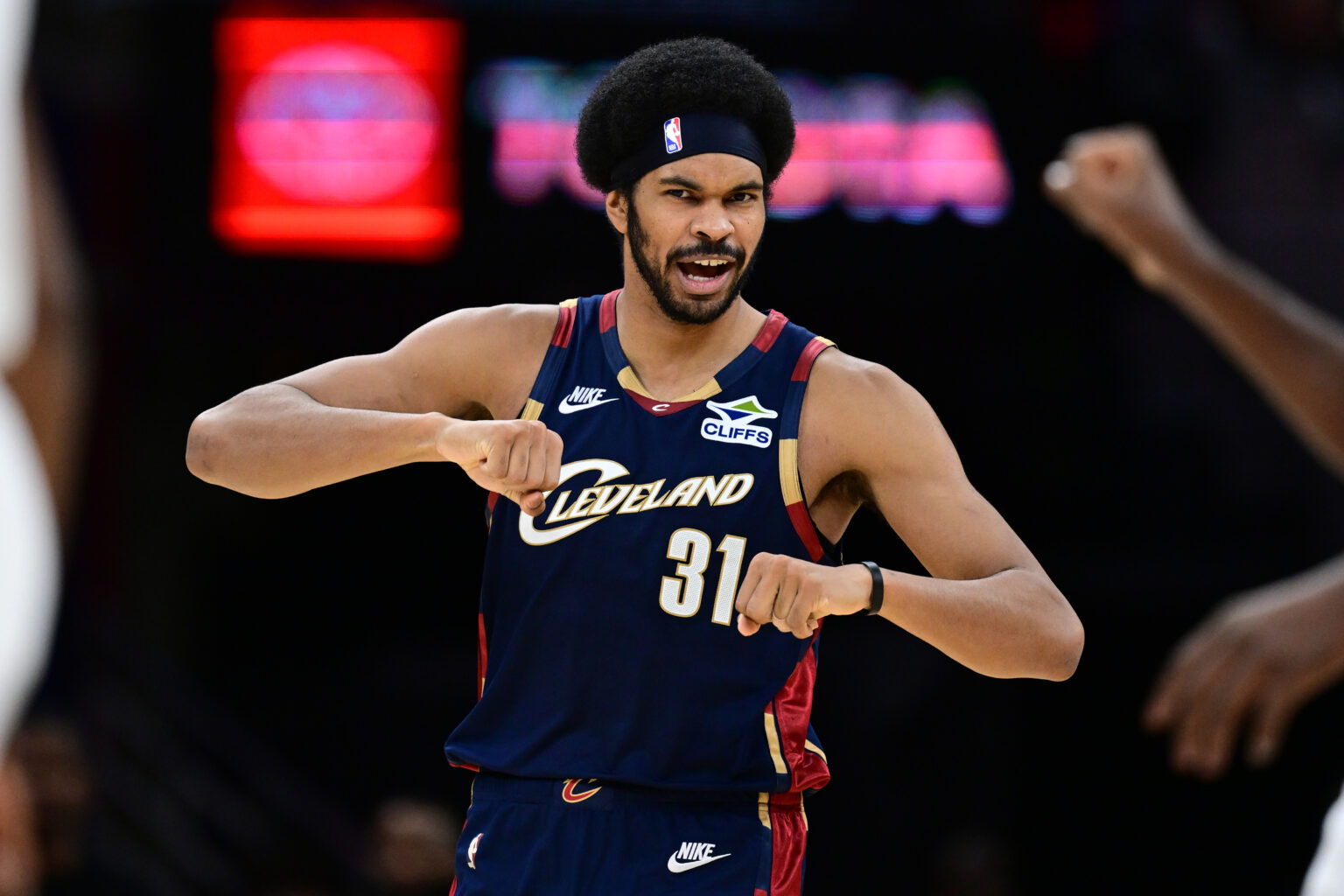
Jarrett Allen has quietly become the pressure-release valve for a Cavaliers deadline that’s suddenly spinning in multiple directions. Allen is averaging 14.0 points, 8.0 rebounds, and 2.0 assists while shooting 60.5% from the field this season, which is exactly why his name matters in real conversations and not just fake trade machines.
The top of the rumor board is bigger than Allen, and that’s the point. Brian Windhorst said the Cavaliers have talked to the Bucks about Giannis Antetokounmpo and talked to the Mavericks about Anthony Davis.
The Bucks angle is basically impossible as a practical deadline outcome because the Cavaliers don’t have the draft assets, and the timing is brutal. But the Mavericks mention tells you they are at least testing the market for a true “break glass” move.
At the same time, the Cavs have a live, credible Plan B that’s far more executable. Chris Haynes reported the Cavaliers and Clippers have had advanced discussions on a James Harden for Darius Garland framework, expected to finalize pretty soon.
Here’s where Allen enters the center of the board: Sam Amick reported the Cavaliers have explored moving Allen’s contract, with the second-apron squeeze sitting in the background of every call.
“Their second-apron status has been well chronicled, but league sources say they’ve explored ways of trading the contract of big man Jarrett Allen ($90.7 million combined in the next three seasons) as a way of unlocking much bigger possibilities.”
So this list is built off one premise: if the Cavaliers are chasing star-level outcomes, Allen is the cleanest “real value” piece who can move without detonating the entire roster.
1. Orlando Magic
Orlando Magic Receive: Jarrett Allen
Cleveland Cavaliers Receive: Goga Bitadze, Tyus Jones, Tristan da Silva, 2031 first-round pick (swap rights)
This is the kind of Allen deal that makes sense for both timelines. The Magic get a real, bankable starting center under contract at $20.0 million this season, the exact archetype they’ve lacked when games slow down and every miss turns into a transition problem the other way.
I’m not re-selling Allen’s production here, but the fit is obvious: rim security, vertical spacing, and a cleaner defensive floor in playoff-style possessions.
For the Cavaliers, the appeal is volume and flexibility. Goga Bitadze is the direct functional replacement in the middle, and his production holds up for a rotation big: 5.9 points, 5.1 rebounds, 1.2 assists on 68.0% from the field, plus 20.0% from three and 73.1% at the line.
He’s also on $8.3 million this season, which is the type of center money contenders actually like because it’s movable and doesn’t lock you into one roster shape.
Tyus Jones is the guard utility piece. He’s at 3.1 points, 1.1 rebounds, 2.5 assists in 15.9 minutes, but the key is that he can organize second units without hijacking touches. His $7.0 million salary is clean, and it gives the Cavaliers a controllable rotation option if they end up reshuffling the backcourt in a separate move.
Tristan da Silva is the wing swing. He’s giving the Magic 9.1 points, 3.4 rebounds, 1.2 assists while shooting 43.8% from the field, 37.4% from three, and 84.2% from the line, and that’s exactly the “spacing plus size” profile teams try to buy at the deadline. His contract is also the point: $3.8 million this season keeps the Cavaliers’ books flexible while still adding a playable piece.
The pick element matters because it’s a swap. It’s not guaranteed value, but it’s a future lever the Cavaliers can stack with other assets if they decide to chase a bigger upgrade later. For the Magic, it’s the opposite: you’re paying in depth and optionality to lock in the center spot with a player who fits the roster’s next two seasons immediately.
2. Indiana Pacers
Indiana Pacers Receive: Jarrett Allen
Cleveland Cavaliers Receive: Bennedict Mathurin, Isaiah Jackson, Jay Huff
The Pacers’ need is simple and it’s been out in the open: they’ve been calling around for a starting-caliber center upgrade since the season started and Myles Turner left.
Per Shams Charania, the Pacers were in “active trade talks around the league” early in the season to find a “center of the future” after losing Myles Turner in free agency. That’s been their roster hole from Day 1, and it’s why a Jarrett Allen swing tracks as more than deadline noise.
The “why” shows up in the games, not just the rumor mill. In their loss to the Rockets on Monday, they got crushed on the glass 56-33, with the Rockets generating a constant second-chance diet. That’s exactly the kind of problem a real rim anchor cleans up, because it reduces extra possessions and lets their guards leak out instead of scrambling to gang rebound.
Allen gives the Pacers a plug-and-play defensive backbone for the next few seasons, and it fits how they want to play. Put him behind an aggressive point-of-attack group, let him absorb the rim duties, and you stop asking undersized lineups to survive in the paint for 48 minutes. Offensively, he’s a natural vertical spacer for a high-tempo pick-and-roll team, which matters when the Pacers’ best possessions are built on early attacks and quick decisions.
For the Cavaliers, this is the “quantity plus optionality” counter. Bennedict Mathurin is the headliner because he can actually score and scale. He’s at 17.8 points, 5.4 rebounds, 2.3 assists on 43.3% from the field. His contract is also clean for a value conversation at $9.2 million this season, heading to restricted free agency.
Isaiah Jackson is the functional big replacement. He’s giving the Pacers 7.3 points, 5.9 rebounds, 0.8 assists on 58.5% from the field, and he’s under contract at $7.6 million. He’s not Allen, but he keeps the Cavaliers from falling into the “no real center minutes” trap if they’re simultaneously reshuffling elsewhere.
Jay Huff is the sneaky fit piece. He’s at 8.5 points, 3.8 rebounds, 1.2 assists while shooting 46.7% from the field and 31.9% from three, plus 2.0 blocks a night. On $2.3 million, that’s the kind of cheap floor-spacing big you can actually carry in a playoff rotation as a change-up.
This is one of the few Allen frameworks that matches the Pacers’ reported priority without getting cute, and it gives the Cavaliers enough playable pieces to justify moving a core starter if they’re truly opening multiple lanes at once.
3. Golden State Warriors
Golden State Warriors Receive: Jarrett Allen
Cleveland Cavaliers Receive: Moses Moody, Al Horford, De’Anthony Melton, 2026 first-round pick (swap), 2027 first-round pick
The Warriors are 27-23, and the center signal has been loud for a while. Chris Haynes reported the Warriors have been looking for a center upgrade, explicitly framing it as a rim-running, shot-blocking need. Allen isn’t a pure vertical spacer in the mold of Daniel Gafford, but he’s a legit two-way 5 who stabilizes the paint and cleans up possessions.
On the outgoing side, Moses Moody’s having a real season: 11.2 points, 3.2 rebounds, 1.5 assists, plus 40.4% from three. That’s the piece the Cavaliers can talk themselves into as a long-term wing plug-and-play guy. Al Horford (7.2 points, 5.0 rebounds, 2.3 assists) is more about functionality and matching money. De’Anthony Melton (11.7 points, 2.8 rebounds, 2.1 assists) gives them another two-way guard look right now.
The picks are what make it believable. If the Warriors are serious about maximizing the Curry timeline, this is the kind of overpay you talk yourself into because it fixes the one thing they’ve been publicly tied to: getting bigger and harder to score on inside.
4. Los Angeles Lakers
Los Angeles Lakers Receive: Jarrett Allen
Cleveland Cavaliers Receive: Gabe Vincent, Deandre Ayton, 2026 first-round pick (swap)
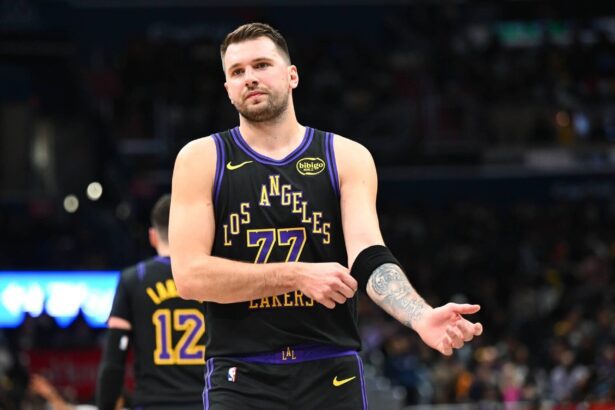
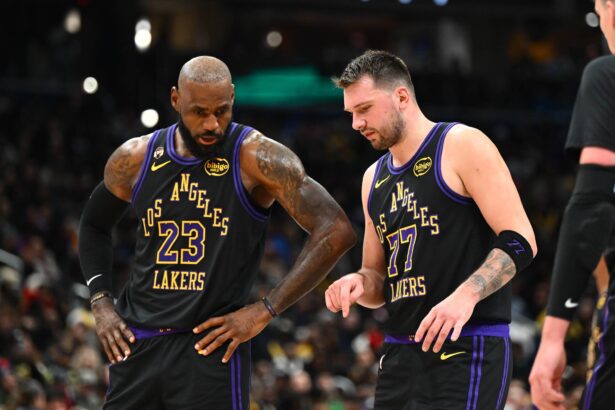
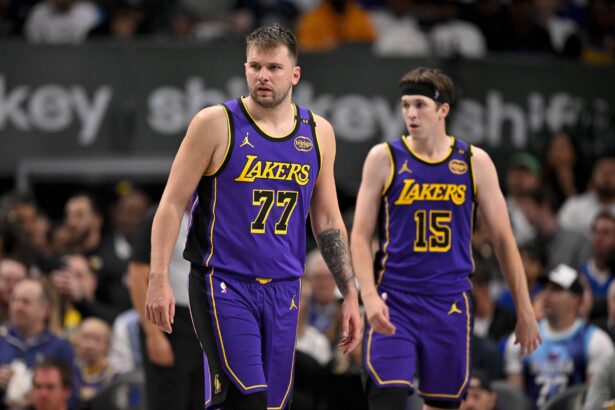
This is the Lakers’ version of “buying certainty.” They’re 29-19, but the center room has screamed stopgap all year, and Deandre Ayton’s future is still in question, as Jake Fischer stated the Lakers don’t see him as the long-term answer next to Luka Doncic.
Ayton’s been productive (13.6 points, 8.5 rebounds, 1.0 blocks, 67.5% from the field), but the whole point is timeline and reliability. If the Lakers want a real defensive floor-raiser at the 5, Jarrett Allen is cleaner: younger, locked in money-wise, and you’re not sweating a summer option decision.
The reporting angle on the Lakers’ side is straightforward: they’ve been actively hunting upgrades with expiring money, and Mike Scotto reported they’ve dangled expiring contracts like Gabe Vincent’s $11.5 million deal to sniff around the market. On top of that, Jovan Buha reported the organization has been chasing a specific center archetype post-Doncic, with named targets that fit the “rim pressure, vertical gravity” brief. Allen fits that style even if he’s not a dunk-only specialist.
For the Cavaliers, Gabe Vincent (4.9 points, 1.3 assists) is mostly money and optionality, not impact. The actual bet is: take Ayton plus the pick equity, then decide if you’re re-routing that center slot again in a larger package, which tracks with Amick’s “unlock bigger possibilities” framing.