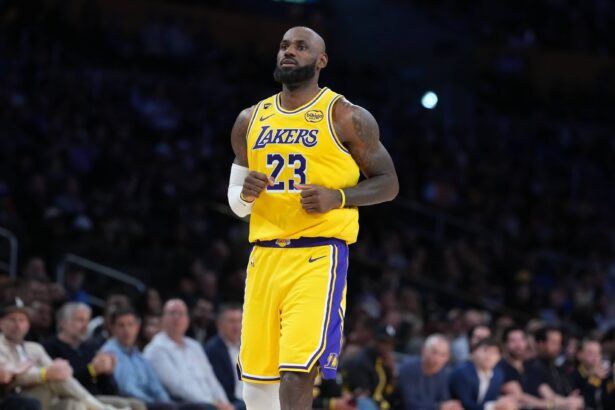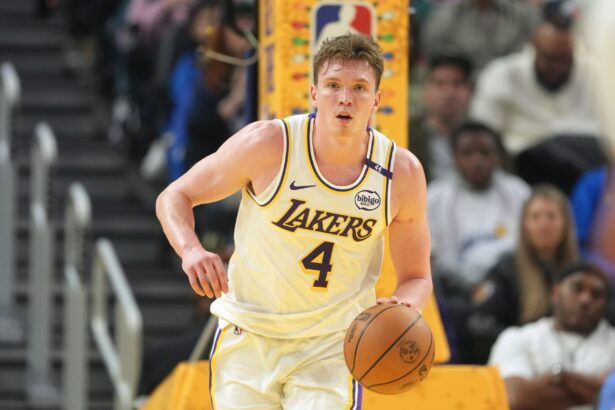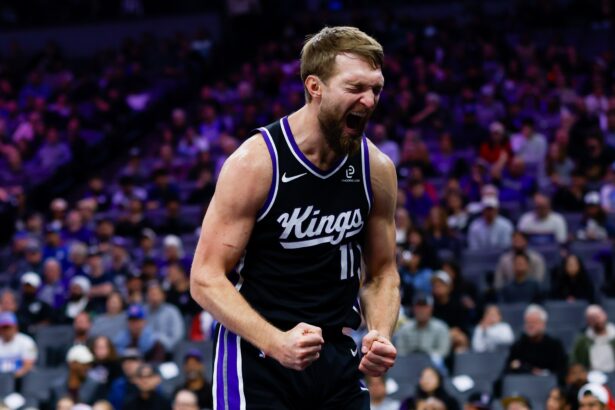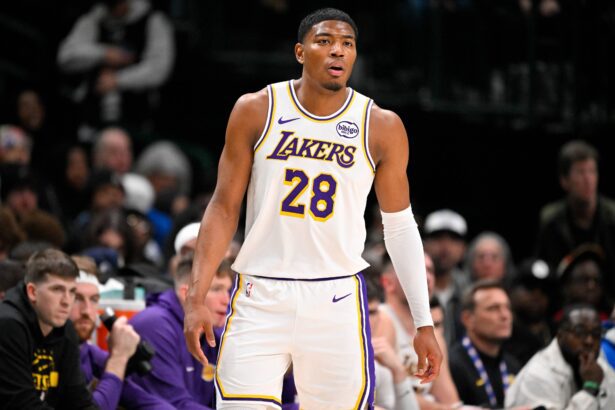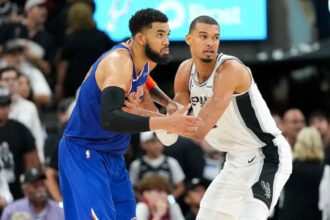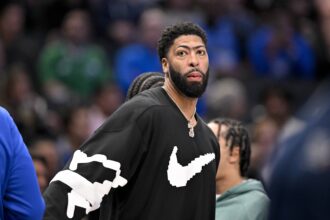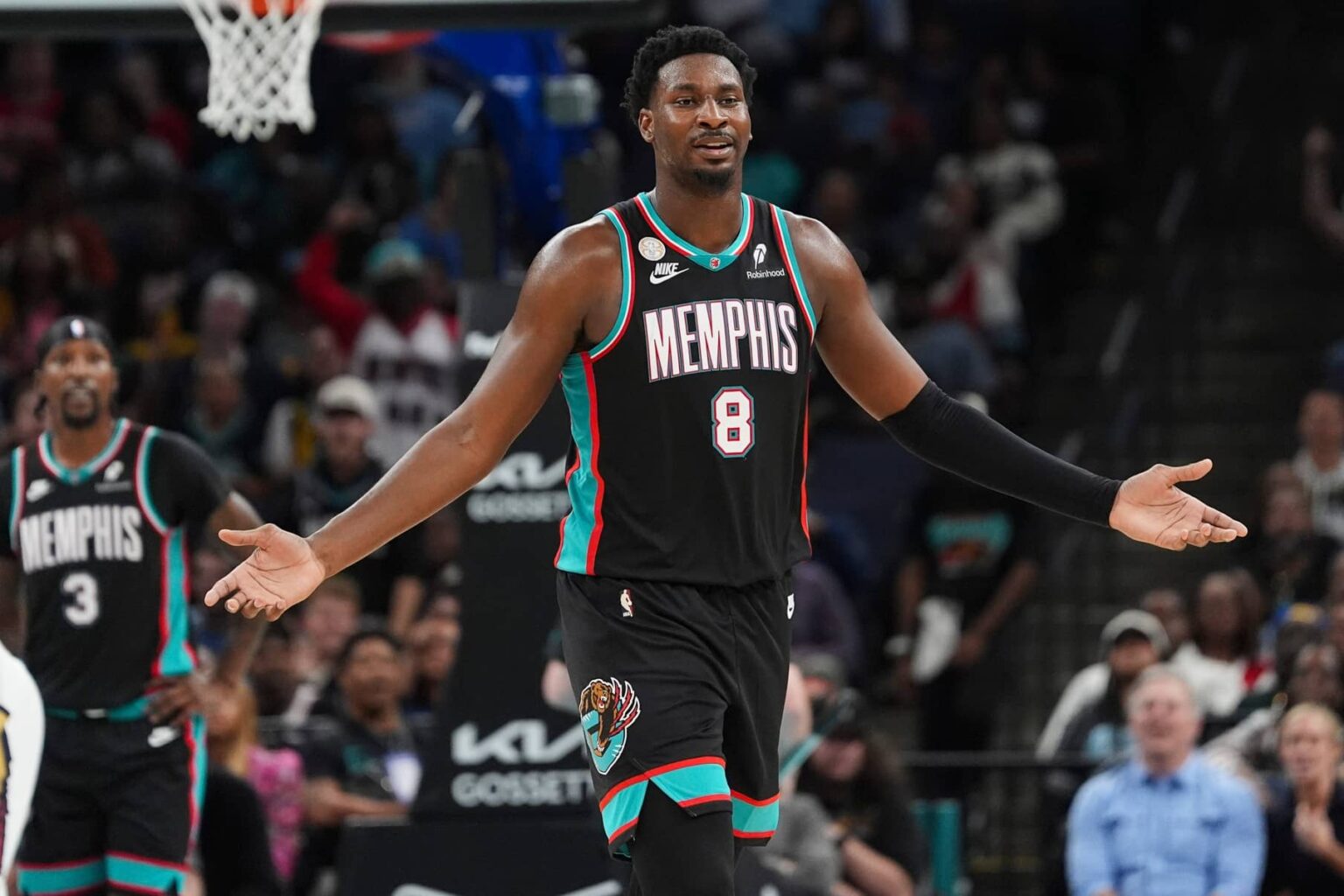
Shams Charania just detonated the deadline: the Grizzlies are sending Jaren Jackson Jr. to the Jazz in a real, pick-heavy blockbuster, with John Konchar, Vince Williams Jr., and Jock Landale also headed to the Jazz, while the Grizzlies bring back Walter Clayton Jr., Kyle Anderson, Taylor Hendricks, Georges Niang, plus three future first-round picks.
The timing matters because both teams are sitting in the mud right now, not polishing a contender. The Grizzlies are 18-29, and the Jazz are 15-35, so this reads less like “one last move” and more like two franchises picking a direction out loud, one cashing out a premium two-way big for volume, the other paying up to accelerate its build with a defensive centerpiece.
Trade Details:
Utah Jazz Receive: Jaren Jackson Jr., John Konchar, Jock Landale, Vince Williams Jr.
Memphis Grizzlies Receive: Walter Clayton Jr., Kyle Anderson, Taylor Hendricks, Georges Niang, three future first-round picks
Jaren Jackson Jr. was the Grizzlies’ actual franchise cheat code, a two-way big who covers for mistakes on defense and still gives you real offense. He’s at 19.2 points, 5.8 rebounds, and 1.9 assists this season, shooting 47.5% from the field and 35.9% from three, and that’s why this deal hits like a hard reset instead of a normal shuffle.
And that’s the twist: the noise around this roster lately was centered on Ja Morant, with Shams Charania reporting the Grizzlies were entertaining offers for him, but the team just moved the cleaner, more universally valued piece first.
Utah Jazz: A-
If you’re the Jazz, this is the kind of trade that only makes sense if you’re done pretending you’re purely “building.” You don’t pay three future first-round picks for a 26-year-old two-way big unless you want your timeline to start right now. And Jaren Jackson Jr. is exactly that caliber of target, a defensive ceiling-raiser who doesn’t kill your spacing. Shams Charania’s report made it clear this wasn’t a one-for-one star swap either, it was a real package, but the headline is Jackson Jr. as the centerpiece.
The grade is high because the on-court fit is clean. Jackson Jr. gives the Jazz a modern frontcourt identity immediately: rim protection, switchability, and enough shooting gravity that you can still play five-out concepts without feeling like you’re lying to yourself. This season, he’s at 19.2 points, 5.8 rebounds, and 1.9 assists, with 47.5% from the field. That’s a real offensive baseline for a big man who can actually anchor a defense.
The other reason I like it is the clarity it forces. The Jazz are 15-35, so the “why now” question is fair, but that record is exactly why they needed a real pillar instead of another year of vibes and prospects. Jackson Jr. is young enough that you can still grow a core around him, but proven enough that you’re not betting on a lottery ticket to become a franchise defender.
The risk, and the reason it’s A- instead of A, is the cost and the money. Jackson Jr. sits at $35.0 million this season, and that number jumps to $49.0 million next year on the cap table. If you’re surrendering three first-round picks and taking on that salary trajectory, you better be sure you’re building something that matters before the contract gets heavy. If the Jazz stay stuck in the bottom tier, this becomes “expensive relevance” instead of a real rise.
Still, as a pure basketball bet, I get it. This is how you buy an identity. Now the Jazz can build with Jackson Jr. next to Lauri Markkanen in the frontcourt, pending Walker Kessler’s free agency status in the season, and rookie Ace Bailey on the wings. This move allows the Jazz to quit pretending and actually start competing for real next season when the new pieces mesh.
Memphis Grizzlies: B
The Grizzlies are basically admitting the season and the direction needed a hard decision, and they made it before the market made it for them. They’re 18-29, and when you’re sitting there with constant noise around your lead guard, you either double down or you liquidate value.
What makes this trade so spicy is the context. Shams reported in early January that the Grizzlies were entertaining offers on Ja Morant. That’s the kind of report that usually sets the league into “which star is next” mode. Then, the team moves the other star, the one every front office can talk themselves into because two-way bigs travel in every playoff environment.
The return is why the grade stays solid. Three future first-round picks are real ammunition, and the incoming players give them flexibility in different directions. Taylor Hendricks is the swing piece, a young forward on a cheap rookie scale number, $6.1 million this season. That matters if the Grizzlies are trying to reset the roster’s age curve and keep future cap sheets clean. Kyle Anderson and Georges Niang are more about survival; you can actually play them, keep your rotation functional, and still preserve optionality.
The downside is the “what now” problem. Jackson Jr. isn’t just a scorer; he’s the defensive backbone. You don’t replace that with volume. And if you’re actually serious about moving Morant too, then the Grizzlies are functionally blowing it up. That can be smart, but it also means your next two drafts and your next two trades have to be hits, not just “assets.” Picks only matter if you turn them into the right players at the right time.
B is fair because the Grizzlies got real value, but they also chose pain. Now they have to prove it was purposeful pain.
Jaren Jackson Jr.: A
Jackson Jr. is the rare trade piece who fits almost every roster in the league. That’s why this deal feels like a structural shift, not a “basketball trade.” He’s producing like a core star, and he’s doing it efficiently enough that you can build around him without constantly “protecting” him in lineup decisions.
The bigger point is how he changes the Jazz immediately. Their record says they’ve been a bottom-tier team, but Jackson Jr. is the kind of defender who can drag your baseline up by himself. You can finally play perimeter pressure without getting punished at the rim every other possession. You can switch more actions without panicking. You can run more aggressive coverages because you have a legit eraser behind it.
And from Jackson Jr.’s perspective, this is a role upgrade in terms of responsibility and identity. In Memphis, the storyline had drifted toward Morant and the franchise’s uncertainty. Shams’s report about Morant trade conversations is the perfect example; the spotlight was on the guard drama, not on the big man who was doing the stable, valuable stuff every night. Now Jackson Jr. becomes the headline and the foundation of what the Jazz are trying to be.
The only reason this isn’t an automatic A+ is the environment. If the Jazz don’t follow this move with coherent team-building, ball-handling, shooting, and real defensive connectivity around him, Jackson Jr. could end up doing the “great player on a bad team” thing again, just with different uniforms. But as a player value bet and a basketball fit, this is as clean as it gets.